Gathering food for thought: First Nations peoples’ approaches to peacebuilding and peacemaking in Australia

Gathering Food for Thought – the Project

This landmark research project was funded by an MSB grant in 2022, with additional funding from the College of Human and Social Futures at the University of Newcastle. The Research Team’s lead investigator was Professor Tania Sourdin, with Dr Helen Bishop (a First Nations woman) as the lead researcher. Other team members were Dr Bin Li (University of Newcastle), Sally Prowse (University of Newcastle) and Alysoun Boyle (University of Newcastle and RMIT). We were assisted by a Project Advisory Group, a majority of whose members are First Nations experts and practitioners. 

Our final report was released to the MSB and the university in February this year, and is available online at the websites of both institutions: Mediator Standards Board and University of Newcastle.

Being restricted to available funding, the research was limited to a desktop review of collected materials relating to First Nations peoples’ approaches to managing conflict: peacebuilding and peacemaking. A key finding included in the report is that there is a notable lack of inclusion of First Nations researchers in studies of matters that affect their peoples. This has led to research outcomes that have been defined by mainstream preferences, rather than reflecting First Nations viewpoints and ideas. Similar limited First Nations peoples’ primary engagement was noted in commissions of enquiry as well as in the design, delivery, and evaluation of a range of community-based dispute resolution programs and services.

Research significance

According to Dr Helen Bishop, “The Gathering Food for Thought Report is profoundly significant. It unveils both ancient and contemporary knowledge and practices essential to First Nations peoples’ coexistence, governance, and social systems. I eagerly await the involvement and insights of my fellow First Nations researchers into future studies of First Nations peacebuilding and peacemaking approaches, needs, and resources. I want to thank the Research team, the MSB and the University of Newcastle for their commitment to this landmark work.”

To our knowledge, this is the first time such a collection of materials has been systematically reviewed and analysed. The collection is currently stored in a secure online facility, and the primary longer-term intent is that it be readily available to all First Nations’ communities and practitioners and this is likely to be facilitated by the Australian Institute of Aboriginal and Torres Strait Islander Studies (AIATSIS). The materials reviewed in the report include historical anthropological reports (some dating back to the late 1800s), reports from Royal Commissions, case studies, journal articles, books, and other publications. We have also explored the pivotal role of language in maintaining and safeguarding culture, and the links between wellbeing and cultural connection.

Research approach

We have taken a dispute system design approach to our research, and this arose from the clear need to set the project in an appropriate context: acknowledging First Nations peoples’ approaches to conflict, and their age-old systems, processes, techniques and skills, and exploring ways in which they might be recognised within existing Australian dispute resolution frameworks and standards. It is clear that there is incredible variety, depth and ways to talk in the First Nations experience of conflict management, and the final report represents only the first stage in a much larger research undertaking. 

Throughout the project, we are taking a First Nations peoples-centric approach, amplifying their perspectives and knowledge, working collaboratively in ways that recognise and respect each other’s capability and learning. Our priority is to ensure participation by First Nations peoples, and provide benefit to their peacebuilders and peacemakers.

Next steps

There is very limited professional recognition and effective professional support for First Nations peacebuilders and peacemakers reflecting a broader lack of sensitivity to and recognition of their culturally diverse and specific practices and skills. In our report, we have called for more inclusive approaches to research in this area, promoting the engagement of First Nations researchers in the design and delivery of all future studies.

It is expected that this unique project will result in an invaluable knowledge base to inform ongoing and future research in this area, as well as making a significant contribution to the scope and design of support networks, training programmes, and practice frameworks relating to First Nations peoples’ peacebuilding and peacemaking systems, processes, techniques, and skills, both in Australia, and elsewhere.

Our report includes twelve areas of research in which “Next Steps” are suggested, including:

The importance of:

  • Engaging First Nations peoples in the design, delivery, and analysis of research studies; and
  • Establishing culturally appropriate protections of the intellectual property relating to historical and contemporary First Nations materials.

The need for:

  • Research materials to be accessible to non-researchers, and be presented in plain English;
  • Appropriate recognition and responsiveness to cultural sensitivities in this area (the Research Team developed their own “Cultural Responsiveness Statement” which is included in the report);
  • Further exploration of the influence of Elders and other community leaders in the safeguarding of social cohesion and the management of conflict in a community context;
  • Further exploration of the extraordinary diversity of First Nations peoples’ approaches to peacebuilding and peacemaking, including the influence of complex social relationships such as kinship groups; and
  • Government-funded conflict management programs and services to more fully engage First Nations communities in the design, delivery and evaluation of such programs and services, ensuring that mainstream preferences do not dominate in these areas.

Sitting in Many Camps

In May this year, members of the Research Team and the Advisory Group met on Gadigal Country (Sydney) and planned the next phase of this project. They agreed that it is to be called “Sitting in Many Camps: Celebrating and Supporting First Nations Peacebuilding and Peacemaking”. The phrase, Sitting in Many Camps, was first used some years ago by Mr Charlie Watson, a Kangalu and Birri Gubba (Wiri) man who grew up in his Mother’s Kangalu Country in Central Queensland.


Why are US lawyers allowed to lie while negotiating?

No alternative text description for this image

Robert Angyal SC and Nicholas Saady

The late William Rehnquist, when Chief Justice of the US Supreme Court, gave many speeches at law schools. For a while, to lighten the tone, he started each speech with a ‘lawyer joke’.

Example: What is the difference between a bad lawyer and a good lawyer? Answer: A bad lawyer makes a case drag on for years. A good lawyer makes it last even longer. Example: What looks good on a lawyer? Answer:  A Doberman.

But Rehnquist abandoned his practice when he discovered two things: First, the lawyers in the audience did not think the jokes were funny. Second, the non-lawyers in the audience did not realise they were jokes.[1]

Rehnquist’s discoveries illustrate a problem for the U.S. legal profession: Public distrust.  A 2020 Gallup poll found that only 3% of people surveyed found lawyers’ honesty and ethics to be “very high”, and only 18% found them to be “high”.[2] This public distrust is a perennial source of concern to the national legal body, the American Bar Association.  Its journal regularly features articles such as “What can lawyers do to combat their bad PR?”, which suggests that “carefully executed social media presences” can “build trust, erasing one lawyer joke at a time”.[3]

Rather than carefully curating  lawyers’ social media profiles, we suggest that a better approach to building public trust in lawyers would be revocation of  the American Bar Association rule that allows lawyers to lie when negotiating.  Yes, astonishingly, a disciplinary rule promulgated by the ABA (Model Rule 4.1(a)) allows lawyers to lie about non-material facts when negotiating on behalf of a client.

The very existence of that rule seems problematic. When you look at its legal meaning (or lack of), it becomes even more problematic.  Despite several attempts to define and limit the circumstances in which the rule allows US lawyers to lie, its meaning remains unclear.

One such attempt was a formal ABA ethics opinion, five single-spaced pages long, with 22 footnotes.[4] (The irony inherent in issuing an “ethics” opinion defining when lawyers can legally tell lies apparently was lost on the ABA.)  The perceived need for such a detailed guide to interpreting a one-sentence rule was itself an acknowledgment of the difficulty of interpreting it. We analyse the ABA’s opinion in a just-published law review article and conclude that it contains no coherent statement of principle and leaves the reader no wiser about what the rule means. Other attempts have been similarly futile — even failing to clarify the meaning of the most basic concept on which the rule is predicated: The distinction between material and non-material facts.

The justification for allowing US lawyers to lie about non-material facts seems to be that the recipients of the lies will not be harmed by them — because they will not rely on them, or not regard them as communicating facts. But if legally permissible false statements are trivialised to this extent, why bother making them? Better to tell the truth all the time and gain a reputation for trustworthiness.  On the other hand, if more substantive false statements are allowed by the rule, how can it possibly be justified?

This, we conclude, is an inescapable dilemma generated by a rule permitting lawyers to tell lies. The dilemma explains why all attempts to date to explain the meaning of the rule have failed.  It also explains why any further attempts would be equally futile.

Allowing lawyers to lie affects the image of the profession detrimentally and intensifies public distrust of it. It does enormous damage to the credibility and the moral authority of lawyers. It is damaging in another way also. If you know that the lawyer for your opponent is allowed to legally lie to you during a mediation in some, undefined, circumstances, the only prudent thing to do is to assume they are lying all the time and to disbelieve everything they tell you. So the rule not only generates public mistrust of lawyers, but also makes negotiations highly inefficient, because the parties cannot take anything they are told at face value.

The good news is that there is a straightforward solution to the problems raised in this post: Require lawyers to tell the truth, all the time (which is the position in Australia).  Rather than advocating PR to improve the public image of lawyers, the ABA should heal this self-inflicted wound by revoking Model Rule 4.1(a).

Robert Angyal SC is an Australian barrister and mediator and was admitted in the District of Columbia for 40 years. Nicholas Saady is a New York and Australian lawyer and mediator. Their law review article “Legal Lying? Comparatively Analyzing US and Australian Lawyers’ Obligations of Truthfulness in Mediation” has just been published in [2021] 21 Pepperdine Dispute Resolution Law Journal 355 (Issue 2).


[1] Marc Galanter, Lowering the Bar: Lawyer Jokes & Legal Culture (The University of Wisconsin Press 2006) at p. 3.

[2] Gallup, “Honesty/Ethics in Professions | Gallup Historical Trends” (2020) https://news.gallup.com/poll/1654/honesty-ethics-professions.aspx.

[3] Danielle Braff, “What can lawyers to combat their bad PR?”, ABA Journal (February 1, 2020) https://www.abajournal.com/magazine/article/many-people-ignore-their-legal-needs-because-they-dont-trust-attorneys-what-can-lawyers-do-to-combat-their-bad-pr.

[4] ABA Committee on Ethics and Professional Responsibility, “Obligation of Truthfulness in Negotiation and Mediation”, Formal Opinion 06-439 (2006).

Striking the Right Balance between Maintaining Confidentiality and Educating the Community about Discrimination

By Dominique Allen

“ADR represents a symbolic harking back to a lost age when caring for others within a communal setting was of pre-eminent importance; it constitutes a reaction against the alienating and competitive style of dispute resolution fostered by an adversarial system.”

– Margaret Thornton, The Liberal Promise (Oxford University Press, 1990, 147)

Image: Unsplash

This year marks 30 years since Emerita Professor Margaret Thornton published The Liberal Promise, a critique of anti-discrimination law in which she argued that liberalism, in the form of anti-discrimination law, will be unable to achieve equality because it can do little to disrupt the power structures that maintain inequalities in society.

As Thornton writes, anti-discrimination law does not give people a right to be free from discrimination; it gives them a right to complain about their treatment. Now – as then – a person who has been discriminated against is required to lodge a complaint at their local equality agency or at the Australian Human Rights Commission. The agency must attempt to conciliate the claim before the complainant can proceed to a civil tribunal or to the Federal Court (other than in Victoria). Courts and tribunals usually attempt to resolve claims via mediation also.

In the chapter she devotes to conciliation, Thornton says that she is ‘equivocal’ about it. Her primary concern was that as the process is confidential, it can have little impact on discrimination in society; its effect is limited to the parties. She didn’t suggest that courts are the ideal forum for discrimination claims though. She writes that complainants find courts “hostile and alienating”, litigation is not well suited to dealing with the types of issues that arise in a discrimination claims, it is costly, and courts are not well equipped to deal with power imbalances, which are common in these disputes. Thus conciliation serves a valid purpose.

In this post, I consider whether Thornton’s concerns about conciliation still apply, drawing on interviews I conducted with barristers and solicitors in Melbourne and conciliators at the Victorian Equal Opportunity and Human Rights Commission in 2017-2019.

One of Thornton’s primary concerns was that although discriminatory acts take place “in the public arena”, the dispute resolution process does not allow public scrutiny of these acts. They must be dealt with confidentially and in a “non-threatening privatised environment”. A public hearing is a last resort.

I share her concern, particularly because in the three decades that have passed, the problem has been compounded by an increased use of confidentiality clauses (often termed Non-Disclosure Agreements).

My research revealed that confidentiality clauses are regularly included in settlement agreements. They prevent the complainant from discussing the nature of the complaint and the terms of settlement. Some are worded so tightly that they prevent the complainant from discussing the claim with anyone, even with a close family member. It is difficult for the law to have an educative effect when claims are privatised and hidden in this way.

However, the process may well educate on an individual level. Conciliators said that just by participating in the dispute resolution process and listening to the complainant talk about their experience, respondents can be educated about their legal obligations and may well introduce changes to their business or workplace as a result. In this way, the process itself becomes part of the solution and a way of addressing harm.

An advantage of conciliation, Thornton writes, is that it creates a space where complainants can achieve small victories which would be “unlikely, if not impossible” within the formal legal system. My interviewees confirmed this. They said that through conciliation, complainants negotiate changes to working arrangements, access to goods and services, modifications to the delivery of education, and compensation payments far in excess of what the tribunal is likely to award. The tribunal, by contrast, orders compensation, often at low amounts which may not be enough to cover the complainant’s legal fees.

So am I equivocal about conciliation? In my view it is an effective way for the parties to resolve the underlying issues that caused the dispute and potentially reach a shared understanding of what happened. They may even be able to maintain a relationship going forward, which is very important in the employment and education contexts.

Being heard and knowing that their complaint has been taken seriously is often very important to complainants. Litigation will not give them that opportunity. Nor are courts likely to make the systemic orders which are needed to tackle discrimination, whereas respondents do agree to wider outcomes at conciliation.

I’m in favour of conciliation with the qualifier that we must be aware of its limitations. Confidentiality precludes the law’s development, it may allow ‘repeat offenders’ to continue undetected and it hides the prevalence of discrimination in the community. We need to find ways to alleviate its limitations.

The balance has yet to be struck between the parties’ desire to contain the complaint and the community’s interest in knowing about the types of discrimination that still exist and how discrimination is being addressed.

Challenges and Opportunities for Asia-Pacific International Arbitration: Symposium Report, and News on a Forthcoming Publication

By Dr Benjamin Hayward, Professor Luke Nottage, and Dr Nobumichi Teramura

Photo: Faypearse, Creative Commons

On Friday 15 November 2019, Sydney Law School hosted the ‘Challenges and Opportunities for Asia-Pacific International Arbitration’ symposium.

The event addressed a range of dispute resolution issues: international commercial arbitration, investor-State dispute settlement (including investor-State mediation), and the rise of international commercial courts.  Academics, practitioners, and (both current and former) judges were in attendance: ensuring that a wide spectrum of views were addressed throughout the day.

The symposium focused on dispute resolution in the Asia-Pacific region.  This is a topic of significant interest to the Australian arbitration community.  As far back as 2009, the then-Attorney General Rob Hulls introduced reforms to Australia’s International Arbitration Act aiming to promote Australia as a regional dispute resolution hub.  More than 10 years later, this is a goal to which Australia still aspires.

The symposium addressed arbitration in the Australian, New Zealand, Japanese, Indonesian, Hong Kong, and mainland Chinese contexts.  It followed a counterpart event hosted by the University of Hong Kong in July 2019.

The symposium’s international comparisons provide much food for thought for the Australian arbitration community, as we seek to continually improve the local landscape.  For example, what degree of confidentiality should be preserved in Australian arbitral proceedings?  And what lessons can we learn from arbitration experience, in the region, relating to the possible future establishment of an Australian international commercial court?

A collection of papers presented at both events will be published in late 2020 (or early 2021) in a Kluwer volume titled New Frontiers in Asia-Pacific International Arbitration and Dispute Resolution.  Details of the volume, including links to pre-publication versions of some papers, are available here.

Of particular interest in the Australian context will be:

* Professors the Hon Marilyn Warren and Clyde Croft’s chapter titled ‘An International Commercial Court for Australia: An Idea Worth Taking to Market’;

* Albert Monichino SC and Nobumichi Teramura’s chapter ‘New Frontiers for International Commercial Arbitration in Australia: Beyond the “(Un)Lucky Country”’;

* Luke Nottage addressing ‘Confidentiality and Transparency in International Arbitration: Asia-Pacific Tensions and Expectations’; and

* Luke Nottage and Ana Ubilava’s chapter on ‘Novel and Noteworthy Aspects of Australia’s Recent Investment Agreements and ISDS Policy’.

Readers of this blog might also be particularly interested in Stacie Strong’s chapter titled ‘Promoting International Mediation Through the Singapore Convention’, that Convention also having been addressed at the December 2019 ADRRN Roundtable.  This chapter will mention some empirical data from a study addressing the use of mediation in resolving international commercial disputes.

Interestingly, while Australia’s geographic isolation is thought to be impeding its emergence as a regional dispute resolution hub, COVID-19 has led to the rapid adoption of virtual hearings in civil litigation and in arbitration.  The pandemic may have unintentionally highlighted a means by which Australian arbitration and an Australian international commercial court could flourish in the region: notwithstanding the unavoidable ‘social distance’ between Australia and our neighbours.

These recent developments, post-dating the symposium, will be addressed in the forthcoming Kluwer volume.  They will be of great interest to those invested in Australia’s potential as a venue for international commercial dispute resolution.

Put that in your Diary: National Mediation Conference 2021

We now know the date as well as the location of the next National Mediation Conference. Now’s the time to put it on your diary. NMC is a practitioner-focused conference with a strong academic edge, covering all areas of dispute resolution. You can see the details of the last NMC here.

The next NMC will be held in Alice Springs, Northern Territory from 1-4 September 2021. Importantly, the conference will be hosted on the grounds of Desert Knowledge Precinct, a beau­ti­ful 73 hectare prop­er­ty on the South Stu­art High­way, 8km south of the Alice Springs CBD.

alice springs

Spectacular Alice: ANZC by Ayi Lui (CC BY-NC-ND 2.0)

A copy of the press release from Prof Laurence Boulle, Chair of the NMC is posted below. Both Laurence and  Alysoun Boyle are members of the ADRR Network and are planning the 2021 conference.

The directors of the National Mediation Conference Ltd acknowledge the Traditional Owners of country throughout Australia, and in the context of this announcement especially the Western Aranda and Central Arrernte peoples of the Alice Springs region.  We recognise their connection to land, waters and culture, and we pay our deep respects to their Elders past, present and emerging.

In this regard the NMC is delighted to announce that the Desert Knowledge Precinct Partners (Centre for Appropriate Technology, Batchelor Institute of Indigenous Tertiary Education, Desert Knowledge Australia and the Desert Peoples Centre)  have issued an invitation to us and the dispute resolution community to hold NMC 2021 at their facilities in Alice Springs (https://www.dka.com.au/activities/dk-precinct).

The NMC directors have accepted this invitation and would also like to acknowledge the valuable assistance from the Northern Territory Business Events Support fund for NMC 2021.

The Welcome Reception for the conference will be on the evening of Wednesday 1 September 2021 and the event will run over the following three days, namely 2, 3 and 4 September.  In setting these dates the NMC Board has taken into account the timetable of The Ghan train from Adelaide to Alice Springs, and return.

Please save these dates and spread the word for an innovative, stimulating, and inspiring conference in the heart of the country.

The NMC Board is currently appointing a Design Committee to plan the conference and is commencing a formal process for selecting a Professional Conference Organiser. In due course, the Design Committee will start providing regular updates on all aspects of the conference.

Now it’s time to Save the Date and start preparing for a superb engagement in a wondrous setting.

See you in Alice.

Professor Laurence Boulle AM

Chair, NMC Board                                                                                                                            3 March 2020


Teaching Mediation In Brazil And Australia: Can We Improve Access To Justice?

This paper is part of a series presented at the 2018 7th ADR Research Network
Roundtable hosted by University of the Sunshine Coast Law School. The 8th ADR Research Network Roundtable will be held in December 2019 in Melbourne, hosted by LaTrobe Law School.


By Professor Cristiana Vianna Veras, Visiting Scholar at Flinders University 


The development of the mediation as an institution can be understood as global phenomenon, since several countries present different state and societal experiences of this form of conflict resolution. Although some countries have been working to institutionalize mediation for more than three decades, we can say that mediation is still a “young” experience and now seems to have spread everywhere. In Brazil, the institutionalization of mediation began in 2009 and was encouraged in the field of the Judiciary through a public policy to promote the application of consensual forms of conflict resolution that, through a discourse of social pacification and better adaptation of the form of treatment of social conflicts, sought to reduce the number of lawsuits, currently one of the biggest problems confronting the Brazilian judicial system.[1]

cris

Professor Cristiana Vianna Veras presenting her work at the 7th ADR Roundtable on 4 December 2018

Different actors participate in the applied field of mediation in Brazil. On the one hand, as a pioneer in this field, non-governmental organizations and private institutes, were first responsible for implementing the initial practical training of the first mediators, and have since multiplied in number. On the other hand, the State, or more specifically, the Judiciary has reserved to itself the task of conducting mediations. Alongside these two main actors, a third can now be added: Brazilian law schools, which also participate in mediation in different ways.

In Brazil, law schools are overseen by the federal government, through regulations determined by the Ministry of Education. All law courses must conform to a core curriculum specified by national directives, although each law school is free to interpret this normative guidance. Due to this national curriculum, all law courses cover a range of theoretical disciplines and many courses include in this curriculum a topic on alternative dispute resolution and/or mediation.

In addition to theoretical subjects, all Brazilian law courses are obliged to offer a Center of Legal Practice that can act from simulations (abstract cases) and / or from a real service aimed at low-income people, with some courses offering mediation simulations or offering this possibility of conflict resolution to the local community.

Hence, there are three distinct possible spaces for mediation in law courses in Brazil: a theoretical space, a space of simulation and a space for serving the low-income population. Creating new dialogue within and between these actors who participate in the movement toward institutionalizing mediation is one of the primary goals of my research.

One perspective that helps to better understand these dialogues is the phenomenon of access to justice captured by the metaphor of waves by Mauro Cappelletti and Bryant Garth.[2]  These scholars identified measures implemented by different countries to make legal services more efficient, to better protect collective rights and to make the highly bureaucratized Judiciary more informal.

Mediation is mainly connected with the third wave of Cappelletti, as it is included in the experiences of alternative dispute resolution (ADR), and the trilogy of arbitration, conciliation and mediation that together constitute the process of informal justice. However, mediation is not just an alternative way of conflict resolution. To understanding of its full scope and meaning we should add to the three waves of Cappelletti, a fourth wave identified by Kim Economides[3] in 1997, namely lawyers’ (and judges) access to justice. This fourth waves also raises the issue of what kind of justice it is that which we wish to give access to?
Since mediation is a way of resolving conflict by the “parties themselves” (but with the assistance of a mediator), it may define new criteria of justice – which do not necessarily correspond to the criteria of state/legal justice – in the light of the parties’ own understanding of what is fair and appropriate for them.

In this context, many questions arise: how does mediation – theoretical, simulated or practical – act in terms of the different access to justice waves? What impact does a course on theoretical mediation have on law students? How many law students will intend to use mediation in their professional practice? Is there a more appropriate form of teaching mediation in order to encourage students to work with mediation in their future professional practice? Does experience with the simulations and/or real cases brought by low in-come users encourage students to use mediation in their professional practice?

Also important, is the response of law students exposed to this new form of conflict resolution confined to Brazil? Or is it the case that, in other countries where mediation has been longer established, we find a different response? Do these countries still have a dominant adversarial legal culture? To try to answer these questions, I am conducting comparative and empirical research on law students from three universities: Flinders University, Fluminense Federal University (UFF/public) and Pontifical Catholic University (PUC/private). After comparing the process/methods of the teaching of mediation in Brazil and in Australia, and whether they motivate law students to work with mediation in their future professional practice, I will analyze the contribution of teaching mediation in law school to the process of improving access to justice.

cris 2

There was strong engagement with Chris’ work during her session, including from commentator Dr Lola Akin Ojelabi, LaTrobe Law

Professor Cristiana Vianna Veras is a Visiting Scholar at Flinders University – Adelaide/SA in 2018/2019. She is also a Professor at School of Law of Federal Fluminense University – Rio de Janeiro/Brasil. Cris can be contacted on veras04@hotmail.com and cristiana.viannaveras@flinders.edu.au

[1] To understand the process of implementing of mediation in the Brazilian Judiciary and the main objective behind the official state discourse, see two studies of cases: Kilpo, Klever Paulo Leal. Dilemas da mediação de conflitos no Tribunal de Justiça do Rio de Janeiro. Tese de doutorado apresentada à Universidade Gama Filho. Rio de Janeiro: 2014 and Veras, Cristiana. Um estranho na orquestra, um ruído na música: a apropriação da mediação pelo poder judiciário a partir de uma experiência no Cejusc do TJRJ. Tese apresentada à Universidade Federal Fluminense. Rio de Janeiro: 2015.

[2]  Cappelletti, Mauro e Garth, Bryant. Acesso à Justiça. Porto Alegre: Sérgio Fabris, 1988.

[3] Economides, Kim. “Lendo as ondas do “Movimento de Acesso à Justiça”: epistemologia versus metodologia?” in Dulce Chaves Pandolf e outros (orgs). Cidadania, justiça e violência. Rio de Janeiro: Editora Fundação Getúlio Vargas, 1999. English version: Economides, Kim “Reading the Waves of Access to Justice” Bracton Law Journal, Vol.31, 1999, pp.58-70.

Mediation in NSW schools

by Frances Richards.

Frances is a volunteer adjudicator for the Law Society of New South Wales mock mediation competition. Frances is an accredited mediator and an Adjunct Lecturer at the School of Law, Sydney, The University of Notre Dame Australia.

Mock mediation grandfinal

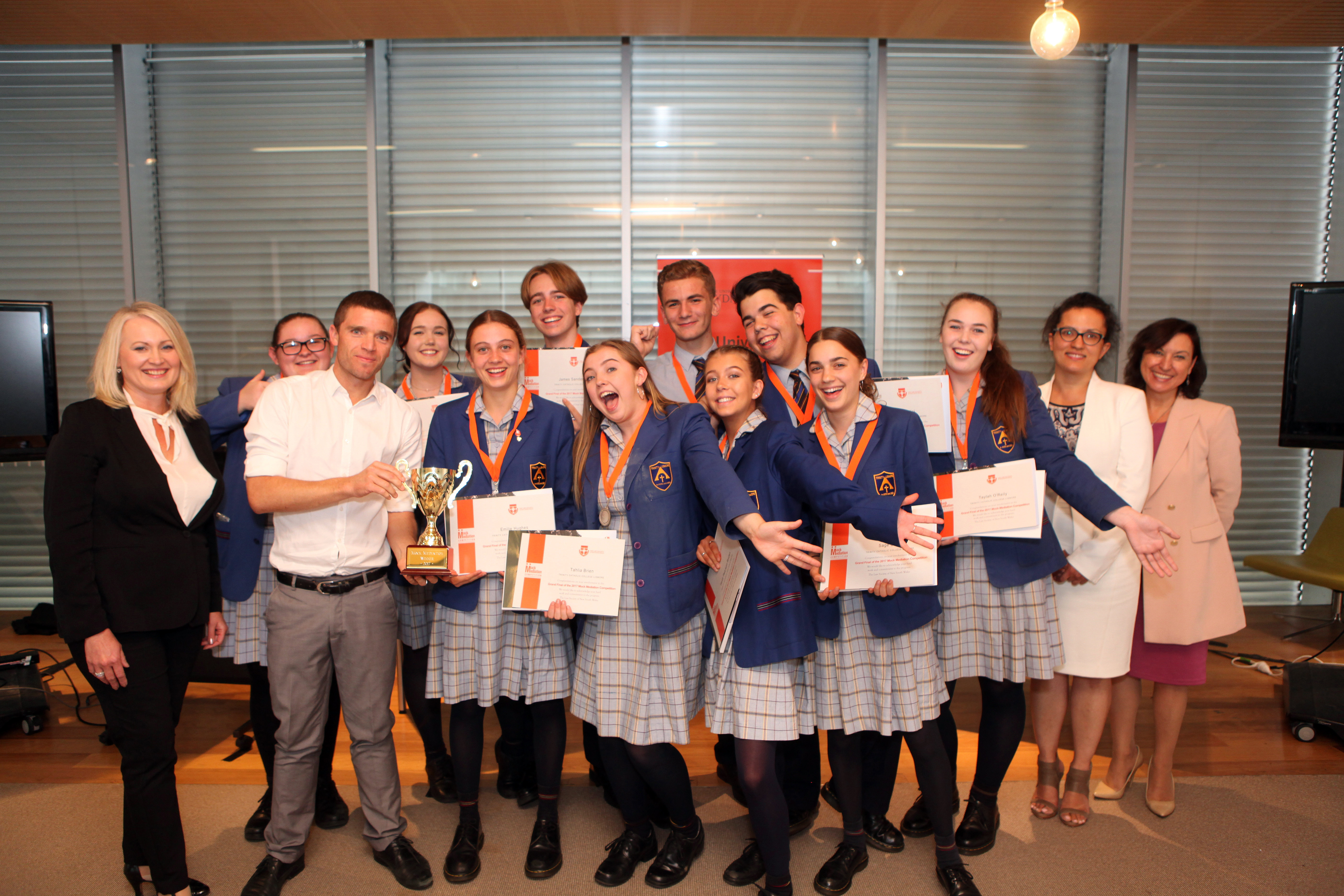
2017 Mock mediation Grand Final – this was the winning team Trinity Catholic College Lismore, with presiding adjudicators on either end of the team in the black jacket (Lara Bishkov), white jacket (Monika Lama) and pink jacket (Helen Miedzinski). Photo courtesy Frances Richards

This article is about initiatives to introduce mediation to students in NSW schools.

The NSW Department of Education offers peer mediation programs for primary and secondary public schools in NSW. These programs are one of the conflict resolution strategies available for schools to adopt. The Department provides resources for schools to use and intends to update these resources. The resources can be found at: Peer Mediation.

The Law Society of NSW organizes an annual mock mediation competition for secondary public and private school students. The competition provides an opportunity for students to develop, refine and practice cooperative problem solving and conflict resolution skills.

What are the objectives of these initiatives to introduce mediation in NSW schools?

According to the Department’s resources, the peer mediation programs are intended to ‘empower, prepare and support students and staff to deal successfully with conflict situations at school, at home and in later life.’

According to the Mock Mediation Manual 2018, the competition aims to:

“ Recognise the opportunities for change and progress that can result from conflict and improve the ability of students to manage conflict in a way that leads to a positive outcome

Acknowledge the increasing use of mediation by courts and the community, and equip students with the skills necessary to participate in a mediation process.

Educate students about the importance of the process in tandem with constructive dialogue.”

How does mediation in schools work?

The peer mediation program involves one or two trained student mediators assisting two disputants through a structured process to reach resolution of a dispute. Peer mediation programs are coordinated by staff trained in mediation, who provide ongoing supervision and support to student mediators. Peer mediation programs are intended for minor disputes such as gossip and rumour spreading, name calling, friendship problems, teasing, loss of property and exclusion.

The mock mediation competition is open to students in years 9 and 10. Each school participating in the competition has 1 team with a maximum of 9 students.  Each team participates in 3 rounds. All teams in the competition receive a certificate of participation. The two teams who reach the grand final receive a certificate and a medal. The winning team receives a trophy.  The competition requires involvement and support from teachers as coaches and mediators as adjudicators.

To receive points for the competition, the students must demonstrate skills including:

Listening, Brainstorming, Empathy, Judgment, Questioning, Decision making, Communication, Teamwork, Problem solving, Leadership, Negotiation, Time management, Assertiveness and Reflecting.

What are the benefits for students?

Both the peer mediation program and the mock mediation competition are intended to benefit the students, staff, schools and community.

The intended benefits for students are:

  • Skill development including communication, listening and problem-solving skills
  • Assuming greater responsibility for solving their own problems
  • Creating an awareness of their responsibilities when dealing with others
  • Furthering personal development and self-improvement
  • Increasing self-esteem
  • Learning to manage conflict in a productive way

In addition to the mediation competition context, acquiring these skills may be of importance for the future employability of the students. A recent study of the Canadian workforce by the Royal Bank of Canada shows that these are the types of skills students will require to negotiate the future. The study found that “An assessment of 20,000 skills rankings across 300 occupations and 2.4 million expected job openings shows an increasing demand for foundational skills such as critical thinking, co-ordination, social perceptiveness, active listening and complex problem solving.”

The study also found that “Virtually all job openings will place significant importance on judgement and decision making and more than two thirds will value an ability to manage people and resources.”

The findings of the study are contained in the report “Humans Wanted How Canadian youth can thrive in the age of disruption” published on 26 March 2018.

What are the other benefits?

The intended benefits for schools and the wider community include:

  • reduced conflict in the school environment
  • reduced bullying and aggressive behaviour
  • reduced tension in the classroom environment
  • reduced time spent by staff on minor disputes
  • safer and more harmonious school environment
  • maximising the opportunity for learning for all students
  • promoting open communication to resolve contentious issues
  • maximising the benefits of cooperative problem-solving
  • encouraging mediation and negotiation as an alternative to litigation

What does the research show?

An exploratory study into a peer mediation program in a primary school context in NSW collected data that demonstrated therapeutic benefits for the school community, that students reported that participation in the peer mediation program had benefited them in their lives after school and that the training and knowledge obtained from the program can be applied in different situations (McWilliam, N., A school peer mediation program as a context for exploring therapeutic jurisprudence (TJ): Can a peer mediation program inform the law?, International Journal of Law and Psychiatry (2010), doi:10.1016/j.ijlp.2010.09.002.)

Research has also been conducted into the use of mediation as an educational strategy in schools in other countries. One recent study of mediation in Spanish schools found evidence that the programs did teach students skills that they do not have the opportunity to learn in other subjects and to manage their own conflicts (Raga, L. G., Sanchis, I. C., Mora, A. M., & Santana, G. R., (2016). Strengths and weaknesses of the school mediation from the perspective of students in secondary education. Pedagogía Social: Revista Interuniversitaria, (28), 203-215. 10.7179/PSRI_2016.28.15.)

Conclusion

As an adjudicator for the mock mediation competition I have observed the students participating enthusiastically and reflecting on their experience of how hard it is to actively listen, what it feels like not to be heard and how hard it is to find strategies to unlock deadlock.

The potential of the peer mediation program and the mock mediation competition to deliver their intended benefits is limited by the time, resources and commitment of staff and volunteers.

Research is needed to provide evidence of the benefits of students participating in peer mediation programs and mock mediation competitions. Such evidence would assist schools in deciding to allocate time and resources to expanding the use of mediation initiatives. Submissions to conduct research in NSW public schools can be directed to: <http://www.serap.det.nsw.edu.au/>. Information about participating in the mock mediation competition in 2019 can be found at: Law Society Mock Mediation

Forty years of anti-discrimination law — how far have we come?

This article was originally published in Impact on 24 April 2018

woman pain

Photo credit: x1klima, Woman and Grief

Anti-discrimination law was introduced in Victoria in 1978. But after 40 years we don’t seem to be any closer to equality for all. Could establishing a corporate watchdog be the answer?

13982532102_76884860fc

Photo credit: Classic Film, Creative Commons

Wanted: Female, 22-25, for a secretarial role. Prefer single.

Imagine running a job ad like this today. Yet, before the advent of anti-discrimination laws, employers were able to limit applicants to very specific age groups, sex and marital status.

The introduction of Victoria’s Equal Opportunity Act in 1977 put a line in the sand for sexual discrimination in the workplace. While race discrimination laws already existed at a federal level, the various state governments brought in their own legislation to cover issues such as sex, age and disability discrimination.

In 1979 flight instructor and qualified pilot Deborah Wardley took Ansett Airlines to task under the new legislation after she was prohibited from being employed by them as a pilot due to her childbearing potential.

Writing to the Women’s Electoral Lobby, General Manager, Reg Ansett said: “we have a good record of employing females in a wide range of positions within our organisation but we have adopted a policy of only employing men as pilots. This does not mean that women cannot be good pilots, but we are concerned with the provision of the safest and most efficient air service possible [and so] we feel that an all-male pilot crew is safer than one in which the sexes are mixed.”

Subsequently, the case came before the High Court of Australia and much to the chagrin of Reg Ansett, Wardley won and went on to a successful career as a pilot.

Not far in 40 years

Fast-forward 40 years and have we really made that much progress?

Monash Business School’s Dr Dominique Allen doesn’t think so. And the move to private mediation is the main reason.

Dr Allen explains that in the early days of the legislation a number of prominent cases helped weed out the most blatant forms of discrimination and served to educate the public.

“When Deborah Wardley won the case, it was a significant victory for women fighting discrimination in the workplace,” Dr Allen says.

“But our legislation has really stagnated since then.”

Since the courts moved towards mediation and conciliation, most anti-discrimination cases are settled privately.

“The public thinks that discrimination was addressed in the 1980s and that it doesn’t happen anymore,” Dr Allen says.

And there are many reasons why people settle: the exorbitant costs involved, the risk of more costs if you lose, damage to their reputation and importantly the psychological pressures of being involved in litigation.

Most people don’t want to spend years pursuing a claim, and others who have lost their job simply move on and find another one, rather than front up to court.

While this makes perfect sense, it means that the whole system has become privatised — taking place behind closed doors so people aren’t aware that discrimination still happens and how it is resolved.

What does compliance look like?

While settling cases may seem sensible, from a business or employer perspective, they don’t know what compliance looks like.

There is no deterrent aspect – they can’t see that someone else has made a claim against a certain issue or behaviour and make moves to prevent it from happening in their own organisation.

“There are problems with the system which focuses on the individual rather than the broader society,” Dr Allen says “We cannot rely on an individual to address the discrimination to “name, blame and claim” it as discrimination.”

She advocates a watchdog similar to corporate regulators to shift the focus to the employers and to business because they are best placed to foresee the impact of their actions on equality.

She proposes that such an enforcement body could make claims on behalf of people or represent them, in the way the Fair Work Ombudsman can in the industrial relations sphere; currently, there is not an equivalent body for equal opportunity.

“There’s nobody like the Australian Securities and Investment Commission (ASIC) or the Australian Competition and Consumer Commission (ACCC)  that can step in and enforce the law or pursue a case – it relies on an individual who is often a vulnerable person,” she says.

Other options to improve the current system include putting requirements on employers and business to act first, rather than waiting until discrimination occurs. Dr Allen says the UK does something similar; public authorities need to have “due regard to the need to advance equality of opportunity” in their undertakings.

Tickets please

Another early case involved Victorian trams issuing scratch tickets that were difficult for visually impaired people to use, while removing conductors who had traditionally assisted people with different disabilities to use public transport. Nine people with various physical disabilities took the Public Transport Corporation to court on the basis that these actions were a form of indirect discrimination. The judges of the High Court agreed.

Dr Allen says that it was one of the unusual instances where the court ruled that it was not just going to compensate people, it ordered the government to review the ticketing system on trams.

It would be unusual today to see a wide order like this. Now, court-awarded damages are fairly insignificant amounts.  Yet Dr Allen says it is one of the things that is needed to tackle discrimination effectively.

She says that while having the conciliation system is good – in that it saves costs and the deal remains confidential – from a societal perspective it doesn’t address broader issues.

Bring in the stick

From a business perspective, low amounts ordered by courts are not a deterrent and don’t encourage compliance with the law. Dr Allen says: “there is no big stick to wave if people are not doing the right thing.  There is no fear, as would be the case if the ACCC was pursuing them, that a hefty penalty may be imposed if they’re found to have acted unlawfully.”

So in 40 years have we addressed the discrimination in this state?

“I think we have come a long way. There are barriers that have been broken down and blatant forms of discrimination don’t happen anymore but there’s still much more than the law could do to address those hidden systemic forms of discrimination,” Dr Allen says.

Victoria’s legislation was modernised in 2010 and Dr Allen is currently working on research to see how effective these changes have been which is due later in the year.

This article was first published on Impact. Read the original article


On the passing of Frank Sander: A critical, grateful view from the Antipodes

Frank Sander, dispute resolution visionary and hero, recently died, aged 91.

I thought it would be worthwhile exploring some of Sander’s achievements and impact from an Australian civil justice perspective. In particular, I will consider the relevance of  Sander’s multi-door court house idea to Australia today.

For many years, I have been teaching Non-Adversarial Justice to undergraduate law students at Monash University. The wonderful, far-ranging discussions we have in those classes have given me the chance to reflect on the impact of Sander’s work here in Melbourne, Australia.

Sander was a professor of law and dispute resolution at Harvard University in the USA. He is associated with developing the ‘multi-door courthouse‘ idea: that a single court could triage the civil matters that came before it and provide a range of dispute resolution services (both litigious and settlement-based)  depending on what is needed in each case. A multi-door courthouse is a dispute resolution centre where a grievant, with the help of a screening officer at the court, is directed to an appropriate process or series of processes. This approach is underpinned by the view that court costs and delay are increased by ill-matched disputes and processes.

In many ways the multi-door courthouse is the civil equivalent of the criminal problem-oriented court, which aims to reduce re-offending by addressing the underlying causes of criminal behaviour.

doors

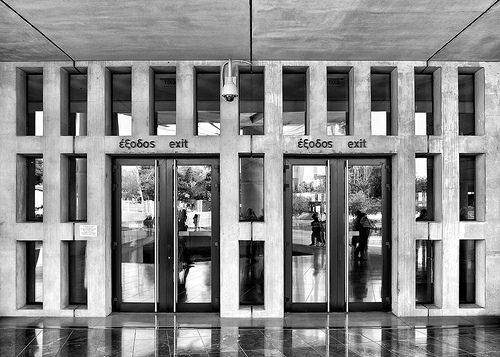
Multi-door courthouse: right for Australia? image Credit: Dan Boss, Exit at the Acropolis Museum, Creative Commons

Sander is also credited with developing the now ubiquitous idea of fitting the forum to the fuss (that each matter should use an appropriate dispute resolution process). In Australia in 2018, this an uncontroversial goal, which, unfortunately, is still a long way from reality in the civil justice system.

To develop ideas that become pervasive and which define a field has a something to do with luck (timing, place, race, gender etc). But not every lucky person has clear thinking, vision and the ability to convince others. Sander was clearly an ideas man and we listened. The impact of his thinking on civil justice systems and court practice is significant, even in far-away places such as Australia.

Sander gave a famous speech in which he first set out his ideas on the civil justice system at the 1976 Pound conference held in St Paul, Minnesota and organised by then Chief Justice of the Supreme Court, Warren Burger. Many, including Jeffrey Stempel regard this conference as the genesis of the modern ADR and court reform movement.  Stempel argues that this conference was notable in its criticism of the litigation process, its promotion of ADR by its “all star cast” including the cream of the American court and legal establishment as well is the publishing of its proceedings in West’s Federal Rules Decisions, guaranteeing wide exposure of the conference’s pro-ADR sentiments, especially to the nation’s federal judges.  The proceedings of the Pound Conference can be found in ‘National Conference on the Causes of Popular Dissatisfaction with the Administration of Justice’ (Apr. 7-9, 1976) in 70 F.R.D. 79 (1976). The 1976 conference has, of course, spawned the contemporary Global Pound conferences.

Sander’s speech was at the heart of what the conference acheived. According to Diane Levin, at the 1976 Pound Conference, Sander

reminded conference participants of the limitations of traditional litigation with its “use of a third party with coercive power, the usually ‘win or lose’ nature of the decision, and the tendency of the decision to focus narrowly on the immediate matter in issue as distinguished from a concern with the underlying relationship between the parties.” He urged conference participants to envision alternatives, a “rich variety of different processes, which, I would submit, singly or in combination, may provide far more ‘effective’ conflict resolution.” And he reminded them of “the central quality of mediation”, namely “its capacity to reorient the parties toward each other, not by imposing rules on them, but by helping them to achieve a new and shared perception of their relationship, a perception that will redirect their attitudes and dispositions toward one another.”

This is a call for the integration of ‘ADR’ with the ordinary everyday business of civil courts. (There is a very readable exploration of the origins of Sander’s Pound paper  here).

More than 40 years later, Sander’s call has largely been answered.  We know that settlement has always been part of civil litigation (thanks Marc Galanter for giving us the term ‘litigotitation’). But since Sander gave that speech, various forms of ADR, especially mediation and arbitration, have become part of standard court practice in most jurisdictions. For example, the Supreme Court of NSW offers both mediation and arbitration for civil matters under Parts 4 and 5 of the Civil Procedure Act 2005 (NSW). Referral to ADR can be mandatory in most Australian courts. Court-connected ADR services in Australia are provided by in-house staff or by external service providers.

However, most Australian courts could not be called multi-door courthouses. One reason why, is that formalised dispute resolution screening processes are not in place in most Australian courts. (The NSW Land and Environment Court is a clear exception).

What I think Sander didn’t quite get it right is that his focus was largely on the courts. To my mind, the locus of conflict and dispute resolution is not at the pointy court-end of the dispute resolution pyramid, but the heavier bottom-part. Most people who have a ‘legal problem’ don’t go near a court but choose or are forced to use other methods of dealing with their matter. These methods include direct action such as physical retaliation, seizure of property or removal of offending objects, informal negotiation or exit and avoidance (‘lumping’ the problem). That’s certainly what goes on in my house!

Court-based triage and assessment of problems is going to offer very little to most people who never even conceive of their ‘problems’ as court-worthy nor have the funds to litigate. When researchers measure ADR use, there is always very low awareness of ADR processes in the community and low uptake and use of formal ADR services. Even ADR services are not the only answer.

The multi-door courthouse doesn’t reflect more recent government efforts to encourage efficiency in the civil justice system in Australia and the UK. Pre-action protocols/procedures have been implemented widely in England and Wales following the Lord Woolf Report and more sparingly (but significantly) in Australia. Pre-action procedures encourage early settlement of disputes, full disclosure of information between parties and, where the matter cant be resolved, the narrowing of issues in dispute, but all before proceedings have commenced. Pre-action procedures are important because they force the location of ADR services away from the courts and towards pre-trial services offered by non-court providers or undertaken informally. Tania Sourdin argues that pre-action procedures are a significant shift away from Sander’s multi-door courthouse and towards  a “more modern multi-option  dispute resolution model.”

I would argue that they key idea behind Sander’s multi-door courthouse idea, matching the forum to the fuss, should and does still exist as a guiding principle of Australian civil justice systems. While the location of dispute resolution activity has shifted away from the courts (in Australia at least) Sander’s ideas have shaped the civil justice landscape of our country.

Thank you, Frank.

Aspects of this post are based upon ‘Chapter 7: ADR: Appropriate or Alternative Dispute Resolution’ in King, Freiberg Batagol & Hyams Non-Adversarial Justice (2nd ed, 2014).

Experiencing the Potential of Mediation

The Australian ADR academic community is committed to ensuring that ADR is embedded across the syllabus of Australian Law Schools. This has been assisted by the agreement that ADR will be delivered within Civil Procedure as part of the Priestley 11.

This is an important achievement and owes some of its success to the efforts of our own ADR Research Network members who have championed the change – including, for example, Rachael Field and Kathy Douglas. As part of building the value of ADR teaching and learning, we continually seek opportunities for students to experience the potential of ADR processes, and to develop as practitioners whose skills are relevant nationally and internationally.

The ICC International Commercial Mediation Competition is one such opportunity. An annual event offered in Paris, the ICC now also offers an annual Asia-Pacific Commercial Mediation Competition, for teams who wish to compete with our Asia-Pacific neighbours.

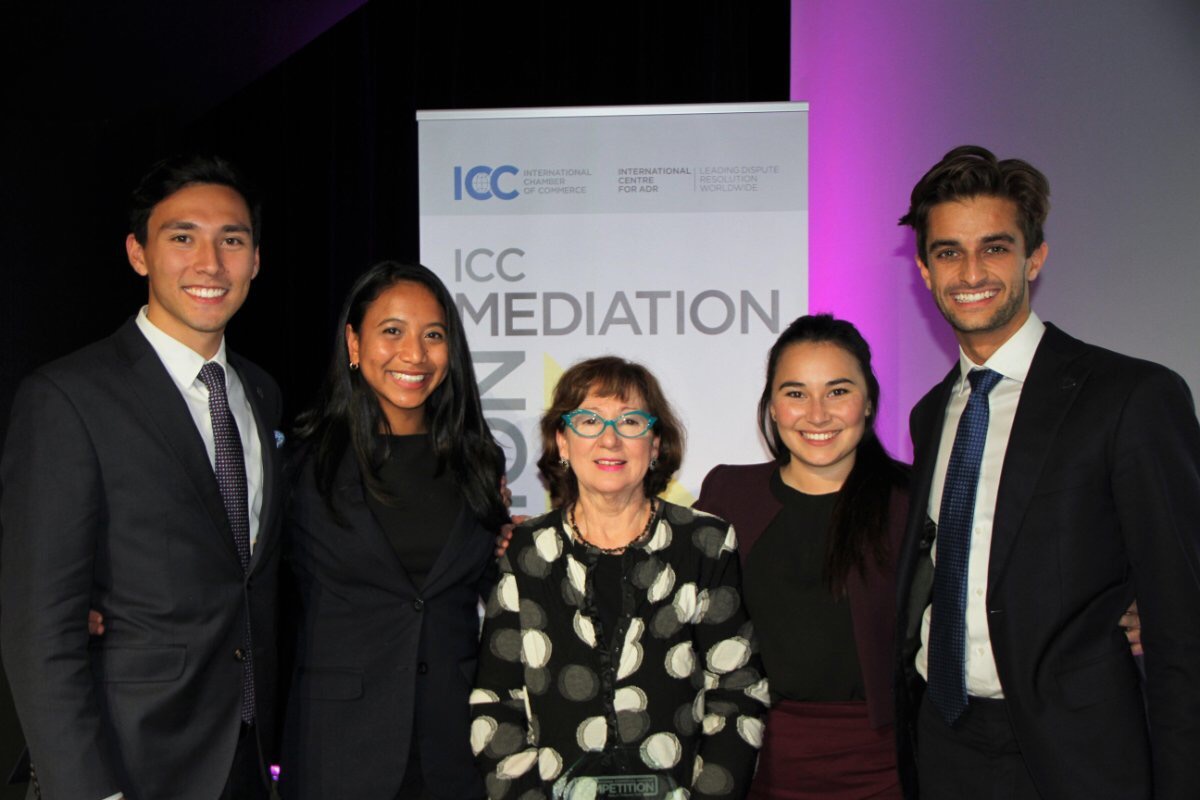
I am just back from Paris where the 4 team-members from UNSW, were this year’s  competition winners.

ICC 2018 winners (1)

Team UNSW ICC Winners 2018. Photo Credit: ICC, with permission

Approached by Kluwer to blog about the competition and the opportunities it provides to students internationally, I was delighted share my views about its enduring value which stretches far beyond the competition itself.

My blogpost includes seven insights that provide a foundation for successfully coaching a team as I have had the privilege to do for the past 12 years. I also hope my insights might be a resource for those who are teaching negotiation, mediation and dispute resolution at a tertiary level.

See you in Paris 2019!