Consultation comment invited – Review of the Farm Debt Mediation Act 1994 (NSW)

The following has been posted on behalf of Dr Hanna Jaireth, Farm Debt Mediation Officer at the NSW Rural Assistance Authority

Consultation comment invited – Review of the Farm Debt Mediation Act 1994 (NSW)

drought

Photo credit: Tim Vrtiska

The Farm Debt Mediation Act 1994 (NSW) (FDMA) is being reviewed to ensure it continues to deliver on its original intent, and to provide a model for nationally consistent legislation.

The Board of the NSW Rural Assistance Authority (RAA) is overseeing the review.

Your feedback is requested in response to questions in the Review Consultation Paper (PDF, 696.57 KB).

Submission options

You may respond by 5 May 2017 by:

  • completing theonline survey, or
  • emailingyour comments, or
  • posting your comments in hardcopy, or
  • one or more of the above.

Online survey

The online survey provides the questions raised in the Review Consultation Paper (PDF, 696.57 KB) so that if you wish, you can respond easily to all or some of the questions.

Individual survey responses will not be published.

Questions 1 to 3 are mandatory so that we can assess which stakeholders express which views, and we can provide you with information about the outcomes of the review.

Email your comments

If you wish to email a submission, please email farmdebt.mediation@raa.nsw.gov.au.

We would prefer to receive longer submissions in Word and/or Pdf format as an attachment.

Please make it clear if you attach additional documents to your submission, whether those documents may be published on the review website.

Post your comments

You may send a submission in hard copy to:

Dr Hanna Jaireth NMAS | Farm Debt Mediation Officer

NSW Rural Assistance Authority

Level 2 | 161 Kite Street | ORANGE  NSW  2800
Locked Bag 23 | ORANGE  NSW  2800
Ph: 1800 678 593 | Fax: 02 6391 3098 | E: hanna.jaireth@raa.nsw gov.au
W: www.raa.nsw.gov.au

Release policy

The RAA will not accept or publish anonymous submissions or comments.

Private contact information will not be published, but submitters’ names and organisations will be published unless a request for confidentiality is agreed after consideration of a written request.

Submissions will be published on the RAA’s website in full or in part unless the RAA declines to accept a submission because it contains information of a private, legal or otherwise sensitive nature, or because it is vexatious, offensive or defamatory.

If a submission includes something critical of another person or organisation the RAA will write to them and ask them to respond, and the RAA may decide to withhold publication of both the submission and the comments made in response.

Further information

If you need to access a translating and interpreting service please telephone 1300 651 500 or visit the Interpreting & Translation page of the Multicultural NSW website.

For further information please:


There is a time and place for mediation but a bullying allegation in the workplace is not one

 By Carmelene Greco


This post is the final in a series of posts on this blog written by students studying Non-Adversarial Justice at the Faculty of Law at Monash University in 2016. Students were invited to write blog posts explaining various complex areas of law relating to dispute resolution to ordinary readers. The very best post on each topic is published here.


bully

Photo Credit: Dick Vos

The practice of mediation to resolve workplace bullying allegations is controversial and largely debated amongst academics. Ironically, effective resolution of such disputes is extremely important in our jurisdiction, with Australia having substantially higher rates of workplace bullying when compared to our international counterparts. This “hidden problem” requires a specialist and careful response but mediation is not it, and it may in fact make the situation worse.


Workplace bullying is notoriously difficult to define and there is still no nationally uniform definition. It has been described as “repeated, unreasonable behaviour directed towards a worker or group of workers, that creates a risk to health and safety”.  It involves an addiction to controlling others, harassment and verbal abuse and constant unjustified criticism. It is not, as accurately stated by the Fair Work Commission, “reasonable management action that’s carried out in a reasonable way”.

Mediation, which aims to be an empowering process, involves trained third parties intervening on a dispute to assist parties to make their own decisions. As stated by the National Alternative Dispute Resolution Advisory Council:

The mediator has no advisory or determinative role…but may advise on or determine the process of mediation…

Therefore, any solution is not imposed on parties but arises out of the empowerment of the parties to make it themselves.

It is important to stress that there is a lot of evidence of mediation providing an effective outcome in many cases where it helps facilitates solutions to problems that appear unsolvable. However, the key distinguishing features of mediation, which make it an attractive option in many instances, are the very reasons it is inappropriate for workplace bullying.


Comparing workplace bullying and family violence

The very nature of workplace bullying automatically suggests that mediation is an unsuited response. Workplace bullying is frequently compared to domestic violence – they are considered “almost identical twins”. In both scenarios there is an addiction to power, the controlling of another in a detrimental way and a severe power imbalance.

Mediation, and other forms of ADR, can be considered inappropriate in cases of family violence. This is exemplified by current Australian family law legislation that affords an exception to the mandate of alternative dispute resolution where there is the presence of family violence. This displays the recognition by the Australian Parliament of how a severe power imbalance can undermine the benefits of mediation.

Similarly, in the case of workplace bullying, a power imbalance and a potential ongoing relationship exists, as such the effectiveness of mediation is reduced.

Consistently, shuttle mediation may also be an ineffective solution as it can exhaust parties into premature agreement, as well as not effectively ensuring the relationship of control has ceased.

Accordingly, on the basis that mediation is not appropriate for allegations of domestic violence, it is equally unsuitable for allegations of workplace bullying. It was argued by Hadyn Olsen that:

The practice of demanding mediation as the first response to any workplace grievance (including Workplace Bullying) places our society back in the same position it was in the 60’s and 70’s in regard to domestic violence. It is an entirely inappropriate response to this problem.

In conjunction with this dynamic is the fact that there are very few options available to the target of workplace bullying. It can be that the target has already resigned, intends to resign or is still employed and wishes to remain employed. The target is likely to be placed in a position of being wedged in a toxic working environment because of their financial needs and a lack of options for alternative employment. This again places the target of workplace bullying in a particularly vulnerable position, which is unique to this category of dispute.

The defining feature of workplace bullying allegations is the power imbalance between the bully and their target, which is exacerbated if the employer is also the bully. Mediation in such conditions is likely to reinforce the dynamic and worsen the situation, as it would in the domestic violence context already discussed. Meanwhile, reaching a constructive outcome jointly between parties is the hallmark of mediation – that is it involves a compromise and a desire to settle. A bully is unlikely to have this aim but instead view the mediation as an opportunity to further manipulate the target. Furthermore, the target is likely to be further disempowered and unlikely to reach a favourable outcome because of a lack of capacity to negotiate with the bully.

Hadyn Olsen noted that he has not met any target of workplace bullying who feels mediation was fair for them but argues that instead, in most cases targets feel further abused and damaged by the process. Similarly, a representative from Northern Territory Working Women’s Centre stated that:

The imbalance of power is so profound that she is just not able to speak freely… I think it would be unsafe and really inappropriate if it required the person who was being bullied to sit face to face with the person who was bullying her….


Bullying is not and cannot be a neutral agenda item

In a typical mediation, the issue to be considered is one that both parties are equally as affected by or equally contributed to. But in the context of workplace bullying, the agenda is entirely based on the inappropriate behaviour of the bully in the workplace.

A mediator may struggle to frame this issue as an agenda item and by referring to it as a ‘relationship’ the target of the bullying may interpret this to mean the mediator does not believe the bullying occurred. At the same time, a bully would view this as a reinforcing their lack of fault. Therefore, in workplace bullying allegations the person and the issue cannot be separated and trying to frame it otherwise can be detrimental.


Mediation fails to punish past behaviour

 Mediation focuses on the present and future relationship between the parties and does not punish past behaviour. This is because it usually involves a mutually engaged in conflict. But workplace bullying is different. There is clearly one victim; one person who needs recognition of what has occurred in order to heal and move on. Dr Caponecchia stated that:

Mediation is more focused on not whether it happened or not but, ‘Let’s get back to work’, which may mean transferring someone.

Facilitators of workplace mediation argue that this is a benefit of mediation because it offers a fresh start and is about moving forward. However it is unlikely that targets of severe bullying will be looking for a fresh start and, instead, are more likely to want recognition and an apology. This is particularly the case where the target has decided to resign from their employment.


Public interest

 It may also be in the public interest for matters of workplace bullying to go to court and not to be held in a private mediation. Mediation keeps any wrongdoing outside public scrutiny or knowledge. This is not a good thing because the knowledge of the prevalence of workplace bullying is significantly restricted, which in turn, reduces the likelihood of policy being developed in response. Because of the high levels of workplace bullying in Australia, full transparency is necessitated to establish an effective response.


But does this mean mediation can never be appropriate for workplace bullying?

 It is arguable that a complete power balance between parties to a mediation is not the norm and hence it is always the role of the mediator to manage this relationship and minimise the impact of any imbalance.

Power imbalance can be managed by:

  • the use of support persons for each party (whether that be a family member or otherwise);
  • effectively communicating the rights of each parties and ensuring they are aware of these rights;
  • reality testing the options available to both parties;
  • representation by an advocate; and
  • informing the target that they have specific rights against the bullying – such as the ability to lodge a formal complaint.

If it is believed that the imbalance of power is not so severe that a mediator can effectively manage it, mediation may potentially be appropriate. However this is going to very much depend on the particular situation. It is likely that a mediator is going to be able to more effectively manage the power imbalance if intervention is early. Mediation is of no use where the target is now seeking full justice or retribution.

Consequently the suitability of mediation very much depends on the stage of escalation of the bullying. It is thought that mediation can be a helpful early intervention technique. The House of Representatives, Standing Committee on Education and Employment (2012), inquiry into workplace bullying found that several submissions supported mediation as an early intervention.  It was stated in that report that:

Mediation cannot be the panacea to workplace bullying, rather, it is an effective early intervention tool and needs to be applied on a case-by-case basis.

Moira Jenkins also supported the use of it as an early intervention model stating that:

I do not think mediation is appropriate later on when you have very damaged people, but as an early intervention I think it is great.

We should begin with the assumption that mediation is an inappropriate way of dealing with workplace bullying. Where the bully is the employer, this position will not change. In such cases, arbitration provides a more appropriate dispute resolution option as it offers the opportunity for the past wrongdoings committed by the bully to be discussed and for them to be held to accountable. This is an important process for the victim in moving on and essential to facilitate a productive working environment by focusing on past behaviour, which mediation fails to do. In addition, arbitration allows somebody in power to define what is and isn’t bullying and to avoid allegations by the bully of hypersensitivity in the victim.

Alternatively, however, if it is identified that the bullying is at the very early stages of escalation and that a mediator is able to effectively manage the existing power imbalance, mediation may then be carefully conducted. If there is any doubt, it is in the best interest of the general public and of the target, that mediation is avoided as a means of managing allegations of workplace bullying.

A consequence of this protection of the victim of workplace bullying may be, unfortunately, that their access to justice is reduced to some extent. However, this is, in many circumstances, a necessary concession. Additionally, the availability of arbitration, which is not an overly expensive option for litigants, ensures that justice is not inaccessible.


Carmelene Greco completed a Law/Arts degree, with a major in journalism, at Monash University in 2016. She is now a graduate lawyer at King & Wood Mallesons and has a keen interest in exploring alternative dispute resolution prospects within the commercial law context.

Nearly Neutral: A Mediator’s Best Bet

By Amanda Selvarajah

This post is the third in a series of posts on this blog written by students studying Non-Adversarial Justice at the Faculty of Law at Monash University. Students were invited to write blog posts explaining various complex areas of law relating to dispute resolution to ordinary readers. The very best post on each topic is published here.


the-gate-by-guillaume-delebarre

‘The Gate’ by  Guillaume Delebarre: Creative commons source

The National Mediator Accreditation System removed “neutrality” as a requirement on their list of ethical standards in 2015. This may suggest a trend away from the truly “neutral” mediator in the sense of a ‘detached third-party’. But does this mean we are to rule out neutrality entirely as an ethical consideration in mediation? With a trend of increasingly interventionist mediators, a complete disregard of the concept could place participants at great risk of being subjected to ethically dubious decisions.

     Perhaps the reason for the mediation community’s shift from neutrality is not because of a flaw in neutrality itself, but rather a failure to grasp a version of neutrality that can and should be an important element of an ethical mediation. Instead of defining neutrality as an unattainable attribute intrinsic in the nature of a mediator, perhaps we should be viewing neutrality as a constant practical endeavour throughout the mediation process, a mediator who’s nearly neutral.

Why Neutral At All?

A mediator in its simplest description is a ‘trained, impartial third party’ who assists parties in making their own decisions. However, mediation remains unregulated and virtually unmonitored as it is typically conducted in private with assurances of confidentiality. Mediated parties are expected to relinquish a guarantee of the principles of justice and fairness that would be inescapable in a common law court. It is these qualities of mediation that leave participants particularly vulnerable to a biased decision in the event of a potentially opinionated, interventionist mediator. Therefore, it is the consensual participation in the process and the assurance of “neutrality” that many consider the source of the process’s legitimacy.

On the spectrum of mediator involvement in mediation, the facilitative approach, which focuses a mediator’s role to procedural stages, leaves parties with as much freedom and control in the substance and outcome of the mediation as possible. The evaluative approach, on the other hand, has even been disregarded by some, like the Victorian Association for Dispute Resolution, as being a form of mediation at all. They argued that the mediator’s ‘input into the content, and sometimes the outcome’ of the mediation made the process inherently contrary to the core principles of mediation.

Such or any mediator involvement may suggest, as critics of the evaluative mediation approach do, an immediate breach of neutrality. But this is only the case if neutrality is restricted to a ‘strict, dualistic sense of the mediator either being or not being neutral.’

Why Not Be Absolutely Neutral?

To truly make the case for a re-imagined concept of neutrality, one must first accept the bold suggestion that mediations are not neutral in its literal sense and could likely never be so. Mental health professionals have found that ‘there is no such thing as total impartiality, neutrality, or lack of bias when working with people, even though as practitioners they may strive for such ideals.’ In mediation specifically, research has shown that in practice, mediators may affect and influence mediation at almost all stages of the process. Examples include ‘the ways they structure the interchange between the parties, in terms of the sequencing of storytelling and the framing of responses and what needs to be responded to.’ It follows then that any assessment of a mediator’s success in reference to their ability to be neutral, in the literal sense of the word, would set almost all our mediators up for failure.

However, regardless of a mediator’s ability to be neutral, there is the added consideration that absolute neutrality may not even be conducive to the goals of a truly successful mediation. For example, in the case of the simultaneous expectations that a mediator be both absolutely neutral but also committed to facilitating an equal conversation, one often comes at the cost of the other.

Mediated parties often experience a power imbalance. Therefore, a hands-off mediator may in these cases fail to protect ‘vulnerable parties from inappropriate pressure’. In family law mediation (family dispute resolution or FDR), for example, parties often meet at very unequal terms. Mediators in these cases may be caught between either claiming a position of absolute neutrality, thereby stripping them of the power to ‘redress imbalances’, or recognising a role in sometimes having to take ‘affirmative action… to achieve a balanced agreement.’

Family dispute resolution practitioners must consider if ‘family dispute resolution is appropriate’ before mediation is undergone. This may allow for vulnerable parties to be excluded from the mediation process, sparing mediators the struggle of balancing these competing expectations. But some victims still ‘feel that FDR processes fail to identify and manage the risk of family violence effectively.’ The exclusion also does nothing for parties beyond family abuse dynamics who may still be more vulnerable than the other party due to cultural, societal or financial factors.

This concept of absolute neutrality is similarly challenging for indigenous mediators, to whom Western notions of neutrality may not make sense. In indigenous mediation it has been recommended that a respected elder would likely be the more appropriate choice of mediator than a neutral third-party. Selecting a mediator for their ability to intimately understand the parties as opposed to their ability to detach themselves from them is arguably in direct opposition to Western expectations of a successful mediator. A commonality in our understandings of a successful mediation, however, may be the increasing interest in addressing the conflict at the heart of mediations.

Therapeutic jurisprudence, a philosophy focused on critically viewing our legal systems to maximise the health and wellbeing of those who engage with it, has been applied to improve and direct law reform throughout Australia’s legal system. Critically assessing the purely facilitative mediation process through a therapeutic jurisprudence lens unearths the potentially anti-therapeutic effects of having a non-interventional, solution-centric mediator who as a result, fails to address and redress the underlying tensions at the heart of parties’ relationships. The development of therapeutic jurisprudence throughout Australia is proof that the indigenous community’s focus on rebuilding and strengthening relationships is not unique and could be facilitated in mediations with a more involved mediator.

A New, Nearly Neutral Approach

Neutrality was seen as a cornerstone of mediation’s procedural fairness, the idea that ‘what is required by procedural fairness is a fair hearing, not a fair outcome’. The facilitative approach has, therefore, been described as having the highest regard for procedural fairness on the basis of perhaps a rather simplistic equating of a fair hearing with a decision-maker who allows parties to make their own case with as little intervention as possible.

This argument assumes, however, that participants of mediation are always equally capable of articulating and pursuing their own interests and that they are always more concerned with a practical outcome than a resolution of the underlying feelings and conflict which brought on the mediation in the first place.

However, research has shown that in mediation ‘the basis of authoritativeness (e.g. of the ability to gain voluntary acceptance from members of the public) is changing from neutrality-based to trust-based.’ This suggests that contrary to advocates for neutral mediators, parties may actually prefer a more interventionist mediator who is willing to foster openness and build a relationship of trust over a detached one.

So perhaps instead of aligning neutrality with a mediator who never intervenes, it would be best to hold mediators’ interventions to standards ‘of non-partisan fairness or impartiality’ instead. For example, weighing, as an objective third-party, whether an intervention would make sense to ‘facilitate a productive dialogue by encouraging or even coaching reticent or inarticulate parties’ to promote a generally more just proceeding. After all, in the immortal words of Theodore Roosevelt, ‘Impartial justice consists not in being neutral between right and wrong, but in finding out the right and upholding it, wherever found, against the wrong.’


Amanda Selvarajah is (@amanda_darshini) currently in her third year of the Bachelor of Law (Honours) program at Monash University. Her research has focused on questioning the limits of the law and its rooms for improvement across a variety of fields. Last year, her research into the abuse of forensic evidence in court was selected for presentation at the International Conference of Undergraduate Research.


Honesty and Candour in Mediation: Are They in Short Supply?

Mediation, like negotiation, is at its most basic a process of communication between parties in dispute. The aim in mediation is to find a mutually agreeable solution. The success of mediation might well depend on the ‘honesty’ and ‘candour’ of the parties and their representatives. The parties must be honest and open enough to find a zone of agreement.

The terms honesty and candour need to be defined. Elsewhere I have defined ‘honesty’ as a concept which concerns the accuracy of information conveyed, while ‘candour’ is a concept which goes to the heart of whether or not information is conveyed at all.

13891817217_b5df5d440f

Honesty the flower: credit Creative Commons  see below

https://www.flickr.com/photos/11758041@N08/13891817217/”>Dave_A_2007</a&gt;

While it makes sense for the parties to be honest and open enough to find a mutually acceptable solution, only a fool would rush into a mediation and reveal, at the outset, their BATNAs, WATNAs, and bottom lines.

As for mediators, they are constantly handling information gleaned from the parties in dispute. Often they have to run ‘messages’ back and forth from separate sessions with the parties.

This short discussion looks at the obligations, if any, which fall upon the mediation participants and mediators to be honest and candid.

Parties and their representatives – duties owed to mediators and to each other

Agreements/Legislation

Standard form agreements to mediate and relevant legislation do not usually impose an obligation to be honest and/or candid, although they often require parties to ‘cooperate’ with each other and with the mediator to carry out tasks such as isolation of issues in dispute, exploration of options and so on. Many legislative schemes require the parties to participate in good faith. The terms ‘cooperation’ and ‘good faith’ (and ‘genuine effort’) are rarely defined in agreements to mediate or by relevant legislation but the courts have discerned some common elements (eg attendance at the mediation by someone with authority to settle). Some guidance on behaviour which is not inconsistent with good faith in mediation is also available from cases and commentaries. Good faith does not require a party to act against self-interest and it does not require a party to take ‘any step to advance the interests of the other party’.[1] Good faith does not require the parties to engage in total disclosure. There is no requirement to reveal all of one’s negotiation goals and bottom lines.

Lawyers, as agents for their clients, are also bound by the obligation to act in good faith. A lawyer cannot mislead the mediator or his or her opponent about a material fact for it is recognised that such action (or inaction, where a false statement needs to be corrected) constitutes bad faith.

Negotiation Convention

It is sometimes assumed that interest-based negotiation, which underlies the facilitative model of mediation, requires honesty and candour. Negotiators adhering to an interest-based approach might explain their positions and interests (and refrain from misleading on these matters) with the idea of finding a solution that meets each parties’ interests, but the prescription to be honest and forthcoming with information stops at positions and interests. There is no requirement under this model of negotiation to disclose one’s BATNA or bottom lines.

Rules of Professional Conduct for Lawyers

If the parties are legally represented, the level of regulation intensifies. Legal representatives are subject to the ‘law of lawyering’ including the rules of conduct of the legal profession. These rules set out obligations owed by lawyers to courts and tribunals, clients, opponents and other parties.

Lawyers cannot mislead or deceive the court on any matter. They must advise the court of any adverse legal authorities and legislation. They must be honest and courteous to clients. They must not mislead or deceive their opponents. They must treat everyone with whom they interact, with honesty and courtesy.

Aside from the requirement to advise the court about adverse legal authorities and legislation, the rules do not impose a positive obligation to reveal information unless it is necessary to correct a half-truth or to correct a prior statement which has since become false.

The rules in relation to clients, opponents and others are easily transferable to mediation. The rules in relation to courts are an awkward fit in mediation. It seems that practitioners must treat mediators as courts (see the definition of ‘court’ in the professional conduct rules). If this is the case, practitioners must never mislead or deceive a mediator and they must reveal adverse legal authorities and legislation. I say that this is an awkward fit because mediators do not make substantive decisions and, unless he or she is an evaluative mediator, a mediator seems to have no need for information on adverse authorities and legislation. What is clear is that practitioners do not have to reveal other information either to the mediator or to an opponent save if it is necessary to correct a half truth or correct a statement which has become false (and of course, the practitioner must not reveal information without the consent of the client).

Mediators – duties owed to participants

The NMAS Standards

Assuming that a mediator is accredited under the NMAS and ‘bound’ by the scheme’s Practice Standards (PS), the mediator owes a duty of honesty in regard to matters of advertising and promotion of mediation. But that may be the extent of the mediator’s obligation for honesty under the PS. The mediator might owe an obligation to act with ‘integrity’ but the meaning of that term is not clear.

Rules of Professional Conduct for Lawyers

If the mediator is a lawyer, he or she is still subject to the law of lawyering.

Lawyer mediators owe obligations to the court (not to mislead or deceive). A lawyer mediator is still a lawyer and could not, for example, be a party to a fraud committed during mediation.

The rules governing the relationship of lawyers and opponents seems to have no application to mediators. Mediation participants are not the mediator’s opponents.

Mediation participants are not clients in the traditional sense.

It may be that participants are best considered to be ‘others’ (they are certainly not courts). If this assumption is correct, mediators are obliged to treat mediation participants with honesty and courtesy but there is, at least under the legal profession’s rules, no requirement for candour.

What is the safest course?

The best advice for parties (and their legal representatives) is to reveal information slowly and cautiously. If information is conveyed, care must be taken to ensure that it is accurate. Lawyer mediators must also take care to ensure that any information they convey is accurate. Since there is no general duty of candour, all those who participate in mediation – including mediators – must think before they talk. At times, they may want to take refuge in a silent ‘safe harbour’.


[1] United Group Rail Services Limited v Rail Corporation New South Wales [2009] NSWCA 177 (3 July 2009) [76] (Allsop P).

Reviewing of recent books on mediation and ethics

By Dr Bobette Wolski, Faculty of Law, Bond University


In this post, Dr Wolski provides a quick summary and compares two recent texts on mediation and ethics.


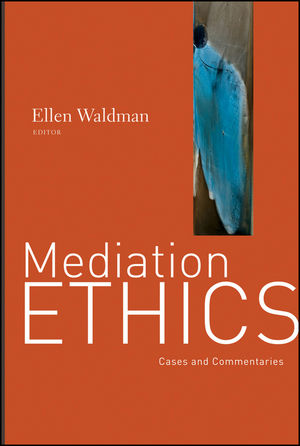
Ellen Waldman, Mediation Ethics: Cases and Commentaries 2011

Many of our readers will be familiar with Professor Waldman’s book titledMediation Ethics: Cases and Commentaries published in 2011 by Jossey-Bass. This is only the second text of which I am aware to deal exclusively with the ethical complexities of mediation practice. Waldman’s text is ground-breaking in that it adopts a case-specific problem-solving approach to the subject. (The first text was a collection of essays edited by Phyllis Bernard and Bryant Garth, titled ‘Dispute Resolution Ethics: A Comprehensive Guide’ published by the American Bar Association Section of Dispute Resolution in 2002.) According to Professor Waldman, one of the primary aims of her text is to showcase the diverse thinking in the field of mediation and to offer guidance to mediators on how to navigate the ‘murky ethical terrain’ that they are likely to encounter in practice.

waldman-ethics

There are thirteen chapters in Waldman’s text. The first, written by Professor Waldman, discusses the ‘underlying values of mediation, its regulatory codes, and emerging models of practice’. The values identified by Waldman are: disputant autonomy, procedural fairness, and substantive fairness. Each of the remaining 12 chapters deals with a particular ethical topic by using two or more case scenarios to illustrate the tension that may exist between these core values. Of continuing interest is the tension between the promotion of disputant autonomy (eg by helping disputants make informed decisions) and concern that basic norms of fairness and equity are not violated.

The case scenarios in each chapter are followed by commentaries from two (and sometimes more) leading dispute resolution scholars who explain what they would do in the circumstances presented and why. Contributors to the book are well known to us. They include:  Forrest (Woody) Mosten, Lela Love, Jacqueline Nolan-Hayley, Julie Macfarlane, Dwight Golann, Art Hinshaw, Carrie Menkel-Meadow and Harold Abramson. These commentators do not always agree on what to do. The diversity of mediation approaches is evident: facilitative, evaluative, narrative, transformative. Here Waldman is able to highlight the very different conclusions that experienced practitioners and scholars reach when analyzing what constitutes ‘right action’ in any particular mediated case. However despite these different end-points, there is a commonality in the way commentators approach problems presented in the case studies ie the authors identify the values that are important to them, the priority that they give to these values, and the action plan that they would adopt.

Mediator Responsibility and Justice

The issue of mediator responsibility for outcome fairness is a central theme tying the chapters together. In the end, Waldman’s own opinion shines through: mediators ‘ought to bear some responsibility for ensuring that mediated outcomes meet minimal standards of fairness’ though she acknowledges that the idea ‘remains controversial and has yet to gain traction’ (email with Professor Waldman dated 10 November 2016).

Professor Waldman is also very interested in the concept of justice in mediation, a topic she explores in greater depth with Dr Lola Akin Ojelabi (see Ellen Waldman and Lola Akin Ojelabi, ‘Mediators and Substantive Justice: A View from Rawls’ Original Position’ (2016) 30 Ohio State Journal on Dispute Resolution 391).

Waldman’s book is written is an accessible easy-to-read style, with mediation and conflict resolution professionals in mind. While the book will be useful for a range of people – students of dispute resolution, academics seeking inspiration for their classes, researchers and policy makers, and anyone else seeking thoughtful analysis of mediation’s many unresolved issues, the real strength of the book is in its practice orientation.


Omer Shapira, A Theory of Mediators’ Ethics: Foundations, Rationale, and Application 2016

More recently another excellent text on mediation ethics has become available that being Omer Shapira’s text entitled ‘A Theory of Mediators’ Ethics: Foundations, Rationale, and Application’ published this year by Cambridge University Press.

shapira

Many readers will be familiar with Dr Shapira’s earlier work in articles such as ‘Exploring the Concept of Power in Mediation: Mediators’ Sources of Power and Influence Tactics’ (2008-2009) 24 Ohio State Journal on Dispute Resolution 535; and ‘Joining Forces in Search for Answers: The Use of Therapeutic Jurisprudence in the Realm of Mediation Ethics’ (2008) 8 Pepperdine Dispute Resolution Law Journal 243.

A Professional Ethics Perspective

As its title suggests, in this new publication, Shapira attempts to construct a theory of mediators’ ethics – a theory he describes as ‘a professional ethics perspective’ based on role-morality and applied to a core definition of the mediator’s role. This is used as the theoretical basis for discussing and evaluating the ethical norms that govern mediators conduct, including existing codes of conduct for mediators.

Shapira argues that all mediators are placed in ethical relationships with mediation parties, the mediation profession, the public and their employers or principals and that these relationships produce certain ethical obligations. He goes on to explore the legitimate expectations of these groups and ultimately to propose a model code of conduct for mediators described as ‘a detailed set of norms of mediators’ ethics that can be rationally justified and defended with regard to mediators at large’.

This book will also be of value to ADR researchers, teachers and students, mediators and mediation participants, mediation organizations and programs, policymakers and ethical bodies.

Comparing the Books: Which is Best?

While there are practical guidelines in Shapira’s work, this is a heavy-weight text, more theory oriented than Waldman’s book, and in the end, more prescriptive in its approach. It is more about what mediators ‘ought’ to do.

Both books in their own way strive to provide guidance for mediators on how they might exercise discretion in making decisions on the many aspects of mediator conduct where there is a choice between competing values and contradictory courses of action. This is an exciting new direction for mediation professionals.

Workplace Culture and Mediation: Creating a Workplace Mediation Model That Works


 Photo: The Circulation Desk, 1946 by Bob Kent, State Library Victoria, (www.slv.vic.gov.au)


This is the third of a series of posts on papers we are sharing from the 2015 ADR Network Roundtable #ADRRoundtable held last month in Sydney. 


In this post, Pauline Roach describes her work  into developing a healthy workplace dispute resolution culture. Pauline began her career as nurse and midwife, working in several different hospitals in Australia, England and Scotland. Following her return from a 4 year trip overseas, she began a career with the NSW Public Service. Pauline has worked in the dispute resolution field for 20 years and has managed the Community Justice Centres (CJCs) Sydney and Bankstown, where she provided ongoing training and supervision to mediators and staff.

In 2003, Pauline was appointed to the position of Grievance Network Coordinator at the Roads and Traffic Authority (RTA) where she completed a major review of the RTA’s Grievance Resolution Policy. In this role she established the grievance resolution network and the RTA Workplace Mediation Panel. In 2013 she was appointed to the position of Consultant at Transport for NSW.

Pauline completed the Master in Dispute Resolution at University of Technology, Sydney.


Workplace disputes are disruptive, expensive and often linger in one form or another for long periods of time. This post looks at anew workplace mediation model developed and implemented at (an anonymous for this post) large public sector organisation in New South Wales. The post is in two parts: The first part discusses strategies and structures implemented to respond to workplace disputes. The second part provides details the new hybrid mediation process developed and analyses the outcomes from this mediation process.


Strategies and Structures

The organisation implemented a strategic framework to help develop a corporate culture and context where the principles of ADR could succeed and are accepted by staff. This has involved staffing, policy development and the education of staff. It also includes engagement with the union to encourage and support their members to participate in the process. The organisation, employee and union representative have a shared benefit in the successful resolution of a dispute, the employer has a functioning workplace and the employee has a job. Both groups acknowledge this understanding of the shared benefits and this removes many barriers to the ADR process succeeding.

Policies such as the Code of Conduct outline an ethical framework for the standards of work, conduct and responsibilities for all staff, managers and contractors. The use of ADR processes to resolve workplace disputes are integrated into its culture and policies such as the Code of Conduct. The Code of Conduct highlighted that staff must be actively involved in resolving their disputes. Through on going education staffwere aware of the ADR procedures available to them, which assist in the resolution of workplace disputes at the local level. The organisation established a grievance resolution network which provided staff and managers with the tools to resolve workplace issues locally, in a timely manner and as close as possible to the origin of the dispute. The aim is principally to assist in the early identification and management of a dispute before it had a negative impact to the workplace. This included the development of an individual dispute resolution strategy (DRS) for each dispute. A broad range of ADR processes are available to assist in the resolution of disputes:

➢ Mediation
➢ Facilitated discussion
➢ Team Development Days
➢ Conflict coaching
➢ Group facilitation.

For a great description of many of these terms, see this NADRAC document.

Grievance Contact Officers (GCOs) were appointed from across the state for a three year term on a voluntary basis. GCOs assisted staff with workplace communication difficulties and/or interpersonal disputes or other workplace concerns. Where possible they encouraged staff to:

➢ Speak directly with the person concerned
➢ Ask their manager for assistance
➢ Referred the matter to Human Resources for assistance.

To support this policy direction, the organisation has also established a Workplace Mediation Panel. This panel consists of independent consultants who are skilled in the provision of a range of ADR processes.


The Hybrid Mediation Model

The hybrid mediation model implemented at the organisationhas three distinguishing features:

1. Before any ADR intervention is undertaken a thorough intake and /or pre-mediation process is conducted. The aim is to ensure that the most appropriate dispute resolution strategy is developed (i.e. conflict coaching scheduled prior to and after mediation). Before a dispute resolution strategy is developed all parties to the dispute must be identified, interviewed and the facts analysed. It also includes discussions with local managers to gain an understanding of previous action taken to resolve the dispute. Why wasn’t the action successful? What outcome does the manager want and how do they see it being resolved? It may also include discussions with the union organisor.
2. When the agreement is being developed the party’s manager is present. This means that the relevant manager becomes a party to the mediated outcomes so that responsibility for agreed changes to conduct cannot be ignored. In cases where a manager is involved, that manager’s manager is involved. All parties including the manager sign the mediated agreement and are also given a copy of the agreement.
3. Where possible the mediators mirror the parties (e.g. gender, age, language and cultural background).

Bearing in mind the importance of retaining or rebuilding a working relationship following resolution of less complex bullying complaints, the organisation also refers these cases for ADR intervention. In these cases a thorough intake interview is also undertaken to access the power imbalance between the disputants and to ensure the disputants and the manager understand the process and reality check outcome options.

Resolution of workplace disputes requires a strategic and explicit cultural change rather than a piece meal application of ADR processes in isolation. The organisation has implemented a strategic framework and consistent approach, which developed a culture and context where dispute resolution can succeed and be accepted by staff. Through a review of policies and staff education programs, staffs are aware of their responsibilities under the Code of Conduct and various policies. In a climate that supports dispute resolution, the organisation has successfully developed a dispute resolution process which accommodates its unique culture and business.

The ‘fairness fairy’ in mediation: mediators, parties or lawyers?

Who bears the responsibility for fairness in mediation?

It is generally accepted that every dispute resolution process should have fairness as one of its goals and that there are several theories of fairness: procedural, substantive, restorative, informational, retributive, distributive etc. While mediation might not be designed to achieve all of these ideas of fairness, there is agreement that mediators are responsible for procedural fairness. This requires ensuring that parties are given the opportunity to speak and to be heard, and in addition, the opportunity to negotiate on the basis of informed consent (cl 9 NMAS Practice standards, 2012). As such, it is arguable that mediators are informational ‘fairness fairies’ in that they are required to support the parties to reach agreements on the basis of informed consent (cl 9.1 NMAS Practice Standards, 2012).

However, mediators are generally not viewed as bearing responsibility for substantive fairness: they are not substantive ‘fairness fairies’. They, on the other hand, are to support a party to assess the ‘feasibility and practicality’ of proposed agreements ‘in accordance with the participant’s own subjective criteria of fairness’ (cl 9.7 NMAS Practice Standards, 2012).The responsibility for achieving fairness thus lies with the parties. They are to satisfy themselves that they have achieved, what to them, is fair in the circumstances of their dispute. In doing this, they are supported by the mediator who is not to pressure them into any form of agreement. Parties are thus, the substantive ‘fairness fairies’: they must have ‘the eye’ for fairness of the outcome.

But it is not in all cases that parties know exactly what fairness might represent or require in their disputes. This is particularly so when they are not well or fully informed, are not in a position to obtain relevant information due to lack of resources, or have diminished capacity as result of disability etc. In these situations, what options are open to the mediator to support parties to assess the feasibility and practically of a proposed agreement? Who takes the role of the substantive ‘fairness fairy’?

Possibly the role of the ‘fairness fairy’ shifts to the support person(s) present at the mediation, or where a party is legally represented, to the legal representative who is expected to act in the best interest of her client. But are lawyers always fulfilling this role in mediations? Should the responsibility for fairness become solely that of legal representatives? Should mediators always assume that lawyers will act as ‘fairness fairies’ in mediations?

For a view on the role of lawyers in mediations, see post dated 27 March 2015: “On Mediation, Legal Representatives and Advocates by Bobette Wolski” (Post by Dr Olivia Rundle)

Mediating family matters where there is a history of violence.

One of the most controversial aspects of mediation practice is its use with parties whose relationship has involved domestic violence, with critics pointing out the potential for a discussion based process such as mediation to reinforce the power imbalance, fear and voicelessness experienced by the survivor of domestic violence.    On the other hand, the potential benefits of mediation are clear, there is scope for the process to actively empower participants, and mediation holds a central role in Family Dispute Resolution in Australia under Part VII of the Family Law Act.

Dr Rachael Field,  Associate Professor at QUT Law, has recently published a piece with co-author Angela Lynch releasing the results of a pilot study, run by the Federal Attorney General, into a family mediation model specifically designed for use with parties with a history of domestic violence.

The piece is published in the Journal of Social Welfare and Family Law and is entitled  Hearing parties’ voices in Coordinated Family Dispute Resolution (CFDR): An Australian pilot of a family mediation model designed for matters involving a history of domestic violence   (link to open access).

This process was evaluated by the Australian Institute of Family Studies as being ‘at the cutting edge of family law practice’ because it involves the conscious application of mediation where there has been a history of family violence, in a clinically collaborative multidisciplinary and multi-agency setting. The authors conclude that Australian government’s failure to invest resources in the ongoing funding of this model jeopardises the safety and efficacy of family dispute resolution practice in family violence contexts, and compromises the hearing of the voices of family violence victims and their children.

Teaching behavioural insights in dispute resolution

As part of an ongoing research project,  I’ve been looking at the impact of behavioural insights on mediation (and dispute resolution more broadly).   By ‘behavioural insights’, I’m referring to fields such as cognitive neuroscience, behavioural economics, social psychology,  all of which have been recently made accessible to non-experts through popular books such as  Nudge, Thinking, Fast and Slow and Blink.   

This project is directed at a critical analysis of the impact of these fields on core concepts such as self-determination in mediation.   However, that’s a post for another day  (and in fact a forthcoming book chapter), where I explore the challenges of these fields for foundational concepts in mediation, such as self-determination and party autonomy.   

However, in the process of undertaking this research I have come across some very good teaching resources from the University of Texas’ Ethics Unwrapped site.   I plan to use these in my teaching this semester, as they offer some insights into cognitive biases that, as mediators know only too well,  are common to participants in disputes.      Some of the topics that I have found particularly useful include  –  loss aversion,  framing, and fundamental attribution error.

Ethics and the Mediation Community

What does it mean to think communally about mediation ethics? It’s tempting to conceive ethics as a set of abstract rules or principles formulated by experts and then imposed from above. However, another way to think of ethics is as the product of a dynamic, community oriented process. Experienced mediators who seek to adopt an ethical attitude to their practice will notice patterns in their approaches to various disputes. Reflection upon these patterns then supplies the foundation for formulating general guidelines that arise organically from the process. This approach to identifying principles of mediation practice treats these principles are subsidiary to the situational nature of ethical judgments.

The model of mediation ethics sketched above is community oriented, rather than individualistic. This is because it recognises that the source of meaningful ethical guidelines lies in the accretion of experience in different mediation contexts over time. Mediators, then, can learn not just from their own practice, but from the experiences of others who accept the same general ethical outlook. Mediation ethics depends on the sharing of principles and guidelines throughout the mediation community. This makes full use of the store of knowledge reflected in the diverse experiences of mediators.

The community oriented model of ethics outlined above points to the importance of recognising mediation as a profession with its own specialties. This applies not only at the general level of recognising the distinctiveness of mediation, but also at the level of recognising the particular challenges that arise in, say, family mediation and allowing a store of knowledge to arise about the ethical guidelines applicable to family mediators. It may be that beyond the overarching value of party self-determination, different forms of mediation will generate quite different guidelines for ethical practice.

I do not mean to suggest there is anything radical or groundbreaking about this model. Indeed, I think it describes what already happens on an organic basis. However, the organic nature of ethics is not always fully appreciated. This results in the adoption of abstract principles that can distort or mask the evolved character of the guidelines practitioners actually follow. A mature model of mediation ethics will not hide the complexities of mediation behind the veneer of impartiality. It will embrace those complexities and challenge itself to develop ethical guidelines that can cope with them.

I’ve written previously about the evolution of ethical and legal judgments in my chapter on ‘Pre-Reflective Law’ in Maksymilian Del Mar (ed), New Waves in Philosophy of Law (Palgrave Macmillan, 2011), as well as other publications. I’m interested in exploring further what this means for mediation theory and practice.