Mediation: Australia’s Place in the International Scene (Part 2 of 4)

Peter Condliffe PhD
Chair, AMDRAS

This post is the second in a four-part series as written by Peter Condliffe and based on his presentation in the Australian Dispute Resolution Association ‘International Mediation Conference’ on 15 August 2024 at Sydney.

The Evolution of the Australian Way

The NMAS was a very Australian way of regulating practitioner training, skills development and registration. Since its commencement in 2008 it has, until this recent review, remained virtually static as the mediation field around it has evolved. But even after this review its four central core features of voluntariness and decentralisation, reflexiveness and responsiveness remains.

It relies on voluntary compliance by the accreditation bodies (formerly called Recognised Mediator Accreditation Bodies (RMABs) and now termed Recognised Accreditation Providers) that agree to accredit mediators in accordance with the requisite standard. Involvement in the system is not mandatory and is reliant upon voluntary compliance and membership.

It can be described as an industry based decentralised system where training (both initial and ongoing) as well as registration is conducted by a number of disparate organisations known as Recognised Mediator Accreditation Bodies (RMABs). In many ways it both mirrored and accommodated the Australian federal constitutional system which “spreads” various aspects of governance and administration across multiple representative parliaments and bodies to accommodate the needs of widely disparate but culturally contiguous geographical regions. This decentralized regulatory system is replicated in many parts of the Australian workplace and economy. In part this is a recognition of the vast distances involved but also of the protection of more localised interest groups.

At about the time the NMAS was formed in 2008 Nadja Alexander insightfully described it as a “self-regulatory” approach to regulation embodying reflexive and responsive approaches or theories. These terms she defines as:

“Responsiveness refers to collaboration between government and the group or collective being regulated. Reflexion means that actors have the opportunity to identify issues, reflect upon them and negotiate their own solutions. In their purest form self-regulatory approaches refer to community-based initiatives embracing collaborative, consultative and reflective processes, as distinct from top down policy regulation.”

If one looks at the foundation documents that relate to the formation of the NMAS one can see these core elements being engaged. The role of government seeding grants and reports published by affiliated government bodies associated with a groundswell from industry groups and mediators themselves came together to create the initial framework. It is a regulatory framework that contrasts with more highly centralised regulatory regimes in such disparate places as Hong Kong and Italy (the Hong Kong Mediation Accreditation Association Limited (HKMAAL) and the Italian Ministry of Justice, respectively) which Alexander would probably term a “formal legislative approach”. But it also can be contrasted with more open association market-based systems such as presently operating in the United States of America and the United Kingdom. In many ways it can be seen as a “middling approach” to regulation and compliance.

The provenance of this model went back, at least, to the year 2000 when a government affiliated advisory body known as the National Alternative Dispute Resolution Advisory Council (NADRAC) launched a discussion paper on “The Development of Standards for ADR” which formed the basis for consultation on this issue. This Report stated that:

“NADRAC proposes a framework for the development of standards for ADR, in which responsibility is shared across service providers, practitioners, and government and non-government organisations (Recommendation 1). It proposes the following strategies:

(i) Facilitate the ongoing development of standards at the sector, program and service provider level, in order to improve the quality of ADR practice and to enhance the credibility and capacity of the ADR field.

(ii) Implement particular standards, within a code of practice, in order to educate and protect consumers, and build consumer confidence in ADR processes.”

One can see in these initial proposals the genesis of the decentralised model. In March 2004, NADRAC released a further paper on mediator accreditation, “Who Says You’re a Mediator? Towards a National System for Accrediting Mediators”. The aim of this paper was to obtain information and to stimulate discussion in the lead‐up to a national workshop on mediation standards. Discussion on it was facilitated at the 7th National Mediation Conference in Darwin on 2 July 2004. With the help of a grant from the federal Attorney-General’s Department the Conference established a broad-based Committee to work on implementation and the establishment of the standards. Notably, for the system’s subsequent development this Committee was representative of the various industry sectors involved, reflected the geographic and disciplinary diversity of practitioners and included members who were suitably experienced in both the practice of mediation and its administration.

At a subsequent conference in 2006 the National Mediation Committee was then formed to attempt to move the proposal forward and to assist to draft standards and a system for mediator accreditation. However, this committee was not able to move the proposal forward and no accreditation system was established at this time. It was not until a further grant was obtained in 2007 by the Western Australian Dispute Resolution Association (WADRA) and a further period of consultation and refinement of the draft Standards made that they were finally operationalized at the beginning of 2008. Professor Tania Sourdin, the academic who conducted this second consultation, recommended and cemented in place the establishment of a voluntary industry system under which organisations that met certain criteria could accredit mediators. This has been a cornerstone of the system ever since. With the help of some more funding the National Mediator Accreditation Committee (NMAC) became the Mediator Standards Board in 2010.

In launching the MSB, his Honor Justice Murray Kellam AO, the then Chairman of NADRAC noted that Australia was the only country to have established a national scheme for mediator standards and accreditation and that the NMAS had ‘prompted the biggest transformation to the professional landscape in the history of mediation in Australia by providing an overarching, base level of accreditation for all mediators irrespective of their field of work.’ Whilst government seeding funds to initiate the NMAS had been obtained it was clear from the onset of these developments that the MSB would need to be wholly funded by RMABs and for practical purposes, by mediators seeking accreditation through RMABs. The MSB passed a significant milestone in 2015 when it successfully concluded a process of consultation and minor revision of the NMAS. The introduction of the new AMDRAS system represents the first significant review of the Standards.

Author Biography

Peter is a Barrister, qualified teacher and mediator. He has also been previously employed in several management and human rights roles including with the United Nations. He is an experienced teacher presenting courses in universities and other organizations. His book “Conflict Management: A Practical Guide” (Lexis Nexis, 2019, 6th Ed.) is well known to many dispute resolution practitioners and negotiators with a 7th edition to be published in 2025. He is Chair of the Australian Mediator and Dispute Resolution Accreditation Standards Board (formerly the Mediator Standards Board) and has served as a Director since 2019 holding positions as Secretary and Convenor of the Research and Review Committees. As well he was the initial drafter of mediation courses for the Dispute Resolution Centres of Victoria; Department of Justice (QLD); the Institute of Arbitrators and Mediators (IAMA – now part of the Resolution Institute) and the Victorian Bar. He is the Principal Instructor in the Victorian Bars’ Lawyers Mediation Certificate which is a specialist course for lawyer mediators. He was the founding President of The Victorian Association for Restorative Justice and is Deputy Chair, ADR Committee of the Victorian Bar, Deputy-President, Council of the Ageing (Vic.), and Member, Senior Rights Victoria Advisory Committee.

Mediation: Australia’s Place in the International Scene (Part 1 of 4)

Peter Condliffe PhD
Chair, AMDRAS

This post is the first in a four-part series as written by Peter Condliffe and based on his presentation in the Australian Dispute Resolution Association ‘International Mediation Conference’ on 15 August 2024 at Sydney.

The Australian system appears to be a unique industry-based system which allows for a common accreditation of mediators across a wide spectrum of professional disciplines. Furthermore, it is a decentralised and diverse system allowing for different styles of mediation whilst maintaining robust central standards for both initial and ongoing training. This latter aspect has been given more emphasis in the new AMDRAS system. The decentralisation of the Australian system makes it flexible in allowing for the cohabitation of the dispute resolution space by different species of practitioners and organizations which are widely divergent in their interests and social functions. The regulatory landscape of Australia provides for some legislative intervention in particular categories of disputes and dispute resolution which allows for a strong culture of private practice and referrals alongside a range of government run or funded services. These unique factors have caused a fusion of thought and practice which has positioned Australia as a country where mediation, and dispute resolution more generally, has matured and diversified under the rubric of a common set of core values. The combination of a decentralised system with adherence to a core set of principles has served the Australian community well since 2008 and will continue to do. Importantly, it will also fit more easily into trends identified in the international mediation field.

Background

As Nadja Alexander a Singapore based academic and an expert on comparative Australian and international conflict management systems stated in a recent paper,

“lf the 20th century was the arbitration century then this century, without a doubt, is the mediation century. The need for greater flexibility, diversity and accessibility in dispute resolution has challenged legal and arbitration systems and opened the door to dispute resolution mechanisms that feature co- operative, interest-based approaches to decision-making that can move easily across cultures…”

What Alexander concluded was that mediation as a process was increasingly the “process of choice” in international dispute resolution in the 1990s and, more recently, the legal instruments to regulate it. She argues that the growing internationalisation of mediation has led to a greater appreciation of diverse practice models and the cultural assumptions underpinning them. To her, and others, it is clear that mediation and other dispute resolution processes have both to be understood in both cultural and international contexts. This was something that the Mediator Standards Board (now the AMDRAS Board) also considered when, in 2019 it began to consider changes to the Australian accreditation system. As part of the tender process the contractor was asked to “…include a review of comparative international regulatory dispute resolution systems…”. It was clear that we had to place ourselves both in cultural and international contexts so as to better understand what we were undertaking.

At about the same time as the international context of mediation was changing in the 1990s my own professional practice took me into a number of pivotal experiences that informed how I think about the interaction of conflict management processes, place and culture. The first was my experience in Cambodia in the 1990s as a United Nations Human Right worker and educator. Cambodia, at that time was a society where the rule of law and civil authority were minimal, and it impacted upon the ways in which its members managed conflict. This experience had a significant impact on me and pricked my interest particularly in restorative justice processes but also how conflict is managed in different cultural contexts. There is one incident that was particularly informative and that was to do with the murder of a “witch” in a town called Sisophon in the then wilds of north-west Cambodia. She practised her craft in a nearby village. Unfortunately, the village had experienced some unexpected bad luck, which resulted in several deaths and illnesses. The relatives of the victims blamed the witch. They decided that the best course of action was to kill her. They approached the headman of the village with their plan and he approved. The unfortunate witch was killed.

The police were called in. Rather than arresting the suspects, the police called a meeting of the witch’s aggrieved relatives and the perpetrators. The meeting was held to discuss compensation to the witch’s relatives. This done, the matter was closed. Presumably, the police and the headman both received a share of the proceeds.

No attempt was made to bring the perpetrators of the crime to justice. No formal charges were laid. It was as if the State of Cambodia with its panoply of Western-style laws did not exist. The idea that the State may have an interest in these events was not contemplated or, if it were, it was an interest of very low priority. The very idea of ‘crime’ was different here. These events reminded of similar stories from the medieval Europe.

This was only one of a large number of instances that came to my attention where Cambodian citizenry and officials reached their own solutions to problems and conflicts. The desire to engage in ‘self-help’ or third-party interventions outside the formal legal system was widespread. The killing of “witches” in Cambodia appeared to be common, as I came across a number of prisoners described in the official records as ‘witch killers’.

Unlike our concept of public wrongs, which entitles the State to interfere in the lives of its citizens, the fate of the witch of Sisophon was determined by proto-State concepts of private and communal interests. The definition of crime was not the prerogative of the State but that of the people directly involved and according to their local customs. In Cambodia, even today there is often little understanding of, or perceived need for, a high-level justice system to protect citizens from often authoritarian or fearsome regimes. The rhythm of life beats to a different drum. Conflict and its various manifestations are perceived and dealt with differently in this society than they are others or in our own. In other words the context in which conflict and social wrongs occurs is critical to the form and function of processes engaged to deal with them.

The second major influence upon me was the work of John Paul Lederach whom I first encountered in the 1990s when I began to teach conflict management courses. Lederach argues that understanding conflict requires an understanding of the culture of a group. Lederach interprets culture to mean the shared knowledge schemes created by a set of people for perceiving, interpreting, expressing and responding to social realities around them. By comparing dispute processes in various cultures he provides clear examples of how dispute managers go through similar functions or phases but the form of these may vary widely.

The third was my contact with First Nations approaches to conflict which I began to be involved in as a mediator in the 1990s in Queensland. What I found through this experience was that my presumptions about mediation process and functions needed to be significantly adapted to this different cultural milieu. More recently some research partly funded by the AMDRAS Board and managed by Professor Tania Sourdin of Newcastle University has clearly indicated these differences and the inadequacy of our understanding of them. The key questions this research, and others like it poses, is how do we better understand indigenous systems of conflict management and how can we both adapt to them and engage them. This has been and still is a particular challenge for our national mediation accreditation system. So, what is this Australian accreditation system?

Author Biography

Peter is a Barrister, qualified teacher and mediator. He has also been previously employed in several management and human rights roles including with the United Nations. He is an experienced teacher presenting courses in universities and other organizations. His book “Conflict Management: A Practical Guide” (Lexis Nexis, 2019, 6th Ed.) is well known to many dispute resolution practitioners and negotiators with a 7th edition to be published in 2025. He is Chair of the Australian Mediator and Dispute Resolution Accreditation Standards Board (formerly the Mediator Standards Board) and has served as a Director since 2019 holding positions as Secretary and Convenor of the Research and Review Committees. As well he was the initial drafter of mediation courses for the Dispute Resolution Centres of Victoria; Department of Justice (QLD); the Institute of Arbitrators and Mediators (IAMA – now part of the Resolution Institute) and the Victorian Bar. He is the Principal Instructor in the Victorian Bars’ Lawyers Mediation Certificate which is a specialist course for lawyer mediators. He was the founding President of The Victorian Association for Restorative Justice and is Deputy Chair, ADR Committee of the Victorian Bar, Deputy-President, Council of the Ageing (Vic.), and Member, Senior Rights Victoria Advisory Committee.

Join the discussion, speak within our ‘Town Hall’

We welcome and encourage you all to join our recently established LinkedIn discussion group.

Many of you may already be subscribed and are familiar with this Australian Dispute Resolution Research Network Blog. For those newcomers, this is a place where us practitioners, professionals, researchers, academics and students alike can collaborate and share our ideas on all things relating to dispute resolution, ideas of which, reach over 17,000 individuals per year and has over 25,000 hits.

The LinkedIn discussion group is a relatively new forum which has been created to provide us all a space to continue discussing our ideas and thoughts as well as to gain a further reach to those who may not be subscribed to this Blog. The discussion group is much like a ‘town hall’ rather than an official publishing forum. It is a place where you may speak freely of your ideas and thoughts relating to the topics of concern, but we ask kindly that you do not promote your commercial practices in law or dispute resolution and that you credit any authors where relevant. The discussion group follows the same guidelines here on our Blog.

To view or join the LinkedIn discussion group, you will be required to create or sign in to your LinkedIn account. For those who may not be familiar with LinkedIn, it is a social platform that is designed to connect professionals and peers to network and develop career opportunities. It is a great platform for practitioners, academics, and researchers to keep up to date with developments in their field as well as students and newly established professionals to get a running-start to their career.

Following the publishing of an article on this Blog, we encourage authors to post something brief in the LinkedIn discussion group. This allows a further reach to readers who may not be subscribed to this Blog. Some things to consider including in your LinkedIn post are relevant hashtags, appropriate emojis, and of course, the link to your blog!

We encourage all to engage, contribute, and participate in discussions with other members and posts, whether that is here on this Blog, the discussion group, Facebook Page at “ADR Research Network” or X (formerly Twitter) @ADRResearch.

For enquires, more information, or if you are interested in publishing an article on our Blog, please contact our Editors in Chief, Sam Houssain and Milan A. Nitopi.

Oxymorons R Us

John Lande, JD, PhD
This post is republished with permission. The original article is published within the University of Missouri School of Law the Legal Studies Research Paper Series.

In ‘Evaluative Mediation’ is an Oxymoron, Kim Kovach and Lela Love argued that evaluative mediation described in the famous Riskin Grid is a contradiction in terms – essentially not really mediation or the way that mediation should be. Len Riskin responded, “It is too late for commentators or mediation organizations to tell practitioners who are widely recognized as mediators that they are not, in the same sense that it is too late for the Pizza Association of Naples, Italy to tell Domino’s that its product is not the genuine article.”

Although I share Len’s perspective, this article is not about what should or should not be legitimately considered as mediation.

Rather, this article argues that the concepts of facilitative and evaluative mediation themselves are oxymorons. I analyzed problems with these concepts in various pieces in Part 3 of the Real Practice Systems Project Annotated Bibliography (Including the classics Confusing Dispute Resolution Jargon, Houston, We Have a Problem in the Dispute Resolution Field, and “Labels Suck”). So I will not repeat those critiques here.

This article riffs on comments at an excellent program during the ABA Section of Dispute Resolution’s annual conference to illustrate how oxymoronic these terms have become. It suggests ways that we in the dispute resolution field can decide to avoid speaking oxymoron.

Mediators’ Proposals

The ABA program described techniques for making mediators’ proposals. This procedure usually is a last resort after extended unsuccessful efforts to reach agreement. Typically, it is used in high-stakes cases where both sides are represented by attorneys. The parties want to settle but worry that one or both sides are taking unreasonable positions. The procedure can help parties feel more confident in their decisions.

Mediators make these proposals only if both sides agree to the procedure. Indeed, some mediators use the procedure only if suggested or requested by one or both of the parties. Mediators gives a proposal confidentially to each side. It reflects their perception of the terms that both sides would accept. It is not a prediction about the likely court outcome if the case were adjudicated.

If both sides accept the proposal, they have an agreement. If either or both parties reject the proposal, there is no agreement. A party that rejects the proposal doesn’t know if the other party has accepted it or not.

As this description illustrates, this is a specific procedure that the parties agree to, not a unilateral casual suggestion by a mediator.

Two Oxymorons

During the discussion, one person referred to mediators “facilitatively” making a proposal. Another person described mediators “empowering” the parties by asking how much risk they were willing to take. For example, if plaintiffs are willing to take more risk that the defendants would not accept the proposal, the mediators would propose a higher amount. If the plaintiffs were willing to take less risk, the mediators would propose a lower amount.

In the definitive publication defining facilitative and evaluative mediation, facilitative mediation, includes helping parties develop and exchange proposals (in contrast to evaluative mediation where mediators may propose agreement). Thus, by definition, mediator proposals are inherently evaluative and can’t be facilitative.

A recent article by Robert A. Baruch Bush, a founder of transformative theory, identifies the goals and purposes of transformative mediation as “[s]upport[ing] parties in changing their conflict interaction from negative / destructive to positive / constructive; help them recapture strength and understanding.” It requires mediators to “[p]rivilege party decision-making on all matters – content and process.” The reason for this approach is to promote “party empowerment and interparty recognition.” The article states that the “emphasis in the transformative framework on party empowerment opposes any effort by the mediator to bring the parties toward reconciliation.”

Arguably, mediators making proposals and inquiring about their preferred level of risk is transformative by asking about parties’ preferences about the procedure. However, it is designed to promote agreement and it is not designed to promote empowerment or constructive interactions between the parties. Nor is it how mediators generally understand transformative theory.

Presumably, members of the audience kinda, sorta, probably understood what the speakers meant by using the terms “facilitative” and “empower.”

But why misuse terms from traditional mediation theory when there is plain language that expresses these ideas more clearly and without contradicting traditional theory?

How You Can Avoid Speaking Oxymoron

As a public service, this article provides the following suggestions to help you avoid the embarrassment of speaking oxymoron. These suggestions have the added value of making our language intelligible to civilians.

Instead of using the term “facilitative,” we might say the following, adapted from Riskin’s original account:

  • Helps parties develop ideas and proposals
  • Helps parties evaluate ideas and proposals
  • Asks parties about consequences of not settling
  • Asks parties about likely court or other outcomes if they don’t settle
  • Asks parties about the strengths and weaknesses of the arguments

Note that these are very different techniques. Mediators often use some but not all of them in a given case.

Listening to people using the term, however, they kinda, sorta, probably mean some of the following:

  • Is friendly and respectful
  • Helps parties understand their case and their options
  • Doesn’t (explicitly) pressure parties

Here are the elements of “evaluative” mediation from Riskin’s article:

  • Urges / pushes parties to accept settlement
  • Develops and proposes agreements
  • Predicts court outcomes and consequences of not settling
  • Assesses strengths and weaknesses of each side’s case

Again, these are different techniques and mediators who are allegedly evaluative don’t use all of them in a given case. When people use the term, they kinda, sorta, probably mean some of the following:

  • Is aggressive
  • Doesn’t listen to parties
  • Pressures parties to accept the mediators’ ideas

Bush’s description of empowerment is included above. When people use the term “empowerment,” they kinda, sorta, probably mean that the mediator helps parties understand their case and options so that they feel more informed, confident, and assertive and thus can protect their own interests.

Maybe people mean other things when they use the traditional terms of facilitative, evaluative, and empowerment. Who knows? When people use these terms, we don’t really know what they actually mean. We kinda, sorta, probably think we know. But we don’t really know.

As so-called communication experts, it would be nice if we could speak and write so that people actually do know what we mean.

A radical concept.

Try it. You’ll like it.

Author Biography

John Lande, JD, PhD is the Isidor Loeb Professor Emeritus at the University of Missouri School of Law and former director of its LLM Program in Dispute Resolution. He earned his JD from Hastings College of Law and his PhD in sociology from the University of Wisconsin-Madison. Since 1980, John has practiced law and mediation in California, and since the 1990’s, he has directed a child protection mediation clinic.

The American Bar Association has published John’s books, including ‘Lawyering with Planned Early Negotiation: How You Can Get Good Results for Clients and Make Money‘ and ‘Litigation Interest and Risk Assessment: Help Your Clients Make Good Litigation Decisions‘ (co-authored with Michaela Keet and Heather Heavin).

John frequently writes for the Indisputably blog and has received many awards for his scholarship, most recently the American Bar Association Section of Dispute Resolution’s award for outstanding scholarly work. You can download articles on a wide range of dispute resolution topics from his website.

Insights from cognitive psychology: Applying priming to conflict management

This post has been written by Judith Rafferty, adapted from her Open Educational Resource (OER) Neuroscience, psychology and conflict management (2024), licensed under a Creative Commons Attribution NonCommercial 4.0 Licence by James Cook University.

Neuroscience, psychology and conflict management

In a previous post, I discussed the value of neuroscience and psychology knowledge to inform conflict management theory and practice. In this post, I discuss specific learnings gained from cognitive psychology, focusing on memory and the phenomenon of priming.

Memory in conflict management

Conflict management practitioners – these include mediators, facilitators, coaches and negotiators – and negotiating parties often need to handle complex issues and juggle multiple pieces of information during a conflict management process. For example, conflict parties frequently must remember what they said, thought and did in the past, and process new information for future decision-making. These tasks require all types of the human memory, including:

  1. sensory memory
  2. short-term memory
  3. long-term memory

In this post, I focus on long-term memory and the phenomenon of priming, due to its applicability to conflict management. Before discussing priming in more detail, let’s have a brief look at what the long-term memory comprises.

Long-term memory

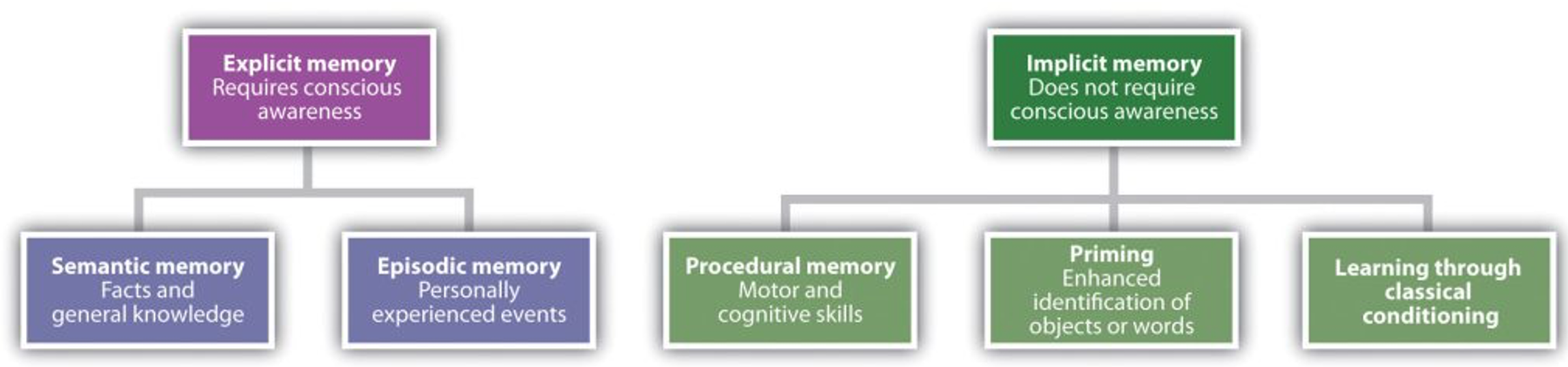
The long-term memory can be categorised as explicit and implicit memory.

The explicit memory, also known as declarative memory, refers to the type of memory that a person is consciously aware of. “You know that you know the information” (Gluck et al., 2020, p. 280). It comprises both memory of facts and general knowledge (semantic memory) and memory of personal experiences (episodic memory).

The implicit memory, by contrast, refers to memory that operates without the learner being consciously aware of it. Implicit memory is formed by:

  • procedural memory
  • priming
  • learning through classical conditioning

Figure 2.4.3. Types of Memory by Jennifer Walinga and Charles Stangor used under a CC BY-NC-SA 4.0 licence in Rafferty, J. (2024). Neuroscience, psychology and conflict management. James Cook University. https://doi.org/10.25120/k4vd-86×5

Priming

Priming is a psychological phenomenon where exposure to a stimulus influences how we respond to subsequent stimuli, and how we perceive and interpret new information. As defined by Gluck et al. (2020), priming is

“a phenomenon in which prior exposure to a stimulus can improve the ability to recognize that stimulus later” (p. 88).

Similarly, Kassin et al. (2020) describe priming as

“the tendency for frequently or recently used concepts to come to mind easily and influence the way we interpret new information” (p. 118).

In essence, priming makes certain concepts or ideas feel familiar, even if we aren’t consciously aware of the exposure.

For example, research has shown that if we’re subtly exposed to specific words or images, we may later be more likely to recognise or choose something related to those stimuli (Gluck et al., 2020; Goldstein, 2019; Kassin et al., 2020).

The impact of priming on social behaviour

Exposure to a stimulus can also lead people to behave in a particular way without their awareness, especially when the stimulus was presented subconsciously. The impact of priming on social behaviour has been demonstrated in research, including in a series of provocative (and debated) experiments by Bargh, Chen and Burrows (1996). In this study, participants were primed with different words that were thought to influence their behaviour.

For example, in experiment 1, participants were primed to activate either the constructs “rudeness” or “politeness” and were then placed in a situation where they had to either wait or interrupt the experimenter to seek some information. The research found that participants whose concept of rudeness was primed interrupted their experimenter more quickly and frequently than did participants primed with polite-related stimuli.

In experiment 2, participants were primed with words that activated elderly stereotypes. The study found that participants for whom an elderly stereotype was primed walked more slowly down the hallway when leaving the experiment than did control participants, consistent with the content of that stereotype.

How does priming relate to conflict management?

The phenomenon of priming can both help understand what creates conflict and how we can support parties in conflict management/ resolution. Most of the publications discussed in this post focus on mediation, but many of the findings could also find application in other conflict management process such as group facilitations and one-on-one conflict management coaching. 

Priming in mediation

Daniel Weitz, in his article The brains behind mediation: Reflections on neuroscience, conflict resolution and decision-making discusses how priming can influence the mediation process. He suggests that using words like “listen to,” “hearing each other,” “dialogue,” “options,” and “future” in their opening statements, mediators may be able to “prime” parties for collaboration rather than competition (p. 478).

Similarly, Hoffman and Wolman in their article The psychology of mediation note that the mediator’s initial description of the mediation process is the most powerful form of priming in mediation. Based on priming studies (which the authors mention but don’t specifically list), they suggest that mediators may wish to include expressions such as “being ‘flexible’ and ‘open-minded,’ the goal of reaching ‘a fair and reasonable resolution,’ and the need for ‘creativity’ and ‘thinking outside the box’” in their opening statements (p. 3).

Beyond the mediator’s opening statement, Sourdin and Hioe, in their article Mediation and psychological priming, discuss other opportunities for priming during the mediation process. They suggest that mediators can “strategically moderate the environment” to foster a positive atmosphere and encourage successful outcomes (p. 79). Such moderation can be achieved, for example, by carefully selecting and setting up the physical location of the mediation, including considerations of room colour, temperature, and the provision of food and water.

Amanda Carruthers, in her article on The impact of psychological priming in the context of commercial law mediation, explores factors such as the physical appearance of the mediator and legal representatives, the choice of venue, language use, and the influence of stress and references to money. She concludes that mediators and legal practitioners should avoid overt priming cues related to strength, power, and money to improve the positions of both parties in a commercial mediation.

How priming can affect perception

People are particularly likely to rely on the priming effect when new information is ambiguous. This is because we rely more on top-down processing than bottom-up processing when we are confronted with an ambiguous stimulus.

Bottom-up processing begins with our receptors, which take in sensory information and then send signals to our brain. Our brain processes these signals and constructs a perception based on the signals. When our perception depends on more than the stimulation of our receptors – and this is frequently the case when information is ambiguous – we speak about top-down processing. During top-down processing, we interpret incoming information according to our prior experiences and knowledge. This process is frequently referred to as concept or schema-driven. As we learned earlier, when we have been primed, frequently or recently used concepts come to mind more easily and influence the way we interpret new information.

In her blog post Priming in psychology, Kendra Cherry discusses how the priming effect influences what people hear when confronted with ambiguous auditory information, referring to the 2018 Yanny/Laurel viral phenomenon.

As an example for visual perception, Lisa Feldman Barrett explains in her book How Emotions are made how priming can significantly influence our visual perception of others’ emotions. She emphasises that facial expressions are often much more ambiguous than many popular readings suggest, which would make us particularly susceptible to the effects of priming. For instance, if we’re told a person in a photo is screaming in anger, we are more likely to see anger in their expression, even if this is inaccurate.

The person might actually be celebrating something positive, such as winning an important tennis match, potentially involving a whole mix of (positive) emotions, but the priming narrows our interpretation. With contextual information provided, we are likely to interpret the facial configuration more accurately than when taken out of context.

How does the priming effect and perception relate to conflict management?

A mediator might misinterpret facial configurations of parties in a mediation, perceiving emotions like anger, based on preconceived ideas of how people may “show” that emotion on their face, or influenced by comments made by the other mediation party.

Knowing about priming can sensitise us to potential misinterpretations of emotions and encourages us to use multiple cues and information to perceive parties’ emotions more accurately. For a more detailed discussion on the cues that we can use to more accurately perceive others’ emotions, see Chapter 3, Topic 3.4 in Neuroscience, psychology and conflict management. These cues and the topic of emotions in conflict is also discussed in much more detail in Sam Hardy’s course on Working with Emotions in Conflict.  

Priming to improve inter-group relationships

Recent research by Capozza, Falvo and Bernardo explored whether activating a sense of attachment security through priming can reduce the tendency to dehumanise “outgroups”—groups with which individuals don’t feel a connection. They conducted two studies:

  • The first study primed attachment security by showing participants images of relationships with attachment figures and then measured how they humanised an outgroup, in this case, the homeless.
  • The second study had participants recall a warm, safe interaction to activate a sense of interpersonal security and then measured how they humanised another outgroup, the Roma.

Both studies found that attachment security led to greater humanization of outgroups, with the second study showing that increased empathy played a key role in this effect. These findings suggest that fostering a sense of security can enhance intergroup relations, which has implications for intergroup conflicts. The successful use of priming to boost feelings of security highlights the importance of applying cognitive psychology to conflict management.

The calming effect

Capozza, Falvo and Bernardo, in their article, discuss several further positive effects of security priming, many of which are relevant to conflict and conflict management/resolution. For example, they emphasise the calming effect of security priming, noting that “even a momentary sense of security can shift the attention from one’s needs to others’ needs…” (p.3).

Conflict management processes often aim to help individuals in conflict consider the needs and concerns of others. Understanding the calming effect of security priming and its ability to foster perspective-taking may provide conflict management practitioners with additional strategies to support their clients. Such strategies could consider aspects like:

  • The choice of physical setting for a mediation or coaching session (or other conflict management process).
  • The language used by the practitioner, such as during the mediator’s opening statement.
  • The types of questions the practitioner asks throughout the process.

Remaining questions and considerations

This post explored the priming effect and its relevance to conflict management, particularly in understanding why conflicts arise and how practitioners can support parties to manage or resolve them. Research suggests that there are multiple opportunities to prime parties during a conflict management process, such as mediation, as discussed in the sources mentioned throughout this blog. However, many questions remain, such as how much control a practitioner truly has over priming in a conflict management process Additionally, practitioners should consider the ethical implications, including the potential for manipulation, when applying priming techniques to their practice.

A full reference list of the readings referred to in this post that have not been linked in the text can be found here.

Author Biography

Judith Rafferty is an Adjunct Senior Research Fellow at the Cairns Institute, JCU, and a Senior Trainer at the Conflict Management Academy. She integrates over 12 years of experience as a conflict management practitioner, researcher, and educator/trainer. She holds a PhD in Conflict Resolution, a Master of Conflict and Dispute Resolution, a Graduate Business Administration Diploma, and a Graduate Certificate in Psychology. As a Senior Lecturer and former Director of the postgraduate Conflict Management and Resolution program at James Cook University, Judith played a key role in developing curriculum and training resources that assist professionals in navigating complex conflict situations.
Judith can be contacted on:
Email: judith@conflictmanagementacademy.com
LinkedIn: https://www.linkedin.com/in/judith-rafferty-770a329b

Top Ten Ways to Improve Your Mediation Skills

John Lande, JD, PhD
This post is adapted from the Association of Family and Conciliation Courts article published by the University of Missouri School of Law in the Legal Studies Research Paper Series.

Traditional mediation theories are incomplete at best and misleading at worst, providing mystifying descriptions of what mediators actually do. Those theories focus on only a few behaviours during mediation sessions and don’t recognise the many variations of mediators, parties, and cases. This leaves many mediators to ignore these models because they are either confusing or unhelpful.

John Lande uses Real Practice Systems (RPS) theory in his article to identify 10 things that mediators can do to include within their skillset and improve their own practice. This article is adapted from his previous article ‘Helping You Do the Best Mediation You Can‘ published by the University of Missouri School of Law.

Although Lande’s article is directed to practicing mediators, he refers to additional resources in this Indisputably blog which can be used by teachers and trainer in their work, including to prepare and further develop student’s skills in negotiation, mediation, and advocacy.

These 10 things are summarised below, but it is highly encouraged that you to read John Lande’s published article for a complete and comprehensive explanation.

1. Recognise That You Have a Complex Practice System

If you mediate regularly, you have a complex mediation practice system. Mediation is not “just” what you do during mediation sessions when all the participants have convened, you also have unconscious routine procedures and conscious strategies for dealing with recurring challenges that you use before, during, and after mediation sessions.

It is important that you recognise the basis for your system and that have you developed categories of cases, parties, and behaviour patterns that led you to develop your system.

2. Understand Real Practice System Theory

In this 20-minute video, John Lande explains Real Practice Theory (‘RPS’) and how can improve your mediation practice system. It is applicable in every type of case and at every stage of practice, from novice to mid-career to senior mediator.

3. See Illustrations of Practice Systems in Experienced Mediators

Read John Lande’s article ‘Ten Real Mediation Systems‘ which illustrates the account of ten experienced mediators who identify factors affecting their mediation practice systems and includes links to a detailed account of their systems.

4. Complete a Self-Assessment Questionnaire to Get an Overall Understanding of Your Practice System

This 18-question self-assessment worksheet is designed to help you recognise basic elements of your practice system, prompting you to reflect on your background, motivations, mediation practice, common patterns in your cases, and your procedures.

5. Understand and Use Real Practice System Menu of Mediation Checklists

Read John Lande’s article ‘Real Practice Systems Project Menu of Mediation Checklists‘ which is a detailed menu of checklists for mediators. It includes mediators’ actions before, during, and after mediation sessions as well as items about information to provide on websites, compliance with ethical requirements, and reflection and improvement of mediation techniques.

In another article, ‘Practitioners Tell Why Real Practice System Checklists Are So Useful‘, Lande uses the descriptions of fourteen current and former practitioners to explain how these checklists can help you to carefully design your unique practice system.

6. Develop Your Own General Mediation Checklist

By using the above Real Practice Systems (RPS) checklists, you can consciously develop your own general checklist based on the typical cases and parties in your practice, the procedures you find useful. This checklist is quite versatile, enabling you to choose items which can be modified to suit your needs. But the RPS checklists cannot be exhaustive, so you should add any other items that are relevant to your practice and remove any which are not.

A mediators’ checklists necessarily vary based on many factors including the subject matter, complexity, typical legal issues, participation of attorneys, and amount of time before mediation sessions, among others. As a result, some mediators’ general checklists are longer and more complex than others.

7. Customise Your General Mediation Checklist for Each Case

Before each mediation session, review your general mediation checklist and consider any modifications you might make based on what you know about that particular case you are about to mediate. This can ensure that you are better prepared and equipped with a checklist that will be most useful to you during that mediation.

8. Read Articles in the Real Practice System Annotated Bibliography

To develop a deeper understanding of practice systems generally as well as your own practice system, you should read Lande’s ‘Real Practice Systems Project Annotated Bibliography‘ which organises several publications concerning various topics, including:

  • Overview of Real Practice System theory
  • Critiques of traditional dispute resolution theories
  • Promotion of party decision-making
  • Litigation interest and risk assessment
  • Preparation for mediation sessions
  • Technology systems

9. Participate in an Ongoing Educational Practice Group

It is important to learn from each other as well as give and receive feedback to and from other mediators. This can be done by participating in practice groups.

Although practice groups vary in size, Lande suggests that between 5 and 8 people is optimal. A fixed membership with a commitment to participate for an extended period of time (such as at least 6 to 12 months) is beneficial to allow members to feel comfortable sharing sensitive experiences with each other.

Lande also provides numerous considerations before commencing or joining a practice group, including similarities or differences between members, the type of activities completed, and the use of reflective practice techniques.

10. Share Your Experiences

Sharing your experiences with others is a valuable way to learn. This might include giving talks, participating in trainings, teaching courses, or writing articles. These activities require reflection, which can produce new insights, and interactions with people can stimulate thinking and further reflection on those experiences.

Author Biography

John Lande, JD, PhD is the Isidor Loeb Professor Emeritus at the University of Missouri School of Law and former director of its LLM Program in Dispute Resolution. He earned his JD from Hastings College of Law and his PhD in sociology from the University of Wisconsin-Madison. Since 1980, John has practiced law and mediation in California, and since the 1990’s, he has directed a child protection mediation clinic.

The American Bar Association has published John’s books, including ‘Lawyering with Planned Early Negotiation: How You Can Get Good Results for Clients and Make Money‘ and ‘Litigation Interest and Risk Assessment: Help Your Clients Make Good Litigation Decisions‘ (co-authored with Michaela Keet and Heather Heavin).

John frequently writes for the Indisputably blog and has received many awards for his scholarship, most recently the American Bar Association Section of Dispute Resolution’s award for outstanding scholarly work. You can download articles on a wide range of dispute resolution topics from his website.

Gathering food for thought: First Nations peoples’ approaches to peacebuilding and peacemaking in Australia

Gathering Food for Thought – the Project

This landmark research project was funded by an MSB grant in 2022, with additional funding from the College of Human and Social Futures at the University of Newcastle. The Research Team’s lead investigator was Professor Tania Sourdin, with Dr Helen Bishop (a First Nations woman) as the lead researcher. Other team members were Dr Bin Li (University of Newcastle), Sally Prowse (University of Newcastle) and Alysoun Boyle (University of Newcastle and RMIT). We were assisted by a Project Advisory Group, a majority of whose members are First Nations experts and practitioners. 

Our final report was released to the MSB and the university in February this year, and is available online at the websites of both institutions: Mediator Standards Board and University of Newcastle.

Being restricted to available funding, the research was limited to a desktop review of collected materials relating to First Nations peoples’ approaches to managing conflict: peacebuilding and peacemaking. A key finding included in the report is that there is a notable lack of inclusion of First Nations researchers in studies of matters that affect their peoples. This has led to research outcomes that have been defined by mainstream preferences, rather than reflecting First Nations viewpoints and ideas. Similar limited First Nations peoples’ primary engagement was noted in commissions of enquiry as well as in the design, delivery, and evaluation of a range of community-based dispute resolution programs and services.

Research significance

According to Dr Helen Bishop, “The Gathering Food for Thought Report is profoundly significant. It unveils both ancient and contemporary knowledge and practices essential to First Nations peoples’ coexistence, governance, and social systems. I eagerly await the involvement and insights of my fellow First Nations researchers into future studies of First Nations peacebuilding and peacemaking approaches, needs, and resources. I want to thank the Research team, the MSB and the University of Newcastle for their commitment to this landmark work.”

To our knowledge, this is the first time such a collection of materials has been systematically reviewed and analysed. The collection is currently stored in a secure online facility, and the primary longer-term intent is that it be readily available to all First Nations’ communities and practitioners and this is likely to be facilitated by the Australian Institute of Aboriginal and Torres Strait Islander Studies (AIATSIS). The materials reviewed in the report include historical anthropological reports (some dating back to the late 1800s), reports from Royal Commissions, case studies, journal articles, books, and other publications. We have also explored the pivotal role of language in maintaining and safeguarding culture, and the links between wellbeing and cultural connection.

Research approach

We have taken a dispute system design approach to our research, and this arose from the clear need to set the project in an appropriate context: acknowledging First Nations peoples’ approaches to conflict, and their age-old systems, processes, techniques and skills, and exploring ways in which they might be recognised within existing Australian dispute resolution frameworks and standards. It is clear that there is incredible variety, depth and ways to talk in the First Nations experience of conflict management, and the final report represents only the first stage in a much larger research undertaking. 

Throughout the project, we are taking a First Nations peoples-centric approach, amplifying their perspectives and knowledge, working collaboratively in ways that recognise and respect each other’s capability and learning. Our priority is to ensure participation by First Nations peoples, and provide benefit to their peacebuilders and peacemakers.

Next steps

There is very limited professional recognition and effective professional support for First Nations peacebuilders and peacemakers reflecting a broader lack of sensitivity to and recognition of their culturally diverse and specific practices and skills. In our report, we have called for more inclusive approaches to research in this area, promoting the engagement of First Nations researchers in the design and delivery of all future studies.

It is expected that this unique project will result in an invaluable knowledge base to inform ongoing and future research in this area, as well as making a significant contribution to the scope and design of support networks, training programmes, and practice frameworks relating to First Nations peoples’ peacebuilding and peacemaking systems, processes, techniques, and skills, both in Australia, and elsewhere.

Our report includes twelve areas of research in which “Next Steps” are suggested, including:

The importance of:

  • Engaging First Nations peoples in the design, delivery, and analysis of research studies; and
  • Establishing culturally appropriate protections of the intellectual property relating to historical and contemporary First Nations materials.

The need for:

  • Research materials to be accessible to non-researchers, and be presented in plain English;
  • Appropriate recognition and responsiveness to cultural sensitivities in this area (the Research Team developed their own “Cultural Responsiveness Statement” which is included in the report);
  • Further exploration of the influence of Elders and other community leaders in the safeguarding of social cohesion and the management of conflict in a community context;
  • Further exploration of the extraordinary diversity of First Nations peoples’ approaches to peacebuilding and peacemaking, including the influence of complex social relationships such as kinship groups; and
  • Government-funded conflict management programs and services to more fully engage First Nations communities in the design, delivery and evaluation of such programs and services, ensuring that mainstream preferences do not dominate in these areas.

Sitting in Many Camps

In May this year, members of the Research Team and the Advisory Group met on Gadigal Country (Sydney) and planned the next phase of this project. They agreed that it is to be called “Sitting in Many Camps: Celebrating and Supporting First Nations Peacebuilding and Peacemaking”. The phrase, Sitting in Many Camps, was first used some years ago by Mr Charlie Watson, a Kangalu and Birri Gubba (Wiri) man who grew up in his Mother’s Kangalu Country in Central Queensland.

Why are US lawyers allowed to lie while negotiating?

No alternative text description for this image

Robert Angyal SC and Nicholas Saady

The late William Rehnquist, when Chief Justice of the US Supreme Court, gave many speeches at law schools. For a while, to lighten the tone, he started each speech with a ‘lawyer joke’.

Example: What is the difference between a bad lawyer and a good lawyer? Answer: A bad lawyer makes a case drag on for years. A good lawyer makes it last even longer. Example: What looks good on a lawyer? Answer:  A Doberman.

But Rehnquist abandoned his practice when he discovered two things: First, the lawyers in the audience did not think the jokes were funny. Second, the non-lawyers in the audience did not realise they were jokes.[1]

Rehnquist’s discoveries illustrate a problem for the U.S. legal profession: Public distrust.  A 2020 Gallup poll found that only 3% of people surveyed found lawyers’ honesty and ethics to be “very high”, and only 18% found them to be “high”.[2] This public distrust is a perennial source of concern to the national legal body, the American Bar Association.  Its journal regularly features articles such as “What can lawyers do to combat their bad PR?”, which suggests that “carefully executed social media presences” can “build trust, erasing one lawyer joke at a time”.[3]

Rather than carefully curating  lawyers’ social media profiles, we suggest that a better approach to building public trust in lawyers would be revocation of  the American Bar Association rule that allows lawyers to lie when negotiating.  Yes, astonishingly, a disciplinary rule promulgated by the ABA (Model Rule 4.1(a)) allows lawyers to lie about non-material facts when negotiating on behalf of a client.

The very existence of that rule seems problematic. When you look at its legal meaning (or lack of), it becomes even more problematic.  Despite several attempts to define and limit the circumstances in which the rule allows US lawyers to lie, its meaning remains unclear.

One such attempt was a formal ABA ethics opinion, five single-spaced pages long, with 22 footnotes.[4] (The irony inherent in issuing an “ethics” opinion defining when lawyers can legally tell lies apparently was lost on the ABA.)  The perceived need for such a detailed guide to interpreting a one-sentence rule was itself an acknowledgment of the difficulty of interpreting it. We analyse the ABA’s opinion in a just-published law review article and conclude that it contains no coherent statement of principle and leaves the reader no wiser about what the rule means. Other attempts have been similarly futile — even failing to clarify the meaning of the most basic concept on which the rule is predicated: The distinction between material and non-material facts.

The justification for allowing US lawyers to lie about non-material facts seems to be that the recipients of the lies will not be harmed by them — because they will not rely on them, or not regard them as communicating facts. But if legally permissible false statements are trivialised to this extent, why bother making them? Better to tell the truth all the time and gain a reputation for trustworthiness.  On the other hand, if more substantive false statements are allowed by the rule, how can it possibly be justified?

This, we conclude, is an inescapable dilemma generated by a rule permitting lawyers to tell lies. The dilemma explains why all attempts to date to explain the meaning of the rule have failed.  It also explains why any further attempts would be equally futile.

Allowing lawyers to lie affects the image of the profession detrimentally and intensifies public distrust of it. It does enormous damage to the credibility and the moral authority of lawyers. It is damaging in another way also. If you know that the lawyer for your opponent is allowed to legally lie to you during a mediation in some, undefined, circumstances, the only prudent thing to do is to assume they are lying all the time and to disbelieve everything they tell you. So the rule not only generates public mistrust of lawyers, but also makes negotiations highly inefficient, because the parties cannot take anything they are told at face value.

The good news is that there is a straightforward solution to the problems raised in this post: Require lawyers to tell the truth, all the time (which is the position in Australia).  Rather than advocating PR to improve the public image of lawyers, the ABA should heal this self-inflicted wound by revoking Model Rule 4.1(a).

Robert Angyal SC is an Australian barrister and mediator and was admitted in the District of Columbia for 40 years. Nicholas Saady is a New York and Australian lawyer and mediator. Their law review article “Legal Lying? Comparatively Analyzing US and Australian Lawyers’ Obligations of Truthfulness in Mediation” has just been published in [2021] 21 Pepperdine Dispute Resolution Law Journal 355 (Issue 2).


[1] Marc Galanter, Lowering the Bar: Lawyer Jokes & Legal Culture (The University of Wisconsin Press 2006) at p. 3.

[2] Gallup, “Honesty/Ethics in Professions | Gallup Historical Trends” (2020) https://news.gallup.com/poll/1654/honesty-ethics-professions.aspx.

[3] Danielle Braff, “What can lawyers to combat their bad PR?”, ABA Journal (February 1, 2020) https://www.abajournal.com/magazine/article/many-people-ignore-their-legal-needs-because-they-dont-trust-attorneys-what-can-lawyers-do-to-combat-their-bad-pr.

[4] ABA Committee on Ethics and Professional Responsibility, “Obligation of Truthfulness in Negotiation and Mediation”, Formal Opinion 06-439 (2006).

Striking the Right Balance between Maintaining Confidentiality and Educating the Community about Discrimination

By Dominique Allen

“ADR represents a symbolic harking back to a lost age when caring for others within a communal setting was of pre-eminent importance; it constitutes a reaction against the alienating and competitive style of dispute resolution fostered by an adversarial system.”

– Margaret Thornton, The Liberal Promise (Oxford University Press, 1990, 147)

Image: Unsplash

This year marks 30 years since Emerita Professor Margaret Thornton published The Liberal Promise, a critique of anti-discrimination law in which she argued that liberalism, in the form of anti-discrimination law, will be unable to achieve equality because it can do little to disrupt the power structures that maintain inequalities in society.

As Thornton writes, anti-discrimination law does not give people a right to be free from discrimination; it gives them a right to complain about their treatment. Now – as then – a person who has been discriminated against is required to lodge a complaint at their local equality agency or at the Australian Human Rights Commission. The agency must attempt to conciliate the claim before the complainant can proceed to a civil tribunal or to the Federal Court (other than in Victoria). Courts and tribunals usually attempt to resolve claims via mediation also.

In the chapter she devotes to conciliation, Thornton says that she is ‘equivocal’ about it. Her primary concern was that as the process is confidential, it can have little impact on discrimination in society; its effect is limited to the parties. She didn’t suggest that courts are the ideal forum for discrimination claims though. She writes that complainants find courts “hostile and alienating”, litigation is not well suited to dealing with the types of issues that arise in a discrimination claims, it is costly, and courts are not well equipped to deal with power imbalances, which are common in these disputes. Thus conciliation serves a valid purpose.

In this post, I consider whether Thornton’s concerns about conciliation still apply, drawing on interviews I conducted with barristers and solicitors in Melbourne and conciliators at the Victorian Equal Opportunity and Human Rights Commission in 2017-2019.

One of Thornton’s primary concerns was that although discriminatory acts take place “in the public arena”, the dispute resolution process does not allow public scrutiny of these acts. They must be dealt with confidentially and in a “non-threatening privatised environment”. A public hearing is a last resort.

I share her concern, particularly because in the three decades that have passed, the problem has been compounded by an increased use of confidentiality clauses (often termed Non-Disclosure Agreements).

My research revealed that confidentiality clauses are regularly included in settlement agreements. They prevent the complainant from discussing the nature of the complaint and the terms of settlement. Some are worded so tightly that they prevent the complainant from discussing the claim with anyone, even with a close family member. It is difficult for the law to have an educative effect when claims are privatised and hidden in this way.

However, the process may well educate on an individual level. Conciliators said that just by participating in the dispute resolution process and listening to the complainant talk about their experience, respondents can be educated about their legal obligations and may well introduce changes to their business or workplace as a result. In this way, the process itself becomes part of the solution and a way of addressing harm.

An advantage of conciliation, Thornton writes, is that it creates a space where complainants can achieve small victories which would be “unlikely, if not impossible” within the formal legal system. My interviewees confirmed this. They said that through conciliation, complainants negotiate changes to working arrangements, access to goods and services, modifications to the delivery of education, and compensation payments far in excess of what the tribunal is likely to award. The tribunal, by contrast, orders compensation, often at low amounts which may not be enough to cover the complainant’s legal fees.

So am I equivocal about conciliation? In my view it is an effective way for the parties to resolve the underlying issues that caused the dispute and potentially reach a shared understanding of what happened. They may even be able to maintain a relationship going forward, which is very important in the employment and education contexts.

Being heard and knowing that their complaint has been taken seriously is often very important to complainants. Litigation will not give them that opportunity. Nor are courts likely to make the systemic orders which are needed to tackle discrimination, whereas respondents do agree to wider outcomes at conciliation.

I’m in favour of conciliation with the qualifier that we must be aware of its limitations. Confidentiality precludes the law’s development, it may allow ‘repeat offenders’ to continue undetected and it hides the prevalence of discrimination in the community. We need to find ways to alleviate its limitations.

The balance has yet to be struck between the parties’ desire to contain the complaint and the community’s interest in knowing about the types of discrimination that still exist and how discrimination is being addressed.

Challenges and Opportunities for Asia-Pacific International Arbitration: Symposium Report, and News on a Forthcoming Publication

By Dr Benjamin Hayward, Professor Luke Nottage, and Dr Nobumichi Teramura

Photo: Faypearse, Creative Commons

On Friday 15 November 2019, Sydney Law School hosted the ‘Challenges and Opportunities for Asia-Pacific International Arbitration’ symposium.

The event addressed a range of dispute resolution issues: international commercial arbitration, investor-State dispute settlement (including investor-State mediation), and the rise of international commercial courts.  Academics, practitioners, and (both current and former) judges were in attendance: ensuring that a wide spectrum of views were addressed throughout the day.

The symposium focused on dispute resolution in the Asia-Pacific region.  This is a topic of significant interest to the Australian arbitration community.  As far back as 2009, the then-Attorney General Rob Hulls introduced reforms to Australia’s International Arbitration Act aiming to promote Australia as a regional dispute resolution hub.  More than 10 years later, this is a goal to which Australia still aspires.

The symposium addressed arbitration in the Australian, New Zealand, Japanese, Indonesian, Hong Kong, and mainland Chinese contexts.  It followed a counterpart event hosted by the University of Hong Kong in July 2019.

The symposium’s international comparisons provide much food for thought for the Australian arbitration community, as we seek to continually improve the local landscape.  For example, what degree of confidentiality should be preserved in Australian arbitral proceedings?  And what lessons can we learn from arbitration experience, in the region, relating to the possible future establishment of an Australian international commercial court?

A collection of papers presented at both events will be published in late 2020 (or early 2021) in a Kluwer volume titled New Frontiers in Asia-Pacific International Arbitration and Dispute Resolution.  Details of the volume, including links to pre-publication versions of some papers, are available here.

Of particular interest in the Australian context will be:

* Professors the Hon Marilyn Warren and Clyde Croft’s chapter titled ‘An International Commercial Court for Australia: An Idea Worth Taking to Market’;

* Albert Monichino SC and Nobumichi Teramura’s chapter ‘New Frontiers for International Commercial Arbitration in Australia: Beyond the “(Un)Lucky Country”’;

* Luke Nottage addressing ‘Confidentiality and Transparency in International Arbitration: Asia-Pacific Tensions and Expectations’; and

* Luke Nottage and Ana Ubilava’s chapter on ‘Novel and Noteworthy Aspects of Australia’s Recent Investment Agreements and ISDS Policy’.

Readers of this blog might also be particularly interested in Stacie Strong’s chapter titled ‘Promoting International Mediation Through the Singapore Convention’, that Convention also having been addressed at the December 2019 ADRRN Roundtable.  This chapter will mention some empirical data from a study addressing the use of mediation in resolving international commercial disputes.

Interestingly, while Australia’s geographic isolation is thought to be impeding its emergence as a regional dispute resolution hub, COVID-19 has led to the rapid adoption of virtual hearings in civil litigation and in arbitration.  The pandemic may have unintentionally highlighted a means by which Australian arbitration and an Australian international commercial court could flourish in the region: notwithstanding the unavoidable ‘social distance’ between Australia and our neighbours.

These recent developments, post-dating the symposium, will be addressed in the forthcoming Kluwer volume.  They will be of great interest to those invested in Australia’s potential as a venue for international commercial dispute resolution.