The ethics of 21st century ‘family justice’ research: Invitation to Workshop

The Australian Chapter of Family and Conciliation Courts is hosting its conference in Sydney between 15 to 17 August 2019. ADRRN members are welcome to register to attend the conference. Chapter secretary Jenni Neoh has alerted us to a workshop of particular interest to researchers in family law and family dispute resolution.

AFCC-LogoThe ethics of 21st century ‘family justice’ research, and its application to professional practice

Associate Professor Nicola Taylor, Alexander McMillan Chair in Childhood Studies, Director, Children’s Issues Centre University of Otago, Dunedin, New Zealand, Professor Judith Cashmore, University of Sydney, Sydney NSW.

This full day workshop draws together the combined expertise of three leading international researchers who have undertaken numerous studies on a diverse range of family law issues including post-separation residence and contact arrangements, relocation, international child abduction, children and young people’s views/participation, child protection, out-of-home care, child witnesses and family dispute resolution processes. The researchers will provide a unique perspective on the nuances of ethical research with families, particularly separated parents and their children, and with the family justice professionals who work with them. The workshop explores key ethical issues and complexities that have arisen for them in the research context, but which also have relevance for working with, or representing, children more generally in the family justice context. The benefits and limitations of social science research evidence in family law practice and dispute resolution will also be addressed.

Participating in this workshop is critical for all family law professionals, researchers and academics who want to better understand and discuss the role of research in the family justice field and how it applies to their practice or field. Opportunity will be given to workshop participants to raise ‘ethical’ issues they have grappled with too.

Call for Papers: 8th ADR Research Network Round Table

We are delighted to announce our Call for Papers (click here for Word version) for the 8th Australasian Dispute Resolution Research Network Roundtable, to be held at Latrobe University Law School in Melbourne on 9th and 10th December 2019. Please note that this post is the only way that we advertise the Roundtable, so please disseminate to any researchers who may be interested.

ADR Network logo

Call for Paper Proposals

The 8thAnnual Research Roundtable of the Australasian Dispute Resolution Research Network (ADRRN) will be held in Melbourne, 9-10 December 2019.

ADRRN roundtables provide a collaborative and supportive research environment for work-shopping papers-in-progress. Draft papers are distributed ahead of time to participants, to enable thoughtful and constructive quality feedback. Time allocated for a presentation is usually 30 minutes for presentation, and 30 minutes for feedback and discussion. Two primary commentators are appointed for each paper.

The ADRRN is now calling for papers for the 2019 roundtable to be held at the La Trobe Law School, La Trobe University Melbourne, City Campus. Paper proposals of no more than 300 words should be submitted via email to adrresearchnetwork@gmail.comby 31 July 2019. Presenters will be required to submit, in addition to draft papers, a short blog post of no more than 1000 words prior to the roundtable. Blog posts will be published here on the ADRRN’s webpage:  https://adrresearch.net/.

Paper proposals that consider dispute resolution from a scholarly, critical and/or empirical perspective are welcome. We particularly encourage submissions from postgraduate students and early career researchers. All proposals will be considered. Papers must not have been published or submitted for publication, as the focus is work in progress.

A selection panel will select round table papers from abstracts submitted. The following selection criteria will be applied:

  • Papers take a scholarly, critical and/or empirical perspective on an area of dispute resolution;
  • The round table will include a spread of participants across stages of career; and
  • A well-balanced range of work will be presented at the round table to provide diversity, to develop the field and to enable cohesive discussion.

Participation is on a self-funded basis.

Attendance at the Round Table is only open to individuals who are contributing to the scholarly discussions by presenting a paper, or commentating and/or chairing a session.

Deadline for paper proposals: 31 July 2019

(300 word maximum plus short bio, to adrresearchnetwork@gmail.com)

Date for notification: 16 August 2019

Draft (full) papers + blog post due: 31 October 2019 (to send to participants early Nov.)

For further information, please contact:

2019 Network President: Lola Akin Ojelabi via adrresearchnetwork@gmail.com

2019 Roundtable Conveners: Lola Akin Ojelabi and Jacqueline Weinberg

About the Australasian Dispute Resolution Research Network

The Australasian Dispute Resolution Research Network brings together leading dispute resolution scholars and provides a collaborative environment to foster, nurture and enrich high quality research and scholarship. The Network is inclusive and forward-looking and seeks to bring together emerging, mid-career and established scholars to build excellence in the field and provide peer support. Network activities are expressly designed to provide a supportive and collegial presentation environment in which meaningful discussion and constructive feedback is provided to the presenter.

Network activities include maintaining the ADR Research Network blog at www.adrresearch.net on Twitterand conducting annual scholarly round tables of work in progress since 2012.

Guest blog post proposals are always welcome. Contact blog editor Olivia Rundle, at Olivia.Rundle@utas.edu.au.

Membership of Australasian Dispute Resolution Research Network

We don’t like hierarchies or unnecessary administration, so we don’t have any membership list or legal organisational framework.

The way to become a member of the ADR Research Network is to subscribe to the blog. This is our primary means of communication.

Subscription will mean that every time a post is made on the blog you will receive a notification alert to your email address. Other ways to follow blog activity is through Facebook “ADR Research Network” and Twitter@ADRResearch, but engagement on these platforms is not necessary to keep track of blog activity.


Conflict about Climate Change

Screen Shot 2019-03-15 at 10.51.42 amSchool students are protesting today about the failure of politicians to take serious action in response to climate change. They are calling for action. The Global Strike for Future grew from 16 year old Swedish student Greta Thunberg‘s decision to strike on Fridays outside the Swedish parliament. She has been joined regularly for Friday protests by students in Germany, Belgium, Britain and France. Today’s global protest is happening in 112 countries including Australia. “Pupils from hundreds of schools in over 55 cities and towns across Australia are using the action to call on all politicians to stop Adani’s coal mine, say no to all new fossil fuels and power Australia with 100 per cent renewable energy by 2030.
A protest is obviously evidence of a dispute, in this case between politicians and young people, most of whom are not yet allowed to vote. It is hard for people without a right to vote to persuade democratically elected politicians. The power imbalance between the primary parties to this dispute is obvious. However, if there is, as is expected, a significant turn out in numbers, a strong message will be sent to politicians about what future voters think about their performance on climate change. The dispute has already sparked reaction from politicians in Australia, with the Prime Minister, Deputy Prime Minister, Commonwealth Education Minister and NSW Education Minister all making public statements calling for students to stay in school and not participate in the strike. The Deputy Prime Minister said in parliamentary question time that “the children should be staying in school to learn about Australian history, to learn about Australia geography“. Prime Minister Scott Morrison has called for less activism and more learning in schools. Essentially, none of these responses address the substantive concerns of the protestors, instead concentrating on the right to protest where it conflicts with the policy of compulsory school attendance. Other politicians have supported the children’s right to protest, including the ACT Education Minister.

Another argument raised against the protest is that because the people protesting are children, they are essentially being “politicised” and used by adults to push a political agenda. Students have responded assertively against such claims, reinforcing that they are expressing their own concerns. This argument plays upon the power imbalance between the parties, because the people protesting are being told that their message is less persuasive because they lack capacity to form a truly independent opinion in the way that an adult can.

The dispute has spread well beyond the two groups of politicians and school students who wish to protest. Schools have been divided in their support or non-support of their students attending, media coverage reveals a range of views for and against, and parents and children have been negotiating their way around whether or not they are allowed to or supported to participate.

The opportunities for the application of conflict management and resolution processes in this context are infinite.

  • Within families, the opportunity to engage in meaningful, respectful discussions about the issues of climate change action and protesting about it in school time has been taken in many families. There has potentially been enormous growth in the skills that both children and parents have chosen and developed in these dialogues.
  • Similarly, students, teachers, parents, and school principals have all had the opportunity to discuss the issues, negotiate possibilities, and communicate boundaries within school communities. Thinking about ways to enable different points of view to be expressed, and to manage conflicting opinions, power imbalance, and mass protest must have been an enormous challenge within schools. There is always the choice to use power to say “no”, but the civil disobedience on a mass scale that might follow then also has to be dealt with. It will be interesting to see whether schools take the opportunity for a “teachable moment” to discuss protest, school attendance and climate change action by politicians and ordinary people, and effective ways to manage conflicting points of view.
  • Politicians have an opportunity to decide how to engage with the message that the people they govern are sending them. They could decide to open a conversation, to think critically about how people under the age of 18 can meaningfully participate in political life, and to take a more collaborative approach to the conversation rather than the adversarial “for or against” approach that appears to have been adopted so far.


Celebrating Women in Dispute Resolution

Happy International Women’s Day 2019. You may like to flashback to our 2017 International Women’s Day post about gender issues in dispute resolution. This year, I want to celebrate the community building contributions of women dispute resolution practitioners and researchers.

Our Australian Dispute Resolution Research Network is filled with wonderful women, who strive to maintain a mutually supportive, inclusive and friendly community. Women are very well represented among our membership. Many of the prominent scholars in the dispute resolution field are women – we read their work, they supervise(d) our research training, they inspire us. (NB I thought about making a list and decided it would be way too long and could never be inclusive of all the wonderful women DR researchers!). Most of the people who have supported me in my research so far are women. I am forever indebted to them for their welcome, genuine interest, time, care, kindly communicated rigour, and fabulous company. Community is best when everyone makes an effort, and in my own experience, women are particularly adept at building and maintaining community – giving and receiving so much in the process.

In some areas of dispute resolution women appear to face substantial barriers. There is a ‘persistent and severe under-representation of women in the highest levels of international mediation, particularly at the United Nations.‘ By “highest levels” I am guessing the author is referring to the most prestigious and best remunerated international mediation opportunities. The United Nations has recognised that there needs to be equal representation of women as compared to men in international peace building processes. Under-representation of women in international dispute resolution has been given scholarly attention. Attempts to support women’s participation in international level dispute resolution processes include the Women Mediators Across the Commonwealth, a ‘platform for the peer-to-peer exchange and learning of women mediators from across Commonwealth countries.‘ Networks have been created around the globe, to support the participation of women in mediation as a peace building activity. Benefits of networks of women include: improved access to women mediators, best practice development, research and analysis, publication, better consultation with women’s groups, technical expertise, training, confidence building, and inter-generational relationship strengthening.

The example above demonstrates that where there is a will to increase women’s participation in our field, networks can be used to build capacity, confidence, community and profile.

Thank you to all you women in the ADRRN.


ADR rountable dec 2018cris 2

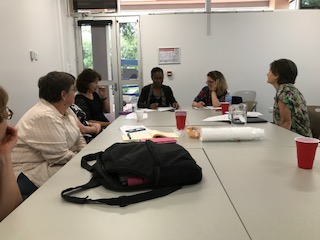
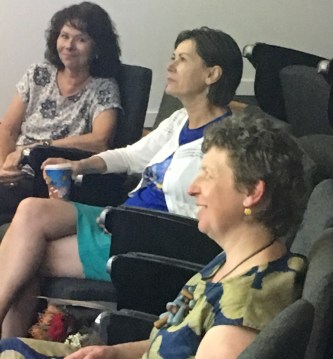
[photographs of some of our women members from the December 2018 ADRRN Research Roundtable, University of the Sunshine Coast, Queensland]