Workplace Culture and Mediation: Creating a Workplace Mediation Model That Works


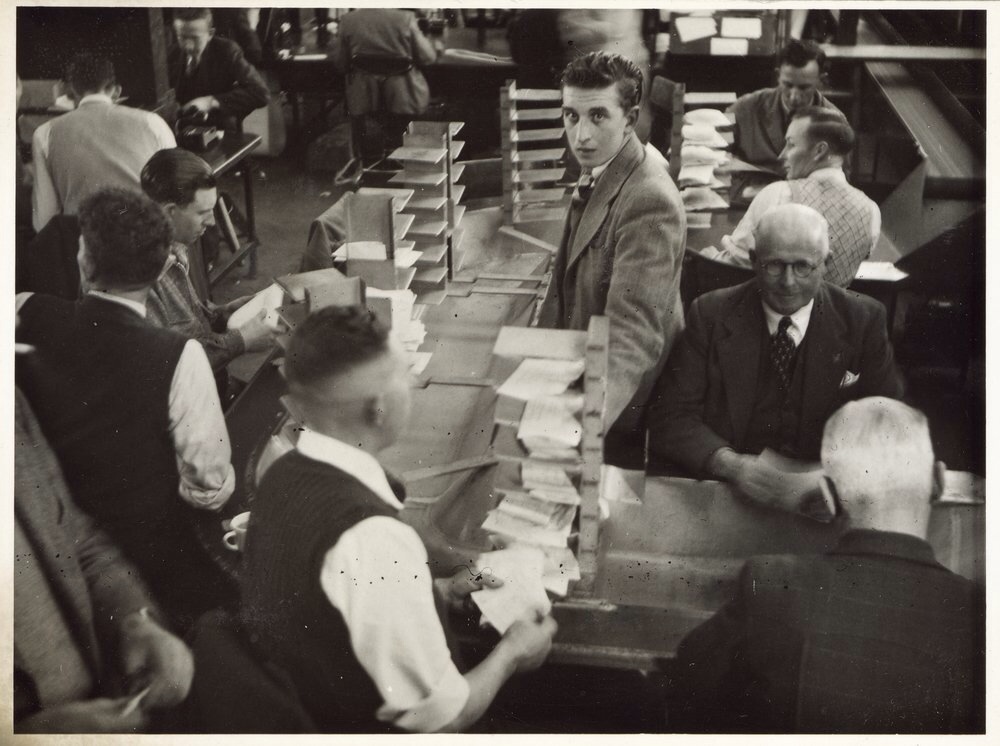
 Photo: The Circulation Desk, 1946 by Bob Kent, State Library Victoria, (www.slv.vic.gov.au)


This is the third of a series of posts on papers we are sharing from the 2015 ADR Network Roundtable #ADRRoundtable held last month in Sydney. 


In this post, Pauline Roach describes her work  into developing a healthy workplace dispute resolution culture. Pauline began her career as nurse and midwife, working in several different hospitals in Australia, England and Scotland. Following her return from a 4 year trip overseas, she began a career with the NSW Public Service. Pauline has worked in the dispute resolution field for 20 years and has managed the Community Justice Centres (CJCs) Sydney and Bankstown, where she provided ongoing training and supervision to mediators and staff.

In 2003, Pauline was appointed to the position of Grievance Network Coordinator at the Roads and Traffic Authority (RTA) where she completed a major review of the RTA’s Grievance Resolution Policy. In this role she established the grievance resolution network and the RTA Workplace Mediation Panel. In 2013 she was appointed to the position of Consultant at Transport for NSW.

Pauline completed the Master in Dispute Resolution at University of Technology, Sydney.


Workplace disputes are disruptive, expensive and often linger in one form or another for long periods of time. This post looks at anew workplace mediation model developed and implemented at (an anonymous for this post) large public sector organisation in New South Wales. The post is in two parts: The first part discusses strategies and structures implemented to respond to workplace disputes. The second part provides details the new hybrid mediation process developed and analyses the outcomes from this mediation process.


Strategies and Structures

The organisation implemented a strategic framework to help develop a corporate culture and context where the principles of ADR could succeed and are accepted by staff. This has involved staffing, policy development and the education of staff. It also includes engagement with the union to encourage and support their members to participate in the process. The organisation, employee and union representative have a shared benefit in the successful resolution of a dispute, the employer has a functioning workplace and the employee has a job. Both groups acknowledge this understanding of the shared benefits and this removes many barriers to the ADR process succeeding.

Policies such as the Code of Conduct outline an ethical framework for the standards of work, conduct and responsibilities for all staff, managers and contractors. The use of ADR processes to resolve workplace disputes are integrated into its culture and policies such as the Code of Conduct. The Code of Conduct highlighted that staff must be actively involved in resolving their disputes. Through on going education staffwere aware of the ADR procedures available to them, which assist in the resolution of workplace disputes at the local level. The organisation established a grievance resolution network which provided staff and managers with the tools to resolve workplace issues locally, in a timely manner and as close as possible to the origin of the dispute. The aim is principally to assist in the early identification and management of a dispute before it had a negative impact to the workplace. This included the development of an individual dispute resolution strategy (DRS) for each dispute. A broad range of ADR processes are available to assist in the resolution of disputes:

➢ Mediation
➢ Facilitated discussion
➢ Team Development Days
➢ Conflict coaching
➢ Group facilitation.

For a great description of many of these terms, see this NADRAC document.

Grievance Contact Officers (GCOs) were appointed from across the state for a three year term on a voluntary basis. GCOs assisted staff with workplace communication difficulties and/or interpersonal disputes or other workplace concerns. Where possible they encouraged staff to:

➢ Speak directly with the person concerned
➢ Ask their manager for assistance
➢ Referred the matter to Human Resources for assistance.

To support this policy direction, the organisation has also established a Workplace Mediation Panel. This panel consists of independent consultants who are skilled in the provision of a range of ADR processes.


The Hybrid Mediation Model

The hybrid mediation model implemented at the organisationhas three distinguishing features:

1. Before any ADR intervention is undertaken a thorough intake and /or pre-mediation process is conducted. The aim is to ensure that the most appropriate dispute resolution strategy is developed (i.e. conflict coaching scheduled prior to and after mediation). Before a dispute resolution strategy is developed all parties to the dispute must be identified, interviewed and the facts analysed. It also includes discussions with local managers to gain an understanding of previous action taken to resolve the dispute. Why wasn’t the action successful? What outcome does the manager want and how do they see it being resolved? It may also include discussions with the union organisor.
2. When the agreement is being developed the party’s manager is present. This means that the relevant manager becomes a party to the mediated outcomes so that responsibility for agreed changes to conduct cannot be ignored. In cases where a manager is involved, that manager’s manager is involved. All parties including the manager sign the mediated agreement and are also given a copy of the agreement.
3. Where possible the mediators mirror the parties (e.g. gender, age, language and cultural background).

Bearing in mind the importance of retaining or rebuilding a working relationship following resolution of less complex bullying complaints, the organisation also refers these cases for ADR intervention. In these cases a thorough intake interview is also undertaken to access the power imbalance between the disputants and to ensure the disputants and the manager understand the process and reality check outcome options.

Resolution of workplace disputes requires a strategic and explicit cultural change rather than a piece meal application of ADR processes in isolation. The organisation has implemented a strategic framework and consistent approach, which developed a culture and context where dispute resolution can succeed and be accepted by staff. Through a review of policies and staff education programs, staffs are aware of their responsibilities under the Code of Conduct and various policies. In a climate that supports dispute resolution, the organisation has successfully developed a dispute resolution process which accommodates its unique culture and business.

The ‘fairness fairy’ in mediation: mediators, parties or lawyers?

Who bears the responsibility for fairness in mediation?

It is generally accepted that every dispute resolution process should have fairness as one of its goals and that there are several theories of fairness: procedural, substantive, restorative, informational, retributive, distributive etc. While mediation might not be designed to achieve all of these ideas of fairness, there is agreement that mediators are responsible for procedural fairness. This requires ensuring that parties are given the opportunity to speak and to be heard, and in addition, the opportunity to negotiate on the basis of informed consent (cl 9 NMAS Practice standards, 2012). As such, it is arguable that mediators are informational ‘fairness fairies’ in that they are required to support the parties to reach agreements on the basis of informed consent (cl 9.1 NMAS Practice Standards, 2012).

However, mediators are generally not viewed as bearing responsibility for substantive fairness: they are not substantive ‘fairness fairies’. They, on the other hand, are to support a party to assess the ‘feasibility and practicality’ of proposed agreements ‘in accordance with the participant’s own subjective criteria of fairness’ (cl 9.7 NMAS Practice Standards, 2012).The responsibility for achieving fairness thus lies with the parties. They are to satisfy themselves that they have achieved, what to them, is fair in the circumstances of their dispute. In doing this, they are supported by the mediator who is not to pressure them into any form of agreement. Parties are thus, the substantive ‘fairness fairies’: they must have ‘the eye’ for fairness of the outcome.

But it is not in all cases that parties know exactly what fairness might represent or require in their disputes. This is particularly so when they are not well or fully informed, are not in a position to obtain relevant information due to lack of resources, or have diminished capacity as result of disability etc. In these situations, what options are open to the mediator to support parties to assess the feasibility and practically of a proposed agreement? Who takes the role of the substantive ‘fairness fairy’?

Possibly the role of the ‘fairness fairy’ shifts to the support person(s) present at the mediation, or where a party is legally represented, to the legal representative who is expected to act in the best interest of her client. But are lawyers always fulfilling this role in mediations? Should the responsibility for fairness become solely that of legal representatives? Should mediators always assume that lawyers will act as ‘fairness fairies’ in mediations?

For a view on the role of lawyers in mediations, see post dated 27 March 2015: “On Mediation, Legal Representatives and Advocates by Bobette Wolski” (Post by Dr Olivia Rundle)

Mediating family matters where there is a history of violence.

One of the most controversial aspects of mediation practice is its use with parties whose relationship has involved domestic violence, with critics pointing out the potential for a discussion based process such as mediation to reinforce the power imbalance, fear and voicelessness experienced by the survivor of domestic violence.    On the other hand, the potential benefits of mediation are clear, there is scope for the process to actively empower participants, and mediation holds a central role in Family Dispute Resolution in Australia under Part VII of the Family Law Act.

Dr Rachael Field,  Associate Professor at QUT Law, has recently published a piece with co-author Angela Lynch releasing the results of a pilot study, run by the Federal Attorney General, into a family mediation model specifically designed for use with parties with a history of domestic violence.

The piece is published in the Journal of Social Welfare and Family Law and is entitled  Hearing parties’ voices in Coordinated Family Dispute Resolution (CFDR): An Australian pilot of a family mediation model designed for matters involving a history of domestic violence   (link to open access).

This process was evaluated by the Australian Institute of Family Studies as being ‘at the cutting edge of family law practice’ because it involves the conscious application of mediation where there has been a history of family violence, in a clinically collaborative multidisciplinary and multi-agency setting. The authors conclude that Australian government’s failure to invest resources in the ongoing funding of this model jeopardises the safety and efficacy of family dispute resolution practice in family violence contexts, and compromises the hearing of the voices of family violence victims and their children.

Teaching behavioural insights in dispute resolution

As part of an ongoing research project,  I’ve been looking at the impact of behavioural insights on mediation (and dispute resolution more broadly).   By ‘behavioural insights’, I’m referring to fields such as cognitive neuroscience, behavioural economics, social psychology,  all of which have been recently made accessible to non-experts through popular books such as  Nudge, Thinking, Fast and Slow and Blink.   

This project is directed at a critical analysis of the impact of these fields on core concepts such as self-determination in mediation.   However, that’s a post for another day  (and in fact a forthcoming book chapter), where I explore the challenges of these fields for foundational concepts in mediation, such as self-determination and party autonomy.   

However, in the process of undertaking this research I have come across some very good teaching resources from the University of Texas’ Ethics Unwrapped site.   I plan to use these in my teaching this semester, as they offer some insights into cognitive biases that, as mediators know only too well,  are common to participants in disputes.      Some of the topics that I have found particularly useful include  –  loss aversion,  framing, and fundamental attribution error.

Ethics and the Mediation Community

What does it mean to think communally about mediation ethics? It’s tempting to conceive ethics as a set of abstract rules or principles formulated by experts and then imposed from above. However, another way to think of ethics is as the product of a dynamic, community oriented process. Experienced mediators who seek to adopt an ethical attitude to their practice will notice patterns in their approaches to various disputes. Reflection upon these patterns then supplies the foundation for formulating general guidelines that arise organically from the process. This approach to identifying principles of mediation practice treats these principles are subsidiary to the situational nature of ethical judgments.

The model of mediation ethics sketched above is community oriented, rather than individualistic. This is because it recognises that the source of meaningful ethical guidelines lies in the accretion of experience in different mediation contexts over time. Mediators, then, can learn not just from their own practice, but from the experiences of others who accept the same general ethical outlook. Mediation ethics depends on the sharing of principles and guidelines throughout the mediation community. This makes full use of the store of knowledge reflected in the diverse experiences of mediators.

The community oriented model of ethics outlined above points to the importance of recognising mediation as a profession with its own specialties. This applies not only at the general level of recognising the distinctiveness of mediation, but also at the level of recognising the particular challenges that arise in, say, family mediation and allowing a store of knowledge to arise about the ethical guidelines applicable to family mediators. It may be that beyond the overarching value of party self-determination, different forms of mediation will generate quite different guidelines for ethical practice.

I do not mean to suggest there is anything radical or groundbreaking about this model. Indeed, I think it describes what already happens on an organic basis. However, the organic nature of ethics is not always fully appreciated. This results in the adoption of abstract principles that can distort or mask the evolved character of the guidelines practitioners actually follow. A mature model of mediation ethics will not hide the complexities of mediation behind the veneer of impartiality. It will embrace those complexities and challenge itself to develop ethical guidelines that can cope with them.

I’ve written previously about the evolution of ethical and legal judgments in my chapter on ‘Pre-Reflective Law’ in Maksymilian Del Mar (ed), New Waves in Philosophy of Law (Palgrave Macmillan, 2011), as well as other publications. I’m interested in exploring further what this means for mediation theory and practice.

Dispute Resolution, in Person, for Real

So, I’m excited!

Along with 13 other members of the ADR Research Network, we have been meeting in the glorious sunshine at Queensland University of Technology’s Garden Point Campus this week. Meeting for real, in person. With coffee in hand and fuelled by victuals kindly provided by QUT law school, we have be discussing the most difficult aspects of dispute resolution theory and practice.

The ADR Research Network was founded in 2012 by a group of dispute resolution academics from across Australia. We live and work in the far corners of this big country, from Hobart to Townsville, from the Gold Coast to Bundoora. Some of us are mediators, some lawyers, some legal philosophers, educators and we all live and breathe dispute resolution. We had all met at conferences before and read each others’ work over the years and a few of us have even written together. But we wanted to do more than just see each other occasionally and referee each others’ work: we wanted to engage with each other on what we are working on, we wanted to debate the hard stuff, we wanted to share a laugh.

As well as running this blog, we have decided to write a book together, based around the theme of changing professional identities for both lawyers and mediators in dispute resolution. The increased use of ADR and institutionalisation of processes such as mediation challenge us to rethink the role of lawyers and mediators in dispute resolution. Questions arise such as is mediation now a profession? Is there a single mediation community or are there multiple communities of mediation practice? How do we train lawyers to achieve justice in mediation? What is the basis of an ethical decision making process for mediators? How best do we define mediation and is that important? Should neuroscience affect mediator practice?

The most exciting thing about our book project is that it is so collaborative in nature. Each chapter will be written by a single author but with extensive feedback from the group as a whole and from individual authors. This will create a highly reflective and tightly structured collection that we hope will be central to understanding contemporary dispute resolution practice.

We are still writing and putting together a book proposal. To give you a sense of what we are all writing about, here’s a way to see the tweets we have made over the past few days at the workshop. We have been using the hashtag #adrresearchnetwork. These tweets summarise the ideas raised by each author in our chapters and some of our thoughts around the table as a group.

Stay tuned …

National Mediation Conference 2014

The 14th National Mediation Conference will be held from Tuesday 9 – Thursday 11 September 2014. Chosen from delegates’ feedback, the selected theme for 2014 is “Pathways to Resolution: the Challenge of Diversity”.

The conference website has just been launched and can be found here.

Conference Co-conveners Tania Sourdin and Walter Ibbs explain what the conference is and how it works

The Conference will bring together diverse practitioners, policy makers, researchers, managers, judges and leaders in the field of mediation, negotiation and dispute resolution to explore the diversity of experience, conflict, intellectual outlook, cognitive style, cultural competence and many other attributes that contribute to the richness of the resolution environment.

This Melbourne NMC is especially exciting for those of us who do research in the field of dispute resolution, as for the first time the National Mediation Conference will be combined with the Research Forum of the National Alternative Dispute Resolution Advisory Council (NADRAC). The two great dispute resolution research events in Australia will now be combined. It is going to be a dispute resolution ideas fest and we should all expect to walk away mind-boggled and tongue-tied. Sourdin and Ibbs write ‘This addition will provide delegates with the opportunity to meet and engage on the latest trends and issues in ADR research.’ The 2 day Research forum will start on the last day of the NMC and will continue the next day also.

Since the demise of NADRAC, it is not clear what the status of the research forum will be. But there are many working hard behind the scenes to ensure that it goes ahead regardless. 

The call for papers is now open and abstracts can be submitted from now until 21 February 2014 here.

The theme of the conference is ‘Diversity’.

 The Conference Organisers are particularly interested in presentations that support this theme. The concurrent sessions will be grouped into the following general streams and presenters should nominate to which stream their presentation or poster will relate.

 The streams are:

  • Family;
  • Business & Workplace;
  • Court & Tribunals;
  • Community Mediation;
  • System Design, Public and Statutory ADR;
  • Online dispute resolution/New technologies;
  • Training & Standards;
  • International Approaches;
  • Mediation Practice (including blended, cultural & inclusive ADR practice); and
  • NADRAC ADR Conference stream.


Mediation in the Media

Last night, I watched Episode 1 of Series 2 of Redfern Now,  a compelling Australian drama on the ABC.   That episode contained a number of scenes that would be useful for teaching mediation or dispute resolution, including a mediation between a grandmother and her son-in-law, as well as a coroner’s court scene.    In fact, there are quite a few useful, and some amusing, examples of dispute resolution in the media.    Together with Nicole Cullen of Cullaborate, I have a Pinterest board where I’ve been archiving media clips that I have come across.   If you know any,  feel free to let us know in the comments below!    The link is http://www.pinterest.com/cullaborate/mediation-in-the-media/

The 6th Asia Pacific Mediation Forum Summit, Manila, Dec 9-11 2013

The 6th Asia Pacific Mediation Forum Summit will be held at De La Salle University, Taft Avenue, Manila, Philippines from  December 9-11, 2013. The Conference theme is “Mediation in a Globalizing World: Challenges to Multi-Culturalism, Peace-Building, and Religious Tolerance.”

According to the conference website:

Topics to be explored through presentations, panel discussions, open forums, and group dialogues during the conference include:

Business and Mediation
Mediation and Conflict Resolution/Transformation of Religious, Ethnic, Ideological, and Resource Management
Mediation and Politics
Mediation and the Media
Mediation and Public Policy
Mediation and Peace and Security
Mediation and Human Rights
Mediation and Education
Mediation, Gender and Development
Family Mediation and Family Violence (Violence Against Women and Children).
Mediation and the Courts
Mediation and Armed Conflicts
Global Trends in Mediation

Prospective delegates of the Summit are invited to submit an abstract no more 500 words, and a short biography of no more than 500 words, on any of the above topics through apmf2013Summit@gmail.com. The deadline for submission is the close of business, May 30, 2013 (Philippine time, GMT+8:00). Accepted abstracts will be announced on June 9, 2013.

Full details can be found online at  http://www.dlsu.edu.ph/conferences/apmf/