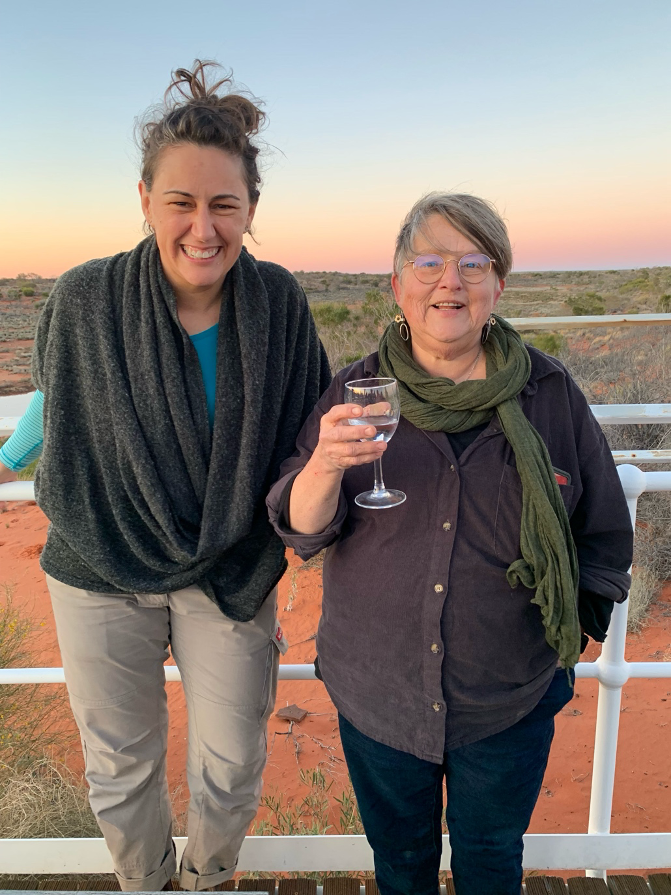
By Peta Spyrou and Matthew Atkinson
The authors thank the many colleagues, practitioners, former students and friends who contributed reflections and photos about Margaret Castles for this piece.
For over three decades, Margaret Castles, or simply ‘Marg’ as she is affectionately known, has helped shape how dispute resolution is practised, taught, and understood in South Australia and beyond.
Anyone who knows Marg also knows she is deeply uncomfortable with too much fuss being made about her, let alone her recent retirement. Even so, bringing together reflections from former students, colleagues, practitioners, and friends for this piece makes it clear just how profound her contribution to dispute resolution, clinical legal education, and access to justice has been. What began as an effort to mark a retirement instead became a collective reflection on the influence she has had on the people and communities around her.
Marg joined the Adelaide Law School in the mid-1990s to establish what was then a relatively novel idea for the institution: clinical legal education. What began as a small, resource-constrained program has, over time, become a cornerstone of legal education and access to justice in South Australia. From early externships and a modest Magistrates Court advice service, the program expanded into a network of clinics, partnerships, and outreach initiatives that continue to serve communities and improve access to justice across the state.
But to describe Marg’s contribution solely in institutional terms risks missing what has mattered most. Whether supervising PhDs, teaching in the classroom or the clinic, taking students on educational trips, mentoring, or working alongside colleagues, Marg taught and supported others with intellectual rigour, practical wisdom, and deep humanity. With her, students learned not only how to practise law, but what it means to be a lawyer.
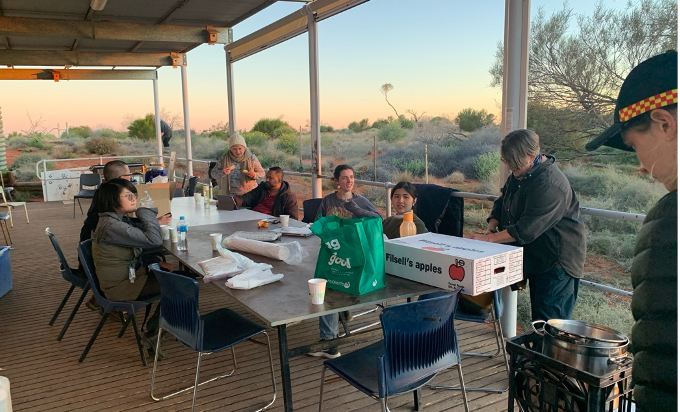
Across the reflections gathered for this piece, one theme recurred: Marg’s belief that students learn through doing the work itself—with care, reflection, and responsibility.
Reflecting on her first year of teaching, Dr Kellie Toole recalled finding herself overwhelmed trying to explain complex procedural doctrines to students:
I tangled up the first seminar on Anshun estoppel, Res Judicata and issue estoppel and threw myself at Marg’s mercy to explain them to me between classes. Instead she said ‘oh they are tricky, shall I come in?’ … Marg somehow made me feel supported not mortified. I and both seminars [students] learned about law and everyone’s dignity was intact: that is Marg’s gift.
Dr Rachel Spencer reflected on Marg’s lasting influence as both an educator and colleague.
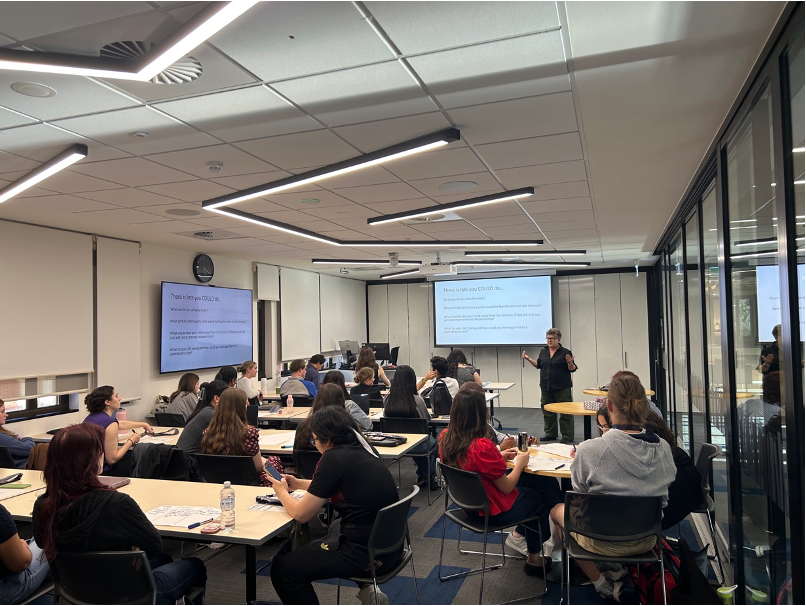
Figure 2: Marg’s last day of teaching students CLE
Recalling their first meeting in 1999, Rachel writes:
Marg and I clicked from the moment we met in 1999 and she invited me to collaborate in Adelaide’s first clinical legal education program based in a tiny room upstairs at the Adelaide Magistrates’ Court. The classes that we co-taught with combined Adelaide and Flinders students were the most memorable and most enjoyable of my academic career.
Rachel also described Marg as a role model for authenticity and a trusted sounding board on access to justice issues:
Watching Marg interact with students taught me to relax as an educator and to be myself. Congratulations Marg on an outstanding career where your care for students, colleagues and clients has been not only exemplary but so very much appreciated.
For Dr Ross Savvas, Marg has been a teacher, mentor, colleague and friend for more than 20 years. Ross’s connection with Marg began when he was a student in the joint university clinic at the Adelaide Magistrates Court and continued throughout his professional life. As Ross reflects: ‘My commitment to pro bono continued in my private practice with a foundation based on Marg’s sense of justice.’
Later, as a clinic supervisor himself, Ross learned from Marg ‘the importance of empathy as a lawyer and mentor and of the power of experiential learning’.
For many contributors, Marg’s influence extended well beyond teaching technique or curriculum design. Her work shaped how lawyers understood responsibility, fairness, and the role of the profession itself.
Working alongside Marg on the South Australian Government’s Legal Needs Assessment in 2023–24, lawyer and academic Dr Mark Giancaspro observed firsthand her deep commitment to justice: ‘She consistently pushed us to reach every corner of the state, to listen carefully, and to include voices often overlooked. This shaped not just the project’s findings but how I personally approach fairness, consultation, and evidence in my own practice’.
Similarly, barrister Marissa Mackie, who served as President of the Law Society of South Australia in 2025, reflected on first meeting Marg in 2008 while undertaking Community Legal Practice:
Marg’s impact on students, the profession and legal practice more generally has been profound. She has gone above and beyond in advocating for greater access to justice and improving the culture in the legal profession … Thank you Marg for encouraging me and countless others over the years and always making the time for a chat.
Running through these reflections is a strong sense that Marg taught students and colleagues, and saw possibility in them, often before they saw it in themselves. Contributors repeatedly returned to her humour, humility, and warmth.
Associate Professor Alex Wawryk reflects on the difficulty of identifying any single quality that explains Marg’s influence: ‘Marg is generous, humble, passionate, empathetic, extremely knowledgeable, and very, very funny, with a sometimes dry and biting wit. She has an innate sense of justice and always acts with integrity.’
Alex adds: ‘To me, her care for students is a lodestar. But most of all, in the midst of everything, life is better because she just makes me laugh.’
Dr Ross Savvas similarly reflects on Marg’s determination to keep people connected to teaching, research, and pro bono work: ‘Marg can see the strengths of people and uses her persuasive and resolution skills to ensure that those who co1ntribute to learning, research and the pro bono sector can continue to flourish and not be lost to the legal and teaching professions.’
Yet alongside her contribution to law, mediation, and access to justice, contributors reflected on Marg’s curiosity about the broader world and her infectious enthusiasm for learning itself. Former student Finn McIntyre recalled travelling with Marg to Port Lincoln to conduct legal interviews:
Marg stopped the car more than 5 times to collect pieces of plants or to look at animals. The last time I saw her, we spent the day working with researchers to catch and tag endangered lizards. She has helped me to realise that while our legal work is important, we must not forget about the world that we live in.
Read together, these reflections show that Marg’s legacy extends far beyond the programs, clinics, and initiatives she helped build. Her greatest impact lives in the students, practitioners, and colleagues shaped by her empathy, generosity, humour, and commitment to experiential learning. Across classrooms, clinics, courtrooms, and communities, those qualities continue to ripple outward— perhaps the clearest reflection of a career grounded not simply in changing institutions, but in changing the people within them.
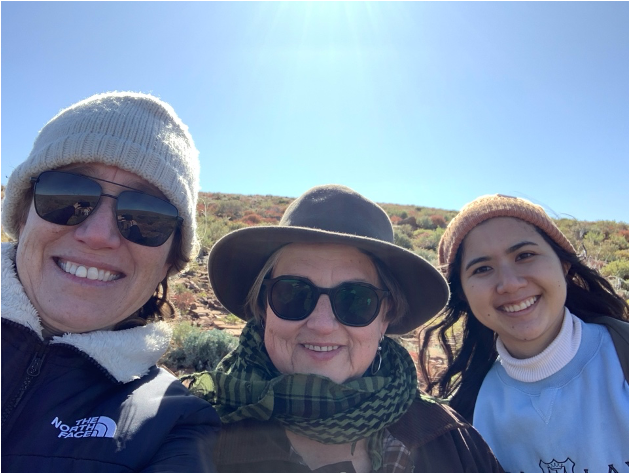
Figure 3: Alex Wawryk, Marg and a student on Conuntry/ the Woomera Prohibited Area