
Should Neutrality be scrapped once and for all? (Part 3 of 3)

By Rory Gowers, Transformation Architect and Principal of The Constructive Solution
This article is 2 of 3 within the series and is re-published with permission. The original publication can be found at www.myrespectability.com

The Intercultural Test

Two blogs into this series we have built a framework, named the smudges, and invited the profession to audit itself honestly. This blog completes the quest – taking LENS into the intercultural space to ask whether it holds, and then in The Crystal Lens, issuing a call to the circle. The Intercultural Test is the hardest test of all. Because if LENS only works in a monocultural room between parties who share the same assumptions about what a fair process looks like, it isn’t a framework. It’s a cultural preference dressed as methodology.

I want to begin with a confession.

Everything this series has argued – role clarity, party agency, the file at the door, the mediator lens, the sanctity of the space – sits within a tradition that has a cultural address. It comes from a specific set of assumptions about the individual as the primary unit of decision-making, about the value of explicit verbal negotiation, about what a fair process looks like.

That address is broadly Western. Broadly Enlightenment. Broadly Christian in its moral inheritance. Broadly Anglo-Australian in its professional expression. Broadly masculine.

I say this not to undermine what has been argued. I say it because intellectual honesty is the foundation for everything LENS requires – and a framework that cannot acknowledge its own cultural situatedness is not a framework. It is an assumption that has forgotten its origin.

Women are from Venus. Men are from Mars.

‘Two people divided by a common language’ was once used to describe the communication challenges between Australia and its long-standing ally United States of America. However closer to home for us all is the gulf in communication between women and men.

If two people who love each other, chose each other, and have shared a life together for decades can still be operating from fundamentally different frameworks – different orientations to the world, different communication needs, different understandings of what conflict means and what a resolution looks like – then the intercultural challenge is not a specialist problem. It is the human condition.

And a better translator does not solve it. Because the problem was never the words. It has always been the world behind the words.

What each person needs – before, during and after – is not just different in content. It is different in kind. Impossible to fully explain in the common language, because the need exists in a register the other framework simply does not have a category for.

Every culture on the planet recognises this problem. Which is precisely why it is the right place to begin.

What Intercultural Actually Means

When most people hear the word intercultural, they think of nationality. Different countries. Different ethnicities. Different customs. Sensitivity training.

That is cultural awareness. It is useful. But that is not what interculturality is about.

Intercultural, in the fullest sense, means any encounter between people whose fundamental frameworks for understanding the world – conflict, resolution, relationship, authority, time, silence, identity, and justice – are built on different premises. It includes, but is not limited to:

Ethnicity, race, and Indigenous identity. Faith and worldview. Gender identity and sexual orientation. Neurodivergence. Disability and chronic illness. Class and socioeconomic background. Age and generation.

Venus and Mars are just the beginning. But it is the example that proves the point. Every culture on the planet has its version of this divide – and every culture knows that the needs of the two parties in the room are genuinely, deeply, and sometimes irreconcilably different.

What all these communities’ share is this: a different framework for understanding the world that may be entirely invisible to the mediator – and a long history of processes that claim neutrality while being built around someone else’s normal. Whatever that really means.

The Box We Were Born Into

What is normal? It is the content of the box that was waiting for us when we arrived on this planet. We did not choose it. We did not examine it. We did not even know it was there – because from the inside, a box with no visible walls does not look like a box. It looks like reality. It contained the values, mores, and understandings about life, and what differentiates our tribe from another tribe, what makes us implicitly the best. And others not so good.

A young American once asked me: “What does it mean to be Australian?” I was completely nonplussed. Not because it was a bad question. Because it was a question I had never needed to ask myself. My box was simply – home – just what everyone does – normal.

We have phrases for this invisible assumption. “You know.” “Everyone knows.” But do they?

The party who does not share the same box will rarely say so. Because admitting you don’t know what everyone knows – in a room full of people who apparently do – is one of the most exposing things a human being can do. So, they stay silent. And that silence is mistaken for understanding. Or agreement. Or consent.

That is not a neutral process. That is a process that has already decided who belongs – before anyone opened their mouth.

The Intercultural Test

Here is the challenge stated directly.

Neutrality is a Western concept. Developed in a Western tradition. Expressed through Western process architecture. Practiced by Western-trained mediators who have in many cases never examined the cultural assumptions their practice carries. That is an honest acknowledgment. The critics are right about that.

The intercultural test is this: does neutrality survive the challenge of the genuinely intercultural room – or does it simply become another form of Western cultural imposition dressed as fairness?

The answer turns on one precise insight.

Neutrality must be neutral to process architecture – or it is not neutral at all.

Consider the Venus and Mars room. A standard Western mediation process drives toward resolution. Closure. A decision made. Forward movement. But resolution is not a neutral outcome. It is a Western outcome. More specifically, it is a masculine-Western outcome – one that preferences the framework that says: get to the answer, close the file, move on.

The party who needs to be fully received before they can engage with any outcome – who needs the relationship honoured before the resolution can be real – is structurally disadvantaged before they sit down. Not by the mediator’s personal bias. By the process architecture itself.

The mediator who enters the room with a fixed process has already taken sides with the fixer culture. Even before the parties walk in.

Adaptive Practice – The Mediator’s Real Toolkit

Genuine neutrality in the intercultural room does not require the mediator to have specific cultural knowledge or language proficiency about every culture. It requires something more fundamental: the capability to design a process from scratch, around the parties in front of them, based on their implicit and explicit needs – before commencing the joint meeting. For more on the preparation and reframing work with each party, refer to Steps 1 and 2 of the myRESPECTability framework.

This is adaptive practice. And it is the discipline that makes genuine neutrality possible.

The mediator’s toolkit is not a library of cultural knowledge. It is a set of capabilities – process design skills, diagnostic questions, relational instincts, and the humility to hold a process lightly enough to reshape it as the room requires.

Think again of the Venus and Mars room. The skilled mediator does not apply one process to both parties. They read – carefully, humbly, without assumption – what each person needs before, during, and after. And they craft the environment accordingly. That is adaptive practice. That is neutrality made real.

But adaptive practice without genuine neutrality is a sham. The mediator who has the toolkit but not the inherent predisposition – who has not examined their own box, who holds a quiet preference for how this should resolve – will default to their own cultural template under pressure. Their cultural competency becomes sophisticated role contamination. More dangerous than the crude version, because it is harder to name and easier to hide behind.

One Principle. Many Processes.

Different cultural frameworks hold different understandings of what a good outcome looks like. The mediator who does not know this has already failed the intercultural test before the process begins.

In a broadly Western, masculine-framed framework – the goal may be resolution. A decision made. An agreement signed. The conflict closed.

In a broadly Eastern framework – the goal may be harmony. The restoration of relationship within which the conflict lived. An agreement that leaves the relationship damaged is not a good outcome. It is a Western outcome.

In a broadly Indigenous framework – the goal may be something deeper still. Perspective. Connectedness. The restoration of relationship with community, with lore, with Country.

A process that rushes toward resolution without honouring the deep context and relational obligations at stake has not resolved anything. It has imposed a timeline on something that does not belong to time in that way.

And in the Venus and Mars room – one party may need resolution. The other may need to feel genuinely received before any outcome can be real. Both are valid. Neither is neutral.

The neutral mediator holds no preference among these. Their process serves whatever a good outcome looks like for these parties, in their frameworks, on their terms.

The Long View

There is urgency in the argument the Western mediation profession has been slow to heed.

The Eastern cultural tradition already practices what Western mediation claims to value. It takes the long view. It advances steadily. It preserves relationship. It protects face. It does not mistake speed for wisdom, or resolution for peace. It knows that the outcome which holds is the one both parties can live with – not the one that was most efficiently produced.

If Western mediation practice does not quickly learn such flexibility – does not demonstrate that its principles can be lived in genuinely adaptive process – it will lose its exalted place in global negotiation training and practice. The process of the future will be what the dominant culture of the day mandates. The privilege of mandating a dominant process has been with the West in the current era. It will not always. As one book title says, “The Future is Asian.”

The hope – and it is a genuine one – is that genuinely adaptive practice offers something the dominant power calculus cannot. A process that preserves face, produces wise outcomes, and protects future relationships is not a concession to any one cultural framework. It is the fullest expression of what mediation was always supposed to be. And it is something any culture, including the most dominant, can recognise as worth having.

The window to show that western mediation can adapt itself is still open. If we move now.

The Standard

Neutral mediation practice must use adaptive process that:

  • Preserves face – for every party, throughout.
  • Produces wise outcomes – not resolution, not harmony, but whatever constitutes genuine wisdom in this room, for these parties, in their frameworks.
  • Provides a respectful experience – so that every party feels genuinely received, not processed.
  • Protects future relationships – because the agreement is not the end. The relationship continues.

Fully respecting the cultural needs of each party.

That is not a Western standard. That is not an Eastern standard. It is the sincere standard – without crack. The gold standard.

And think again of the Venus and Mars room. Even the most intimate intercultural divide – the one at the kitchen table – requires a mediator who can hold all four simultaneously.

LENS and the Intercultural Room

A smudge-free LENS is what makes this possible. Not just in the mediation room – but in preparation, in practice, and in the fulfilment of agreements.

In preparation – the mediator who examines their own lens before entering the room can see what framework they are bringing, what assumptions their process architecture carries, and what needs to be set aside before the design begins. Critically, this preparation includes time with each party in advance – to understand their deep process needs, their framework for a good outcome, and what the space needs to feel like for them to engage fully and safely.

In practice – the mediator with a clean lens can read the room as it is. Not as their framework tells them it should be. They can hear what is not being said. They can recognise when their process is not serving a party. They can adapt – in real time, without losing their role.

In the fulfilment of agreements – the mediator who has held genuine neutrality throughout can ensure that what was agreed genuinely reflects the needs of all parties – not just the party whose framework the process happened to serve best.

The intercultural room does not expose LENS as inadequate. It reveals why LENS is necessary. Because the mediator who cannot see clearly cannot adapt wisely. And the mediator who cannot adapt wisely cannot be genuinely neutral where it matters most.

Because Of

It is because mediation at its best is an expression of a profound commitment. That every person – because of their cultural background, their language, their lore, their neurodivergence, their identity, their relationship to community and to Country – deserves access to a process that genuinely serves their capacity to resolve their own conflicts on their own terms.

Not regardless of who they are. Because of who they are.

A place for all. Peace for all. In our time.

The Crystal Lens – A Call to the Circle

The argument is made. The audit is complete. What remains is something different.

Let me begin with another admission.

I have been in rooms where I dropped the lens. Where the file opened quietly and the outcome I could see began, almost imperceptibly, to shape the process I was running. Where the pull was stronger than the discipline and I told myself it was expertise rather than contamination.

I know what that feels like from the inside. It feels like clarity.

And I know what it feels like to catch it – to notice the drift, name it honestly to myself, and correct. That feeling is different. It is quieter. Less certain. Truer. I sleep better.

You are not alone in that gap.

The Hero’s Journey

There is an old story that runs through every culture, every tradition, every age. The hero receives a call. They resist it, or answer it, or stumble toward it without quite knowing what it is. They face trials that test everything they thought they knew about themselves. They lose the path and find it again. They carry something – a talisman, a truth, a practice – that reminds them who they are when the darkness is thickest.

Mediation, practiced with integrity, is that journey. Not once. Not in a single transformative room. But daily. At every threshold.

The call comes differently to different people. Some hear it clearly – a moment of vocation, a certainty that this work matters in a way that goes beyond the fee and the settlement rate. They answer it with fire.

Some haven’t heard it yet – or aren’t sure they ever will. They show up anyway. They vouch to do their best with honour for the right. That commitment, made honestly without the romantic certainty of calling, is its own form of heroism. Perhaps the purest form.

And some are here because they want to support the ones who are answering the call. To learn from them, encourage them, make the circle stronger. That quiet generosity is as necessary to the profession as the most gifted practitioner in the most difficult room.

All three are welcome in the circle. All three are needed.

The Crystal Lens

After everything this series has argued, the instrument is this.

Looking — at yourself first. At your own box, your own smudges, your own predispositions before you enter the room.

Effective — in service of the parties’ capacity to resolve what only they can resolve. Not your expertise. Their wisdom.

Neutral — to outcome, to process architecture, to cultural preference. The sole and unshared obligation that sits on the mediator’s shoulders alone.

Secure — in your role. Clear about what you brought in and what you left at the door. Fit for purpose. Present.

That is the crystal lens. That is what you carry into every room.

The crystal-clear lens is not the lens of the mediator who never smudges it. That mediator does not exist.

The crystal-clear lens belongs to the mediator who knows exactly how it gets smudged – and who has stood at the threshold, put aside the file, taken three breaths, and entered not with certainty but with discipline, curiosity, and a genuine orientation toward the parties’ wisdom rather than their own.

It belongs to the mediator who stumbles and falls and fights on.

Not for glory in the ordinary sense. For something quieter and more durable. The knowledge that in this room, on this day, with these two parties who came in carrying something heavy and leave carrying something lighter – they did their job. Cleanly. With honour. With the lens as clear as they could make it.

That is enough. That has always been enough.
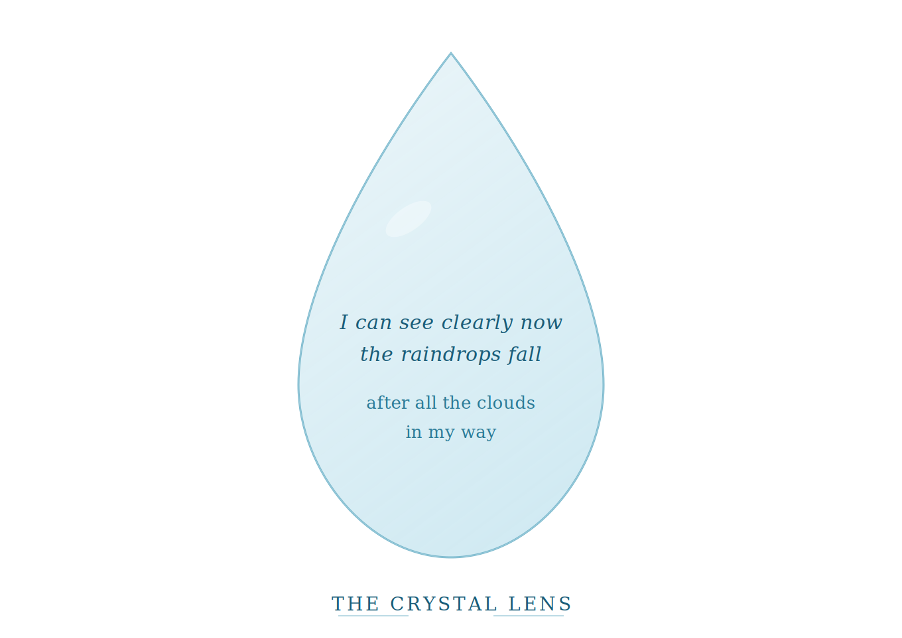
Looking – Effective – Neutral – Secure

The Circle

I want to invite you, explicitly and without ceremony, into a circle.

Not an organisation. Not a movement. Not a brand.

A circle of practitioners – called or committed or quietly supportive – who have decided, together, that neutrality is worth holding. That the parties in every room deserve a mediator who has put aside their file, picked up their lens, and entered with full presence and genuine trust in the parties’ capacity to resolve what only they can resolve.

A circle of humble heroes. Fallible. Persistent. Oriented toward something larger than their own expertise or reputation or professional identity or recognition.

Some of you have been in this circle for decades without having a name for it. This series was written for you. To give language to what you already knew.

The name is professional discipline. The name is fitness for role. The name is LENS.

The Answer

Should neutrality be scrapped once and for all?

After three blogs. After role contamination and the perfection shrine and the file at the door and the mediator lens and the self-audit and the intercultural test.

After everything.

Never.

Pick up the lens. Enter the room. Trust the parties.

Do your best with honour for the right.

The circle is forming. The quest continues.

A place for all. Peace for all. In our time.

You are enough. You are my hero. You are the hope. I salute you.

This concludes the series: Should Neutrality be scrapped once and for all? – Reclaiming Neutrality as Professional Discipline and Fitness for Role.

The conversation continues. Share your percentage. Name your smudges. Join the circle.

Author Biography

Rory Gowers is a Transformation Architect and Principal of The Constructive Solution, specialising in intercultural dispute resolution. He holds a Master of Dispute Resolution from UNSW, a Master of Education from UTS, and over 1000 hours of mediation practice. He is Australasian Ambassador for Medianos, the innovative Italian conflict resolution game now available in Australia and New Zealand.

Editor’s Closing, By Milan A. Nitopi

This article brings Rory’s concepts full circle. Issues of mediator neutrality are challenged and examined by adopting an intercultural lens, and builds upon his previous research and contributions in this same space. Rory’s framework for reflection is invaluable to a mediator’s toolkit, both in strengthening their own professional identity and further developing their skills for mediation practice.

Rory’s question to you: Are you in the circle? And if not yet – what is your next step toward it?

Editor Biography

Milan Nitopi is an Australian lawyer, mediator and Family Dispute Resolution Practitioner with a Master of Laws in Family Dispute Resolution (LLM FDR). His passion concerns people, law, and resolution, and he strives to equip people with skills for better communication and dialogue to address all kinds of conflict.
Medianos Intercultural: Constructive Intercultural Protocol for Sustainable Conflict Responses

Massimiliano Ferrari’s creation of Medianos, a board game designed to help parties align with “interests and needs” rather than “positions”, demonstrates measurable success in Western mediation training contexts (Tambù Creative Team, 2023). The board game is designed to effectively teach collaborative problem-solving skills and transform adversarial thinking patterns. Ferrari’s intent to democratize mediation knowledge through accessible gameplay merits recognition (Gowers, 2025).

However a critical problem emerges as the western Medianos board game expands internationally: “most standard mediation practice is the antithesis of social transformation; it is interculturally incompetent” (Gowers, 2023). When Western-derived intervention tools spread globally, regardless of noble intentions, they risk reproducing colonial paradigms. At this point in history, we need “a new intercultural competence playbook” that honours Ferrari’s democratic vision while co-creating genuinely inclusive, inter-culturally capable conflict responsive approaches.

The Cultural Assumptions Challenge

Medianos succeeds within Western contexts because it aligns with specific cultural values of individual agency, rational discourse, and negotiated outcomes. However, Ting-Toomey’s (1988, 2005) face negotiation theory reveals that conflict parties must manage “face-related concerns” that vary widely between individualistic and collectivistic cultures. The core issue is that game-based mediation training may embed the implicit cultural assumptions of its creator.

Xiao and Chen (2009) observed that Western communication competence (defined as “goal-oriented, self-oriented, lauding assertiveness”), directly contradicts what Chinese and other Asian cultures have considered communicatively competent for centuries. When mediation training reinforces Western competence models, it undermines inter-cultural rapport.

Māori scholar Tauri (2024) warns that Western alternatives become “a way for policymakers and politicians to silence Indigenous critique” by “repackag[ing] and sell[ing] the system back to itself.” Research (Gowers, 2023) confirms this pattern, showing how standard practices “restrict access to justice by using negotiation powerplay to deny the potential for greater benefit for all parties.”

Indigenous Epistemological Challenges

Contemporary indigenous scholarship identifies fundamental clashes with Western conflict resolution approaches. Latin American decolonial theorists document how Western models emerge from “the project of modernity and the ongoing expansion of a European cultural imaginary” (Rodriguez & Inturias, 2018; Quijano, 2000). Australian Aboriginal experts specify that Indigenous approaches “embrace a deeper level of healing and renewal of relationships” compared to Western “dispute resolution” (ADRAC, 2020).

Indian Adivasi philosophy of “Adivasiyat” emphasizes “a strong sense of connection to land, nature, spirits and community” (Xalxo, 2021) that conflicts with the anthropocentric individuality in Western mediation training. When conflict resolution focuses exclusively on person-to-person negotiation while excluding relationships with land, community, ancestors, and spiritual dimensions, it violates fundamental worldviews of numerous global communities.

Smith (2012) identifies this as reproducing “imperial and colonial discourses” that marginalize non-Western ways of knowing within supposedly inclusive frameworks.

Research Imperatives

To honour Ferrari’s democratic vision while avoiding colonial reproduction, research must build on the insight that “interculturally competent mediators recognize these gaps and propose just and intelligent solutions that include all relevant third parties” (Gowers, 2023).

Specific requirements include:

  • Collaborative epistemological mapping that documents indigenous and traditional conflict resolution approaches from specified continents, understanding their philosophical foundations rather than extracting techniques.
  • Critical analysis of embedded assumptions in game-based mediation training through “crossing over with appropriate immersion in at least one other culture” (Gowers, 2023) to identify where Western individualism, rationality, and anthropocentrism conflict with other worldviews. Of course, in instances where other dominant cultures implicitly enforce their worldview the same concerns may also require critical appraisal.   
  • Development of genuine intercultural frameworks where Western innovations like Medianos engage with other traditions as equals, applying for example the “7 steps of RESPECT” methodology (Gowers, 2023).
  • Testing of hybrid approaches that integrate indigenous knowledge systems as equal partners, recognizing the principle that “conflict is endemic in the process of social change itself” (Gowers, 2023).

The Intercultural Mastermind Initiative

This moment demands concrete action aligned with a call for stakeholder collaboration to “define the principles, practices, and techniques necessary to navigate intercultural complexity sensitively and effectively” Gowers’ (2023). We propose establishing an Intercultural Mastermind Working Groupbringing together Ferrari, Gowers, and indigenous knowledge holders from specified continents to co-design Medianos Alternative Protocol (MAP): An Intercultural Framework for Constructive Problem-Solving and Peace-Building.

This initiative embodies the vision that “interculturally competent mediation practice is adaptable to social transformation” through equal partnership including:

  • Indigenous knowledge holders from Australian Aboriginal (including Professor Marcia Langton’s frameworks), Māori, Latin American, Middle Eastern, and Indian Adivasi traditions
  • Intercultural communication theorists who understand both Western and non-Western approaches
  • Community practitioners working at the intersection of traditional and contemporary conflict responses
  • The original creators bringing expertise in game-based learning and mediation theory

The MAP Development Process

The Medianos Alternative Protocol would emerge through the “7 steps of RESPECT” (Gowers’ (2023) methodology:

  1. Reframe the Context by revealing foresight and establish focus. Each tradition shares its cultural background and expectations about conflict resolution. Identify how different approaches engage with mediation based on their cultural contexts.
  2. Resolve the Content by specifying facts, pondering feelings and examining findings. Document where approaches complement, contradict, or offer alternatives while honouring diverse motivations.
  3. Recreate the Contract by confirming finalization and tracking fulfilment. Co-create methodologies integrating multiple epistemologies, test through community implementation with relationship tracking. Verify that agreements are fulfilled or re-negotiated until complete.

This framework develops “inter-cultural respect-ability” (Gowers 2023) terms through the insight that effective intercultural mediation requires “crossing over with appropriate immersion in at least one other culture” while maintaining cultural integrity.

Modelling the Solution

The Intercultural Mastermind approach provides specific advantages over traditional research-then-application models:

  • Immediate Impact: Creates practical tools while building theoretical understanding
  • Authentic Partnership: Positions indigenous knowledge holders as co-creators rather than consultants
  • Living Laboratory: The collaborative process models the intercultural problem-responses it teaches
  • Scalable Innovation: Success informs broader cross-cultural program development

Conclusion: Beyond Cultural Wars to Co-Creation

Current trajectories risk reproducing patterns where Western innovations spread globally with cultural modifications while fundamental power dynamics remain unchanged. The Intercultural Mastermind approach requires courage to question whether appropriate participation demands genuine co-creation from the foundation level.

Ferrari’s vision of democratizing mediation knowledge through accessible, engaging methods deserves fulfillment through the most ambitious interpretation possible. True ‘democratization’ (spoiler alert – a western paradigm) requires surrendering Western centrality for multicultural co-creation that produces innovations none of the traditions could create alone.

The proposed Intercultural Mastermind Working Group represents both urgent scholarly priority and opportunity to model “transforming our viewpoints, priorities, and actions” to “create a new era of intercultural mediation” (Gowers 2023). Rather than studying cross-cultural adaptation, we could demonstrate inter-cultural innovation and answer the question: “How do you plan to come out of these current crises?” (Gowers, 2023).

This moment calls for investigation matching the scope of the challenge, not merely examining how diverse human traditions might inform conflict responses but bringing them together to create new possibilities for our interconnected world.

Note: This Intercultural Mastermind approach demands international collaboration, indigenous partnership, and creative courage that could transform not just conflict response education but our broader approaches to respectful intercultural collaboration. What might be the learnings to use in future IT and AI developments?


References

Informed, Involved, Inclusive: The Proposed Curriculum

Rory Gowers & Milan Nitopi
This article is Part 2 of 3 in our series ‘Informed, Involved, Inclusive’.

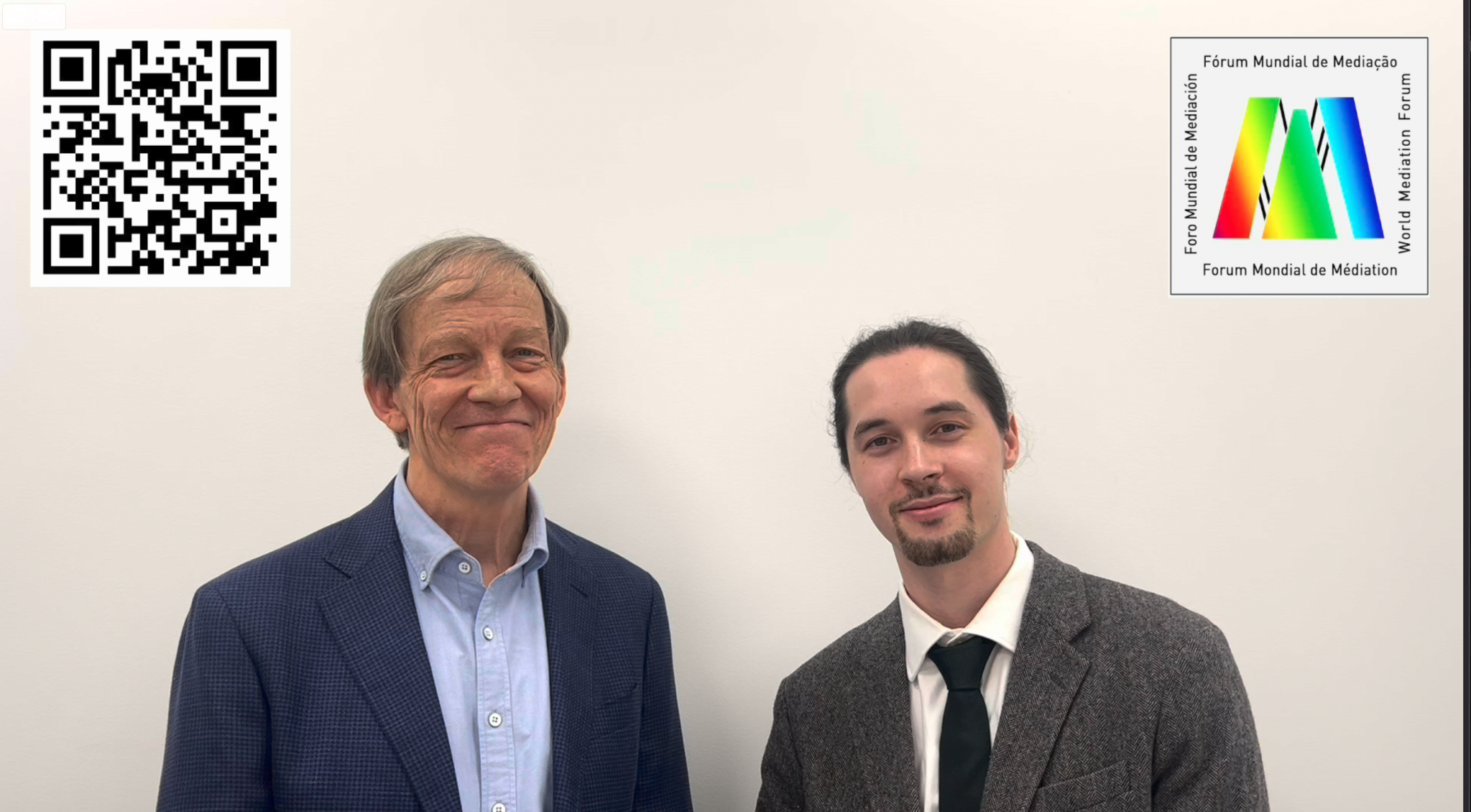
Rory and Milan (left to right) presenting at the 12th Conference World Mediation Forum – Foro Mundial de Mediación in Brazil in November 2024.

Disclaimer: ​​This introductory story is a work of fiction and does not intend to resemble any person or their lived experiences. Names, persons, places, and incidents are products of the author’s imagination. Any resemblance to actual events, locales, or persons is purely coincidental.

In the past…
Ashita had a promising future in Aressa, Syria. As a rising star in the development of artificial intelligence, she was ecstatic when her supervisor pulled her aside on Friday afternoon to share exciting news—her talents had been noticed. Come Monday morning, she would step into a new role, a significant leap forward in her career. As she travelled home that evening, she imagined the innovations she would contribute and the problems she would solve. But by Sunday night, the world she knew was gone.

Then something happened…
The war arrived without warning. Bombs shattered in the night sky, and chaos erupted in the streets. Her family fled in the back of a cattle truck that night, carrying with them only what they could. As the days turned into weeks, and the weeks turned into months, her past was slowly stripped away as she crossed each border. 

But eventually she arrived in her host country, and she was alone—her family was scattered, lost in the chaos of displacement. In her host country, Ashita faced a new kind of struggle. The temporary permit allowed her to stay, but it did not offer any sense of belonging. She could barely communicate her basic needs, let alone articulate her expertise in AI–employers saw a refugee, not a specialist. The locals eyed her with suspicion, their mistrust became a barrier she could not break down. Without any support or others willingness to understand, her talents and her livelihood began slipping away.

So now we’re doing this…
But there is another way. We offer a fresh and constructive path forward with specific application of the myRESPECTability model (Gowers, 2023) and through the Mastering Intercultural Mediation Initiatives (MIMI) training program. MIMI equips professionals in all fields with the skills to turn challenging intercultural communication into innovative and constructive dialogue with the involved stakeholders central to the issues in question. MIMI trained professionals will gain enhanced skills and competencies that enable them to facilitate sophisticated intercultural bridges to overcome long-standing cultural divides and reflect the current realities of our diverse, complex, and globalised world.

So we can have a future like this…
With skilled intercultural professionals, Ashita does not have to remain unseen. Professionals who are interculturally competent can help resolve situations–like Ashita’s–by adapting the standard mediation principles, processes and practices to ensure all parties feel able to express and address their interests, needs, and concerns in culturally relevant ways so that they may have an equal place at the table.

In this way, people who may be experiencing a sense of ‘out-culture’ can come into their foreground and make significant contributions for the benefit of the whole community as they now have an opportunity to share their insights and talents.
The Author/s have labeled this AI-generated content (AIGC). This indicates that this content was completely AI-generated or significantly edited with AI.

We share this so that we can create a future that bridges the gap between culture and encourages collaboration between people of all nations. We share this so that we can all work together to address global challenges and achieve solutions that promote peace, equity, and sustainability for all life on this planet. And, we share this so that we can equip the world with the knowledge and skills required for tomorrow’s challenges. But let us explain how we propose to do this…

In our first article we laid the foundations that underpin our proposed intercultural competency training model. In this article, we share our working developments that set out curriculum and rubric which outline the key assessments and learning objectives we intend to achieve.

As becoming interculturally competent is more than an intellectual and mindful journey, we decided it is crucial to centre our training model on participant transformation. This means ensuring that key learning objectives are met, including:

  1. Participant engagement
  2. Research informed learning
  3. Self-reflection
  4. Flexibility

MIMI Foundation 1: Interculturally Informed

As the first foundation is a structured learning process centered on establishing the baseline knowledge of intercultural competence, we decided that participants would benefit most by undergoing an intensive workshop whereby they can both learn theory as well as engage in practical exercises with their cohort.

We envision the workshop to be a total of 12 hours completed over a 3 day period (4 hours each day). Throughout the 3 days, participants will engage in collaborative style learning to learn intercultural theory as well as participate in group discussions and completion of case studies. Upon completion of the 3 days, participants will submit a portfolio detailing their reflections of the theory and activities they engaged in.

Group discussions will focus on key interculturality issues in mediation practice, root causes for communication and dialogue issues, as well as a discussion of case studies to address questions such as:

  • How did each party feel about the experience?
  • What was the impact on the parties?
  • What could the facilitator have done differently?
  • How did the different communication skills influence the outcome?
  • What does that tell us about the importance of intercultural principles in mediation?

We expect participants will satisfy the following rubric components to demonstrate their competence in being interculturally informed:

  1. To engage in the workshop including all group discussions, case study analyses, and other activities. This will be evidenced by their attendance and their portfolio submission following the 3 days.
  2. To learn and demonstrate an understanding of intercultural theory and its application to communication and dialogue within mediation practice. This will be evidenced by their portfolio submission following the 3 days.
  3. To self-reflect on learnings, insights, and peer contributions. This will also be evidenced by their portfolio submission following the 3 days.

MIMI Foundation 2:  Interculturally Involved

As the second foundation is centered on developing a deeper understanding of other-cultural needs, values, and expectations, we decided that participants would benefit most by undergoing a full other-culture immersion program whereby they can become practically involved to witness, first-hand, their stories, songs, and symbols.

We recommend that participants undergo 10 consecutive days of immersion (with no less than 3 consecutive days). However, it is not a ‘one size fits all’ situation. Some participants may require more or less time to become fully involved in the other-culture–and that is okay! We support flexibility and we encourage participants to be self-determined in their own learning. During and upon completion of their immersion experience, participants will be required to submit a portfolio documenting their daily and final reflections.

In documenting their daily reflections, participants will be prompted on a variety of intercultural issues, such as:

  • What is a specific cultural difference and similarity you experienced today?
  • What was a communication and dialogue challenge you perceived today?
  • How and why did you address and/or manage the intercultural challenge that you faced today?
  • Record one specific cultural story, song, or symbol that you experienced today.

In documenting their final reflection, participants will be prompted on key interculturality issues in mediation practice or root causes for communication and dialogue issues by drawing on their own knowledge, insights, and immersion experience, such as:

  • How have your learnings and experiences affected your approach to peoples of an other-culture in your day to day life and/or in your mediation practice?
  • What communication or dialogue skills will you bring into your life and/or mediation practice?
  • How are those communication or dialogue skills relevant to effective mediation practice?
  • What do your learnings and experiences tell you about the importance of intercultural principles in mediation?

We expect participants will satisfy the following rubric components to demonstrate their competence in being interculturally informed:

  1. To engage in at least 3 days of immersion in the other-culture and demonstrate a willingness to participate despite feeling a sense of discomfort, unease, or unfamiliarity. This will be evidenced by their attendance and daily reflections.
  2. To learn and develop an acceptance of the needs, interests, concerns, expectations of the other-culture in a way that is culturally relevant to their own intercultural interactions and mediation practice. This will be evidenced by their daily and final reflections.
  3. To self-reflect on learnings, insights, and lived experience. This will also be evidenced by their daily and final reflections.

MIMI Foundation 3: Interculturally Included 

As the third foundation is focused on putting learnings and reflections into practice, we decided that participants would benefit most by engaging in a final practical workshop to adapt their current core principles, practices, and processes to the interests, needs, concerns, and expectations of the other-culture they immersed themselves in.

We envision the workshop to be a total of 20 hours completed over a 5-day period (4 hours each day). Throughout the 5 days, participants will engage in activities such as group discussions, case studies, and role-play exercises. The key focus of this workshop is for participants to demonstrate they are able to accurately identify and address communication and dialogue issues within an intercultural context. Upon completion of the 5 days, participants will be required to submit an ‘Intercultural Practice Statement’ as well as a portfolio detailing the activities they engaged in.

Group discussions, case studies, and role-play exercises will focus on key interculturality issues in mediation practice, root causes for communication and dialogue issues, as well as a discussion of case studies to address questions such as:

  • How did each party feel about the experience?
  • What was the impact on the parties?
  • What could the facilitator have done differently?
  • How did the different communication skills influence the outcome?
  • What does that tell us about the importance of intercultural principles in mediation?

The ‘Intercultural Practice Statement’ is a refined methodology for intercultural interaction and participants will be required to present this with their cohort. This provides an opportunity for them, as well as their cohort, to share insights and experience so that they can learn from each other. Participants will be asked to address a final question such as:

  • What are you going to do differently (i.e., how are you planning to include your learnings and experience into your life) now that you are informed and involved with the other-culture?

We expect participants will satisfy the following rubric components to demonstrate their competence in being interculturally informed:

  1. To engage in the workshop including all group discussions, case study analyses, role-plays, and other activities. This will be evidenced by their attendance and their portfolio submission following the 5 days.
  2. To apply their learnings and insights accurately to identify and address communication and dialogue issues within an intercultural context and in a way that is culturally relevant to their own intercultural interactions and mediation practice. This will be demonstrated by their portfolio submission following the 5 days.
  3. To present their intercultural practice statement to their cohort. This will be evidenced by their attendance and portfolio submission following the 5 days. 
  4. To self-reflect on learnings, insights, lived experience, and peer contributions. This will also be evidenced by their intercultural practice statement and portfolio submission following the 5 days.

Intercultural Competency Specialisation (optional add-on)
As an optional add-on, practitioner-based participants (mediators, family dispute resolution practitioners, lawyers, etc.) can elect to undergo a further 1.5 hour role-play assessment to apply their learnings in a practical scenario.

Our vision for the future is to incorporate this training model within leading institutions (such as mediator Recognised Accreditation Providers, Law Societies, Bar Associations, etc.) to develop an intercultural competency specialisation that practitioners can obtain and enhance their own competencies and professional practices.

Continuing Professional Development (CPD)

Each foundation addresses a different, but very necessary, aspect in intercultural competence development. But, because we believe that competency requires ongoing and continual development, the program will provide life-time access to resources and be supported by mentors, alumni, and peers in the online myRespectAbility community.

Professional Members will also receive exclusive discounts on registration in other myRespectAbility or Affiliate programs and workshops. 

Participants who demonstrate extraordinary performance throughout the program may be invited to add a chapter to the Intercultural Competence Playbook–a journal that we will publish, print, and mail annually–and is an opportunity for all to learn from others’ insights and experiences.

Author Biography

Rory Gowers is a Master of Dispute Resolution (MDR), a Master of Education (MEd), an intercultural mediator, and a business strategist, residing in Greater Sydney, Australia. Rory has extensive international experience as a visionary business problem solver, and certified results coach. Rory’s mission is to facilitate a more respectful world by inspiring people and groups to transform business ecosystems with practical sustainable solutions with a vision to facilitate a place for all and peace for all in our time. Contact Rory via
Webpage: www.myRESPECTability.com
Email: rory.gowers@gmail.com
Mobile: +61 425 292 811
LinkedIn: www.linkedin.com/in/constructiveconflictsolutions

Milan Nitopi is an accredited lawyer and mediator with a Master of Laws in Family Dispute Resolution (LLM FDR). Milan has a passion concerning people, law, and resolution and he strives to equip people with skills for better communication and dialogue to address all kinds of conflict.
Contact Milan via
Email: manitopi@outlook.com
Mobile: +61 432 547 538
LinkedIn: www.linkedin.com/in/manitopi/

Informed, Involved, Inclusive: Laying The Foundations

Rory Gowers & Milan Nitopi
This article is Part 1 of 3 in our series ‘Informed, Involved, Inclusive’.

Rory and Milan (left to right) presenting at the 12th Conference World Mediation Forum – Foro Mundial de Mediación in Brazil in November 2024.

Every culture is in conflict; and, we are all moderated by cultural norms and expectations. Where there is more cultural diversity, there is a greater chance for misunderstanding and an escalation of conflict.

In the context of meditation, facilitators who are not equipped with the necessary intercultural competencies risk undermining that process, which can contribute to difficult or unproductive communication and dialogue. Although competencies standards exist (such as the Intercultural Competence Specialisation by the International Mediation Institute), facilitator training in intercultural predisposition is limited. 

We presented our proposition to counter this serious gap in mediator development at the 12th Conference World Mediation Forum – Foro Mundial de Mediación in Brazil in November 2024 in our address: ‘Informed, Involved, Inclusive: A New Chapter In Intercultural Competence’. The Mastering Intercultural Mediation Implementation (MIMI) training program is based on three core foundations:

  1. Informed,
  2. Involved, and,
  3. Inclusive.

MIMI is a specific application of the my-RESPECT-ability model which entails the intercultural mediation principles, processes, and practices at the heart of the Intercultural Competence Playbook (Gowers 2023).

Visit my-RESPECT-ability to read more on the model or to enrol in introductory webinars.

In developing the MIMI training program we explored intercultural research concepts and approaches (including Dai & Chen, Sveiby & Skuthorpe, Gowers) as well as drawing on our combined lived experience and extensive mediation practice. Rory has lived in over 7 countries and brings insights from over a decade of real-life intercultural mediation practice (in public, private, and voluntary sectors).

Becoming interculturally competent is more than an intellectual and mindful journey. Therefore we decided it is crucial to centre our training model on participant transformation. As participants become more aware, more accepting, and more appreciative of an ‘other-culture’, they begin to develop competencies which enable them to facilitate intercultural interactions effectively.

An ‘other-culture’ is a class, community or sub-culture of any kind (social status, ethnicity, spiritual, gender identity, wealth, occupation, species, etc.) that is so different that it reveals in you a sense of personal discomfort or powerlessness (such as fear or anxiety or a capacity to interact). It is the feeling of being a total foreigner, in contrast to the feeling of being a relaxed tourist. It may be experienced as a feeling of alienation. This is what people from an other-culture experience when they enter into a new, dominant culture where they lack the capacity or the social skills to interact or negotiate on a level playing field.

Foreigner. 外人 Gaijin. 鬼佬 Gwáilóu. Stranieri. Gudiya. Alien. 

The word ‘gudiya’ refers to non-Indigenous people in the context of Aboriginal-English. Indigenous Australians adapted English to communicate with non-Indigenous people after their traditional languages were stolen and is a variety of English, distinct from Australian English.

There are many words to refer to an ‘outsider’ and we all have experienced this feeling at some point in our lives.

Communication and dialogue is an essential and fundamental aspect of mediation, but how do we consider this through the lens of the three cultural motifs:

  • the Eastern “We”
  • the Indigenous “Be”
  • the Western “Me”

In a Western context, ideals such as self-determination and non-partisanship (including neutrality and impartiality) are often discussed as being critical to an effective mediated outcome. But what do these aspects actually mean with consideration of other-cultures?

Whereas in an Eastern context, the ideal of achieving harmony appears critical to an effective mediated outcome. And, in an Indigenous context, ideals of responsibility and collective existence appear critical to an effective mediated outcome. Yet the Western understanding of ‘mediation’ does not translate well with ideals belonging to other-cultures.

We see here that ethical practice is shaped by varying culturally embedded needs and these needs are not exclusive to just one specific cultural perspective. In the context of communication and dialogue, they illustrate the interests, needs, concerns, and expectations of other-cultures. Unless a mediator is interculturally aware, accepting, and appreciative of other-culture perspectives and ethical frameworks, their ability to facilitate effective and enduring outcomes is significantly diminished.

Where all parties to an intercultural dispute are able to express and address their interests, needs, and concerns in culturally relevant ways, then a more creative, sustainable, and harmonious outcome can be achieved.

Mastering Intercultural Competence

Our intercultural competence training model is built on three foundations:

  1. Informed
  2. Involved
  3. Inclusive

Foundation 1: Informed (awareness)

The first foundation is focused on being better informed. By being better informed, we are led to an increased awareness. And, to be better informed we must turn our minds to the facts, feelings, and findings of intercultural research.

This foundation is a structured learning process centered on establishing the baseline knowledge of intercultural competence.

As it has been observed that a person’s experience of other-cultures is both an intellectual and mindful journey, knowledge of an other-culture is not itself enough to develop intercultural competence. Although the International Mediation Institute sets out the minimum standards for intercultural competence specialisation and set the pathway for internationally accepted mediation principles, we recognised that more was required in order to have a complete and comprehensive understanding of an other-culture.

In a Western context, unless we become aware and address our own inner conflict, we are unable to take a ‘balcony view’ of others’ conflict. By failing to adopt a balcony view, we lack impartiality and neutrality; concepts that are cornerstone to Western facilitative mediation practice. However, within other-cultures, a different approach might be taken.

Foundation 2: Involved (acceptance)

The second foundation is focused on being more involved. By being more involved, we are led to a greater acceptance of other-cultures. And, to be more involved we must immerse ourselves within an other-culture and listen to their stories, songs, and symbols.

We created this foundation to allow participants the opportunity to develop a deeper understanding of the other-cultures needs, values, and expectations by providing a full other-culture immersion program. This foundation is the heart of our training model.

This immersion program is crucial as participants must initially feel uncomfortable and confronted with unfamiliar aspects of an other-culture. This makes for a more profound intercultural learning experience. It is ourselves actually undergoing the change where we arrive at a deeper level of understanding and respect for other-cultures and their voice at the ‘table’.

As it takes time to begin immersing ourselves in an other-culture, some participants may elect to extend their immersion program to develop an even deeper understanding of the other-culture that they immersed themselves in.

Immersion is more than assimilation with, or imitation of, the other-culture. In their experience, participants learn respect for the values, needs, and expectations embedded within those other-cultures. It is to understand and accept that our eyes are but only one perspective in the world and that there are many eyes which look upon the face of this earth differently. All perspectives are valued.

Unlike how the International Mediator Institute Standards emphasise mediator proficiency of a particular culture and advocates for cross-cultural application, our approach is focused on competence in intercultural interaction.

To be cross-cultural is not to be intercultural. They are different. ‘Intercultural’ is described by Paula Schriefer as:

“communities in which there is a deep understanding and respect for all cultures. Intercultural communication focuses on the mutual exchange of ideas and cultural norms and the development of deep relationships. In an intercultural society, no one is left unchanged because everyone learns from one another and grows together.”

Foundation 3: Inclusive (appreciation)

The third foundation is focused on being more inclusive. By being more inclusive, we are led to a greater appreciation of other-culture’s wisdom, needs, and ways of working with conflict. And, to be more inclusive, we must turn our minds to choosing the most appropriate principles, processes, and practices of intercultural mediation for that culture.

We created this foundation to allow participants the opportunity to further develop their intercultural mindset and heart-set behaviours. A participant is to adapt their current core principles, practices, and processes to the interests, needs, concerns, and expectations of the other-culture they immersed themselves in.

By putting learnings and reflections into practice, participants are able to accurately identify and address communication and dialogue issues within an intercultural context. This can be achieved with case studies or role play exercises.

Authors Biography

Rory Gowers is a Master of Dispute Resolution (MDR), a Master of Education (MEd), an intercultural mediator, and a business strategist, residing in Greater Sydney, Australia. Rory has extensive international experience as a visionary business problem solver, and certified results coach. Rory’s mission is to facilitate a more respectful world by inspiring people and groups to transform business ecosystems with practical sustainable solutions with a vision to facilitate a place for all and peace for all in our time. Contact Rory via
Webpage: www.myRESPECTability.com 
Email: rory.gowers@gmail.com
Mobile: +61 425 292 811
LinkedIn: www.linkedin.com/in/constructiveconflictsolutions

Milan Nitopi is an accredited lawyer and mediator with (soon) a Master of Laws in Family Dispute Resolution (LLM FDR). Milan has a passion concerning people, law, and resolution and he strives to equip people with skills for better communication and dialogue to address all kinds of conflict.
Contact Milan via
Email: manitopi@outlook.com
Mobile: +61 432 547 538
LinkedIn: www.linkedin.com/in/manitopi/

Breaking Negotiation Deadlock: Co-Creating the New Intercultural Competence Playbook

By Rory Gowers
15 March 2024

Author note: Intercultural is not multicultural, or cross cultural. ‘Intercultural’ is described as “communities in which there is a deep understanding and respect for all cultures. Intercultural communication focuses on the mutual exchange of ideas and cultural norms and the development of deep relationships. In an intercultural society, no one is left unchanged because everyone learns from one another and grows together.” — Paula Schriefer, Spring Institute

Source: Nina Simon, 15 October 2014

We have recently heard from two long-standing luminaries in the world of conflict resolution and negotiation.

On 22 February 2024 Dr Rosemary Howell in her post within the Kluwer Mediation Blog refers to recent research by Cobb, Castel and Sultani with its dark summary of our times with “Polarisation, violent conflict, fractures, and divisions across and within societies are on the rise globally …” labelling ‘Hyperpolarization’ as “the state of the world we currently inhabit”.

Dr Howell acknowledges the bleakness of the situation, however she points to the encouraging work by Carrie Menkel-Meadow which provides an optimistic insightful and constructive recipe – an article well worth a full read.

On 24 February 2024 William Ury, co-author of Getting to Yes, in a seemingly unrelated post, recalled his recent appearance on Ari Melber’s The Beat concerning the current political tribalism in the United States of America. Ury states “we need more conflict – not less”, and further suggests that we cannot end polarization, however we can transform it into ‘healthy conflict’ with constructive creative negotiation.

Of course, in Australia we see similar polarization of political debate, as demonstrated in the 2023 Referendum, and this continues to stymie meaningful bipartisan collaboration to this day. 

Such polarisation does not achieve constructive outcomes for a peaceful and progressive society but serves dominant factions in enlarging their power base and further marginalising minority voices.

Many of us will agree with the statements from both Dr Rosemary Howell and William Ury that the first constructive step is to reframe the context of the conflict by helping parties reflect on the cultural background dynamics shaping the narrative and expectations of each party (and their tribe). It is also useful to adopt the ‘balcony strategy’, as explained by Ury, as well as considering the other party’s perspectives to get the full context. 

I encourage all to employ the use of an acronym of the word ‘cultural’ to remind us of the full scope of a cultural background: Commonly Understated Lores, Traditions, Understandings, Rituals, Expectations, Assumptions, Legacy.

By reframing the context of conflict, participants become more empowered and are in a better position to see life from all sides which then prepares them to confer more civilly with others in a joint constructive discourse as all parties seek to bridge the current impasse with practical and realistic solutions that meet the legitimate needs of all.

But is this enough to break the polarization?

After a decade of mediation, I think not; that is, unless we are prepared to adapt the process and embrace the culturally embedded needs of each party rather than blindly use the standard dominant culture’s approach (i.e. western culture). It is a whole new playing field!

I make ‘A Call for a new Intercultural Competence Playbook in Mediating social transformation’ in a recently published peer-reviewed research paper. I posit a new level where the future of mediation is intercultural. This paper can be located on the University of Montreal’s Online Law Journal Lex Electronica Volume 28 n. 5 2023 Special Dossier, Paper 13, pp. 195-215.

We require a new toolkit, and the adventure of our time is to co-create it. Will you join me?

A call for a new mediator playbook

In my paper I claim that “every culture is in conflict; conflict is endemic in the process of culture metamorphosis.” My paper examines the paradox that conflict is intrinsic to every culture, yet there is little attention to the ‘culture’ norms in resolving that conflict. I refer to original thinkers such as Hofstede and Ting-Toomey and compare their contributions to the change in intercultural understanding since.

We are in an unprecedented global pandemic where cultural norms and expectations are under threat, in individualistic and collectivist cultures. We face existential threats from climate change and environmental catastrophes. We need a new mediator playbook for effective intercultural negotiation and issue resolution.

All professionals can acquire intercultural skills, mentorship, or supervision; join immersion events to extend intercultural awareness and communications skills; foster inclusive work environments; adapt coaching methods; cultivate intelligence about cultural differences; and engage with a positive intercultural predisposition, and approach. 

Everyone can actively facilitate social transformation by making peace with the other cultures in your land as a vital forerunner to effective intercultural mediation of conflicts. 

To allow peace a chance, we must unlock and activate intercultural competence in mediation!

I invite your active participation in reading my paper and responding to the recommendations I put forward. 

For this playbook to succeed our approach must be intercultural. Let’s start now. Welcome aboard!

Author biography
Rory Gowers is a Master of Dispute Resolution MDR, a Master of Education MEd, an intercultural mediator, and a business strategist, residing in Brisbane, Australia. Rory has extensive international experience as a visionary business problem solver, and certified results coach. Rory’s mission is to facilitate a more respectful world by inspiring people and groups to transform business ecosystems with practical sustainable solutions with a vision to facilitate a place for all and peace for all in our time. Contact Rory via
Webpage: www.myRESPECTability.com 
Email: rory.gowers@gmail.com 
Mobile: +61 425292811
LinkedIn: www.linkedin.com/in/constructiveconflictsolutions