The ADR Research Network is a group of Australian dispute resolution academics. Blogging & tweeting high quality, critical dispute resolution scholarship.
The Australasian Dispute Resolution Research Network is pleased to be hosting its 13th research roundtable on 27-28 November 2025 at Monash University Clayton campus, Melbourne. The roundtable is supported by the Faculty of Law at Monash University and the Australian Centre for Justice Innovation.
The roundtables are designed to encourage a collaborative and supportive research environment in which papers are work-shopped and discussed in detail. Papers in draft form are distributed one month ahead of time to participants, to enable thoughtful and constructive quality feedback.
We welcome proposals that consider dispute resolution from a scholarly, critical and/or empirical perspective. Topics can be addresses for any disciplinary perspective and we are especially interested in interdisciplinary approaches to dispute resolution. We particularly encourage submissions from postgraduate students and early career researchers. All proposals will be considered. Papers must not have been published or submitted for publication, as the focus is work in progress.
There will be a limited number of papers accepted for inclusion in the roundtable discussions. A panel will select roundtable papers from abstracts submitted. The aim is to be as inclusive as time and numbers allow. The following selection criteria will be applied:
Papers take a scholarly, critical and/or empirical perspective on an area of dispute resolution;
The roundtable will include a spread of participants across stages of career; and
A well-balanced range of work will be presented at the roundtable to provide diversity, to develop the field and to enable cohesive discussion.
Participation is on a self-funded basis.
We will also be asking you to draft a short (1,000 words max) blog post about your paper prior to the roundtable. Our blog reaches over 17,000 individuals per year and has over 25,000 hits – so your blog will be widely read. You will have a chance to fix up your blog post after the roundtable in case you’d like to make any adjustments after feedback.
On the day, speakers are given up to 30 minutes for presentation, with 30 minutes for feedback and discussion. Two primary commentators will be appointed for each paper.
Attendance at the Round Table is only open to individuals who are contributing to the scholarly discussions by presenting a paper, or commentating and/or chairing a session.
About the Australasian Dispute Resolution Research Network
The Australasian Dispute Resolution Research Network brings together leading dispute resolution scholars and provides a collaborative environment to foster, nurture and enrich high quality research and scholarship. The Network is inclusive and forward-looking and seeks to bring together emerging, mid-career and established scholars to build excellence in the field and provide peer support. Network activities are expressly designed to provide a supportive and collegial presentation environment in which meaningful discussion and constructive feedback is provided to the presenter.
Network activities include maintaining the ADR Research Network blog at www.adrresearch.net on Twitter and conducting annual scholarly round tables of work in progress since 2012.
Membership of Australasian Dispute Resolution Research Network
We don’t like hierarchies or unnecessary administration, so we don’t have any membership list or legal organisational framework.
The way to become a member of the ADR Research Network is to subscribe to the blog. This is our primary means of communication.
Subscription will mean that every time a post is made on the blog you will receive a notification alert to your email address. Other ways to follow blog activity is through Facebook ADR Research Network page and Linked In discussion group but engagement on these platforms is not necessary to keep track of blog activity.
Rory Gowers & Milan Nitopi This article is Part 3 of 3 in our series ‘Informed, Involved, Inclusive’.
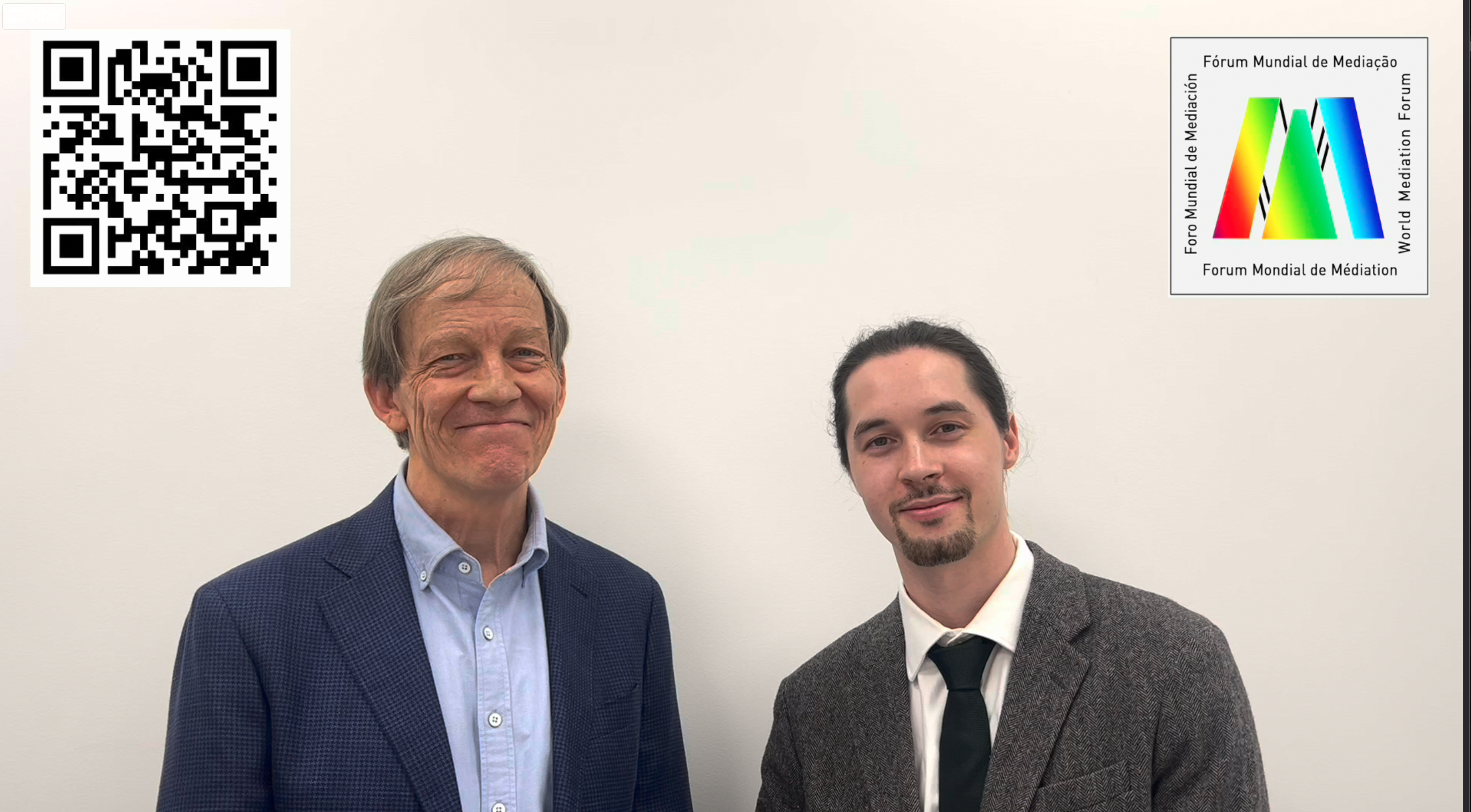
Rory and Milan (left to right) presenting at the 12th Conference World Mediation Forum – Foro Mundial de Mediación in Brazil in November 2024.
The story of fisherman Mark and how mediators are not so different…
Mark Schenk recently shared a fishing story to illustrate when 90% isn’t enough.1 Mark tells us that he loves beach fishing, and beach worms make great bait–but at $9 each, he decided to catch his own. Turns out, it’s trickier than he expected.
Over several months, Mark learned to pick the right beaches, attract worms, spot them, and get them to latch onto bait. But despite all that effort, he would spend two hours catching just one or two worms. He kept missing the final step–grabbing them.
Frustrated, Mark studied everything there was to know about catching worms and learned insight from a highly experienced fisherman. That’s when he discovered the problem, that his instincts were wrong. Mark was using a pincer grip, like picking up a pencil. But the right way? He needed to press the flat his thumb into the first joint of his index finger.
Once Mark changed his grip, he started catching worms immediately–but only if he was focused. Whenever his attention lapsed, old habits crept back.
We share this story because intercultural mediation is not so different.
Although Mark spent months learning the skills and techniques to catch beach worms, it would be entirely futile as what he lacked was insight and experience. Once he learned the ways of experienced fishermen, his ability to catch worms increased exponentially.
Although mediators might be highly trained and skilled in their own right, they can lack the experience and insight required to mediate intercultural interactions effectively. Mediators can prepare meticulously, understand the key players, and enter negotiations with good intentions–but it is justnot enough. Like Mark, they can often rely on ingrained instincts that don’t quite translate in another cultural context.
What is missing within intercultural mediation?
It is simply not enough to just understand different cultures, it is about recognising and appreciating how other people perceive fairness, respect, and the process within their own cultural lens. Ask yourself this:
Am I engaging with each parties’ culture on their own terms?
Am I identifying and discerning their expectations, needs, interests, or concerns accurately (including what they may require for the process to feel appropriate and fair)?
Am I adapting my approach to mediation so that each party can contribute their best in achieving mutually beneficial outcomes?
Without this level of intercultural predisposition, negotiations by and between parties may seem productive on the surface, but will fall apart in practice—just like Mark spending hours on the beach with only one or two worms to show for his efforts.
Why MIMI is the missing link–especially in 2025!
The world is shifting rapidly. Geopolitical tensions, economic realignments, and global challenges mean that current top-level negotiation skills are no longer enough.
Mediators need more than just knowledge of culture, they need an intercultural predisposition–a first-hand experience which complements their current knowledge and skills. The ability to move beyond rigid frameworks and adapt in real time to cultural expectations will produce fairness and respect from multiple perspectives.
Mediators must facilitate an environment where all parties can contribute their best, even when they feel like they are in foreign territory. Without this, agreements that are technically sound lack true buy-in, and those agreements will unravel under pressure or strain.
The cost of misalignment is growing. Whether in business, diplomacy, or public service, failure to navigate cultural expectations means failed projects, lost trust, and missed opportunities. MIMI helps mediators to develop that final 10% needed to excel within cultural interactions, and this cultural adaptability then turns competence into mastery. Like Mark’s fishing lesson, it’s a small shift that changes everything.
Who else can benefit from MIMI?
Mediators are not the only ones who can benefit from what MIMI has to offer. Leaders, coaches, negotiators, managers or executives in business, lawyers and legal professionals, doctors and nurses can all benefit immensely by mastering these intercultural skills.
Reflect on your own experiences… Has there ever been a time in your life, or the life of a person you might know, where there was a cultural disconnect? Where expectations within that interaction were not adequately met? Where needs, interests, or concerns were not accurately addressed? If you have, now imagine how others might feel where there is an even greater cultural disconnect–where the stakes, risks, and loss are substantial.
At MIMI, we have spent years refining our craft, and now we are guiding you to develop that same instinct—not by giving rigid rules, but by helping you see and feel the process differently. By completing our training program, you will begin your journey in becoming a master of intercultural mediation and you will be able to assist others in ways that are culturally relevant.
MIMI will teach you how intercultural mastery can become second nature, just like Mark adjusting his grip. MIMI is not just another training program–it is a transformational shift. This kind of shift, once made, cannot be unseen and will contribute to much beneficial change.
Join the MIMI Pilot Program—A Transformative Experience!
We invite you to express your interest in completing our pilot program and to contribute your thoughts on how we can make it better.
We are selecting only8 accomplished professionals for the exclusive pilot cohort: the Mastering Intercultural Mediation Initiatives (MIMI) Program.If you would like to be a part of this transformative experience, express your interest here.
Expressions of interests close 31 May 2025.
Who should apply?
✔️ Experienced mediators who have navigated complex, high-stakes disputes. ✔️ Senior leaders and negotiators who operate across cultural boundaries. ✔️ Professionals with a proven ability to build rapport in challenging intercultural situations.
As a pilot participant, you will:
Be the first to experience MIMI
Expand on your intercultural toolkit
Join an elite mastermind, shaping the future of intercultural mediation
Rory Gowers & Milan Nitopi This article is Part 1 of 3 in our series ‘Informed, Involved, Inclusive’.
Rory and Milan (left to right) presenting at the 12th Conference World Mediation Forum – Foro Mundial de Mediación in Brazil in November 2024.
Every culture is in conflict; and, we are all moderated by cultural norms and expectations. Where there is more cultural diversity, there is a greater chance for misunderstanding and an escalation of conflict.
In the context of meditation, facilitators who are not equipped with the necessary intercultural competencies risk undermining that process, which can contribute to difficult or unproductive communication and dialogue. Although competencies standards exist (such as the Intercultural Competence Specialisationby the International Mediation Institute), facilitator training in intercultural predisposition is limited.
We presented our proposition to counter this serious gap in mediator development at the 12th Conference World Mediation Forum – Foro Mundial de Mediación in Brazil in November 2024 in our address: ‘Informed, Involved, Inclusive: A New Chapter In Intercultural Competence’. The Mastering Intercultural Mediation Implementation (MIMI) training program is based on three core foundations:
Informed,
Involved, and,
Inclusive.
MIMI is a specific application of the my-RESPECT-ability model which entails the intercultural mediation principles, processes, and practices at the heart of the Intercultural Competence Playbook (Gowers 2023).
Visit my-RESPECT-ability to read more on the model or to enrol in introductory webinars.
In developing the MIMI training program we explored intercultural research concepts and approaches (including Dai & Chen, Sveiby & Skuthorpe, Gowers) as well as drawing on our combined lived experience and extensive mediation practice. Rory has lived in over 7 countries and brings insights from over a decade of real-life intercultural mediation practice (in public, private, and voluntary sectors).
Becoming interculturally competent is more than an intellectual and mindful journey. Therefore we decided it is crucial to centre our training model on participant transformation. As participants become more aware, more accepting, and more appreciative of an ‘other-culture’, they begin to develop competencies which enable them to facilitate intercultural interactions effectively.
An ‘other-culture’ is a class, community or sub-culture of any kind (social status, ethnicity, spiritual, gender identity, wealth, occupation, species, etc.) that is so different that it reveals in you a sense of personal discomfort or powerlessness (such as fear or anxiety or a capacity to interact). It is the feeling of being a total foreigner, in contrast to the feeling of being a relaxed tourist. It may be experienced as a feeling of alienation. This is what people from an other-culture experience when they enter into a new, dominant culture where they lack the capacity or the social skills to interact or negotiate on a level playing field.
The word ‘gudiya’ refers to non-Indigenous people in the context of Aboriginal-English. Indigenous Australians adapted English to communicate with non-Indigenous people after their traditional languages were stolen and is a variety of English, distinct from Australian English.
There are many words to refer to an ‘outsider’ and we all have experienced this feeling at some point in our lives.
Communication and dialogue is an essential and fundamental aspect of mediation, but how do we consider this through the lens of the three cultural motifs:
the Eastern “We”
the Indigenous “Be”
the Western “Me”
In a Western context, ideals such as self-determination and non-partisanship (including neutrality and impartiality) are often discussed as being critical to an effective mediated outcome. But what do these aspects actually mean with consideration of other-cultures?
Whereas in an Eastern context, the ideal of achieving harmony appears critical to an effective mediated outcome. And, in an Indigenous context, ideals of responsibility and collective existence appear critical to an effective mediated outcome. Yet the Western understanding of ‘mediation’ does not translate well with ideals belonging to other-cultures.
We see here that ethical practice is shaped by varying culturally embedded needs and these needs are not exclusive to just one specific cultural perspective. In the context of communication and dialogue, they illustrate the interests, needs, concerns, and expectations of other-cultures. Unless a mediator is interculturally aware, accepting, and appreciative of other-culture perspectives and ethical frameworks, their ability to facilitate effective and enduring outcomes is significantly diminished.
Where all parties to an intercultural dispute are able to express and address their interests, needs, and concerns in culturally relevant ways, then a more creative, sustainable, and harmonious outcome can be achieved.
Mastering Intercultural Competence
Our intercultural competence training model is built on three foundations:
Informed
Involved
Inclusive
Foundation 1: Informed (awareness)
The first foundation is focused on being better informed. By being better informed, we are led to an increased awareness. And, to be better informed we must turn our minds to the facts, feelings, and findings of intercultural research.
This foundation is a structured learning process centered on establishing the baseline knowledge of intercultural competence.
As it has been observed that a person’s experience of other-cultures is both an intellectual and mindful journey, knowledge of an other-culture is not itself enough to develop intercultural competence. Although the International Mediation Institute sets out the minimum standards for intercultural competence specialisation and set the pathway for internationally accepted mediation principles, we recognised that more was required in order to have a complete and comprehensive understanding of an other-culture.
In a Western context, unless we become aware and address our own inner conflict, we are unable to take a ‘balcony view’ of others’ conflict. By failing to adopt a balcony view, we lack impartiality and neutrality; concepts that are cornerstone to Western facilitative mediation practice. However, within other-cultures, a different approach might be taken.
Foundation 2: Involved (acceptance)
The second foundation is focused on being more involved. By being more involved, we are led to a greater acceptance of other-cultures. And, to be more involved we must immerse ourselves within an other-culture and listen to their stories, songs, and symbols.
We created this foundation to allow participants the opportunity to develop a deeper understanding of the other-cultures needs, values, and expectations by providing a full other-culture immersion program. This foundation is the heart of our training model.
This immersion program is crucial as participants must initially feel uncomfortable and confronted with unfamiliar aspects of an other-culture. This makes for a more profound intercultural learning experience. It is ourselves actually undergoing the change where we arrive at a deeper level of understanding and respect for other-cultures and their voice at the ‘table’.
As it takes time to begin immersing ourselves in an other-culture, some participants may elect to extend their immersion program to develop an even deeper understanding of the other-culture that they immersed themselves in.
Immersion is more than assimilation with, or imitation of, the other-culture. In their experience, participants learn respect for the values, needs, and expectations embedded within those other-cultures. It is to understand and accept that our eyes are but only one perspective in the world and that there are many eyes which look upon the face of this earth differently. All perspectives are valued.
Unlike how the International Mediator Institute Standards emphasise mediator proficiency of a particular culture and advocates for cross-cultural application, our approach is focused on competence in intercultural interaction.
To be cross-cultural is not to be intercultural. They are different. ‘Intercultural’ is described by Paula Schriefer as:
“communities in which there is a deep understanding and respect for all cultures. Intercultural communication focuses on the mutual exchange of ideas and cultural norms and the development of deep relationships. In an intercultural society, no one is left unchanged because everyone learns from one another and grows together.”
Foundation 3: Inclusive (appreciation)
The third foundation is focused on being more inclusive. By being more inclusive, we are led to a greater appreciation of other-culture’s wisdom, needs, and ways of working with conflict. And, to be more inclusive, we must turn our minds to choosing the most appropriate principles, processes, and practices of intercultural mediation for that culture.
We created this foundation to allow participants the opportunity to further develop their intercultural mindset and heart-set behaviours. A participant is to adapt their current core principles, practices, and processes to the interests, needs, concerns, and expectations of the other-culture they immersed themselves in.
By putting learnings and reflections into practice, participants are able to accurately identify and address communication and dialogue issues within an intercultural context. This can be achieved with case studies or role play exercises.
Authors Biography
Rory Gowers is a Master of Dispute Resolution (MDR), a Master of Education (MEd), an intercultural mediator, and a business strategist, residing in Greater Sydney, Australia. Rory has extensive international experience as a visionary business problem solver, and certified results coach. Rory’s mission is to facilitate a more respectful world by inspiring people and groups to transform business ecosystems with practical sustainable solutions with a vision to facilitate a place for all and peace for all in our time. Contact Rory via Webpage: www.myRESPECTability.com Email: rory.gowers@gmail.com Mobile: +61 425 292 811 LinkedIn: www.linkedin.com/in/constructiveconflictsolutions
Milan Nitopi is an accredited lawyer and mediator with (soon) a Master of Laws in Family Dispute Resolution (LLM FDR). Milan has a passion concerning people, law, and resolution and he strives to equip people with skills for better communication and dialogue to address all kinds of conflict. Contact Milan via Email: manitopi@outlook.com Mobile: +61 432 547 538 LinkedIn: www.linkedin.com/in/manitopi/
Frances is a volunteer adjudicator for the Law Society of New South Wales mock mediation competition. Frances is an accredited mediator and an Adjunct Lecturer at the School of Law, Sydney, The University of Notre Dame Australia.
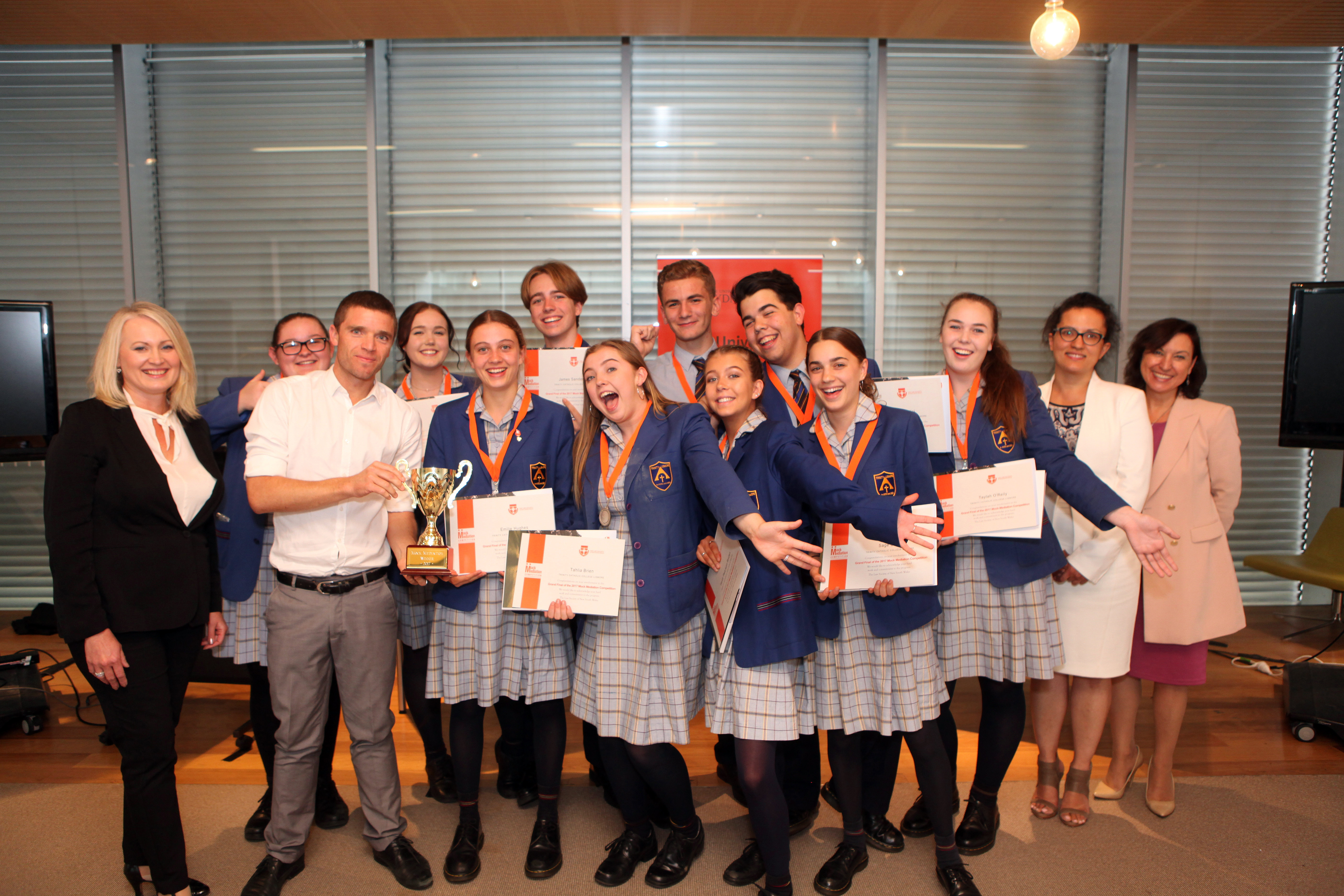
2017 Mock mediation Grand Final – this was the winning team Trinity Catholic College Lismore, with presiding adjudicators on either end of the team in the black jacket (Lara Bishkov), white jacket (Monika Lama) and pink jacket (Helen Miedzinski). Photo courtesy Frances Richards
This article is about initiatives to introduce mediation to students in NSW schools.
The NSW Department of Education offers peer mediation programs for primary and secondary public schools in NSW. These programs are one of the conflict resolution strategies available for schools to adopt. The Department provides resources for schools to use and intends to update these resources. The resources can be found at: Peer Mediation.
The Law Society of NSW organizes an annual mock mediation competition for secondary public and private school students. The competition provides an opportunity for students to develop, refine and practice cooperative problem solving and conflict resolution skills.
What are the objectives of these initiatives to introduce mediation in NSW schools?
According to the Department’s resources, the peer mediation programs are intended to ‘empower, prepare and support students and staff to deal successfully with conflict situations at school, at home and in later life.’
“ Recognise the opportunities for change and progress that can result from conflict and improve the ability of students to manage conflict in a way that leads to a positive outcome
Acknowledge the increasing use of mediation by courts and the community, and equip students with the skills necessary to participate in a mediation process.
Educate students about the importance of the process in tandem with constructive dialogue.”
How does mediation in schools work?
The peer mediation program involves one or two trained student mediators assisting two disputants through a structured process to reach resolution of a dispute. Peer mediation programs are coordinated by staff trained in mediation, who provide ongoing supervision and support to student mediators. Peer mediation programs are intended for minor disputes such as gossip and rumour spreading, name calling, friendship problems, teasing, loss of property and exclusion.
The mock mediation competition is open to students in years 9 and 10. Each school participating in the competition has 1 team with a maximum of 9 students. Each team participates in 3 rounds. All teams in the competition receive a certificate of participation. The two teams who reach the grand final receive a certificate and a medal. The winning team receives a trophy. The competition requires involvement and support from teachers as coaches and mediators as adjudicators.
To receive points for the competition, the students must demonstrate skills including:
Listening, Brainstorming, Empathy, Judgment, Questioning, Decision making, Communication, Teamwork, Problem solving, Leadership, Negotiation, Time management, Assertiveness and Reflecting.
What are the benefits for students?
Both the peer mediation program and the mock mediation competition are intended to benefit the students, staff, schools and community.
The intended benefits for students are:
Skill development including communication, listening and problem-solving skills
Assuming greater responsibility for solving their own problems
Creating an awareness of their responsibilities when dealing with others
Furthering personal development and self-improvement
Increasing self-esteem
Learning to manage conflict in a productive way
In addition to the mediation competition context, acquiring these skills may be of importance for the future employability of the students. A recent study of the Canadian workforce by the Royal Bank of Canada shows that these are the types of skills students will require to negotiate the future. The study found that “An assessment of 20,000 skills rankings across 300 occupations and 2.4 million expected job openings shows an increasing demand for foundational skills such as critical thinking, co-ordination, social perceptiveness, active listening and complex problem solving.”
The study also found that “Virtually all job openings will place significant importance on judgement and decision making and more than two thirds will value an ability to manage people and resources.”
The intended benefits for schools and the wider community include:
reduced conflict in the school environment
reduced bullying and aggressive behaviour
reduced tension in the classroom environment
reduced time spent by staff on minor disputes
safer and more harmonious school environment
maximising the opportunity for learning for all students
promoting open communication to resolve contentious issues
maximising the benefits of cooperative problem-solving
encouraging mediation and negotiation as an alternative to litigation
What does the research show?
An exploratory study into a peer mediation program in a primary school context in NSW collected data that demonstrated therapeutic benefits for the school community, that students reported that participation in the peer mediation program had benefited them in their lives after school and that the training and knowledge obtained from the program can be applied in different situations (McWilliam, N., A school peer mediation program as a context for exploring therapeutic jurisprudence (TJ): Can a peer mediation program inform the law?, International Journal of Law and Psychiatry (2010), doi:10.1016/j.ijlp.2010.09.002.)
Research has also been conducted into the use of mediation as an educational strategy in schools in other countries. One recent study of mediation in Spanish schools found evidence that the programs did teach students skills that they do not have the opportunity to learn in other subjects and to manage their own conflicts (Raga, L. G., Sanchis, I. C., Mora, A. M., & Santana, G. R., (2016). Strengths and weaknesses of the school mediation from the perspective of students in secondary education. Pedagogía Social: Revista Interuniversitaria, (28), 203-215. 10.7179/PSRI_2016.28.15.)
Conclusion
As an adjudicator for the mock mediation competition I have observed the students participating enthusiastically and reflecting on their experience of how hard it is to actively listen, what it feels like not to be heard and how hard it is to find strategies to unlock deadlock.
The potential of the peer mediation program and the mock mediation competition to deliver their intended benefits is limited by the time, resources and commitment of staff and volunteers.
Research is needed to provide evidence of the benefits of students participating in peer mediation programs and mock mediation competitions. Such evidence would assist schools in deciding to allocate time and resources to expanding the use of mediation initiatives. Submissions to conduct research in NSW public schools can be directed to: <http://www.serap.det.nsw.edu.au/>. Information about participating in the mock mediation competition in 2019 can be found at: Law Society Mock Mediation