Informed, Involved, Inclusive: The Proposed Curriculum

Rory Gowers & Milan Nitopi
This article is Part 2 of 3 in our series ‘Informed, Involved, Inclusive’.

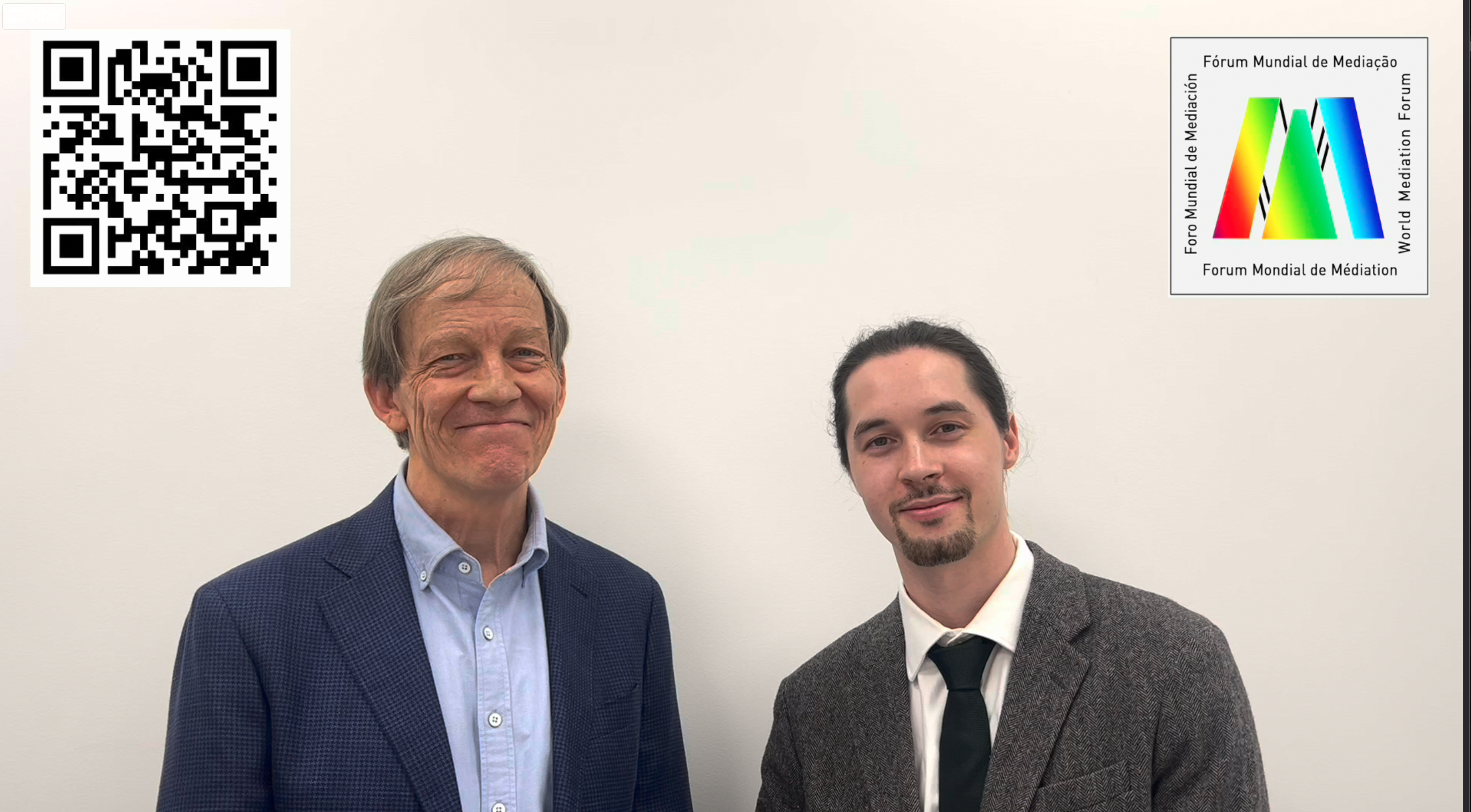
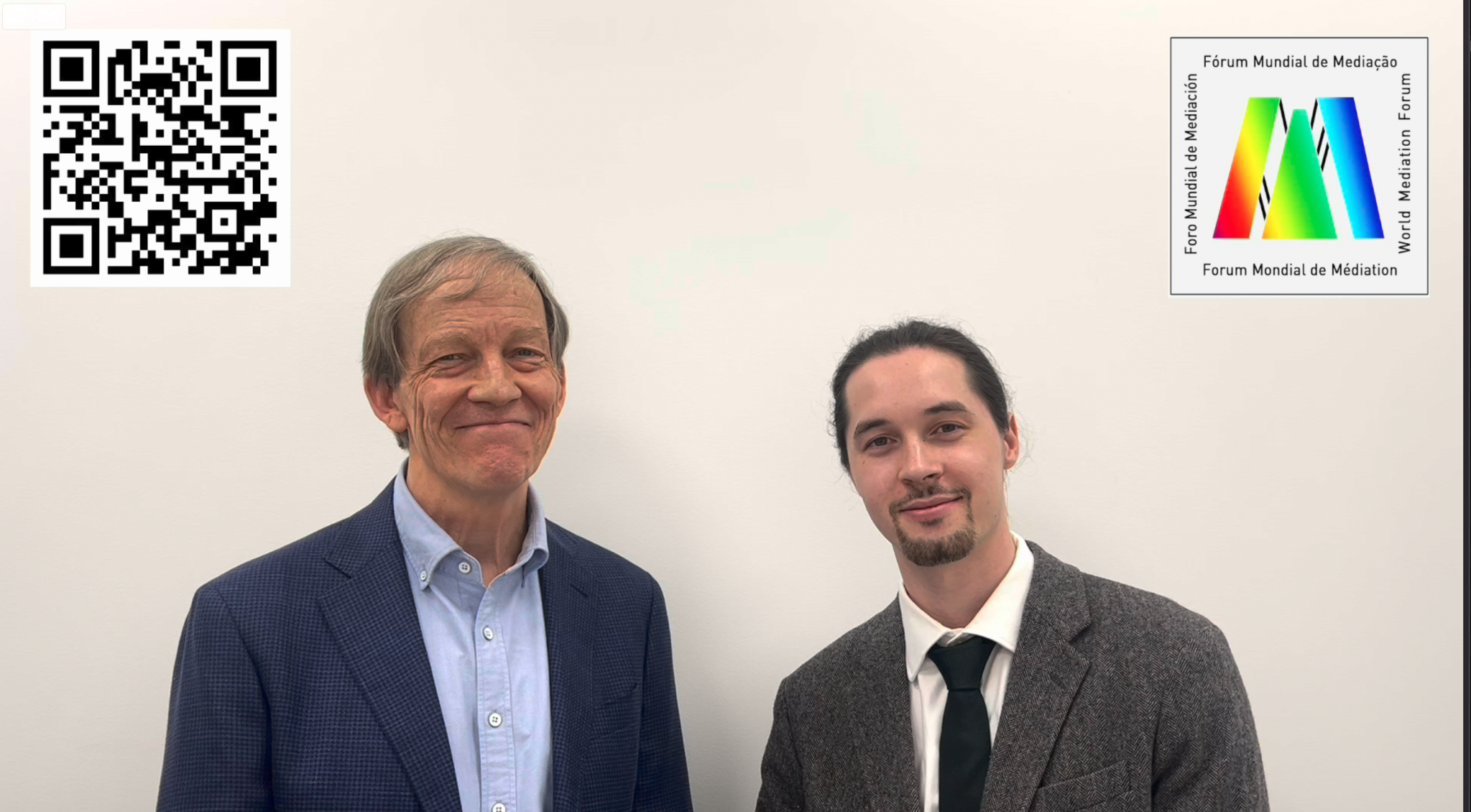
Rory and Milan (left to right) presenting at the 12th Conference World Mediation Forum – Foro Mundial de Mediación in Brazil in November 2024.

Disclaimer: ​​This introductory story is a work of fiction and does not intend to resemble any person or their lived experiences. Names, persons, places, and incidents are products of the author’s imagination. Any resemblance to actual events, locales, or persons is purely coincidental.

In the past…
Ashita had a promising future in Aressa, Syria. As a rising star in the development of artificial intelligence, she was ecstatic when her supervisor pulled her aside on Friday afternoon to share exciting news—her talents had been noticed. Come Monday morning, she would step into a new role, a significant leap forward in her career. As she travelled home that evening, she imagined the innovations she would contribute and the problems she would solve. But by Sunday night, the world she knew was gone.

Then something happened…
The war arrived without warning. Bombs shattered in the night sky, and chaos erupted in the streets. Her family fled in the back of a cattle truck that night, carrying with them only what they could. As the days turned into weeks, and the weeks turned into months, her past was slowly stripped away as she crossed each border. 

But eventually she arrived in her host country, and she was alone—her family was scattered, lost in the chaos of displacement. In her host country, Ashita faced a new kind of struggle. The temporary permit allowed her to stay, but it did not offer any sense of belonging. She could barely communicate her basic needs, let alone articulate her expertise in AI–employers saw a refugee, not a specialist. The locals eyed her with suspicion, their mistrust became a barrier she could not break down. Without any support or others willingness to understand, her talents and her livelihood began slipping away.

So now we’re doing this…
But there is another way. We offer a fresh and constructive path forward with specific application of the myRESPECTability model (Gowers, 2023) and through the Mastering Intercultural Mediation Initiatives (MIMI) training program. MIMI equips professionals in all fields with the skills to turn challenging intercultural communication into innovative and constructive dialogue with the involved stakeholders central to the issues in question. MIMI trained professionals will gain enhanced skills and competencies that enable them to facilitate sophisticated intercultural bridges to overcome long-standing cultural divides and reflect the current realities of our diverse, complex, and globalised world.

So we can have a future like this…
With skilled intercultural professionals, Ashita does not have to remain unseen. Professionals who are interculturally competent can help resolve situations–like Ashita’s–by adapting the standard mediation principles, processes and practices to ensure all parties feel able to express and address their interests, needs, and concerns in culturally relevant ways so that they may have an equal place at the table.

In this way, people who may be experiencing a sense of ‘out-culture’ can come into their foreground and make significant contributions for the benefit of the whole community as they now have an opportunity to share their insights and talents.
The Author/s have labeled this AI-generated content (AIGC). This indicates that this content was completely AI-generated or significantly edited with AI.

We share this so that we can create a future that bridges the gap between culture and encourages collaboration between people of all nations. We share this so that we can all work together to address global challenges and achieve solutions that promote peace, equity, and sustainability for all life on this planet. And, we share this so that we can equip the world with the knowledge and skills required for tomorrow’s challenges. But let us explain how we propose to do this…

In our first article we laid the foundations that underpin our proposed intercultural competency training model. In this article, we share our working developments that set out curriculum and rubric which outline the key assessments and learning objectives we intend to achieve.

    As becoming interculturally competent is more than an intellectual and mindful journey, we decided it is crucial to centre our training model on participant transformation. This means ensuring that key learning objectives are met, including:

    1. Participant engagement
    2. Research informed learning
    3. Self-reflection
    4. Flexibility

    MIMI Foundation 1: Interculturally Informed

    As the first foundation is a structured learning process centered on establishing the baseline knowledge of intercultural competence, we decided that participants would benefit most by undergoing an intensive workshop whereby they can both learn theory as well as engage in practical exercises with their cohort.

    We envision the workshop to be a total of 12 hours completed over a 3 day period (4 hours each day). Throughout the 3 days, participants will engage in collaborative style learning to learn intercultural theory as well as participate in group discussions and completion of case studies. Upon completion of the 3 days, participants will submit a portfolio detailing their reflections of the theory and activities they engaged in.

    Group discussions will focus on key interculturality issues in mediation practice, root causes for communication and dialogue issues, as well as a discussion of case studies to address questions such as:

    • How did each party feel about the experience?
    • What was the impact on the parties?
    • What could the facilitator have done differently?
    • How did the different communication skills influence the outcome?
    • What does that tell us about the importance of intercultural principles in mediation?

    We expect participants will satisfy the following rubric components to demonstrate their competence in being interculturally informed:

    1. To engage in the workshop including all group discussions, case study analyses, and other activities. This will be evidenced by their attendance and their portfolio submission following the 3 days.
    2. To learn and demonstrate an understanding of intercultural theory and its application to communication and dialogue within mediation practice. This will be evidenced by their portfolio submission following the 3 days.
    3. To self-reflect on learnings, insights, and peer contributions. This will also be evidenced by their portfolio submission following the 3 days.

    MIMI Foundation 2:  Interculturally Involved

    As the second foundation is centered on developing a deeper understanding of other-cultural needs, values, and expectations, we decided that participants would benefit most by undergoing a full other-culture immersion program whereby they can become practically involved to witness, first-hand, their stories, songs, and symbols.

    We recommend that participants undergo 10 consecutive days of immersion (with no less than 3 consecutive days). However, it is not a ‘one size fits all’ situation. Some participants may require more or less time to become fully involved in the other-culture–and that is okay! We support flexibility and we encourage participants to be self-determined in their own learning. During and upon completion of their immersion experience, participants will be required to submit a portfolio documenting their daily and final reflections.

    In documenting their daily reflections, participants will be prompted on a variety of intercultural issues, such as:

    • What is a specific cultural difference and similarity you experienced today?
    • What was a communication and dialogue challenge you perceived today?
    • How and why did you address and/or manage the intercultural challenge that you faced today?
    • Record one specific cultural story, song, or symbol that you experienced today.

    In documenting their final reflection, participants will be prompted on key interculturality issues in mediation practice or root causes for communication and dialogue issues by drawing on their own knowledge, insights, and immersion experience, such as:

    • How have your learnings and experiences affected your approach to peoples of an other-culture in your day to day life and/or in your mediation practice?
    • What communication or dialogue skills will you bring into your life and/or mediation practice?
    • How are those communication or dialogue skills relevant to effective mediation practice?
    • What do your learnings and experiences tell you about the importance of intercultural principles in mediation?

    We expect participants will satisfy the following rubric components to demonstrate their competence in being interculturally informed:

    1. To engage in at least 3 days of immersion in the other-culture and demonstrate a willingness to participate despite feeling a sense of discomfort, unease, or unfamiliarity. This will be evidenced by their attendance and daily reflections.
    2. To learn and develop an acceptance of the needs, interests, concerns, expectations of the other-culture in a way that is culturally relevant to their own intercultural interactions and mediation practice. This will be evidenced by their daily and final reflections.
    3. To self-reflect on learnings, insights, and lived experience. This will also be evidenced by their daily and final reflections.

    MIMI Foundation 3: Interculturally Included 

    As the third foundation is focused on putting learnings and reflections into practice, we decided that participants would benefit most by engaging in a final practical workshop to adapt their current core principles, practices, and processes to the interests, needs, concerns, and expectations of the other-culture they immersed themselves in.

    We envision the workshop to be a total of 20 hours completed over a 5-day period (4 hours each day). Throughout the 5 days, participants will engage in activities such as group discussions, case studies, and role-play exercises. The key focus of this workshop is for participants to demonstrate they are able to accurately identify and address communication and dialogue issues within an intercultural context. Upon completion of the 5 days, participants will be required to submit an ‘Intercultural Practice Statement’ as well as a portfolio detailing the activities they engaged in.

    Group discussions, case studies, and role-play exercises will focus on key interculturality issues in mediation practice, root causes for communication and dialogue issues, as well as a discussion of case studies to address questions such as:

    • How did each party feel about the experience?
    • What was the impact on the parties?
    • What could the facilitator have done differently?
    • How did the different communication skills influence the outcome?
    • What does that tell us about the importance of intercultural principles in mediation?

    The ‘Intercultural Practice Statement’ is a refined methodology for intercultural interaction and participants will be required to present this with their cohort. This provides an opportunity for them, as well as their cohort, to share insights and experience so that they can learn from each other. Participants will be asked to address a final question such as:

    • What are you going to do differently (i.e., how are you planning to include your learnings and experience into your life) now that you are informed and involved with the other-culture?

    We expect participants will satisfy the following rubric components to demonstrate their competence in being interculturally informed:

    1. To engage in the workshop including all group discussions, case study analyses, role-plays, and other activities. This will be evidenced by their attendance and their portfolio submission following the 5 days.
    2. To apply their learnings and insights accurately to identify and address communication and dialogue issues within an intercultural context and in a way that is culturally relevant to their own intercultural interactions and mediation practice. This will be demonstrated by their portfolio submission following the 5 days.
    3. To present their intercultural practice statement to their cohort. This will be evidenced by their attendance and portfolio submission following the 5 days. 
    4. To self-reflect on learnings, insights, lived experience, and peer contributions. This will also be evidenced by their intercultural practice statement and portfolio submission following the 5 days.

    Intercultural Competency Specialisation (optional add-on)
    As an optional add-on, practitioner-based participants (mediators, family dispute resolution practitioners, lawyers, etc.) can elect to undergo a further 1.5 hour role-play assessment to apply their learnings in a practical scenario.

    Our vision for the future is to incorporate this training model within leading institutions (such as mediator Recognised Accreditation Providers, Law Societies, Bar Associations, etc.) to develop an intercultural competency specialisation that practitioners can obtain and enhance their own competencies and professional practices.

    Continuing Professional Development (CPD)

    Each foundation addresses a different, but very necessary, aspect in intercultural competence development. But, because we believe that competency requires ongoing and continual development, the program will provide life-time access to resources and be supported by mentors, alumni, and peers in the online myRespectAbility community.

    Professional Members will also receive exclusive discounts on registration in other myRespectAbility or Affiliate programs and workshops. 

    Participants who demonstrate extraordinary performance throughout the program may be invited to add a chapter to the Intercultural Competence Playbook–a journal that we will publish, print, and mail annually–and is an opportunity for all to learn from others’ insights and experiences.

    Author Biography

    Rory Gowers is a Master of Dispute Resolution (MDR), a Master of Education (MEd), an intercultural mediator, and a business strategist, residing in Greater Sydney, Australia. Rory has extensive international experience as a visionary business problem solver, and certified results coach. Rory’s mission is to facilitate a more respectful world by inspiring people and groups to transform business ecosystems with practical sustainable solutions with a vision to facilitate a place for all and peace for all in our time. Contact Rory via
    Webpage: www.myRESPECTability.com
    Email: rory.gowers@gmail.com
    Mobile: +61 425 292 811
    LinkedIn: www.linkedin.com/in/constructiveconflictsolutions

    Milan Nitopi is an accredited lawyer and mediator with a Master of Laws in Family Dispute Resolution (LLM FDR). Milan has a passion concerning people, law, and resolution and he strives to equip people with skills for better communication and dialogue to address all kinds of conflict.
    Contact Milan via
    Email: manitopi@outlook.com
    Mobile: +61 432 547 538
    LinkedIn: www.linkedin.com/in/manitopi/

    Written Off: Three Steps to Move Forward When You Feel Rejected

    Dan Berstein

    Whatever the reason for it and whoever it comes from, rejection hurts. 

    In 2022 I wrote a book called Mental Health and Conflicts: A Handbook for Empowerment with hopes to teach people skills for managing challenging behaviors without writing off people with mental illnesses. At the time, this book represented a culmination of my life’s work and it meant a lot for to me that it found a home at the American Bar Association (ABA). 

    Three years later, my ABA affiliation was unfortunately terminated following a difficult saga, for me and many others, as I was wrestling with interpersonal struggles and bipolar symptoms.   The news of my termination was very difficult. I have been hospitalized five times due to my bipolar disorder–always during times when I became overwhelmed by similar interpersonal challenges. During each episode, I would break down, my mind would get stuck on a problem, and I would decompensate into mania or even psychosis. My condition has a high risk for instability and suicide, with research showing that each subsequent episode means a decreased odds of returning to normal functioning.1

    Being terminated from the ABA overwhelmed me. It was a sudden emotional crisis that put me at risk. I required emergency medication, emergency therapy sessions, and emergency support from friends and family. We summoned all of the lessons from decades of managing my condition in order to make it through.

    Even though it was an immensely challenging period in my life, this time something was different. In 2023, and as part of my professional work as a conflict resolver, I had developed a system for responding to avoidance, rejection, and social exclusion. I presented a three-step model to get through these especially challenging situations, which I call the 3 R’s, at the Association for Conflict Resolution conference and the Academy of American Law Schools ADR Works-In-Progress conferences.

    Without the skills of the 3 R’s, I do not know how I would have coped with being terminated. That system consists of:

    • Respect.
    • Reply.
    • Reorient. 

    The 3 R’s approach readily lends itself to any situation and can be easily used by anyone when they face rejection from friends, family, colleagues. Here’s how it works:

    1. Respect the person’s decision even if you find it stigmatizing or you disagree with it.

    While it is tempting to try to convince them of your worth, dispel lies or inaccuracies, and seek ways to still have the relationship, it can also be dangerous. 

    Sadly, I’ve learned in my life that, given I’m open with my bipolar disorder, it is easy for people to stigmatize my persistence to fight being rejected. Studies have shown that it is common that people with bipolar disorders are sensationalized in the media (such as TV shows or movies, and other portrayals).2 There is also research that shows people are more likely to worry someone that has a mental health problem is some kind of stalker.3 Amidst that kind of climate, it can be risky to continue contacting someone who may be seeing any follow-up through a stigmatizing lens. Arguing with their portrayal may only feed into the narrative.

    Stigma aside, in any conflict it is helpful to separate the person’s decision to cut contact with you from the explanation you are given or the style with which it is delivered. It may feel offensive, demeaning, disrespectful to be ghosted or to hear a story that does not ring true or clearly is contrived. But no matter how poorly implemented or inaccurate the rejection may seem to be, it still provides notice of a decision: however painful the circumstances, this person wants to diminish or end their relationship to you.

    Years of dispute resolution have taught me to prioritize self-determination,4 and made it easier for me to come to a place of accepting that a person made a rejection decision. 

    While it does not feel good to be rejected, it has been a relief to readily accept it instead of debating. If there are other problems related to what is happening, such as bullying or discrimination, it still can be best not to fight and instead look for other kinds of support.5

    2. Reply one last time to confirm the boundary.

    You may not always get a formal letter or confirmation (such as a letter of termination–like I received) when it comes to rejection and social exclusion with friends, family, or others.

    We live in a world filled with “ghosting” patterns–where people just pull away without contact–and things are left rather ambiguous and unclear.6 Sometimes it can be extremely ambiguous, such as in one of the latest dating trends where people engage in “breadcrumbing” to keep romantic partners on the hook or on hold.7

    This is why, whenever anyone seems to be avoiding contact with me, I send one final reply to let them know that I am acknowledging what I perceive to be their boundary to be and that I plan to follow it. Depending on your personal boundaries, you might also let them know you are available in the future if they change their mind on reconnecting. In the course of my mental illness discrimination advocacy work, I typically take that approach, with hopes that one day the people or organizations who are avoiding me will evolve and want to engage. In that case, I want them to know the door is still open for that.

    Sending this reply is important because it is possible–given any ambiguity–that there was a misperception. Sometimes people will immediately let you know that they didn’t mean to make you feel rejected and they might undo the boundary. On the other hand, if they are intent on the rejection, your reply documents that you are honoring their boundary and that record can be helpful, particularly to guard against the stigmas mentioned earlier.

    3. Reorient to next steps rather than stay stuck in pain.

    This is my favorite “R” because this approach has truly changed my life. Before the 3 R’s, I would stay fixated obsessing on hating myself, endorsing self-stigmas, wallowing, and reliving the loss over and over whilst descending into a dark place in my mind.

    But there is another way. If we commit to focusing on reorienting ourselves to discover new opportunities, we can enrich our lives. Since I started using the 3 R’s model in my life, I have connected with new friends and colleagues, developed new projects and partnerships, and become active in new communities–all because I decided to immediately accept the person’s decision to cut contact with me and start looking for new people and places to be involved instead. Since 2023, when I first created this system, my life has grown at a meteoric rate with many new opportunities which I have found and nurtured every time I reorient.

    My initial connection to Australia came by my efforts to reach out to someone in early 2024 and during a time when I received a different rejection letter related to my anti-discrimination advocacy work. This new relationship was a welcoming one where we collaborated on programs, and eventually led to a conference invitation from someone else and then to my writing on this Blog. None of this would have happened if I had not decided to reorient and move forward. And that example is just a fraction of the rich relationships I have developed when I took chances on reorienting toward new things instead of fighting to cling onto what I had already lost.


    I am sad that my bipolar disorder and interpersonal struggles led to difficult circumstances with the ABA and led to my termination. At the same time, I am grateful that the 3 R’s helped me get through it and land on my feet. This method has helped me in a time of need where I have felt unwelcomed in any community or with any person. Remembering to do it when I am feeling hurt has allowed me to make healthier, more empowering decisions.

    Even when I was so dysregulated by my serious mental illness and wrestling with an influx of distressed energy, I was still able to tap into those 3 R’s to ensure I made the best possible decisions to:

    1. Respect peoples’ choices instead of fighting to prove my worth,
    2. Reply to work things out instead of begging to return, and,
    3. Reorient to fill my life with opportunities that were a better fit for me and my sometimes-challenging mental health problems.

    I will still love the American Bar Association, albeit from afar and via nostalgic memories, I still have a page posted summarizing much of my anti-discrimination work there and other projects from my four years as Co-Chair of the ABA’s Dispute Resolution Section Diversity Committee. During this time, I made many friends and did a lot of important work. Though I will certainly miss being connected with so many great opportunities and new ideas, I will keep reorienting amidst the loss. Meanwhile, I will always recommend that anyone who does have access avail themselves of the myriad of resources disseminated by the ABA and often developed from their community of over 200,000 members.

    The 3 R’s have helped me prevent complete breakdowns and manage challenging times in my life. These skills have helped me find and new opportunities during times I might have otherwise fallen apart. Anyone can use this simple yet powerful system when they face rejection in their lives.

    Author Biography

    Dan Berstein is a mediator living with bipolar disorder who uses conflict resolution best practices to promote empowering mental health communication and prevent mental illness discrimination.  His company, MH Mediate, has helped thousands of professionals and organizations be empowering, accessible, and non-discriminatory toward people with disclosed or suspected mental health problems. Dan holds degrees from the Johns Hopkins School of Public Health and the Wharton School. He is the author of the 2022 book, Mental Health and Conflicts: A Handbook for Empowerment.


    1. Gergel, T., Adiukwu, F., & McInnis, M. (2024). Suicide and bipolar disorder: opportunities to change the agenda. The Lancet Psychiatry; Peters, A. T., West, A. E., Eisner, L., Baek, J., & Deckersbach, T. (2016). The burden of repeated mood episodes in bipolar I disorder: results from the National Epidemiological Survey on Alcohol and Related Conditions. The Journal of nervous and mental disease204(2), 87-94. ↩︎
    2. Klin, A., & Lemish, D. (2008). Mental disorders stigma in the media: Review of studies on production, content, and influences. Journal of health communication13(5), 434-449. ↩︎
    3. Wheatley, R., & Underwood, A. (2023). Stalking and the impact of labelling “There’sa difference between my offence and a stalker”. Journal of criminal psychology13(2), 91-104. ↩︎
    4. Baruch Bush, R. A., & Berstein, D. (2023). Orienting Toward Party Choice: A Simple Self-Determination Tool for Mediators. J. Disp. Resol., 1. ↩︎
    5. Tuckey, M. R., Li, Y., Neall, A. M., Chen, P. Y., Dollard, M. F., McLinton, S. S., … & Mattiske, J. (2022). Workplace bullying as an organizational problem: Spotlight on people management practices. Journal of occupational health psychology27(6), 544. ↩︎
    6. Freedman, G., Powell, D. N., Le, B., & Williams, K. D. (2019). Ghosting and destiny: Implicit theories of relationships predict beliefs about ghosting. Journal of Social and Personal Relationships36(3), 905-924. ↩︎
    7. Navarro, R., Larrañaga, E., Yubero, S., & Víllora, B. (2020). Psychological correlates of ghosting and breadcrumbing experiences: A preliminary study among adults. International journal of environmental research and public health17(3), 1116. ↩︎

    A Fresh Perspective on Conflict Management: Upcoming 7th Edition of a Seminal Text

    The enduring relevance of Conflict Management: A Practical Guide lies in its comprehensive exploration of approaches, strategies, tactics, and techniques essential for adopting a constructive and positive approach to conflict. Originally published in 1991 as a foundational text for practitioners, educators, and scholars in the field of conflict resolution, the book has evolved alongside the dynamic field of Alternative Dispute Resolution (ADR) in Australia. Now, the text is set to enter its seventh edition, reaffirming its significance in the discipline.

    Authors Expertise

    Dr. Peter Condliffe, the book’s author, has a distinguished career in the field. Serving as a Director on the Mediator Standards Board since 2018 and its Chairperson from 2023 to 2024, Peter has played a pivotal role in the NMAS Review and the transition to AMDRAS in Australia. As a practicing barrister and mediator in Victoria, his career has included leadership roles in management, human rights, and ADR, such as CEO of the Institute of Arbitrators and Mediators Australia, Director of Dispute Resolution Centres in Queensland’s Department of Justice and Attorney-General, and engagements with the United Nations. Across its six editions, the book has maintained a multidisciplinary framework reflective of Peter’s extensive expertise.

    The upcoming edition will introduce Dr. Claire Holland as co-author. Claire is a practicing mediator, conflict coach, workplace facilitator, and trainer who brings a wealth of academic and practical knowledge to the text. Having used the book extensively in her teaching career, she will incorporate fresh perspectives and insights. Notably, Claire will introduce two new frameworks:

    1. Conflict Analysis Framework: Co-developed with Dr. Judith Herrmann-Rafferty, this tool supports parties in conflict—and the professionals assisting them—to understand the dynamics of a conflict and make informed decisions about next steps.
    2. Planned Approach to Conflict Engagement: Also co-developed by Herrmann-Rafferty and Holland, this framework provides advanced strategies for managing ongoing conflict. It integrates insights and approaches from neuroscience on emotional regulation, fostering cultural awareness, and emphasises sustainable methods for addressing ongoing conflict.

    Call for Feedback

    Condliffe and Holland are seeking input from practitioners, researchers, and readers to shape the new edition. Feedback on areas to retain, adapt, or expand is particularly welcome. As a text designed for both practical application and academic instruction, the authors are keen to ensure the content remains relevant to its diverse audience, from university courses to professional development settings.

    Key Updates in the 7th Edition

    The new edition, retitled Conflict Management and Resolution: Theory and Practice, reflects an evolving understanding of conflict. It acknowledges that resolution is not always achievable or desirable and incorporates broader perspectives on conflict engagement. Planned updates include:

    • Reflections on the new AMDRAS regulatory standards in Australia.
    • Expanded coverage of specialties, such as mediation, restorative justice, First Nations processes, complaints management, and group facilitation.
    • Updates on negotiation concepts and processes, incorporating recent scholarship.
    • Insights into online and AI-assisted dispute resolution.
    • Expanded references to feminist theory and contemporary ADR approaches, including dispute system design.
    • A comprehensive update to the history of ADR in Australia.

    Proposed Topics for the New Edition

    The seventh edition will include chapters on:

    • Navigating Conflict
    • Responding to Conflict
    • Managing Difficult Conversations
    • History of Dispute Resolution in Australia
    • Collaborative Practice
    • Contemporary Approaches to Conflict Management and Resolution
    • Negotiation
    • Mediation
    • Group Facilitation
    • Key Practitioner Skills in Conflict Management and Resolution
    • Managing Ongoing Conflict
    • Dispute System Design

    Engage with the Authors

    Practitioners and academics are encouraged to contribute by sharing research, case studies, or ideas that could enhance the upcoming edition. Your insights will help ensure that Conflict Management and Resolution: Theory and Practice continues to be an indispensable resource for anyone engaging with conflict management in theory or practice.

    Stay tuned for the release of this significant update in late 2025—a resource designed to reflect the latest developments in conflict resolution and equip readers with the tools they need to navigate the complexities of modern conflicts.

    Please feel free to contact or write to either of the authors:
    Dr Peter Condliffe: pc@vicbar.com.au
    Dr Claire Holland: claire.holland@jcu.edu.au

    Motivating people to engage in conflict resolution services

    Samantha Hardy
    This article has been republished and adapted with permission. The original publication can be located within The Conflict Management Academy.

    When we look at how people typically promote conflict-related services, such as mediation, the services are often presented as a better option than other alternatives. In fact, this thinking is even found in the name “alternative dispute resolution”.

    However, psychological research shows that using ‘scare’ tactics to try to motivate someone to do something tends not to work. This can be explained by what Wayne Hershberger (1986) first called “the law of approach and avoidance” and means that we tend to move towards pleasure and away from pain.

    While you might think that telling someone about all the bad things that might happen if they leave their conflict unresolved would motivate them to move away from those bad things towards something better (e.g. mediation), the problem is that we have promoted our service by reference to the bad things, so they may well subconsciously move away from us!

    When we feel an emotion that we find unpleasant, our brain’s natural response is to move away from the thing related to that emotion. In contrast, when we feel an emotion that we find pleasant, our brain is wired to approach.

    However, in Shari Talbot’s book The Influential Mind, she explains that when we are trying to influence someone to do something, we have to be careful how we apply this logic. While we tend to move away from something that we see as unpleasant, we can also stop moving altogether if we are not sure about what we are moving towards.

    Our brains are wired in such a way that anticipating a reward not only triggers approach, it is more likely to elicit action altogether. If you want someone to act quickly, promising a reward that elicits an anticipation of pleasure may be better than threatening them with a punishment that elicits an anticipation of pain.

    In short – if we are trying to avoid something bad, we may move away from it, but we may also freeze if we are uncertain about what lies ahead of us. In contrast, if we know that something positive and rewarding lies ahead of us, we are more likely to actively take steps towards that better option.

    This works for both words and images. 

    A study of crowd funding requests carried out by Alexander Genevsky and Brian Knutson in 2015 examined 13,500 online requests for funding. These requests were often for financial support for people needing expensive medical treatment, and counter-intuitively, the research found that crowd funding requests were more likely to raise money if they showed someone happy and well rather than someone sick in a hospital bed.

    If you search online stock photo libraries for photos relating to “conflict resolution”, you will perhaps be surprised to find that many of the images do not illustrate “resolution” but rather show people in conflict.

    Here are some examples:

    As well as the law of approach and avoidance, we need to consider people’s need for a sense of certainty and control.

    Warnings and threats limit people’s sense of control, so instead we need to emphasize what needs to be done to reap rewards – which increases their sense of control.

    So, what does this mean for marketing a service like mediation?

    Firstly, talk about the benefits that clients will achieve by participating using an approach framework. Don’t just talk about the bad things they will avoid; also talk about the good things they will gain so that they can manage risk and also know what they can work towards.

    Secondly, emphasise the client’s opportunities to make choices and take control of their future.

    Thirdly, use positive images on your website, that show how people will feel and behave after they have used your services. 

    Here are some examples:

    Review your promotional material. If you want to make sure you are marketing your mediation services effectively, think about how much of your content is about what clients can avoid by engaging your services and how much of your content is about what clients can gain (rewards, pleasure) by engaging your services.

    Think about the kinds of images you use. Consider whether those images show the problem a client wants resolved or how the client will feel after they work with you? Consider ideas that describe the outcomes people will gain from working with you and the associated positive emotions that those people will elicit.

    Author Biography

    Dr Samantha (Sam) Hardy is the Director and Lead Trainer of the Conflict Management Academy. Sam is an experienced mediator, conflict coach, and the founder of the REAL Conflict Coaching System™. She provides conflict support to managers and leaders across the world as well as professional development training, supervision and mentorship to mediators and coaches who work with clients in conflict. Sam is an accredited mediator under the Australian National Mediation Accreditation System (NMAS), a certified transformative mediator by the United States Institute of Conflict Transformation, and a certified narrative coach. She has been awarded Conflict Coach of the Year at the Australian Dispute Resolution Awards in 2022 as well as the Australian Resolution Institute Award for Service to Dispute Resolution in 2021 for her leadership and innovation in the field. Sam also publishes widely in dispute and conflict resolution, including Dispute Resolution in Australia, Mediation for Lawyers and Conflict Coaching Fundamentals: Working with Conflict Stories.

    Insights from cognitive psychology: Applying priming to conflict management

    This post has been written by Judith Rafferty, adapted from her Open Educational Resource (OER) Neuroscience, psychology and conflict management (2024), licensed under a Creative Commons Attribution NonCommercial 4.0 Licence by James Cook University.

    Neuroscience, psychology and conflict management

    In a previous post, I discussed the value of neuroscience and psychology knowledge to inform conflict management theory and practice. In this post, I discuss specific learnings gained from cognitive psychology, focusing on memory and the phenomenon of priming.

    Memory in conflict management

    Conflict management practitioners – these include mediators, facilitators, coaches and negotiators – and negotiating parties often need to handle complex issues and juggle multiple pieces of information during a conflict management process. For example, conflict parties frequently must remember what they said, thought and did in the past, and process new information for future decision-making. These tasks require all types of the human memory, including:

    1. sensory memory
    2. short-term memory
    3. long-term memory

    In this post, I focus on long-term memory and the phenomenon of priming, due to its applicability to conflict management. Before discussing priming in more detail, let’s have a brief look at what the long-term memory comprises.

    Long-term memory

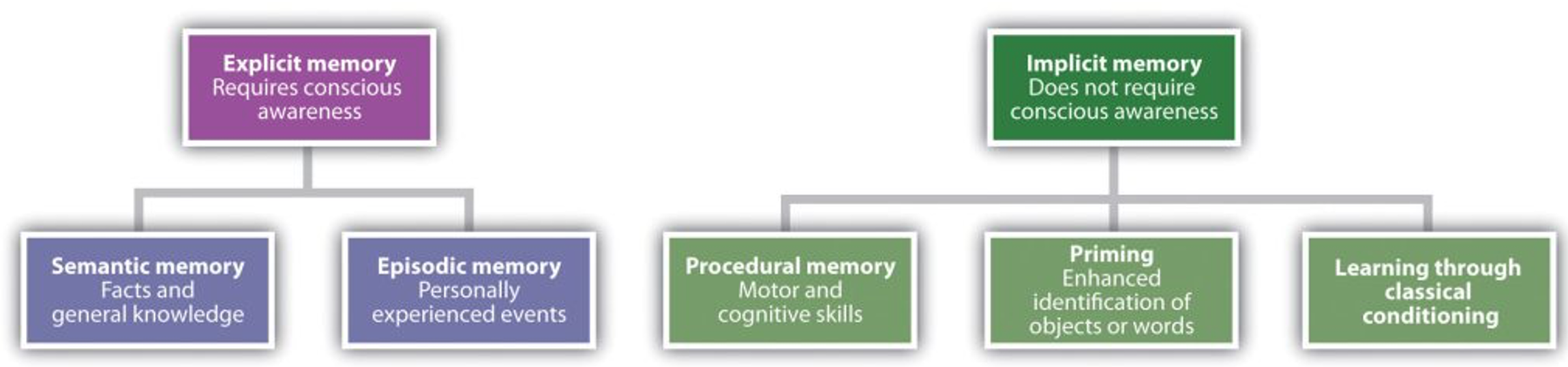
    The long-term memory can be categorised as explicit and implicit memory.

    The explicit memory, also known as declarative memory, refers to the type of memory that a person is consciously aware of. “You know that you know the information” (Gluck et al., 2020, p. 280). It comprises both memory of facts and general knowledge (semantic memory) and memory of personal experiences (episodic memory).

    The implicit memory, by contrast, refers to memory that operates without the learner being consciously aware of it. Implicit memory is formed by:

    • procedural memory
    • priming
    • learning through classical conditioning

    Figure 2.4.3. Types of Memory by Jennifer Walinga and Charles Stangor used under a CC BY-NC-SA 4.0 licence in Rafferty, J. (2024). Neuroscience, psychology and conflict management. James Cook University. https://doi.org/10.25120/k4vd-86×5

    Priming

    Priming is a psychological phenomenon where exposure to a stimulus influences how we respond to subsequent stimuli, and how we perceive and interpret new information. As defined by Gluck et al. (2020), priming is

    “a phenomenon in which prior exposure to a stimulus can improve the ability to recognize that stimulus later” (p. 88).

    Similarly, Kassin et al. (2020) describe priming as

    “the tendency for frequently or recently used concepts to come to mind easily and influence the way we interpret new information” (p. 118).

    In essence, priming makes certain concepts or ideas feel familiar, even if we aren’t consciously aware of the exposure.

    For example, research has shown that if we’re subtly exposed to specific words or images, we may later be more likely to recognise or choose something related to those stimuli (Gluck et al., 2020; Goldstein, 2019; Kassin et al., 2020).

    The impact of priming on social behaviour

    Exposure to a stimulus can also lead people to behave in a particular way without their awareness, especially when the stimulus was presented subconsciously. The impact of priming on social behaviour has been demonstrated in research, including in a series of provocative (and debated) experiments by Bargh, Chen and Burrows (1996). In this study, participants were primed with different words that were thought to influence their behaviour.

    For example, in experiment 1, participants were primed to activate either the constructs “rudeness” or “politeness” and were then placed in a situation where they had to either wait or interrupt the experimenter to seek some information. The research found that participants whose concept of rudeness was primed interrupted their experimenter more quickly and frequently than did participants primed with polite-related stimuli.

    In experiment 2, participants were primed with words that activated elderly stereotypes. The study found that participants for whom an elderly stereotype was primed walked more slowly down the hallway when leaving the experiment than did control participants, consistent with the content of that stereotype.

    How does priming relate to conflict management?

    The phenomenon of priming can both help understand what creates conflict and how we can support parties in conflict management/ resolution. Most of the publications discussed in this post focus on mediation, but many of the findings could also find application in other conflict management process such as group facilitations and one-on-one conflict management coaching. 

    Priming in mediation

    Daniel Weitz, in his article The brains behind mediation: Reflections on neuroscience, conflict resolution and decision-making discusses how priming can influence the mediation process. He suggests that using words like “listen to,” “hearing each other,” “dialogue,” “options,” and “future” in their opening statements, mediators may be able to “prime” parties for collaboration rather than competition (p. 478).

    Similarly, Hoffman and Wolman in their article The psychology of mediation note that the mediator’s initial description of the mediation process is the most powerful form of priming in mediation. Based on priming studies (which the authors mention but don’t specifically list), they suggest that mediators may wish to include expressions such as “being ‘flexible’ and ‘open-minded,’ the goal of reaching ‘a fair and reasonable resolution,’ and the need for ‘creativity’ and ‘thinking outside the box’” in their opening statements (p. 3).

    Beyond the mediator’s opening statement, Sourdin and Hioe, in their article Mediation and psychological priming, discuss other opportunities for priming during the mediation process. They suggest that mediators can “strategically moderate the environment” to foster a positive atmosphere and encourage successful outcomes (p. 79). Such moderation can be achieved, for example, by carefully selecting and setting up the physical location of the mediation, including considerations of room colour, temperature, and the provision of food and water.

    Amanda Carruthers, in her article on The impact of psychological priming in the context of commercial law mediation, explores factors such as the physical appearance of the mediator and legal representatives, the choice of venue, language use, and the influence of stress and references to money. She concludes that mediators and legal practitioners should avoid overt priming cues related to strength, power, and money to improve the positions of both parties in a commercial mediation.

    How priming can affect perception

    People are particularly likely to rely on the priming effect when new information is ambiguous. This is because we rely more on top-down processing than bottom-up processing when we are confronted with an ambiguous stimulus.

    Bottom-up processing begins with our receptors, which take in sensory information and then send signals to our brain. Our brain processes these signals and constructs a perception based on the signals. When our perception depends on more than the stimulation of our receptors – and this is frequently the case when information is ambiguous – we speak about top-down processing. During top-down processing, we interpret incoming information according to our prior experiences and knowledge. This process is frequently referred to as concept or schema-driven. As we learned earlier, when we have been primed, frequently or recently used concepts come to mind more easily and influence the way we interpret new information.

    In her blog post Priming in psychology, Kendra Cherry discusses how the priming effect influences what people hear when confronted with ambiguous auditory information, referring to the 2018 Yanny/Laurel viral phenomenon.

    As an example for visual perception, Lisa Feldman Barrett explains in her book How Emotions are made how priming can significantly influence our visual perception of others’ emotions. She emphasises that facial expressions are often much more ambiguous than many popular readings suggest, which would make us particularly susceptible to the effects of priming. For instance, if we’re told a person in a photo is screaming in anger, we are more likely to see anger in their expression, even if this is inaccurate.

    The person might actually be celebrating something positive, such as winning an important tennis match, potentially involving a whole mix of (positive) emotions, but the priming narrows our interpretation. With contextual information provided, we are likely to interpret the facial configuration more accurately than when taken out of context.

    How does the priming effect and perception relate to conflict management?

    A mediator might misinterpret facial configurations of parties in a mediation, perceiving emotions like anger, based on preconceived ideas of how people may “show” that emotion on their face, or influenced by comments made by the other mediation party.

    Knowing about priming can sensitise us to potential misinterpretations of emotions and encourages us to use multiple cues and information to perceive parties’ emotions more accurately. For a more detailed discussion on the cues that we can use to more accurately perceive others’ emotions, see Chapter 3, Topic 3.4 in Neuroscience, psychology and conflict management. These cues and the topic of emotions in conflict is also discussed in much more detail in Sam Hardy’s course on Working with Emotions in Conflict.  

    Priming to improve inter-group relationships

    Recent research by Capozza, Falvo and Bernardo explored whether activating a sense of attachment security through priming can reduce the tendency to dehumanise “outgroups”—groups with which individuals don’t feel a connection. They conducted two studies:

    • The first study primed attachment security by showing participants images of relationships with attachment figures and then measured how they humanised an outgroup, in this case, the homeless.
    • The second study had participants recall a warm, safe interaction to activate a sense of interpersonal security and then measured how they humanised another outgroup, the Roma.

    Both studies found that attachment security led to greater humanization of outgroups, with the second study showing that increased empathy played a key role in this effect. These findings suggest that fostering a sense of security can enhance intergroup relations, which has implications for intergroup conflicts. The successful use of priming to boost feelings of security highlights the importance of applying cognitive psychology to conflict management.

    The calming effect

    Capozza, Falvo and Bernardo, in their article, discuss several further positive effects of security priming, many of which are relevant to conflict and conflict management/resolution. For example, they emphasise the calming effect of security priming, noting that “even a momentary sense of security can shift the attention from one’s needs to others’ needs…” (p.3).

    Conflict management processes often aim to help individuals in conflict consider the needs and concerns of others. Understanding the calming effect of security priming and its ability to foster perspective-taking may provide conflict management practitioners with additional strategies to support their clients. Such strategies could consider aspects like:

    • The choice of physical setting for a mediation or coaching session (or other conflict management process).
    • The language used by the practitioner, such as during the mediator’s opening statement.
    • The types of questions the practitioner asks throughout the process.

    Remaining questions and considerations

    This post explored the priming effect and its relevance to conflict management, particularly in understanding why conflicts arise and how practitioners can support parties to manage or resolve them. Research suggests that there are multiple opportunities to prime parties during a conflict management process, such as mediation, as discussed in the sources mentioned throughout this blog. However, many questions remain, such as how much control a practitioner truly has over priming in a conflict management process Additionally, practitioners should consider the ethical implications, including the potential for manipulation, when applying priming techniques to their practice.

    A full reference list of the readings referred to in this post that have not been linked in the text can be found here.

    Author Biography

    Judith Rafferty is an Adjunct Senior Research Fellow at the Cairns Institute, JCU, and a Senior Trainer at the Conflict Management Academy. She integrates over 12 years of experience as a conflict management practitioner, researcher, and educator/trainer. She holds a PhD in Conflict Resolution, a Master of Conflict and Dispute Resolution, a Graduate Business Administration Diploma, and a Graduate Certificate in Psychology. As a Senior Lecturer and former Director of the postgraduate Conflict Management and Resolution program at James Cook University, Judith played a key role in developing curriculum and training resources that assist professionals in navigating complex conflict situations.
    Judith can be contacted on:
    Email: judith@conflictmanagementacademy.com
    LinkedIn: https://www.linkedin.com/in/judith-rafferty-770a329b

    Enhancing Conflict Management Theory and Practice through Insights from Psychology and Neuroscience

    This post has been written by Judith Rafferty, adapted from her Open Educational Resource (OER) Neuroscience, psychology and conflict management (2024), licensed under a Creative Commons Attribution NonCommercial 4.0 Licence by James Cook University.

    Conflict Management: A Multidisciplinary Field

    While there are designated conflict management scholars and practitioners, many ideas that inform both theory and practice come from outside the field. Individuals involved in conflict management often come from a broad spectrum of disciplines, particularly in the social sciences, such as psychology, sociology, history, geography, communication studies, political science, international relations, organizational behavior, and anthropology.

    Contributions to conflict management are also made from the formal sciences like mathematics, physics, biology, and neuroscience. By exploring some of these disciplines in more detail, we can gain valuable perspectives that deepen our understanding of conflict formation, escalation, management, and resolution. Psychology and neuroscience offer some especially useful perspectives and are the focus of this post.

    The Role of Psychology in Conflict Management

    Psychology and some of its branches are highly relevant for both theory and practice in conflict management. For instance, the American Psychological Association has a division specifically dedicated to applying psychology knowledge to conflict situations, called “The Society for the Study of Peace, Conflict, and Violence: Peace Psychology”. In fact, peace psychology is a distinct field of study with an International Centre for Peace Psychology, and the journal Peace and Conflict: Journal of Peace Psychology.

    Similarly, the Australian Psychological Society (APS) highlights the contributions psychologists make to understanding and managing conflict. According to the APS, psychology provides key insights into the psychological factors that underpin social conflict and aims to identify effective ways to foster positive relationships and productive outcomes. These approaches include strategies for resolving conflicts and governance models that prioritise cooperation over coercion (APS, 2023).

    Understanding Psychology: A Foundation for Conflict Management

    Psychology focuses on the study of mental processes and behaviour (and their relationship) (Zimbardo, Johnson, & McCann, 2009). The field of psychology comprises multiple sub-groups, or branches of psychology (Mullin, n.d.). Some of these branches are especially relevant to conflict management, including personality psychology, cognitive psychology, and social psychology. So, what do these branches focus on and how are they relevant to conflict management?

    Cognitive psychology

    Most generally, cognitive psychology is concerned with the study of mental processes such as thinking, learning, remembering, perception, information processing, language, problem-solving, decision-making, and reasoning. Cognitive psychology also considers people’s emotions and the impact of emotions on cognition. All cognitive processes mentioned earlier, as well as the effect of emotions on them, are highly relevant to the experience and management of conflict. For example, multiple mental processes and emotions are involved when people try to resolve conflicts, e.g. they must retrieve information about past conflict events and make decisions as to how to move forward. At the same time, mental processes and emotions are likely to have contributed to and have been affected by the conflict in the first place. For example, many conflicts arise because people have perceived events differently. More information about how cognitive psychology may relate to conflict management can be found here.

    Figure 2.2.1. Six or Nine? Image generated with Adobe Firefly; Rafferty, J. (2024). Neuroscience, psychology, and conflict management. James Cook University. https://doi.org/10.25120/k4vd-86×5

    Personality Psychology

    Personality psychology is the scientific study of the whole person (McAdams, 2009). It focuses on human individuality and may address questions like:

    • Why does Paul act more violently than Peter in the same situation?
    • Why do Tracey and Sam have such different ways of communicating and managing conflict?

    Personality psychology is distinct from other branches of psychology by focusing more on the person than on the situation. This is not to say though, that personality psychology neglects the situation. But rather than exploring how most people would act under certain circumstances, personality psychology tries to explain or predict how a specific type of person would most react in each situation. Conflict management practitioners and theorists have noted the effects that individual differences in personality may have on the formation and escalation of conflict, as well as on conflict resolution processes and their outcomes (Sandy et al., 2014). More information on how personality psychology may inform conflict management can be found here.

    Social psychology

    Social psychology seeks to answer questions like:

    • Why do people act differently when they are in a group compared to when they are on their own?
    • Why do people behave differently among their co-workers compared to when they are with their friends and family?
    • Why do people hold prejudice and stereotypes against certain groups and how may these affect their behaviours?
    • How can social cohesion best be strengthened to prevent social division and conflict?

    Social psychology may be defined as “the scientific study of how individuals think, feel, and behave in a social context” (Kassin et al., 2020, p. 4). All three areas, thinking, feeling, and behaving are involved and affected during the emergence, escalation, management, and resolution of conflicts. Several notable books in the field have focused on the applications of social psychology for conflict theory and practice, such as:

    A more detailed discussion of the application of social psychology for conflict management can be accessed here.

    Neuroscience and Conflict: Bridging the Gap

    Beyond psychology, the field of conflict management is increasingly looking to neuroscience for insights into why conflicts occur and how they can be effectively managed or resolved. Many conflict management scholars and practitioners recognise that people’s brains and bodies are significantly involved in facilitating societal conflict.

    For instance, Mary Fitzduff (2021) notes in her book Our brains at war that recent advancements in genetics, brain science, and hormonal research suggest that many personality characteristics are rooted in the brain’s biology. By offering “new and more sophisticated and nuanced insights into the way that people actually think”, neuroscience makes a critical contribution to the field of conflict management (Burgess, 2022). As another example, Bruneau (2015), in her book chapter Putting neuroscience to work for peace, emphasises the value of directly examining neural activity to transform psychology-based conflict theories into mechanistic understandings (p. 143).

    Knowledge from neuroscience can also help inform and evaluate the purpose, potential, design and principles of justice and conflict resolution processes, as well as the role and skills of conflict practitioners. For instance, findings from neuroscience can increase our understanding of aggression in people, which again may have implications for processes like restorative justice, as discussed in a Ted Talk by Dan Reisel. Other examples of how neuroscience can inform conflict management theory and practice, as well as links to related readings, can be found here.

    Neuroscience Meets Psychology: A Synergy for Conflict Management

    Neuroscience is the scientific study of the nervous system and an interdisciplinary field that integrates biology, chemistry, psychology, and more. Of particular interest for conflict management theory and practice are the intersections between neuroscience and psychology. It may help to think of neuroscience as dealing with the ‘physical’ (brain) and psychology dealing with the ‘abstract’ (mind).

    The functioning of our brain, hormones and neurotransmitters significantly affects our behaviours, cognitions, and social experiences. That is why the links between neuroscience and different areas of psychology are increasingly being recognised, studied, and taught. The growing recognition of these links has led to the emergence of new interdisciplinary fields, such as social neuroscience and cognitive neuroscience (Ito & Kubota, 2022). Both are highly relevant to conflict management theory and practice.

    Knowledge from social neuroscience, for instance, can increase our understanding of intergroup and social conflict, including the sources and factors that create, perpetuate, contribute to, and escalate intergroup conflict. This knowledge may again inform the planning and design of conflict intervention initiatives to help manage intergroup and social conflict. You can find further readings about social neuroscience and intergroup conflict in the previously mentioned Peace and Conflict: Journal of Peace Psychology as well as other Peace Psychology publications, including the newsletter The Peace Psychologist and the blog Dialogues with Peace and Conflict.

    Conclusion

    The integration of psychology and its branches, as well as of neuroscience offers critical insights into the questions why conflict occurs, how it develops and how it may be managed. By exploring the connections between the human mind, brain, and behavior, conflict management can be more effective and nuanced. Many of these connections are discussed in more detail in Judith’s (2024) eBook Neuroscience, psychology and conflict management, from which this post has been adapted. A course on Neuroscience, Psychology and Conflict Management will also be developed next year to be offered through the Conflict Management Academy.

    A full reference list of the readings referred to in this post can be found here.

    Author Biography

    Judith Rafferty is an Adjunct Senior Research Fellow at the Cairns Institute, JCU, and a Senior Trainer at the Conflict Management Academy. She integrates over 12 years of experience as a conflict management practitioner, researcher, and educator/trainer. She holds a PhD in Conflict Resolution, a Master of Conflict and Dispute Resolution, a Graduate Business Administration Diploma, and a Graduate Certificate in Psychology. As a Senior Lecturer and former Director of the postgraduate Conflict Management and Resolution program at James Cook University, Judith played a key role in developing curriculum and training resources that assist professionals in navigating complex conflict situations.
    Judith can be contacted on:
    Email: judith@conflictmanagementacademy.com
    LinkedIn: https://www.linkedin.com/in/judith-rafferty-770a329b

    Are frameworks useful to help understand complex conflict contexts?

    This post is republished with permission from the Conflict Management Academy.

    Claire Holland and Judith Rafferty, conflict management specialists, academics, researchers and trainers with the Conflict Management Academy (CMA), say YES! According to Judith and Claire, frameworks are a useful way to break down and look at complicated conflict situations in a way that can bring greater awareness, understanding, and clarity to the situation. It’s not suggested that frameworks simplify the conflict, but that they are useful to make the conflict appear more manageable.

    Practically, a framework can help to better understand a complex conflict by allowing the user to view the conflict through different lenses. Frameworks can also suggest multiple ways of thinking about the issues at hand, help the user to develop a more detailed and holistic picture of the conflict, and then consider multiple opportunities to work with the conflict. Claire and Judith suggest that using frameworks in conflict management contexts have multiple benefits, including:

    1. Assisting conflict management specialists, like mediators, conflict management coaches, and HR professionals, to work with clients to gather necessary information about the conflict and its context, and decide on next steps.
    2. Supporting clients to take a step back or ‘go to the balcony’ and perhaps not react out of habit and prior learned behaviour, but to suspend judgement on the situation until a more holistic analysis of the situation has been conducted.
    3. Thinking about future options that might be quite different from a conflict parties’ initial reaction to the situation once the conflict has been considered through different lenses.
    4. Focusing on long term strategies to manage the conflict by considering how the conflict may play out overtime. Looking at a conflict through an analytical lens and framework helps the user to determine if the issues in the conflict are suited to resolution or require alternative approaches to manage the conflict.

    Conflict Analysis Framework

    Drawing on years of teaching, research, and conflict management practice, Judith and Claire, have developed a framework to support conflict management specialists and conflict parties better understand ‘what is going on’ in a conflict situation. Drawing on multidisciplinary scholarship, including conflict studies, psychology, management, history, political science, etc. the Conflict Analysis Framework guides users through a step-by-step process to compartmentalise a complex conflict into more manageable segments for analysis.

    Spencer, Barry, and Ojelabi in their text Dispute Resolution in Australia provide only a short commentary on conflict analysis. While they note that it’s not easy to analyse complex conflicts, they suggest that conflict specialists would ideally have knowledge of multiple analytical tools and models to help them collect information about the conflict, understand the conflict dynamics and to support the conflict parties to constructively manage or resolve the conflict. Condliffe, in his text Conflict Management: A practical guide, leads the reader through a process of ‘understanding conflict’ and presents several considerations in ‘responding to conflict’. Condliffe outlines several models of conflict but does not provide a clear overarching framework for analysis.

    Several scholars and practitioners have introduced frameworks or tools to support conflict analysis. For example, Furlong, in his book The Conflict Resolution Toolbox, introduces 8 different models that help analyse and intervene in conflict, all considering different aspects of the conflict. This resource is particularly useful for interpersonal, less complex conflict situations. Bright’s Conflict Mapping Chart, lists specific elements for consideration in a conflict analysis process, aimed at analysing complex conflicts. Referring to Wehr’s Conflict Mapping Guide and Sandole’s Three Pillar Approach, Bright’s mapping chart describes five key steps to consider for analysis, informing a sixth step of conflict intervention. Judith and Claire have previously used this Chart in their teaching, as well as to develop engaging resources to be used for teaching conflict analysis.

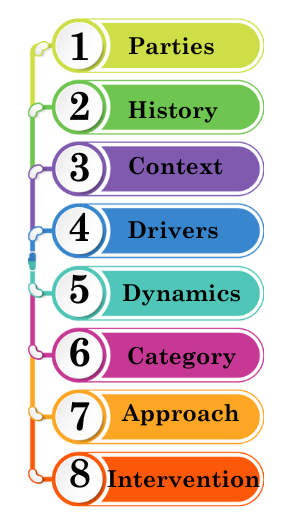
    Drawing on the work of colleagues and contemporary scholars, Claire and Judith have developed an 8-step framework for conflict analysis that will be introduced in their webinar Beyond Resolution: A planned approach to conflict engagement, available to view on demand on the CMA website.

    Planned Approach to Conflict Engagement

    Many conflicts have resolvable elements, but may also have ongoing aspects. For example, a divorcing couple may be able to negotiate and decide on selling the family home. However, decisions about their children’s future education, extracurricular activities, health, nutrition, etc., can’t really be negotiated as a one off, but will need to be managed for as long as both parents are involved in their children’s upbringing. So in the conflict analysis process that we described above, it is important to recognise the different aspects of a conflict, e.g. as resolvable or ongoing elements, and address them appropriately. Judith and Claire have developed a framework to support parties consider their options for “conflict engagement” as an alternative approach to dealing with conflict when elements of the conflict may be ongoing, and where resolution is not possible, or may be ill-advised.

    The Planned Approach to Conflict Engagement, or PACE for short, draws on multidisciplinary scholarship, such as Bernard Mayer’s book Staying with Conflict: A strategic approach to ongoing conflict, Sam Hardy’s book Conflict Coaching Fundamentals: Working with conflict stories, as well as contemporary literature on neuroscience, psychology and emotions, including Judith’s recently published open access educational resources. PACE has also been informed by Judith’s and Claire’s own research and practice as conflict management specialists, including in Australia and in culturally diverse settings like the Central African Republic, Rwanda, the Philippines and refugee camps on the Thailand-Myanmar border. They have published a blog post and a journal article about their work as mediation specialists in some of these settings, discussing the adaptation of mediation models to different cultural settings.

    Claire and Judith suggest that the development of a constructive and sustainable conflict engagement plan is ideally based on an exploration of several key areas, which they describe in detail in PACE. With the assistance of a suite of prompt questions and models for categorization for each of these key areas, the PACE framework assists conflict parties in deepening and expanding their understanding of the conflict itself as well as their options to engage constructively in the conflict over time. Some key recommendations for a sustainable approach to engagement in ongoing conflict include that parties:

    1. Have understood the ongoing nature of at least some aspects of their conflict, and
    2. Develop a plan to manage their emotions, energy, and access to resources and support long-term. This point is important so that parties don’t burn out and can continue to stay productive and engaged in the conflict over time.

    In the webinar Beyond Resolution: A planned approach to conflict engagement, available to view on demand on the CMA website, Judith and Claire are introducing their PACE framework in addition to the Conflict Analysis Framework. They will also offer training on the Planned Approach to Conflict Engagement (PACE) Framework on the CMA platform.