
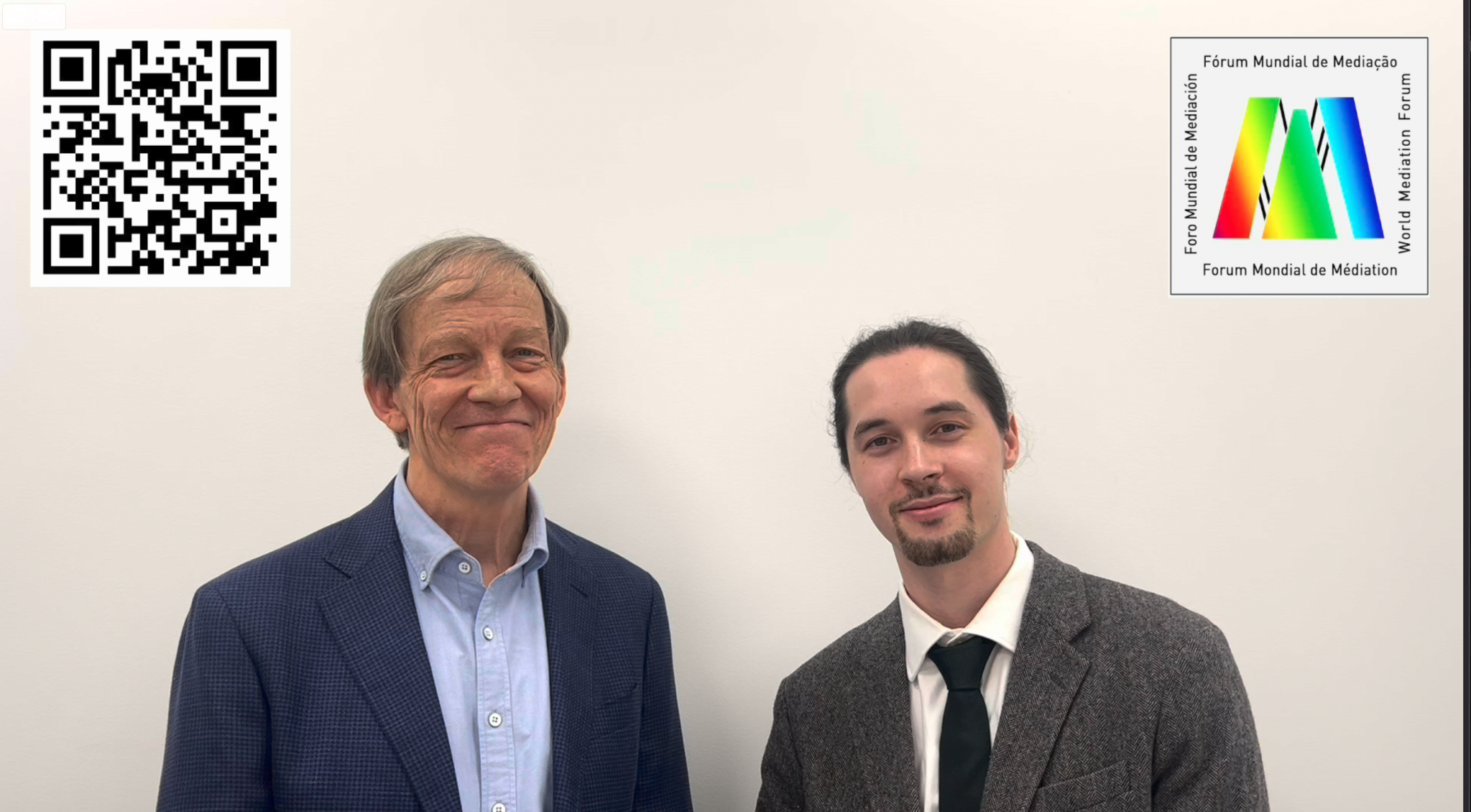
Rory Gowers & Milan Nitopi
This article is Part 2 of 3 in our series ‘Informed, Involved, Inclusive’.
Disclaimer: This introductory story is a work of fiction and does not intend to resemble any person or their lived experiences. Names, persons, places, and incidents are products of the author’s imagination. Any resemblance to actual events, locales, or persons is purely coincidental.
In the past…
Ashita had a promising future in Aressa, Syria. As a rising star in the development of artificial intelligence, she was ecstatic when her supervisor pulled her aside on Friday afternoon to share exciting news—her talents had been noticed. Come Monday morning, she would step into a new role, a significant leap forward in her career. As she travelled home that evening, she imagined the innovations she would contribute and the problems she would solve. But by Sunday night, the world she knew was gone.

Then something happened…
The war arrived without warning. Bombs shattered in the night sky, and chaos erupted in the streets. Her family fled in the back of a cattle truck that night, carrying with them only what they could. As the days turned into weeks, and the weeks turned into months, her past was slowly stripped away as she crossed each border.

But eventually she arrived in her host country, and she was alone—her family was scattered, lost in the chaos of displacement. In her host country, Ashita faced a new kind of struggle. The temporary permit allowed her to stay, but it did not offer any sense of belonging. She could barely communicate her basic needs, let alone articulate her expertise in AI–employers saw a refugee, not a specialist. The locals eyed her with suspicion, their mistrust became a barrier she could not break down. Without any support or others willingness to understand, her talents and her livelihood began slipping away.

So now we’re doing this…
But there is another way. We offer a fresh and constructive path forward with specific application of the myRESPECTability model (Gowers, 2023) and through the Mastering Intercultural Mediation Initiatives (MIMI) training program. MIMI equips professionals in all fields with the skills to turn challenging intercultural communication into innovative and constructive dialogue with the involved stakeholders central to the issues in question. MIMI trained professionals will gain enhanced skills and competencies that enable them to facilitate sophisticated intercultural bridges to overcome long-standing cultural divides and reflect the current realities of our diverse, complex, and globalised world.

So we can have a future like this…
With skilled intercultural professionals, Ashita does not have to remain unseen. Professionals who are interculturally competent can help resolve situations–like Ashita’s–by adapting the standard mediation principles, processes and practices to ensure all parties feel able to express and address their interests, needs, and concerns in culturally relevant ways so that they may have an equal place at the table.

In this way, people who may be experiencing a sense of ‘out-culture’ can come into their foreground and make significant contributions for the benefit of the whole community as they now have an opportunity to share their insights and talents.

We share this so that we can create a future that bridges the gap between culture and encourages collaboration between people of all nations. We share this so that we can all work together to address global challenges and achieve solutions that promote peace, equity, and sustainability for all life on this planet. And, we share this so that we can equip the world with the knowledge and skills required for tomorrow’s challenges. But let us explain how we propose to do this…
In our first article we laid the foundations that underpin our proposed intercultural competency training model. In this article, we share our working developments that set out curriculum and rubric which outline the key assessments and learning objectives we intend to achieve.
As becoming interculturally competent is more than an intellectual and mindful journey, we decided it is crucial to centre our training model on participant transformation. This means ensuring that key learning objectives are met, including:
- Participant engagement
- Research informed learning
- Self-reflection
- Flexibility
MIMI Foundation 1: Interculturally Informed
As the first foundation is a structured learning process centered on establishing the baseline knowledge of intercultural competence, we decided that participants would benefit most by undergoing an intensive workshop whereby they can both learn theory as well as engage in practical exercises with their cohort.
We envision the workshop to be a total of 12 hours completed over a 3 day period (4 hours each day). Throughout the 3 days, participants will engage in collaborative style learning to learn intercultural theory as well as participate in group discussions and completion of case studies. Upon completion of the 3 days, participants will submit a portfolio detailing their reflections of the theory and activities they engaged in.
Group discussions will focus on key interculturality issues in mediation practice, root causes for communication and dialogue issues, as well as a discussion of case studies to address questions such as:
- How did each party feel about the experience?
- What was the impact on the parties?
- What could the facilitator have done differently?
- How did the different communication skills influence the outcome?
- What does that tell us about the importance of intercultural principles in mediation?
We expect participants will satisfy the following rubric components to demonstrate their competence in being interculturally informed:
- To engage in the workshop including all group discussions, case study analyses, and other activities. This will be evidenced by their attendance and their portfolio submission following the 3 days.
- To learn and demonstrate an understanding of intercultural theory and its application to communication and dialogue within mediation practice. This will be evidenced by their portfolio submission following the 3 days.
- To self-reflect on learnings, insights, and peer contributions. This will also be evidenced by their portfolio submission following the 3 days.
MIMI Foundation 2: Interculturally Involved
As the second foundation is centered on developing a deeper understanding of other-cultural needs, values, and expectations, we decided that participants would benefit most by undergoing a full other-culture immersion program whereby they can become practically involved to witness, first-hand, their stories, songs, and symbols.
We recommend that participants undergo 10 consecutive days of immersion (with no less than 3 consecutive days). However, it is not a ‘one size fits all’ situation. Some participants may require more or less time to become fully involved in the other-culture–and that is okay! We support flexibility and we encourage participants to be self-determined in their own learning. During and upon completion of their immersion experience, participants will be required to submit a portfolio documenting their daily and final reflections.
In documenting their daily reflections, participants will be prompted on a variety of intercultural issues, such as:
- What is a specific cultural difference and similarity you experienced today?
- What was a communication and dialogue challenge you perceived today?
- How and why did you address and/or manage the intercultural challenge that you faced today?
- Record one specific cultural story, song, or symbol that you experienced today.
In documenting their final reflection, participants will be prompted on key interculturality issues in mediation practice or root causes for communication and dialogue issues by drawing on their own knowledge, insights, and immersion experience, such as:
- How have your learnings and experiences affected your approach to peoples of an other-culture in your day to day life and/or in your mediation practice?
- What communication or dialogue skills will you bring into your life and/or mediation practice?
- How are those communication or dialogue skills relevant to effective mediation practice?
- What do your learnings and experiences tell you about the importance of intercultural principles in mediation?
We expect participants will satisfy the following rubric components to demonstrate their competence in being interculturally informed:
- To engage in at least 3 days of immersion in the other-culture and demonstrate a willingness to participate despite feeling a sense of discomfort, unease, or unfamiliarity. This will be evidenced by their attendance and daily reflections.
- To learn and develop an acceptance of the needs, interests, concerns, expectations of the other-culture in a way that is culturally relevant to their own intercultural interactions and mediation practice. This will be evidenced by their daily and final reflections.
- To self-reflect on learnings, insights, and lived experience. This will also be evidenced by their daily and final reflections.
MIMI Foundation 3: Interculturally Included
As the third foundation is focused on putting learnings and reflections into practice, we decided that participants would benefit most by engaging in a final practical workshop to adapt their current core principles, practices, and processes to the interests, needs, concerns, and expectations of the other-culture they immersed themselves in.
We envision the workshop to be a total of 20 hours completed over a 5-day period (4 hours each day). Throughout the 5 days, participants will engage in activities such as group discussions, case studies, and role-play exercises. The key focus of this workshop is for participants to demonstrate they are able to accurately identify and address communication and dialogue issues within an intercultural context. Upon completion of the 5 days, participants will be required to submit an ‘Intercultural Practice Statement’ as well as a portfolio detailing the activities they engaged in.
Group discussions, case studies, and role-play exercises will focus on key interculturality issues in mediation practice, root causes for communication and dialogue issues, as well as a discussion of case studies to address questions such as:
- How did each party feel about the experience?
- What was the impact on the parties?
- What could the facilitator have done differently?
- How did the different communication skills influence the outcome?
- What does that tell us about the importance of intercultural principles in mediation?
The ‘Intercultural Practice Statement’ is a refined methodology for intercultural interaction and participants will be required to present this with their cohort. This provides an opportunity for them, as well as their cohort, to share insights and experience so that they can learn from each other. Participants will be asked to address a final question such as:
- What are you going to do differently (i.e., how are you planning to include your learnings and experience into your life) now that you are informed and involved with the other-culture?
We expect participants will satisfy the following rubric components to demonstrate their competence in being interculturally informed:
- To engage in the workshop including all group discussions, case study analyses, role-plays, and other activities. This will be evidenced by their attendance and their portfolio submission following the 5 days.
- To apply their learnings and insights accurately to identify and address communication and dialogue issues within an intercultural context and in a way that is culturally relevant to their own intercultural interactions and mediation practice. This will be demonstrated by their portfolio submission following the 5 days.
- To present their intercultural practice statement to their cohort. This will be evidenced by their attendance and portfolio submission following the 5 days.
- To self-reflect on learnings, insights, lived experience, and peer contributions. This will also be evidenced by their intercultural practice statement and portfolio submission following the 5 days.
Intercultural Competency Specialisation (optional add-on)
As an optional add-on, practitioner-based participants (mediators, family dispute resolution practitioners, lawyers, etc.) can elect to undergo a further 1.5 hour role-play assessment to apply their learnings in a practical scenario.
Our vision for the future is to incorporate this training model within leading institutions (such as mediator Recognised Accreditation Providers, Law Societies, Bar Associations, etc.) to develop an intercultural competency specialisation that practitioners can obtain and enhance their own competencies and professional practices.
Continuing Professional Development (CPD)
Each foundation addresses a different, but very necessary, aspect in intercultural competence development. But, because we believe that competency requires ongoing and continual development, the program will provide life-time access to resources and be supported by mentors, alumni, and peers in the online myRespectAbility community.
Professional Members will also receive exclusive discounts on registration in other myRespectAbility or Affiliate programs and workshops.
Participants who demonstrate extraordinary performance throughout the program may be invited to add a chapter to the Intercultural Competence Playbook–a journal that we will publish, print, and mail annually–and is an opportunity for all to learn from others’ insights and experiences.
Author Biography
Rory Gowers is a Master of Dispute Resolution (MDR), a Master of Education (MEd), an intercultural mediator, and a business strategist, residing in Greater Sydney, Australia. Rory has extensive international experience as a visionary business problem solver, and certified results coach. Rory’s mission is to facilitate a more respectful world by inspiring people and groups to transform business ecosystems with practical sustainable solutions with a vision to facilitate a place for all and peace for all in our time. Contact Rory via
Webpage: www.myRESPECTability.com
Email: rory.gowers@gmail.com
Mobile: +61 425 292 811
LinkedIn: www.linkedin.com/in/constructiveconflictsolutions
Milan Nitopi is an accredited lawyer and mediator with a Master of Laws in Family Dispute Resolution (LLM FDR). Milan has a passion concerning people, law, and resolution and he strives to equip people with skills for better communication and dialogue to address all kinds of conflict.
Contact Milan via
Email: manitopi@outlook.com
Mobile: +61 432 547 538
LinkedIn: www.linkedin.com/in/manitopi/
 The Australian Dispute Resolution Research Network