
The prevention, management and resolution of disputes in lockdown calls not only for an understanding of dispute resolution knowledge, skills and techniques – and of the art of mediation. It also calls for an appreciation of the nature and causes of conflict and disputes, and ways in which conflict and disputes might be appropriately analysed.
In the last Lockdown Dispute Resolution 101 post we defined the terms ‘conflict’ and ‘dispute’ and explored how in dispute resolution theory, disputes are commonly understood to be a concrete manifestation of conflict. In this post we focus on developing a deeper awareness of the nature of conflict and disputes. This leads us to some key questions we can ask in lockdown in order to better respond to conflict and disputes.
Many disciplines, for example the disciplines that make up sociology, investigate, research and analyse the nature and dimensions of conflict and disputes . However, this knowledge is not usually something we learn at school or through other public education avenues. There is a strong argument for a broader public education project on dispute resolution knowledge and skills. This is because everyone in communities – both domestic and global – at some point has to deal with conflict and disputes and their consequences.
Conflict and disputes are natural and everyday phenomena encountered in homes, communities, boardrooms, parliaments and war zones around the world.
They are played out vicariously in the news media, television, theatre and computer games. Interestingly, disputes and conflict are not absent from non-human animals’ behaviours as well.

No matter who the participants are, conflicts and disputes all involve a level of incompatibility among the parties involved, whether over objectives, resources, strategies, perceptions or other inconsistent preferences. These incompatibilities can lead to disagreement and disagreement can lead to a struggle where each side pursues its own preferences in ways not acceptable to the other. At this stage conflict has become a dispute.
Conflicts and disputes are seldom static in nature – they tend to be living organisms involving internal dynamics and fluctuating environmental pressures. The best approach is to prevent disputes from eventuating from conflict. The preferred option if a dispute does arise is, of course, to resolve it. This is not always possible, especially in lockdown. However often, if we adopt strategies from the art of mediation, we can steer a middle path – which is to manage the dispute so that although it may not be completely resolved, the parties involved can live with the situation, and continue their relationship with each other, whatever that might look like.
As we noted in post #12, while the definitive DNA of conflict is yet to be revealed there is increasing knowledge and understanding about the phenomenon. Some commentators refer to three potential aspects to a dispute – the cognitive, the emotional and the behavioural.

The cognitive component involves the perceptions, beliefs and understandings of people in dispute. People have a range of subjective perceptions that their needs are not being met because of – what they perceive to be – the incompatible and unreasonable activities of others. For example, in a post-separation parenting situation a parent waiting for their children to be returned after visiting the other parent may perceive that parent to be inconsiderate and unreasonable for not getting the children home on time.
The second dimension is the emotional – which involves the subjective feelings of people in dispute situations, including those directed at others. For example, the waiting parent is upset, frustrated or angry because every week there are delays in returning the children, or because they are now going to be late in getting the children to their sport commitment.
Both the cognitive and emotional facets of conflict might not be known to others if they are suppressed and are not articulated by the party experiencing them. This is not the case with the third dimension, the behavioural, which comprises the external and observable actions which parties in dispute take in expressing their feelings, articulating their views on the situation’s rights and wrongs and pursuing concrete actions in attempting to get their needs met. In the above example, the parent might remonstrate the recalcitrant party, seek legal advice or attempt to get the parenting arrangements changed.

The dimensions of conflict and disputes may overlap, but also they need not coincide with one another. Thus a small business owner may have negative perceptions (cognitive) about a dispute situation with a large supplier, but chooses to suppress their sense of injustice or to withdraw from the situation (behaviour) for emotional relief (emotion); alternatively they might negotiate a settlement and implement its terms (behaviour) but still regard themselves as having been unfairly treated (cognitive) or experience prolonged anger towards the supplier (emotion).
The emotional and psychological dimensions of conflict are related to the grieving process which parties experience after a significant loss. Where a person has suffered the loss of a limb, their job or their hopes for being able to purchase a house, they are likely to experience some or all of the stages or phases of grief. These include shock, denial, anger, bargaining and sadness, but they do not occur in a neat linear fashion.
For example, after the breakdown of a relationship, a spouse might be in shock (‘I don’t know why this happened’) or denial (‘They’re just going through a phase, everything will be fine’) – and this means it is not easy to negotiate or make appropriate decisions about things like parenting arrangements or the division of matrimonial property. The grief and loss process may have to be managed before negotiations can be effective. Once a person has reached the ‘acceptance’ stage of the grieving process in relation to conflict or a dispute they are more able to create new meanings for their lives. This is when people are best able to participate authentically in dispute resolution processes such as mediation.
Parties’ beliefs and the meanings they attach to past events affect all the dimensions of conflict and disputes. Where parties are acting out in contested situations their attitudes and behaviours are predicated on beliefs about what they deserve or can reasonably expect. This can be founded on on life experiences, on what others have told them or on their professional advice.
For example, changes in welfare regulations may lessen the benefits for senior citizen Ruby. However, Ruby may have a strong sense of entitlement to benefits, based on her many years of work, on serving with distinction in the military and on paying taxes throughout her life. These together create subjective beliefs as to what is right and wrong in her situation and brings her into conflict, and potential dispute, with welfare agencies and government. Beliefs are not easy to change. This is an area where a mediator or conciliator can bring value through their third-party intervention in a dispute. They are able to acknowledge Ruby’s beliefs and understand their significance for her perceptions and behaviour – and as a result of this acknowledgement Ruby may be assisted through the dispute process.
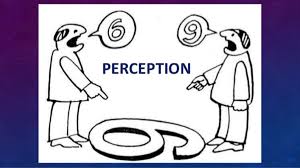 Perceptions and subjectivity are therefore important factors in conflict and disputes. However, conflict situations with the potential to turn into concrete disputes may not do so because they exist only in the perception of one or both parties and not in actual reality – for example two employees perceive themselves to be competitive rivals for one position whereas neither is realistically in line for it. This can be referred to as pseudo conflict in which parties’ perceptions or expectations are false or based on incorrect fears or unjustified apprehensions. False conflicts are based on stereotypes about others in terms of their personal or group attributes, for example about management or unions, or about refugees and security officials, and these can be accentuated by continuing ignorance or withholding of information, or by rumours, confirmation biases and wilful blindness. There may be little basis to the conflict in reality but it is played out by one or more parties as if there was. With both pseudo conflict and false conflict, the sharing of correct information, the provision of an explanation, or righting a misperception or a misunderstanding can help to resolve the situation.
Key questions to ask ourselves in lockdown to analyse disputes
A deeper understanding of conflict and disputes can inform some key questions we need to ask to analyse a dispute in lockdown. Using our dispute resolution agency means we need to adopt structured and intentional approaches to dealing adequately with a dispute rather than operating merely on gut-feeling.

Here are some questions to help us to think methodically through the elements of a dispute in lockdown:
- Who are the relevant people involved in the dispute?
- Why are they in dispute?
- Why have past attempts at resolving the dispute failed?
- On a scale of 1-10 how is each party coping with the dispute (and the conflict underlying the dispute)?
- What are the parties’ positions?
- What are the parties’ underlying interests, needs, fears and concerns?
- What would life look like if the dispute continues unresolved?
- What are some possible options for resolution?
- Which ones are realistic?
- What ‘package’ of options could optimally satisfy each party?
Tomorrow’s Blog: Lockdown Dispute Resolution 101 #14: Learning from the art of mediation – mediators functions relating to conflict.
Highlighting Works of some of the ADR Research Network Members
See here a sample of the works on conflict and dispute resolution in Australia – many of which are authored by current members of the ADR Research Network:
Bobette Wolski et al, Skills, Ethics and Values for Legal Practice (Thomson Reuters, 2nd ed, 2009)
David Spencer, Lise Barry and Lola Akin Ojelabi, Dispute Resolution in Australia: Cases, Commentary and Materials (Thomson Reuters, 4th ed, 2018)
Tania Sourdin, Alternative Dispute Resolution (Thomson Reuters, 6th ed, 2020)
Peter Condliffe, Conflict Management: A Practical Guide (LexisNexis, 6th ed, 2019)
Michael King et al, Non-Adversarial Justice (The Federation Press, 2nd ed, 2014)
Michael Mills, Commercial Dispute Resolution: A Practitioners’ Guide to Successful ADR (Thomson Reuters, 2018)
Acknowledgements
The content of this post was adapted and reproduced from Laurence Boulle and Rachael Field, Australian Dispute Resolution: Law and Practice (LexisNexis, 2017) Chapter 5. See also, Laurence Boulle and Nadja Alexander, Mediation Skills and Techniques (LexisNexis, 3rd ed, 2020) Chapters 1 and 4.
Sociology circle image: Pinterest
Fighting gorillas image: Africa Adventure Safari
DNA image: Science Mag
Cognitive Emotional Behavioural image: Victorian State Government
Perception image: Psychology Today
Question mark image: Clipart Library




 Future Time, Future Space
 Conflict is a challenging phenomenon in all contexts – in international relations, societies, families and workplaces. It is pretty much endemic to the human condition and is usually present in some form or at some level wherever human beings are in a relationship or relating to each other in some way. In one of our books on dispute resolution – Australian Dispute Resolution: Law and Practice – Laurence Boulle and I deal extensively with the many facets of conflict and disputes: the definitions, sources and dimensions, how they can escalate and de-escalate, and possible interventions and outcomes. This post is taken from that Chapter.

 The term complaint is sometimes used interchangeably with ‘dispute’. However, the term is usually associated with consumers or clients alleging wrongdoing or irregular practices by business, government or other service-providers.
 The term grievance is often used in workplace and employment contexts where it is used to refer to allegations of various kinds made by employees against employers, supervisors or other employees. The term ‘grievance’ usually implies that there has been a lack of response, or even resistance, from management – for example a supervisor has not responded to allegations of victimisation, the HR department has not addressed bullying concerns or there has been failure to performance manage an employee adequately. Grievances can arise out of conflict situations and could give rise to concrete disputes that require legal interventions such as fact-finding investigations or tribunal hearings. Where an employee brings a grievance claim there could follow a process of investigation, mediation and adjudication in relation to their rights as employees and the alleged wrongdoing of other parties in the workplace.
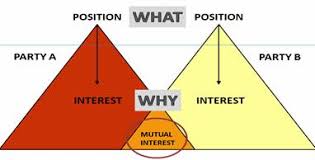


 If the parties adopt positional or argumentative approaches, mediators attempt to divert them into an interest-based or problem-solving mode. This requires interventions which shift the focus from positions (or in other words, what a party wants) to interests, needs and priorities (or why a person wants what they want). Positions are the tip of the iceberg, it’s only once the mediator helps the parties to mutually explore and understand their divergent interests that more diverse options for resolution can be generated.
 The mediator function of facilitating party negotiations is extremely skilful and represents the true art of mediation practice. It requires a deep functioning knowledge and appreciation of the theories and practices of positional and interest-based negotiation – so that mediators can impart constructive techniques for the parties’ benefit. It is difficult to capture the art of facilitated negotiations in mediation in a way that is easily replicable by us in our homes and virtual offices while in lockdown.



 Drawing on mediation practice, there are a range of strategies we can enact. For example, ensuring we find a quiet place to sit comfortably, where we are free from interruptions and the lighting is at an appropriate level. We should choose a room that is relatively neutral, like the living or dining-room, for example, rather than a person’s bedroom. It can be constructive to have a whiteboard – even just a small one, or in the alternative a flip-chart or some paper, or an electronic device – for writing up the agenda and taking notes about possible options and solutions that are discussed. We might also harness relevant physical symbols that make us feel comfortable and productive. For example, having a photo of the children on the table when talking about arrangements for them to keep a focus on their best interests. It’s also a good idea to set up with glasses of water for refreshment.


 In our lockdown communications we can also establish ground-rules like these. We can say out loud at the start of a discussion or negotiation that we are committing to speak and engage respectfully with each other and that only one person will speak at a time. We won’t always succeed in adhering to the ground-rules. But having established them gives each person in the conversation the authority to remind others of them and if, for example, one person starts over-talking another, they can be respectfully reminded that their earlier commitment was not to do that. Something as simple as this can bring a sense of order and structure to communications.

 Our verbal communications are only one dimension of the way we communicate with family, friends, colleagues and others in lockdown. Non-verbal communication is another dimension. Non-verbal communication consists of aspects of communication which can be seen by the other party – the ‘visuals’, and other forms of communication which can be heard – the ‘vocals’. To communicate and negotiate effectively in lockdown it is important for us all to be aware of body language messaging.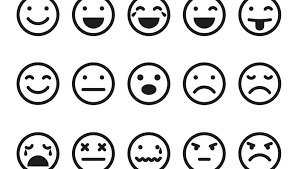

 The Australian Dispute Resolution Research Network