Our efforts in lockdown to prevent, manage and resolve disputes can be supported by engaging with some psychology basics. Not only do we need to recognise the different biases we bring to lockdown negotiations and communications, there is also a range of other insights that we can learn from psychology. We don’t have a mediator at home and in virtual workplaces to help us, so we need to draw on our dispute resolution agency and harness this knowledge ourselves.

As we know, psychology is the scientific discipline that studies the human mind, human behaviour and the mental processes that inform human behaviour. Psychology as a profession is dedicated to helping people solve practical problems with human fundamentals – such as how we think and feel. A common misconception of psychology is that it is only concerned with mental health issues, such as depression, anxiety and stress. These issues fall under the heading of clinical psychology, which is a particular psychological specialisation. However, other aspects of psychological knowledge can help us in lockdown communications and dispute resolution practice to understand why people behave, think and feel in certain ways. It is therefore clear that our efforts to make communication and dispute resolution in lockdown more effective can be enhanced by connecting with the evidenced-based knowledge base of psychology.
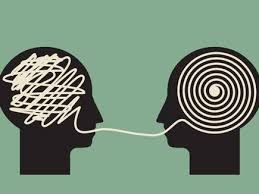
In this post we specifically look at emotional intelligence, emotional flooding and emotional transference and countertransference. If we tap into some of these ‘psychology basics’ we will be better able to understand conflict, disputes and our responses to them in lockdown.
Emotional intelligence
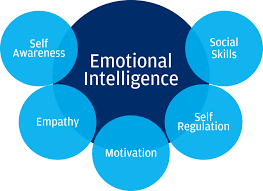 Simply put, emotional intelligence is the intelligent use of emotions. This requires an awareness of our emotions and an ability to use that awareness to beneficially aid our thinking and behaviour. Emotional intelligence informs our capacity to perceive emotions, assimilate emotion-related feelings, understand the information of those emotions, and manage them.
Emotional intelligence contains four competencies. First, the ability to perceive emotion accurately. Second, the ability to use emotion to facilitate thought. Third, the ability to understand emotion. Fourth, the ability to manage emotion.
Emotional intelligence is strongly related to intrapersonal intelligence and interpersonal intelligence. Emotional intelligence from an intrapersonal perspective considers an individual’s emotional self-awareness and their ability to regulate their own emotions. Emotional intelligence from an interpersonal perspective involves a person’s ability to accurately detect the emotions of another person and to manage their emotional responses.
Harnessing our emotional intelligence is important for communicating and negotiating in lockdown if we are to engage as well as we can with family, friends and work colleagues.
Emotional contagion
 Emotional contagion is a psychological phenomenon that refers to the ‘catchability’ or contagiousness of emotions. For example, if Rachael is in a particularly happy mood, this mood may end up rubbing off on Anna and Anna may subsequently begin to feel happier. Anna might then ‘infect’ others with her happiness. Emotional contagion ‘refers to the tendency to catch (experience/express) another person’s emotions’ (Kimura, Daibo and Yogo, 2008, 27).
One formal definition of emotional contagion (sometimes referred to as primitive emotional contagion’ or ‘implicit emotional contagion’) describes the construct as ‘the tendency to automatically mimic and synchronize facial expressions, vocalizations, postures, and movements with those of another person and, consequently, to converge emotionally’ (Hatfield, Cacioppo and Rapson, 1994, 5).
Emotional contagion has also been defined more broadly to mean ‘a process in which a person or group influences the emotions or behavior of another person or group through the conscious or unconscious induction of emotion states and behavioral attitudes’ (Schoenewolf, 1990, 49).
An awareness of emotional contagion can help us to understand the feelings of others and therefore see a conflict in a more positive light – and take actions that might lead to positive outcomes. This awareness can also help us to avoid catching the emotions of others, which otherwise might lead to feelings of helplessness, or hostility towards the other party.
Emotional flooding
 Emotional flooding occurs when an individual becomes swamped by emotions. Biologically, intense emotional experience can affect the way the brain works. Information exchange to the neo-cortex is inhibited, with the result that people find it difficult to think in cognitively complex ways and to function properly. This might sound like a really extreme and rare occurrence, but it actually happens to people surprisingly frequently.
Have you ever found that in a heated argument, or when you are faced with a stressful situation, that your brain does not seem to function quite as well as you would like? Your muscles feel a bit tense, your heart rate goes up, your breathing becomes a bit more rapid, or your voice becomes unsteady? Maybe you feel like bursting into tears? These are all signs that emotional flooding may be occurring.
Knowing about emotional flooding is important for us in lockdown communications and negotiations. It is not uncommon to feel distressed if we are experiencing conflict, and this makes us particularly susceptible to emotional flooding. Emotional flooding is most likely to occur when we experience negative emotion that has been triggered by an external event, or even our own negative thoughts. It can be counterproductive to engaging in higher order thinking. That said, emotional flooding can occur to varying degrees in different people. For example, it might manifest itself in the person we are communicating with as their appearing just a bit spaced out, or mentally stuck.
Literature suggests that it may take at least 20 minutes for someone to recover from an experience of emotional flooding. Obviously, there are some situations where we can’t afford to take a 20-minute time out. Ideally then, we should try to avoid emotional flooding. Understanding our own triggers for emotional flooding is a vital step in its prevention. Reframing external problems or threats as challenges to be overcome, and correcting or challenging negative internal dialogue, are two strategies for combating emotional flooding. Positive self-talk is really helpful in this regard!
Transference and countertransference
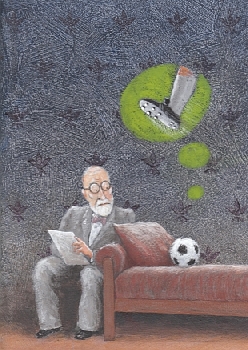 The concepts of transference and countertransference have their origin in the work of Sigmund Freud and his focus on psychoanalysis/psychodynamic theory. Freud was a famous psychologist for many reasons, although when most people think about Freud, they often think about beards, couches, and unconscious and sexually repressed thoughts and behaviour. These images are all accurate to a certain degree. As it turns out, one of the reasons why Freud used ‘the couch’ when treating patients related to the notion of countertransference: ‘Freud frankly admitted that he used this arrangement inherited from the days of hypnosis, because he did not like “to be stared at”; thus, it served him as a protection in the transferencecountertransference duel’ (Benedek, 1953, 202).
Talking about transference and countertransference outside the context of psychotherapy arguably dilutes the precise clinical meaning of these terms. Given this caveat, transference refers to a process in which we might project on to the person we are communicating with certain traits – which might not be based in reality – but which stem from our previous associations with that person. Countertransference involves a reaction to their expressed emotions and point of view from a perspective of our own unresolved personal issues. Just like emotional contagion and emotional flooding, transference and countertransference are regularly occurring phenomena. They don’t necessarily lead to problems, but it is important to appreciate when transference and countertransference are at play.
Tomorrow’s Blog: Lockdown Dispute Resolution 101 #24: Effective communication strategies in lockdown – self-management: Part 1. This is followed by Lockdown Dispute Resolution 101 #25: Effective communication strategies in lockdown – self-management: Part 2. These are the 2 final posts in the Lockdown Dispute Resolution 101 series.
Acknowledgements
 The content of this post was adapted and reproduced from Rachael Field, James Duffy and Anna Huggins, Lawyering and Positive Professional Identities (LexisNexis, 2nd ed, 2020) paras 10.27-10.42.
Psychology image 1: American Psychological Association
Emotional intelligence image 1: Cognitive Institute
Emotional contagion image 1: Psychology Today
Emotional flooding image 1: Highly Sensitive Refuge
Countertransference image 1: Moosmosis
See also:
Therese Benedek, ‘Dynamics of the Countertransference’ (1953) 17 BULL Menninger Clinic 201.
Paul Olsen (ed), Emotional Flooding (Human Sciences Press, 1976).
Gerald Schoenewolf, ‘Emotional Contagion: Behavioral Induction in Individuals and Groups’ (1990) 15(1) Modern Psychoanalysis 49.
Elaine Hatfield, John T Cacioppo and Richard L Rapson, Emotional Contagion (Cambridge University Press, 1994).
Tricia Jones and Andrea Bodtker, ‘Mediating with Heart in Mind: Addressing Emotion in Mediation Practice’ (2001) 17(3) Negotiation Journal 217.
Lezlie Burwell-Pender and Kate H Halinski, ‘Enhanced Awareness of Countertransference’ (2008) 36(2) Journal of Professional Counseling: Practice, Theory, and Research 38.
Masanori Kimura, Ikuo Daibo and Masao Yogo, ‘The Study of Emotional Contagion from the Perspective of Interpersonal Relationships’ (2008) 36 Social Behavior and Personality 27.
Nadja Alexander, Jill Howieson and Kenneth Fox, Negotiation: Strategy Style Skills (LexisNexis, 3rd ed, 2015).

 A compelling illustration of these insights is provided in relation to the phenomenon of loss aversion, one of the cognitive biases previously identified by psychologists. When subjects undergoing brain-scanning are exposed to the single words ‘loss’ or ‘gain’ there are profound differences in the observed neural impacts – in broad terms the former term has an effect several orders of magnitude greater than the latter, in respect of both intensity and duration. In this instance the brain science reinforces orthodoxy long prevalent in mediation theory: parties who perceive they are facing a loss are likely to be risk-accepting and seek an outcome away from the mediation, but if they perceive a gain at the mediation table they are likely to be risk averse and favour settlement. Brain scanning provides corroboration and a deeper explanation for the phenomenon, founded on human survival instincts, which responds to threats more intensely than to rewards. While survival instincts arose originally in relation to physical threats, they are now also a product of perceived unfairness, undignified treatment, negative emotional experiences or unfulfilled expectations in the mediation room.
 Another dimension of brain science derives from the organ’s bicameral structure. In 2017 Australian judges were addressed on the divided brain by an English psychiatrist, Ian McGilchrist, his work drawing on science, philosophy, literature and culture. He accentuated the significance of brain bicameralism in many aspects of human affairs and societal development – and by implication in dispute resolution activities. A more dated ‘left brain-right brain’ notion had been prevalent decades earlier, associating the left with attributes such as logic, language and analysis and the right with factors such as emotion, affect and art. This construct had in some respects been overtaken by work on the triune brain, and its implications, referred to above.
 John Wade used the metaphor of the mediator’s tool-box of interventions, implying that mediators will not always be able to adopt standardised procedures and linear logic but may have to be reactive, responsive and instinctive in using different tools in the process. The National Mediator Accreditation System provides some guidance on mediator responsibilities in relation to conflict, negotiation and culture but this is of only limited proportions. Psychology and neuro-science are definitely new tools for the mediator’s tool-box.
 In acting as an agent of reality, a key strategy to help the parties consider whether a settlement or solution is realistic and viable is to question them about what the proposed solution would look like in operation in the context of their lives outside mediation, helping them to cogently and realistically think through the risks, options and choices available to them.
 Some of the content of this post was adapted and reproduced from Laurence Boulle and Nadja Alexander, Mediation Skills and Techniques (LexisNexis, 3rd ed, 2020) paras 6.57-6.58 with the kind permission of the authors. Thank you – Laurence and Nadja! Both Laurence and Nadja are esteemed members of the ADR Research Network and have long been leaders in the Australian and international dispute resolution communities. The post also includes content from Laurence Boulle and Rachael Field, Mediation in Australia (LexisNexis, 2018) 104-5.


 The content of this post was adapted and reproduced from Laurence Boulle and Nadja Alexander,
 Good summarising requires a range of micro-skills, such as retaining important information, recalling it and condensing it. It is always a selective process in that in a mediation, mediators pick up on positive progress to date and present it in a constructive and concise statement. It is also selective in that mediators pick up only on what is useful for the communications – not everything gets summarised. The reason why mediators are selective in enacting the summarising process is that selectivity allows them to create a positive and encouraging basis for the parties to move forward with their negotiations. However, summaries also need to be balanced in the sense that they deal fairly with what each side has said.
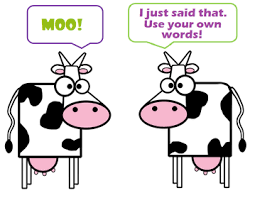 In a mediation, mediators ensure that paraphrasing is done in an even-handed way so that both the parties’ communications are paraphrased. In this way, it can be used to set up a pattern of direct communication between parties, and it can break what Australian mediation legends Ruth Charlton and Micheline Dewdney have called the ‘Oh but’, ‘Yes but’ pattern of communication: ‘Oh but I didn’t understand that’s what you wanted.’ ‘Yes but I had told you only two days before …’. ‘Oh but I called and texted you …’ ‘Yes but …’ (2014: 250). However, if this is the only way of keeping parties communicating constructively it can quickly become strained and artificial.
 Generally, reiteration is one of the tools in the mediator’s toolbox which can be used in all situations in which parties are talking past each other and not picking up on important messages.
 See also: Ruth Charlton and Micheline Dewdney,


 The content of this post was adapted and reproduced from Laurence Boulle and Nadja Alexander, Mediation Skills and Techniques (LexisNexis, 3rd ed, 2020) paras 6.47-6.54 with the kind permission of the authors. Thank you Laurence and Nadja! Both Laurence and Nadja are esteemed members of the ADR Research Network and have long been leaders in the Australian and international dispute resolution communities.
 When mediators reframe, they are engaging in a translation exercise through which they change the communication by moving it from one type of language to another. The intention is that the second language version is more palatable to the parties and more conducive to collaborative problem-solving.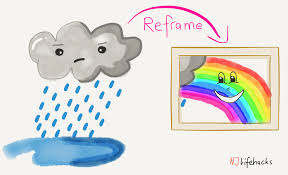
 The content of this post was adapted and reproduced from Laurence Boulle and Nadja Alexander,




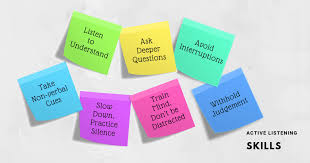
 As human beings, we all have a basic capacity for empathy, and we are also socialised to extend that capacity because in every culture, even though empathy may manifest in diverse ways, some level of empathy is important to the quality of human relations. In order to harness the communication benefits of empathy, we must be present in our communications with others, paying attention and prepared to engage and connect. Listening empathically means that we are focused on what the other person is saying, observing, feeling, needing and requesting.
 This next sequence of posts continues our learning from the theory and practice of mediation – with an emphasis on specific skills for effective communication. We are focussing on five key skills denoted by the acronym LARSQ. LARSQ stands for listening, acknowledging, reframing, summarising and questioning. The LARSQ approach to understanding and enacting effective communication is a common feature of
  Effective listening
 The content of this post was adapted and reproduced from Laurence Boulle and Nadja Alexander,
  See also: Mieke Brandon and Leigh Robertson, Conflict and Dispute Resolution: A Guide for Practice (Oxford University Press, 2007).