
Unknown's avatar

About Milan A Nitopi

Milan Nitopi a Sydney-based lawyer and mediator whose passion surrounds people, law, and resolution. He writes with a focus on conflict management and legal dispute resolution. Connect with Milan via LinkedIn and Instagram!

We Need to Talk About … the EU AI Act!

Maxi Scherer
This article has been republished with permission. The original publication can be located within the Kluwer Arbitration Blog.

There has been a lot of talk about artificial intelligence (“AI”) in international arbitration in recent years.  I vividly remember when I gave the keynote speech on “International Arbitration 3.0 – How Artificial Intelligence Will Change Dispute Resolution” at the Vienna Arbitration Days 2018.  At the time, people were quite skeptical about the topic, but apparently intrigued enough to select it at the GAR awards as the best lecture of the year.  Since then, the international arbitration community has evolved, and it is now undisputed that AI systems have a significant and increasing impact on international arbitration (see e.g., Maxi Scherer, Chapter 39: Artificial Intelligence in Arbitral Decision-Making: The New Enlightenment?, in Cavinder Bull, Loretta Malintoppi, et al., (eds), ICCA Congress Series, Volume 2, pp. 683 – 694 (2023)).  For instance, counsel frequently employ AI tools for document review and research purposes, and there is a rising demand for these systems in transcription and translation tasks.

As AI systems continue to develop, it is also important to create a harmonized ecosystem where AI “collaborates” effectively with arbitration practitioners – be it with counsel or arbitrators.  Among the most burning questions is whether there is a need to regulate AI, either broadly or in international arbitration more specifically.  Recently, I gave the 6th Sciences Po Mayer Brown arbitration lecture on the question “Do We Need to Regulate the Use of Artificial Intelligence in International Arbitration?”  While there is burgeoning regulation in court proceedings (such as by the UK Courts and Tribunal Judiciary and the Dubai International Financial Centre (DIFC)), very little exists that applies to international arbitration.  In April 2024, the Silicon Valley Arbitration and Mediation Center published the “Guidelines on the Use of Artificial Intelligence (AI) in International Arbitration,” as an attempt to propose some form of optional regulation.

On a broader level, the European Union Artificial Intelligence Act (the “Act”), a landmark legislation that lays down harmonised rules on artificial intelligence, was adopted by the European Parliament on 13 March 2024 and will enter into force after its publication in the EU Official Journal.  Despite being described as the most comprehensive piece of legislation in the AI field, the international arbitration community has paid little, if any, attention to this regulation and few practitioners are aware that the Act has the potential to apply to international arbitration proceedings (but see here), and in particular to arbitrators.  This blog discusses how the activities of arbitrators may fall within the material, personal, territorial and temporal scope of the Act.

Material Scope

The Act takes a risk-based approach, which means that it classifies economic activities according to the likelihood of harm caused by AI systems, and the regulatory duties vary according to this level of risk (Recital 26).

For instance, there is a general duty of AI literacy, which means that providers and deployers of AI systems shall take appropriate measures to gain the knowledge and skills to “make an informed deployment of AI systems, as well as to gain awareness about the opportunities and risks of AI and possible harm it can cause” (Recital 56).

Activities of arbitrators may be classified as “high-risk”.  Annex III, Art 8(a) provides that “AI systems intended to be used by a judicial authority or on their behalf to assist a judicial authority in researching and interpreting facts and the law and in applying the law to a concrete set of facts or used in a similar way in alternative dispute resolution” (emphasis added) are to be classified as high-risk AI systems.  The reference to “alternative dispute resolution” is likely to include international arbitration.  This is confirmed by Recital 61 which provides that “AI systems intended to be used by alternative dispute resolution bodies for [the purposes of the administration of justice and democratic processes] should also be considered to be high-risk when the outcomes of the alternative dispute resolution proceedings produce legal effects for the parties.” (emphasis added).

Article 6(3) contains exceptions to the high-risk classification, namely where otherwise high-risk AI systems are used in a way that does not pose a significant risk of harm to the health, safety or fundamental rights of natural persons.  This applies to situations in which:

“(a) the AI system is intended to perform a narrow procedural task;
(b) the AI system is intended to improve the result of a previously completed human activity;
(c) the AI system is intended to detect decision-making patterns or deviations from prior decision-making patterns and is not meant to replace or influence the previously completed human assessment, without proper human review; or
(d) the AI system is intended to perform a preparatory task to an assessment.”

In which circumstances these exceptions apply is not immediately clear from the Act.  Nor is the answer clear to the critical question whether one can conclude from Article 6(3) that international arbitration will fall under the high-risk activities category only if natural persons are concerned.

Personal Scope

The Act distinguishes between different regulated entities.  Providers, importers and manufacturers of AI systems bear the most stringent obligations under the Act (Articles 16, 25).  However, “deployers” of AI systems also fall under the scope of the Act. A “deployer” is defined in Article 3(4) as “any natural or legal person, public authority, agency or other body using an AI system under its authority except where the AI system is used in the course of a personal non-professional activity.”  Arbitrators, as natural persons using AI systems for a professional activity, thus fall under the personal scope of the Act.

Deployers of high-risk activities have to follow a certain number of regulatory obligations, such as the obligations to (i) take appropriate technical and organizational measures to ensure that the AI systems are used in accordance with their instructions (Article 26(1)), (ii) monitor their operation (Article 26(4)), (iii) assign human oversight to natural persons who have the necessary competence, training, authority and support (Article 26(2)), (iv) ensure the input data is relevant and sufficiently representative (Article 26(4)), and (v) keep the logs automatically generated by the system for a period of at least six months (Article 26(6)).  In certain situations, deployers have additional duties to carry out data protection impact assessments (Article 26(9)) and cooperate with national EU authorities (Article 26(12)).  In case of non-compliance, financial and non-financial sanctions are foreseen (Article 99).

Territorial Scope

The Act outlines its territorial scope in Article 2.  The Act applies if the deployer of AI systems either (i) has its place of establishment or is located within the EU (Article 2(b)); or (ii) has its place of establishment outside the EU but “where the output produced by the AI system is used in the Union.” (Article 2(c)).

The application of this provision to international arbitration is not straightforward.

Concerning Article 2(b), one could argue that the place of habitual residence of an arbitrator is where she is established or located.  However, this means that in a three-member tribunal, one or two arbitrators might be covered by the Act, while the other one or two might not.  An interpretation that favours a more uniform application amongst tribunal members would be to consider the place of establishment of the tribunal (as opposed to its individual members), which would likely be determined by the seat of the arbitration.

It is even more complicated to assess in which circumstances the Act could apply if we consider Article 2(c).  The interpretation difficulty turns around the requirement that the output produced by the AI system must have been “used” in the EU.  Arguably, if AI systems have been used by the arbitral tribunal, the AI system’s output has impacted the award, which in turn has legal effects on an EU-based party.  Is the location of one of the parties in the EU thus sufficient to conclude that the “output produced by the AI system is used in the EU”?  Or, otherwise, is it sufficient that an award could ultimately be enforced against assets located in the EU?  If one were to answer in the positive, this would mean that the Act could have potentially significant extraterritorial consequences: it could apply even if the seat of the arbitration is outside the EU, the arbitrators are based outside the EU, and one of the parties is located outside the EU.

Temporal Scope

The Act will be implemented in stages.  Most provisions related to high-risk AI systems will apply 24 months after the Act has entered into force (Article 113).

Fortunately, this means that the international arbitration community still has time to consider the extent to which the use of AI in international arbitration by arbitrators falls under the Act.  What is sure, however, is that we need to engage in the debate!

I wish to thank Russell Childree, Dr. Ole Jensen, Andra Ioana Curutiu, Alice Dupouy, and Alexey Schitikov, colleagues at Wilmer Cutler Pickering Hale and Dorr LLP, for their research and assistance.

Oxymorons R Us

John Lande, JD, PhD
This post is republished with permission. The original article is published within the University of Missouri School of Law the Legal Studies Research Paper Series.

In ‘Evaluative Mediation’ is an Oxymoron, Kim Kovach and Lela Love argued that evaluative mediation described in the famous Riskin Grid is a contradiction in terms – essentially not really mediation or the way that mediation should be. Len Riskin responded, “It is too late for commentators or mediation organizations to tell practitioners who are widely recognized as mediators that they are not, in the same sense that it is too late for the Pizza Association of Naples, Italy to tell Domino’s that its product is not the genuine article.”

Although I share Len’s perspective, this article is not about what should or should not be legitimately considered as mediation.

Rather, this article argues that the concepts of facilitative and evaluative mediation themselves are oxymorons. I analyzed problems with these concepts in various pieces in Part 3 of the Real Practice Systems Project Annotated Bibliography (Including the classics Confusing Dispute Resolution Jargon, Houston, We Have a Problem in the Dispute Resolution Field, and “Labels Suck”). So I will not repeat those critiques here.

This article riffs on comments at an excellent program during the ABA Section of Dispute Resolution’s annual conference to illustrate how oxymoronic these terms have become. It suggests ways that we in the dispute resolution field can decide to avoid speaking oxymoron.

Mediators’ Proposals

The ABA program described techniques for making mediators’ proposals. This procedure usually is a last resort after extended unsuccessful efforts to reach agreement. Typically, it is used in high-stakes cases where both sides are represented by attorneys. The parties want to settle but worry that one or both sides are taking unreasonable positions. The procedure can help parties feel more confident in their decisions.

Mediators make these proposals only if both sides agree to the procedure. Indeed, some mediators use the procedure only if suggested or requested by one or both of the parties. Mediators gives a proposal confidentially to each side. It reflects their perception of the terms that both sides would accept. It is not a prediction about the likely court outcome if the case were adjudicated.

If both sides accept the proposal, they have an agreement. If either or both parties reject the proposal, there is no agreement. A party that rejects the proposal doesn’t know if the other party has accepted it or not.

As this description illustrates, this is a specific procedure that the parties agree to, not a unilateral casual suggestion by a mediator.

Two Oxymorons

During the discussion, one person referred to mediators “facilitatively” making a proposal. Another person described mediators “empowering” the parties by asking how much risk they were willing to take. For example, if plaintiffs are willing to take more risk that the defendants would not accept the proposal, the mediators would propose a higher amount. If the plaintiffs were willing to take less risk, the mediators would propose a lower amount.

In the definitive publication defining facilitative and evaluative mediation, facilitative mediation, includes helping parties develop and exchange proposals (in contrast to evaluative mediation where mediators may propose agreement). Thus, by definition, mediator proposals are inherently evaluative and can’t be facilitative.

A recent article by Robert A. Baruch Bush, a founder of transformative theory, identifies the goals and purposes of transformative mediation as “[s]upport[ing] parties in changing their conflict interaction from negative / destructive to positive / constructive; help them recapture strength and understanding.” It requires mediators to “[p]rivilege party decision-making on all matters – content and process.” The reason for this approach is to promote “party empowerment and interparty recognition.” The article states that the “emphasis in the transformative framework on party empowerment opposes any effort by the mediator to bring the parties toward reconciliation.”

Arguably, mediators making proposals and inquiring about their preferred level of risk is transformative by asking about parties’ preferences about the procedure. However, it is designed to promote agreement and it is not designed to promote empowerment or constructive interactions between the parties. Nor is it how mediators generally understand transformative theory.

Presumably, members of the audience kinda, sorta, probably understood what the speakers meant by using the terms “facilitative” and “empower.”

But why misuse terms from traditional mediation theory when there is plain language that expresses these ideas more clearly and without contradicting traditional theory?

How You Can Avoid Speaking Oxymoron

As a public service, this article provides the following suggestions to help you avoid the embarrassment of speaking oxymoron. These suggestions have the added value of making our language intelligible to civilians.

Instead of using the term “facilitative,” we might say the following, adapted from Riskin’s original account:

  • Helps parties develop ideas and proposals
  • Helps parties evaluate ideas and proposals
  • Asks parties about consequences of not settling
  • Asks parties about likely court or other outcomes if they don’t settle
  • Asks parties about the strengths and weaknesses of the arguments

Note that these are very different techniques. Mediators often use some but not all of them in a given case.

Listening to people using the term, however, they kinda, sorta, probably mean some of the following:

  • Is friendly and respectful
  • Helps parties understand their case and their options
  • Doesn’t (explicitly) pressure parties

Here are the elements of “evaluative” mediation from Riskin’s article:

  • Urges / pushes parties to accept settlement
  • Develops and proposes agreements
  • Predicts court outcomes and consequences of not settling
  • Assesses strengths and weaknesses of each side’s case

Again, these are different techniques and mediators who are allegedly evaluative don’t use all of them in a given case. When people use the term, they kinda, sorta, probably mean some of the following:

  • Is aggressive
  • Doesn’t listen to parties
  • Pressures parties to accept the mediators’ ideas

Bush’s description of empowerment is included above. When people use the term “empowerment,” they kinda, sorta, probably mean that the mediator helps parties understand their case and options so that they feel more informed, confident, and assertive and thus can protect their own interests.

Maybe people mean other things when they use the traditional terms of facilitative, evaluative, and empowerment. Who knows? When people use these terms, we don’t really know what they actually mean. We kinda, sorta, probably think we know. But we don’t really know.

As so-called communication experts, it would be nice if we could speak and write so that people actually do know what we mean.

A radical concept.

Try it. You’ll like it.

Author Biography

John Lande, JD, PhD is the Isidor Loeb Professor Emeritus at the University of Missouri School of Law and former director of its LLM Program in Dispute Resolution. He earned his JD from Hastings College of Law and his PhD in sociology from the University of Wisconsin-Madison. Since 1980, John has practiced law and mediation in California, and since the 1990’s, he has directed a child protection mediation clinic.

The American Bar Association has published John’s books, including ‘Lawyering with Planned Early Negotiation: How You Can Get Good Results for Clients and Make Money‘ and ‘Litigation Interest and Risk Assessment: Help Your Clients Make Good Litigation Decisions‘ (co-authored with Michaela Keet and Heather Heavin).

John frequently writes for the Indisputably blog and has received many awards for his scholarship, most recently the American Bar Association Section of Dispute Resolution’s award for outstanding scholarly work. You can download articles on a wide range of dispute resolution topics from his website.

Insights from cognitive psychology: Applying priming to conflict management

This post has been written by Judith Rafferty, adapted from her Open Educational Resource (OER) Neuroscience, psychology and conflict management (2024), licensed under a Creative Commons Attribution NonCommercial 4.0 Licence by James Cook University.

Neuroscience, psychology and conflict management

In a previous post, I discussed the value of neuroscience and psychology knowledge to inform conflict management theory and practice. In this post, I discuss specific learnings gained from cognitive psychology, focusing on memory and the phenomenon of priming.

Memory in conflict management

Conflict management practitioners – these include mediators, facilitators, coaches and negotiators – and negotiating parties often need to handle complex issues and juggle multiple pieces of information during a conflict management process. For example, conflict parties frequently must remember what they said, thought and did in the past, and process new information for future decision-making. These tasks require all types of the human memory, including:

  1. sensory memory
  2. short-term memory
  3. long-term memory

In this post, I focus on long-term memory and the phenomenon of priming, due to its applicability to conflict management. Before discussing priming in more detail, let’s have a brief look at what the long-term memory comprises.

Long-term memory

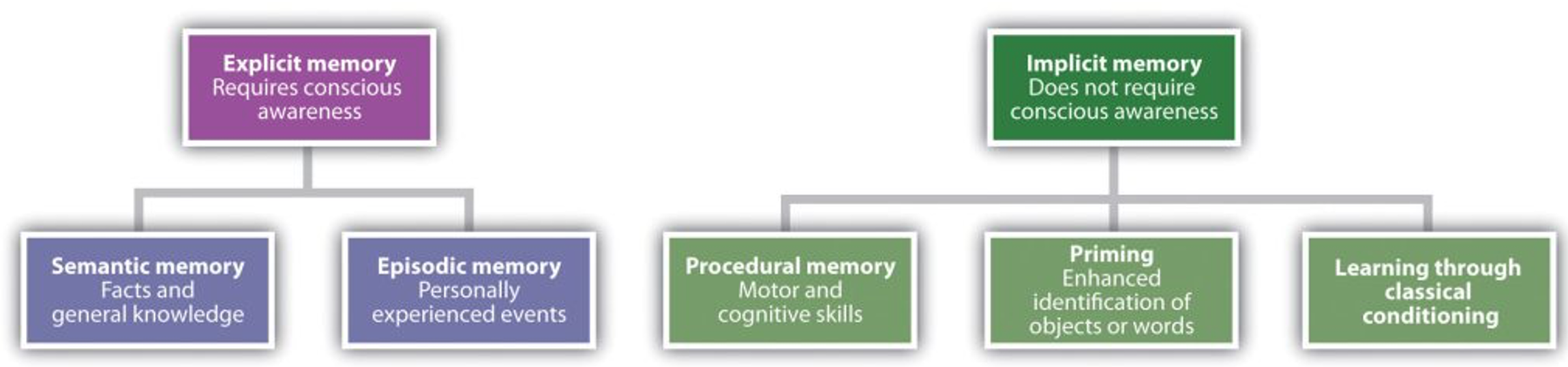
The long-term memory can be categorised as explicit and implicit memory.

The explicit memory, also known as declarative memory, refers to the type of memory that a person is consciously aware of. “You know that you know the information” (Gluck et al., 2020, p. 280). It comprises both memory of facts and general knowledge (semantic memory) and memory of personal experiences (episodic memory).

The implicit memory, by contrast, refers to memory that operates without the learner being consciously aware of it. Implicit memory is formed by:

  • procedural memory
  • priming
  • learning through classical conditioning

Figure 2.4.3. Types of Memory by Jennifer Walinga and Charles Stangor used under a CC BY-NC-SA 4.0 licence in Rafferty, J. (2024). Neuroscience, psychology and conflict management. James Cook University. https://doi.org/10.25120/k4vd-86×5

Priming

Priming is a psychological phenomenon where exposure to a stimulus influences how we respond to subsequent stimuli, and how we perceive and interpret new information. As defined by Gluck et al. (2020), priming is

“a phenomenon in which prior exposure to a stimulus can improve the ability to recognize that stimulus later” (p. 88).

Similarly, Kassin et al. (2020) describe priming as

“the tendency for frequently or recently used concepts to come to mind easily and influence the way we interpret new information” (p. 118).

In essence, priming makes certain concepts or ideas feel familiar, even if we aren’t consciously aware of the exposure.

For example, research has shown that if we’re subtly exposed to specific words or images, we may later be more likely to recognise or choose something related to those stimuli (Gluck et al., 2020; Goldstein, 2019; Kassin et al., 2020).

The impact of priming on social behaviour

Exposure to a stimulus can also lead people to behave in a particular way without their awareness, especially when the stimulus was presented subconsciously. The impact of priming on social behaviour has been demonstrated in research, including in a series of provocative (and debated) experiments by Bargh, Chen and Burrows (1996). In this study, participants were primed with different words that were thought to influence their behaviour.

For example, in experiment 1, participants were primed to activate either the constructs “rudeness” or “politeness” and were then placed in a situation where they had to either wait or interrupt the experimenter to seek some information. The research found that participants whose concept of rudeness was primed interrupted their experimenter more quickly and frequently than did participants primed with polite-related stimuli.

In experiment 2, participants were primed with words that activated elderly stereotypes. The study found that participants for whom an elderly stereotype was primed walked more slowly down the hallway when leaving the experiment than did control participants, consistent with the content of that stereotype.

How does priming relate to conflict management?

The phenomenon of priming can both help understand what creates conflict and how we can support parties in conflict management/ resolution. Most of the publications discussed in this post focus on mediation, but many of the findings could also find application in other conflict management process such as group facilitations and one-on-one conflict management coaching. 

Priming in mediation

Daniel Weitz, in his article The brains behind mediation: Reflections on neuroscience, conflict resolution and decision-making discusses how priming can influence the mediation process. He suggests that using words like “listen to,” “hearing each other,” “dialogue,” “options,” and “future” in their opening statements, mediators may be able to “prime” parties for collaboration rather than competition (p. 478).

Similarly, Hoffman and Wolman in their article The psychology of mediation note that the mediator’s initial description of the mediation process is the most powerful form of priming in mediation. Based on priming studies (which the authors mention but don’t specifically list), they suggest that mediators may wish to include expressions such as “being ‘flexible’ and ‘open-minded,’ the goal of reaching ‘a fair and reasonable resolution,’ and the need for ‘creativity’ and ‘thinking outside the box’” in their opening statements (p. 3).

Beyond the mediator’s opening statement, Sourdin and Hioe, in their article Mediation and psychological priming, discuss other opportunities for priming during the mediation process. They suggest that mediators can “strategically moderate the environment” to foster a positive atmosphere and encourage successful outcomes (p. 79). Such moderation can be achieved, for example, by carefully selecting and setting up the physical location of the mediation, including considerations of room colour, temperature, and the provision of food and water.

Amanda Carruthers, in her article on The impact of psychological priming in the context of commercial law mediation, explores factors such as the physical appearance of the mediator and legal representatives, the choice of venue, language use, and the influence of stress and references to money. She concludes that mediators and legal practitioners should avoid overt priming cues related to strength, power, and money to improve the positions of both parties in a commercial mediation.

How priming can affect perception

People are particularly likely to rely on the priming effect when new information is ambiguous. This is because we rely more on top-down processing than bottom-up processing when we are confronted with an ambiguous stimulus.

Bottom-up processing begins with our receptors, which take in sensory information and then send signals to our brain. Our brain processes these signals and constructs a perception based on the signals. When our perception depends on more than the stimulation of our receptors – and this is frequently the case when information is ambiguous – we speak about top-down processing. During top-down processing, we interpret incoming information according to our prior experiences and knowledge. This process is frequently referred to as concept or schema-driven. As we learned earlier, when we have been primed, frequently or recently used concepts come to mind more easily and influence the way we interpret new information.

In her blog post Priming in psychology, Kendra Cherry discusses how the priming effect influences what people hear when confronted with ambiguous auditory information, referring to the 2018 Yanny/Laurel viral phenomenon.

As an example for visual perception, Lisa Feldman Barrett explains in her book How Emotions are made how priming can significantly influence our visual perception of others’ emotions. She emphasises that facial expressions are often much more ambiguous than many popular readings suggest, which would make us particularly susceptible to the effects of priming. For instance, if we’re told a person in a photo is screaming in anger, we are more likely to see anger in their expression, even if this is inaccurate.

The person might actually be celebrating something positive, such as winning an important tennis match, potentially involving a whole mix of (positive) emotions, but the priming narrows our interpretation. With contextual information provided, we are likely to interpret the facial configuration more accurately than when taken out of context.

How does the priming effect and perception relate to conflict management?

A mediator might misinterpret facial configurations of parties in a mediation, perceiving emotions like anger, based on preconceived ideas of how people may “show” that emotion on their face, or influenced by comments made by the other mediation party.

Knowing about priming can sensitise us to potential misinterpretations of emotions and encourages us to use multiple cues and information to perceive parties’ emotions more accurately. For a more detailed discussion on the cues that we can use to more accurately perceive others’ emotions, see Chapter 3, Topic 3.4 in Neuroscience, psychology and conflict management. These cues and the topic of emotions in conflict is also discussed in much more detail in Sam Hardy’s course on Working with Emotions in Conflict.  

Priming to improve inter-group relationships

Recent research by Capozza, Falvo and Bernardo explored whether activating a sense of attachment security through priming can reduce the tendency to dehumanise “outgroups”—groups with which individuals don’t feel a connection. They conducted two studies:

  • The first study primed attachment security by showing participants images of relationships with attachment figures and then measured how they humanised an outgroup, in this case, the homeless.
  • The second study had participants recall a warm, safe interaction to activate a sense of interpersonal security and then measured how they humanised another outgroup, the Roma.

Both studies found that attachment security led to greater humanization of outgroups, with the second study showing that increased empathy played a key role in this effect. These findings suggest that fostering a sense of security can enhance intergroup relations, which has implications for intergroup conflicts. The successful use of priming to boost feelings of security highlights the importance of applying cognitive psychology to conflict management.

The calming effect

Capozza, Falvo and Bernardo, in their article, discuss several further positive effects of security priming, many of which are relevant to conflict and conflict management/resolution. For example, they emphasise the calming effect of security priming, noting that “even a momentary sense of security can shift the attention from one’s needs to others’ needs…” (p.3).

Conflict management processes often aim to help individuals in conflict consider the needs and concerns of others. Understanding the calming effect of security priming and its ability to foster perspective-taking may provide conflict management practitioners with additional strategies to support their clients. Such strategies could consider aspects like:

  • The choice of physical setting for a mediation or coaching session (or other conflict management process).
  • The language used by the practitioner, such as during the mediator’s opening statement.
  • The types of questions the practitioner asks throughout the process.

Remaining questions and considerations

This post explored the priming effect and its relevance to conflict management, particularly in understanding why conflicts arise and how practitioners can support parties to manage or resolve them. Research suggests that there are multiple opportunities to prime parties during a conflict management process, such as mediation, as discussed in the sources mentioned throughout this blog. However, many questions remain, such as how much control a practitioner truly has over priming in a conflict management process Additionally, practitioners should consider the ethical implications, including the potential for manipulation, when applying priming techniques to their practice.

A full reference list of the readings referred to in this post that have not been linked in the text can be found here.

Author Biography

Judith Rafferty is an Adjunct Senior Research Fellow at the Cairns Institute, JCU, and a Senior Trainer at the Conflict Management Academy. She integrates over 12 years of experience as a conflict management practitioner, researcher, and educator/trainer. She holds a PhD in Conflict Resolution, a Master of Conflict and Dispute Resolution, a Graduate Business Administration Diploma, and a Graduate Certificate in Psychology. As a Senior Lecturer and former Director of the postgraduate Conflict Management and Resolution program at James Cook University, Judith played a key role in developing curriculum and training resources that assist professionals in navigating complex conflict situations.
Judith can be contacted on:
Email: judith@conflictmanagementacademy.com
LinkedIn: https://www.linkedin.com/in/judith-rafferty-770a329b

Enhancing Conflict Management Theory and Practice through Insights from Psychology and Neuroscience

This post has been written by Judith Rafferty, adapted from her Open Educational Resource (OER) Neuroscience, psychology and conflict management (2024), licensed under a Creative Commons Attribution NonCommercial 4.0 Licence by James Cook University.

Conflict Management: A Multidisciplinary Field

While there are designated conflict management scholars and practitioners, many ideas that inform both theory and practice come from outside the field. Individuals involved in conflict management often come from a broad spectrum of disciplines, particularly in the social sciences, such as psychology, sociology, history, geography, communication studies, political science, international relations, organizational behavior, and anthropology.

Contributions to conflict management are also made from the formal sciences like mathematics, physics, biology, and neuroscience. By exploring some of these disciplines in more detail, we can gain valuable perspectives that deepen our understanding of conflict formation, escalation, management, and resolution. Psychology and neuroscience offer some especially useful perspectives and are the focus of this post.

The Role of Psychology in Conflict Management

Psychology and some of its branches are highly relevant for both theory and practice in conflict management. For instance, the American Psychological Association has a division specifically dedicated to applying psychology knowledge to conflict situations, called “The Society for the Study of Peace, Conflict, and Violence: Peace Psychology”. In fact, peace psychology is a distinct field of study with an International Centre for Peace Psychology, and the journal Peace and Conflict: Journal of Peace Psychology.

Similarly, the Australian Psychological Society (APS) highlights the contributions psychologists make to understanding and managing conflict. According to the APS, psychology provides key insights into the psychological factors that underpin social conflict and aims to identify effective ways to foster positive relationships and productive outcomes. These approaches include strategies for resolving conflicts and governance models that prioritise cooperation over coercion (APS, 2023).

Understanding Psychology: A Foundation for Conflict Management

Psychology focuses on the study of mental processes and behaviour (and their relationship) (Zimbardo, Johnson, & McCann, 2009). The field of psychology comprises multiple sub-groups, or branches of psychology (Mullin, n.d.). Some of these branches are especially relevant to conflict management, including personality psychology, cognitive psychology, and social psychology. So, what do these branches focus on and how are they relevant to conflict management?

Cognitive psychology

Most generally, cognitive psychology is concerned with the study of mental processes such as thinking, learning, remembering, perception, information processing, language, problem-solving, decision-making, and reasoning. Cognitive psychology also considers people’s emotions and the impact of emotions on cognition. All cognitive processes mentioned earlier, as well as the effect of emotions on them, are highly relevant to the experience and management of conflict. For example, multiple mental processes and emotions are involved when people try to resolve conflicts, e.g. they must retrieve information about past conflict events and make decisions as to how to move forward. At the same time, mental processes and emotions are likely to have contributed to and have been affected by the conflict in the first place. For example, many conflicts arise because people have perceived events differently. More information about how cognitive psychology may relate to conflict management can be found here.

Figure 2.2.1. Six or Nine? Image generated with Adobe Firefly; Rafferty, J. (2024). Neuroscience, psychology, and conflict management. James Cook University. https://doi.org/10.25120/k4vd-86×5

Personality Psychology

Personality psychology is the scientific study of the whole person (McAdams, 2009). It focuses on human individuality and may address questions like:

  • Why does Paul act more violently than Peter in the same situation?
  • Why do Tracey and Sam have such different ways of communicating and managing conflict?

Personality psychology is distinct from other branches of psychology by focusing more on the person than on the situation. This is not to say though, that personality psychology neglects the situation. But rather than exploring how most people would act under certain circumstances, personality psychology tries to explain or predict how a specific type of person would most react in each situation. Conflict management practitioners and theorists have noted the effects that individual differences in personality may have on the formation and escalation of conflict, as well as on conflict resolution processes and their outcomes (Sandy et al., 2014). More information on how personality psychology may inform conflict management can be found here.

Social psychology

Social psychology seeks to answer questions like:

  • Why do people act differently when they are in a group compared to when they are on their own?
  • Why do people behave differently among their co-workers compared to when they are with their friends and family?
  • Why do people hold prejudice and stereotypes against certain groups and how may these affect their behaviours?
  • How can social cohesion best be strengthened to prevent social division and conflict?

Social psychology may be defined as “the scientific study of how individuals think, feel, and behave in a social context” (Kassin et al., 2020, p. 4). All three areas, thinking, feeling, and behaving are involved and affected during the emergence, escalation, management, and resolution of conflicts. Several notable books in the field have focused on the applications of social psychology for conflict theory and practice, such as:

A more detailed discussion of the application of social psychology for conflict management can be accessed here.

Neuroscience and Conflict: Bridging the Gap

Beyond psychology, the field of conflict management is increasingly looking to neuroscience for insights into why conflicts occur and how they can be effectively managed or resolved. Many conflict management scholars and practitioners recognise that people’s brains and bodies are significantly involved in facilitating societal conflict.

For instance, Mary Fitzduff (2021) notes in her book Our brains at war that recent advancements in genetics, brain science, and hormonal research suggest that many personality characteristics are rooted in the brain’s biology. By offering “new and more sophisticated and nuanced insights into the way that people actually think”, neuroscience makes a critical contribution to the field of conflict management (Burgess, 2022). As another example, Bruneau (2015), in her book chapter Putting neuroscience to work for peace, emphasises the value of directly examining neural activity to transform psychology-based conflict theories into mechanistic understandings (p. 143).

Knowledge from neuroscience can also help inform and evaluate the purpose, potential, design and principles of justice and conflict resolution processes, as well as the role and skills of conflict practitioners. For instance, findings from neuroscience can increase our understanding of aggression in people, which again may have implications for processes like restorative justice, as discussed in a Ted Talk by Dan Reisel. Other examples of how neuroscience can inform conflict management theory and practice, as well as links to related readings, can be found here.

Neuroscience Meets Psychology: A Synergy for Conflict Management

Neuroscience is the scientific study of the nervous system and an interdisciplinary field that integrates biology, chemistry, psychology, and more. Of particular interest for conflict management theory and practice are the intersections between neuroscience and psychology. It may help to think of neuroscience as dealing with the ‘physical’ (brain) and psychology dealing with the ‘abstract’ (mind).

The functioning of our brain, hormones and neurotransmitters significantly affects our behaviours, cognitions, and social experiences. That is why the links between neuroscience and different areas of psychology are increasingly being recognised, studied, and taught. The growing recognition of these links has led to the emergence of new interdisciplinary fields, such as social neuroscience and cognitive neuroscience (Ito & Kubota, 2022). Both are highly relevant to conflict management theory and practice.

Knowledge from social neuroscience, for instance, can increase our understanding of intergroup and social conflict, including the sources and factors that create, perpetuate, contribute to, and escalate intergroup conflict. This knowledge may again inform the planning and design of conflict intervention initiatives to help manage intergroup and social conflict. You can find further readings about social neuroscience and intergroup conflict in the previously mentioned Peace and Conflict: Journal of Peace Psychology as well as other Peace Psychology publications, including the newsletter The Peace Psychologist and the blog Dialogues with Peace and Conflict.

Conclusion

The integration of psychology and its branches, as well as of neuroscience offers critical insights into the questions why conflict occurs, how it develops and how it may be managed. By exploring the connections between the human mind, brain, and behavior, conflict management can be more effective and nuanced. Many of these connections are discussed in more detail in Judith’s (2024) eBook Neuroscience, psychology and conflict management, from which this post has been adapted. A course on Neuroscience, Psychology and Conflict Management will also be developed next year to be offered through the Conflict Management Academy.

A full reference list of the readings referred to in this post can be found here.

Author Biography

Judith Rafferty is an Adjunct Senior Research Fellow at the Cairns Institute, JCU, and a Senior Trainer at the Conflict Management Academy. She integrates over 12 years of experience as a conflict management practitioner, researcher, and educator/trainer. She holds a PhD in Conflict Resolution, a Master of Conflict and Dispute Resolution, a Graduate Business Administration Diploma, and a Graduate Certificate in Psychology. As a Senior Lecturer and former Director of the postgraduate Conflict Management and Resolution program at James Cook University, Judith played a key role in developing curriculum and training resources that assist professionals in navigating complex conflict situations.
Judith can be contacted on:
Email: judith@conflictmanagementacademy.com
LinkedIn: https://www.linkedin.com/in/judith-rafferty-770a329b

Public expectations and confidence in the legal system: A brief thought

On the 6th of June 2024, I attended a panellist event held at the Sydney Jewish Museum where the topic of concern was ‘Nazis in Australia: When History and the Law Collide’. Discussion surrounded the prosecutions brought against four suspected Nazi war criminals for crimes allegedly committed during World War II.

The panel consisted of Hon Greg James AM KC, Graham Blewitt AM, and historian Professor Konrad Kwiet. However, at the time of the prosecutions (during the late 80’s until the early 90’s) their involvement was as Chief Prosecutor, Head of the Special Investigations Unit, and expert historian called to the stand during proceedings.

Of the four cases launched against those suspected war criminals, none were successful.

During questioning, a guest in the crowd asked the panel about whether they saw their efforts as a failure–since no conviction was found. Messrs James and Blewitt emphasised that although, to some, this outcome might be regarded as a failure, the purpose of their efforts and involvement were not merely to obtain a conviction, but also to investigate those, and other, suspected war criminals living in Australia.

Mr Blewitt further explained that the Special Investigations Unit within the Attorney-General’s Department saw to investigate over 800 separate cases, with some suspects being renounced by virtue of those investigations.

It seemed as though few were dissatisfied with this response as I heard murmuring within the crowd. I imagine this kind of reaction arose from certain societal expectations of the criminal justice system not being met; and perhaps, it follows that the level of confidence in that system diminishes.

An established public confidence in a system or institution, whether it be the criminal justice system or otherwise, underpins its effective functioning–an idea that academics, such as Mack et al, continually raise. Notwithstanding its importance, a recent survey by the NSW Bureau of Crime Statistics and Research reported that the public were not overly confident (55%) that the criminal justice system brought people to justice.

Perhaps it is as former Chief Justice Gleeson put it: “Much of what we call public confidence consists of taking things for granted”. And perhaps, this is especially true for public confidence in the criminal justice system, where it is, taking that panellist event as an example, the overwhelming complexity of the legal system is what has been ‘taken for granted’.

To understand and navigate the legal system is complex to say the least. Even with the study and training required to become a lawyer and the further experience gained from one’s practise, it remains a life-long journey for a lawyer to continually add and update their knowledge as well as consider the deeper components which underpin the effective functioning of that legal system.

If this may be the case for us lawyers, how might non-experts struggle to comprehend and navigate the legal system, not to mention, that deeper level of understanding?

It appears that society is more generally outcome focused. I suggest this because, as per the Bureau of Crime Statistics and Research 2020 report, the majority (66%) expressed that criminal sentences were ‘too lenient’ and (56%) that the criminal justice system did not meet the needs of victims. That report acknowledges that levels of confidence in the criminal justice system have not improved over the decade, and by comparison with earlier snapshot reports published by the NSW Sentencing Council, this indeed appears to be the case.

In an effort for us lawyers to ensure we are doing the most we can to uphold public confidence in the legal system, moreover the criminal justice system, we must do what we can to positively transform societal expectations.

Taking us now back to the beginning when that guest asked their question, the response provided by Messrs James and Blewitt was, in my mind, a perfect one. Notwithstanding the apparent dissatisfaction by some guests in that crowd, it was a response equipped with information to evoke a positive transformation of one’s expectations of the criminal justice system. As lawyers, we should aim to do the same in our communication with others, that is, to respond in a way which evokes positive transformation by the listener. By doing so, we work towards bettering societal expectations of the legal system–one person at a time.

Top Ten Ways to Improve Your Mediation Skills

John Lande, JD, PhD
This post is adapted from the Association of Family and Conciliation Courts article published by the University of Missouri School of Law in the Legal Studies Research Paper Series.

Traditional mediation theories are incomplete at best and misleading at worst, providing mystifying descriptions of what mediators actually do. Those theories focus on only a few behaviours during mediation sessions and don’t recognise the many variations of mediators, parties, and cases. This leaves many mediators to ignore these models because they are either confusing or unhelpful.

John Lande uses Real Practice Systems (RPS) theory in his article to identify 10 things that mediators can do to include within their skillset and improve their own practice. This article is adapted from his previous article ‘Helping You Do the Best Mediation You Can‘ published by the University of Missouri School of Law.

Although Lande’s article is directed to practicing mediators, he refers to additional resources in this Indisputably blog which can be used by teachers and trainer in their work, including to prepare and further develop student’s skills in negotiation, mediation, and advocacy.

These 10 things are summarised below, but it is highly encouraged that you to read John Lande’s published article for a complete and comprehensive explanation.

1. Recognise That You Have a Complex Practice System

If you mediate regularly, you have a complex mediation practice system. Mediation is not “just” what you do during mediation sessions when all the participants have convened, you also have unconscious routine procedures and conscious strategies for dealing with recurring challenges that you use before, during, and after mediation sessions.

It is important that you recognise the basis for your system and that have you developed categories of cases, parties, and behaviour patterns that led you to develop your system.

2. Understand Real Practice System Theory

In this 20-minute video, John Lande explains Real Practice Theory (‘RPS’) and how can improve your mediation practice system. It is applicable in every type of case and at every stage of practice, from novice to mid-career to senior mediator.

3. See Illustrations of Practice Systems in Experienced Mediators

Read John Lande’s article ‘Ten Real Mediation Systems‘ which illustrates the account of ten experienced mediators who identify factors affecting their mediation practice systems and includes links to a detailed account of their systems.

4. Complete a Self-Assessment Questionnaire to Get an Overall Understanding of Your Practice System

This 18-question self-assessment worksheet is designed to help you recognise basic elements of your practice system, prompting you to reflect on your background, motivations, mediation practice, common patterns in your cases, and your procedures.

5. Understand and Use Real Practice System Menu of Mediation Checklists

Read John Lande’s article ‘Real Practice Systems Project Menu of Mediation Checklists‘ which is a detailed menu of checklists for mediators. It includes mediators’ actions before, during, and after mediation sessions as well as items about information to provide on websites, compliance with ethical requirements, and reflection and improvement of mediation techniques.

In another article, ‘Practitioners Tell Why Real Practice System Checklists Are So Useful‘, Lande uses the descriptions of fourteen current and former practitioners to explain how these checklists can help you to carefully design your unique practice system.

6. Develop Your Own General Mediation Checklist

By using the above Real Practice Systems (RPS) checklists, you can consciously develop your own general checklist based on the typical cases and parties in your practice, the procedures you find useful. This checklist is quite versatile, enabling you to choose items which can be modified to suit your needs. But the RPS checklists cannot be exhaustive, so you should add any other items that are relevant to your practice and remove any which are not.

A mediators’ checklists necessarily vary based on many factors including the subject matter, complexity, typical legal issues, participation of attorneys, and amount of time before mediation sessions, among others. As a result, some mediators’ general checklists are longer and more complex than others.

7. Customise Your General Mediation Checklist for Each Case

Before each mediation session, review your general mediation checklist and consider any modifications you might make based on what you know about that particular case you are about to mediate. This can ensure that you are better prepared and equipped with a checklist that will be most useful to you during that mediation.

8. Read Articles in the Real Practice System Annotated Bibliography

To develop a deeper understanding of practice systems generally as well as your own practice system, you should read Lande’s ‘Real Practice Systems Project Annotated Bibliography‘ which organises several publications concerning various topics, including:

  • Overview of Real Practice System theory
  • Critiques of traditional dispute resolution theories
  • Promotion of party decision-making
  • Litigation interest and risk assessment
  • Preparation for mediation sessions
  • Technology systems

9. Participate in an Ongoing Educational Practice Group

It is important to learn from each other as well as give and receive feedback to and from other mediators. This can be done by participating in practice groups.

Although practice groups vary in size, Lande suggests that between 5 and 8 people is optimal. A fixed membership with a commitment to participate for an extended period of time (such as at least 6 to 12 months) is beneficial to allow members to feel comfortable sharing sensitive experiences with each other.

Lande also provides numerous considerations before commencing or joining a practice group, including similarities or differences between members, the type of activities completed, and the use of reflective practice techniques.

10. Share Your Experiences

Sharing your experiences with others is a valuable way to learn. This might include giving talks, participating in trainings, teaching courses, or writing articles. These activities require reflection, which can produce new insights, and interactions with people can stimulate thinking and further reflection on those experiences.

Author Biography

John Lande, JD, PhD is the Isidor Loeb Professor Emeritus at the University of Missouri School of Law and former director of its LLM Program in Dispute Resolution. He earned his JD from Hastings College of Law and his PhD in sociology from the University of Wisconsin-Madison. Since 1980, John has practiced law and mediation in California, and since the 1990’s, he has directed a child protection mediation clinic.

The American Bar Association has published John’s books, including ‘Lawyering with Planned Early Negotiation: How You Can Get Good Results for Clients and Make Money‘ and ‘Litigation Interest and Risk Assessment: Help Your Clients Make Good Litigation Decisions‘ (co-authored with Michaela Keet and Heather Heavin).

John frequently writes for the Indisputably blog and has received many awards for his scholarship, most recently the American Bar Association Section of Dispute Resolution’s award for outstanding scholarly work. You can download articles on a wide range of dispute resolution topics from his website.

Breaking Negotiation Deadlock: Co-Creating the New Intercultural Competence Playbook

By Rory Gowers
15 March 2024

Author note: Intercultural is not multicultural, or cross cultural. ‘Intercultural’ is described as “communities in which there is a deep understanding and respect for all cultures. Intercultural communication focuses on the mutual exchange of ideas and cultural norms and the development of deep relationships. In an intercultural society, no one is left unchanged because everyone learns from one another and grows together.” — Paula Schriefer, Spring Institute

Source: Nina Simon, 15 October 2014

We have recently heard from two long-standing luminaries in the world of conflict resolution and negotiation.

On 22 February 2024 Dr Rosemary Howell in her post within the Kluwer Mediation Blog refers to recent research by Cobb, Castel and Sultani with its dark summary of our times with “Polarisation, violent conflict, fractures, and divisions across and within societies are on the rise globally …” labelling ‘Hyperpolarization’ as “the state of the world we currently inhabit”.

Dr Howell acknowledges the bleakness of the situation, however she points to the encouraging work by Carrie Menkel-Meadow which provides an optimistic insightful and constructive recipe – an article well worth a full read.

On 24 February 2024 William Ury, co-author of Getting to Yes, in a seemingly unrelated post, recalled his recent appearance on Ari Melber’s The Beat concerning the current political tribalism in the United States of America. Ury states “we need more conflict – not less”, and further suggests that we cannot end polarization, however we can transform it into ‘healthy conflict’ with constructive creative negotiation.

Of course, in Australia we see similar polarization of political debate, as demonstrated in the 2023 Referendum, and this continues to stymie meaningful bipartisan collaboration to this day. 

Such polarisation does not achieve constructive outcomes for a peaceful and progressive society but serves dominant factions in enlarging their power base and further marginalising minority voices.

Many of us will agree with the statements from both Dr Rosemary Howell and William Ury that the first constructive step is to reframe the context of the conflict by helping parties reflect on the cultural background dynamics shaping the narrative and expectations of each party (and their tribe). It is also useful to adopt the ‘balcony strategy’, as explained by Ury, as well as considering the other party’s perspectives to get the full context. 

I encourage all to employ the use of an acronym of the word ‘cultural’ to remind us of the full scope of a cultural background: Commonly Understated Lores, Traditions, Understandings, Rituals, Expectations, Assumptions, Legacy.

By reframing the context of conflict, participants become more empowered and are in a better position to see life from all sides which then prepares them to confer more civilly with others in a joint constructive discourse as all parties seek to bridge the current impasse with practical and realistic solutions that meet the legitimate needs of all.

But is this enough to break the polarization?

After a decade of mediation, I think not; that is, unless we are prepared to adapt the process and embrace the culturally embedded needs of each party rather than blindly use the standard dominant culture’s approach (i.e. western culture). It is a whole new playing field!

I make ‘A Call for a new Intercultural Competence Playbook in Mediating social transformation’ in a recently published peer-reviewed research paper. I posit a new level where the future of mediation is intercultural. This paper can be located on the University of Montreal’s Online Law Journal Lex Electronica Volume 28 n. 5 2023 Special Dossier, Paper 13, pp. 195-215.

We require a new toolkit, and the adventure of our time is to co-create it. Will you join me?

A call for a new mediator playbook

In my paper I claim that “every culture is in conflict; conflict is endemic in the process of culture metamorphosis.” My paper examines the paradox that conflict is intrinsic to every culture, yet there is little attention to the ‘culture’ norms in resolving that conflict. I refer to original thinkers such as Hofstede and Ting-Toomey and compare their contributions to the change in intercultural understanding since.

We are in an unprecedented global pandemic where cultural norms and expectations are under threat, in individualistic and collectivist cultures. We face existential threats from climate change and environmental catastrophes. We need a new mediator playbook for effective intercultural negotiation and issue resolution.

All professionals can acquire intercultural skills, mentorship, or supervision; join immersion events to extend intercultural awareness and communications skills; foster inclusive work environments; adapt coaching methods; cultivate intelligence about cultural differences; and engage with a positive intercultural predisposition, and approach. 

Everyone can actively facilitate social transformation by making peace with the other cultures in your land as a vital forerunner to effective intercultural mediation of conflicts. 

To allow peace a chance, we must unlock and activate intercultural competence in mediation!

I invite your active participation in reading my paper and responding to the recommendations I put forward. 

For this playbook to succeed our approach must be intercultural. Let’s start now. Welcome aboard!

Author biography
Rory Gowers is a Master of Dispute Resolution MDR, a Master of Education MEd, an intercultural mediator, and a business strategist, residing in Brisbane, Australia. Rory has extensive international experience as a visionary business problem solver, and certified results coach. Rory’s mission is to facilitate a more respectful world by inspiring people and groups to transform business ecosystems with practical sustainable solutions with a vision to facilitate a place for all and peace for all in our time. Contact Rory via
Webpage: www.myRESPECTability.com 
Email: rory.gowers@gmail.com 
Mobile: +61 425292811
LinkedIn: www.linkedin.com/in/constructiveconflictsolutions