TIPS FOR NEW PRACTITIONERS: Getting your documents in order

Samantha Hardy
This article has been republished and adapted with permission. The original publication can be located within The Conflict Management Academy.

When setting up your practice, it’s important to have all your documents in order. Many people don’t prepare in advance and then are in a last-minute panic when the first client turns up and they need paperwork! 

It’s also important to remember that each client may need different types of paperwork, so you adapt and tailor your documents to each client and context.

What documents do you need?

During your training as a coach or mediator, you probably discussed things like agreements to mediate, or coaching contracts, but these are not all you need. You will also need things like:

  • Enquiry-related documents (e.g. information sheets and brochures for parties, lawyers, support people or employers)
  • Business-related documents (e.g. proposals, scope of work, invoices or client databases)
  • Service-related documents (e.g. questionnaires and intake forms agreements to participate, privacy and confidentiality agreements, record of mediation outcomes, spreadsheet for recording property items, value or distribution documents)
  • Correspondence templates
  • Feedback sheets, surveys, and evaluation documents

You may need a few versions of each kind of document for different clients and situations. For example, when an employer is involved as sponsor or when there are multiple parties involved in the conflict (whether a workplace or family conflict) or documents related for different services (e.g. mediation and coaching).

How do you make these documents available?

As well as the content of these documents, you should consider carefully when and how they are made available to prospective or current clients. For example:

  • Are the documents (in a generic version) made available publicly (e.g. on your website)?
  • Are the documents sent to prospective or current clients (as templates or with their details added)?
  • How important is it that the clients read and/or understand the documents? How do you ensure this is likely to happen? What happens if the client does not read the documents you provided?
  • Do you recommend and/or suggest clients obtain (legal or other) advice about the contents of any documents provided?
  • How accessible are your documents (e.g. for people who have visual or other impairments)?
  • What opportunities are there for clients to discuss the contents of the documents with you?
  • Do clients need to sign any documents? Do these need to be witnessed (by anyone, a lawyer or JP)? Can they be signed electronically?

You may have been provided with pro-forma examples of documents, like agreements to mediate or confidentiality agreements, from your trainers or your accreditation bodies, and these are a useful foundation to work from. However, using them “out of the box” is not ideal, as your brand, your clients, and your context are unique, and you need documents that are designed for your particular practice.

I highly recommend you go through any template very carefully and identify any contents or language that needs adjusting.  You should do this when creating your own branded template, but you should also do a quick check for each client, to ensure that each document is tailored appropriately for the specific client and their situation.

Check the content is applicable

Check that the content of the document suits your client and their situation. For example:

  • Is there is an employer or sponsor involved?
  • Is this a two-party or a multi-party situation?
  • Will you be working in person or online?
  • Is the process going to be confidential, or are there reporting requirements (e.g. to an employer)?
  • Does the template refer to laws (e.g. in relation to a mediator’s obligation to disclose information to authorities in certain circumstances) that might vary across jurisdictions?
  • Does the document use terminology that is not relevant to your client’s context. For example, does the document refer to litigation or going to court when this isn’t something your client is likely to be considering, or include statements like “settlement is legally binding” which may not apply to your client’s situation.

Check that the language is suitable

Formal or informal? The language used will differ greatly depending on your client-base. If you are working as a mediator in a legal context, many of your lawyer-clients may be repeat clients so will not need a great deal of information. However, referring lawyers may be providing information to their clients (e.g. a panel of three mediators for the client to choose between) and so you may also want to provide information suitable for lawyers to give to their clients to help inform the client’s choice.

How the people involved are referred to? If you are working with two employees involved in a personality clash at work, they may not find it comfortable to be referred to as “disputants” or “parties”. Try to accommodate language that is suitable for the dispute. For example, if it is a family dispute involving children, referring to the parties as “parents”.

How is the situation or conflict described? If your clients are currently involved in litigation, it might be perfectly acceptable to refer to the situation using language like “the dispute”. However, if you are mediating between family members in a personal conflict or employees who have a personality difference, this terminology might not sit well with them. You might be better using language like “your concerns” or “your working relationship”. Try to be sensitive to what would be comfortable for your clients.

Is it consistent with your brand? If your brand is down-to-earth, plain English, and informal, then providing clients with documents full of legal-ease or formal terminology and language may create a disconnect for your clients. This doesn’t mean you don’t include necessary information, but rather try to use language that is clear and also consistent with your brand ‘voice’.

Is it ambiguous, overstating, or misleading?  Be very careful not to use sweeping statements that may be misinterpreted. Terms to be careful about include “voluntary” and “confidential”. Depending on the client’s circumstances, these terms may not apply in a straightforward manner and can create confusion and distrust (and even sometimes lead to complaints).  For example, an employee who is required to attend mediation as a condition of their employment may not feel that their participation is voluntary. Similarly, if following a workplace mediation, one participant breaches an agreement to keep the discussions confidential by talking with a colleague about what happened, there is often very little anyone can do about this.  This can lead to the other person complaining that “the mediator said it was confidential and yet they couldn’t stop them from talking about what happened”.

Conclusion

Getting your documents in order and knowing how to adapt them when needed is important to build credibility and professionalism in your work.

In our Beyond the Table course accessible on the Conflict Management Academy, we have created an entire module on Your Documents which can help you review a broad variety of examples of different kinds of documents and be tailored to fit your practice and your brand.

We consider different categories of documents, including:

  • Enquiry-related documents (e.g. information sheets and brochures for parties, lawyers, support people or employers)
  • Business-related documents (e.g. proposals, scope of work, invoices or client databases)
  • Service-related documents (e.g. questionnaires and intake forms agreements to participate, privacy and confidentiality agreements, record of mediation outcomes, spreadsheet for recording property items, value or distribution documents)
  • Correspondence templates
  • Feedback sheets, surveys, and evaluation documents

Author Biography

Dr Samantha (Sam) Hardy is the Director and Lead Trainer of the Conflict Management Academy. Sam is an experienced mediator, conflict coach, and the founder of the REAL Conflict Coaching System™. She provides conflict support to managers and leaders across the world as well as professional development training, supervision and mentorship to mediators and coaches who work with clients in conflict. Sam is an accredited mediator under the Australian National Mediation Accreditation System (NMAS), a certified transformative mediator by the United States Institute of Conflict Transformation, and a certified narrative coach. She has been awarded Conflict Coach of the Year at the Australian Dispute Resolution Awards in 2022 as well as the Australian Resolution Institute Award for Service to Dispute Resolution in 2021 for her leadership and innovation in the field. Sam also publishes widely in dispute and conflict resolution, including Dispute Resolution in Australia, Mediation for Lawyers and Conflict Coaching Fundamentals: Working with Conflict Stories.
Informed, Involved, Inclusive: The Proposed Curriculum

Rory Gowers & Milan Nitopi
This article is Part 2 of 3 in our series ‘Informed, Involved, Inclusive’.

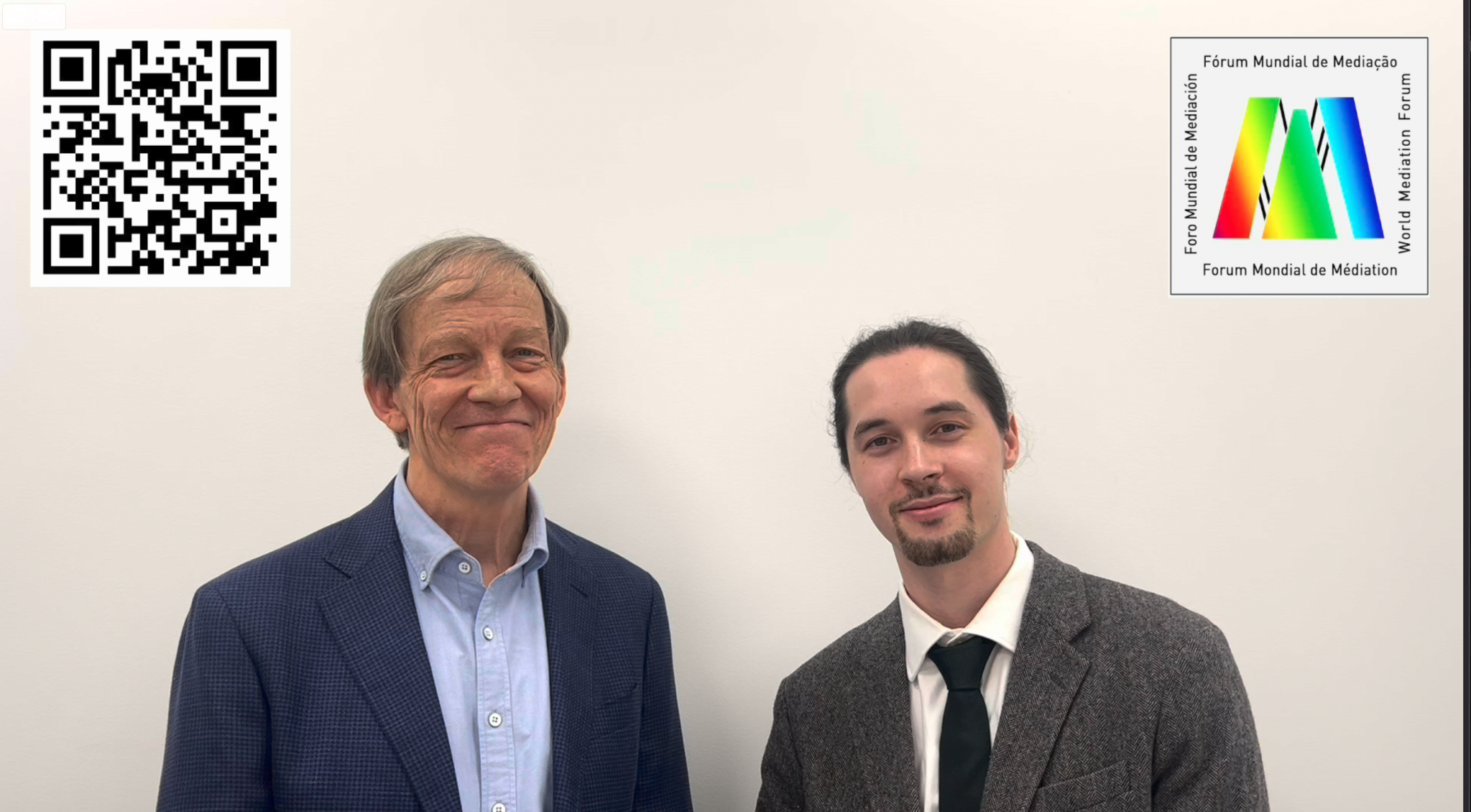
Rory and Milan (left to right) presenting at the 12th Conference World Mediation Forum – Foro Mundial de Mediación in Brazil in November 2024.

Disclaimer: ​​This introductory story is a work of fiction and does not intend to resemble any person or their lived experiences. Names, persons, places, and incidents are products of the author’s imagination. Any resemblance to actual events, locales, or persons is purely coincidental.

In the past…
Ashita had a promising future in Aressa, Syria. As a rising star in the development of artificial intelligence, she was ecstatic when her supervisor pulled her aside on Friday afternoon to share exciting news—her talents had been noticed. Come Monday morning, she would step into a new role, a significant leap forward in her career. As she travelled home that evening, she imagined the innovations she would contribute and the problems she would solve. But by Sunday night, the world she knew was gone.

Then something happened…
The war arrived without warning. Bombs shattered in the night sky, and chaos erupted in the streets. Her family fled in the back of a cattle truck that night, carrying with them only what they could. As the days turned into weeks, and the weeks turned into months, her past was slowly stripped away as she crossed each border. 

But eventually she arrived in her host country, and she was alone—her family was scattered, lost in the chaos of displacement. In her host country, Ashita faced a new kind of struggle. The temporary permit allowed her to stay, but it did not offer any sense of belonging. She could barely communicate her basic needs, let alone articulate her expertise in AI–employers saw a refugee, not a specialist. The locals eyed her with suspicion, their mistrust became a barrier she could not break down. Without any support or others willingness to understand, her talents and her livelihood began slipping away.

So now we’re doing this…
But there is another way. We offer a fresh and constructive path forward with specific application of the myRESPECTability model (Gowers, 2023) and through the Mastering Intercultural Mediation Initiatives (MIMI) training program. MIMI equips professionals in all fields with the skills to turn challenging intercultural communication into innovative and constructive dialogue with the involved stakeholders central to the issues in question. MIMI trained professionals will gain enhanced skills and competencies that enable them to facilitate sophisticated intercultural bridges to overcome long-standing cultural divides and reflect the current realities of our diverse, complex, and globalised world.

So we can have a future like this…
With skilled intercultural professionals, Ashita does not have to remain unseen. Professionals who are interculturally competent can help resolve situations–like Ashita’s–by adapting the standard mediation principles, processes and practices to ensure all parties feel able to express and address their interests, needs, and concerns in culturally relevant ways so that they may have an equal place at the table.

In this way, people who may be experiencing a sense of ‘out-culture’ can come into their foreground and make significant contributions for the benefit of the whole community as they now have an opportunity to share their insights and talents.
The Author/s have labeled this AI-generated content (AIGC). This indicates that this content was completely AI-generated or significantly edited with AI.

We share this so that we can create a future that bridges the gap between culture and encourages collaboration between people of all nations. We share this so that we can all work together to address global challenges and achieve solutions that promote peace, equity, and sustainability for all life on this planet. And, we share this so that we can equip the world with the knowledge and skills required for tomorrow’s challenges. But let us explain how we propose to do this…

In our first article we laid the foundations that underpin our proposed intercultural competency training model. In this article, we share our working developments that set out curriculum and rubric which outline the key assessments and learning objectives we intend to achieve.

    As becoming interculturally competent is more than an intellectual and mindful journey, we decided it is crucial to centre our training model on participant transformation. This means ensuring that key learning objectives are met, including:

    1. Participant engagement
    2. Research informed learning
    3. Self-reflection
    4. Flexibility

    MIMI Foundation 1: Interculturally Informed

    As the first foundation is a structured learning process centered on establishing the baseline knowledge of intercultural competence, we decided that participants would benefit most by undergoing an intensive workshop whereby they can both learn theory as well as engage in practical exercises with their cohort.

    We envision the workshop to be a total of 12 hours completed over a 3 day period (4 hours each day). Throughout the 3 days, participants will engage in collaborative style learning to learn intercultural theory as well as participate in group discussions and completion of case studies. Upon completion of the 3 days, participants will submit a portfolio detailing their reflections of the theory and activities they engaged in.

    Group discussions will focus on key interculturality issues in mediation practice, root causes for communication and dialogue issues, as well as a discussion of case studies to address questions such as:

    • How did each party feel about the experience?
    • What was the impact on the parties?
    • What could the facilitator have done differently?
    • How did the different communication skills influence the outcome?
    • What does that tell us about the importance of intercultural principles in mediation?

    We expect participants will satisfy the following rubric components to demonstrate their competence in being interculturally informed:

    1. To engage in the workshop including all group discussions, case study analyses, and other activities. This will be evidenced by their attendance and their portfolio submission following the 3 days.
    2. To learn and demonstrate an understanding of intercultural theory and its application to communication and dialogue within mediation practice. This will be evidenced by their portfolio submission following the 3 days.
    3. To self-reflect on learnings, insights, and peer contributions. This will also be evidenced by their portfolio submission following the 3 days.

    MIMI Foundation 2:  Interculturally Involved

    As the second foundation is centered on developing a deeper understanding of other-cultural needs, values, and expectations, we decided that participants would benefit most by undergoing a full other-culture immersion program whereby they can become practically involved to witness, first-hand, their stories, songs, and symbols.

    We recommend that participants undergo 10 consecutive days of immersion (with no less than 3 consecutive days). However, it is not a ‘one size fits all’ situation. Some participants may require more or less time to become fully involved in the other-culture–and that is okay! We support flexibility and we encourage participants to be self-determined in their own learning. During and upon completion of their immersion experience, participants will be required to submit a portfolio documenting their daily and final reflections.

    In documenting their daily reflections, participants will be prompted on a variety of intercultural issues, such as:

    • What is a specific cultural difference and similarity you experienced today?
    • What was a communication and dialogue challenge you perceived today?
    • How and why did you address and/or manage the intercultural challenge that you faced today?
    • Record one specific cultural story, song, or symbol that you experienced today.

    In documenting their final reflection, participants will be prompted on key interculturality issues in mediation practice or root causes for communication and dialogue issues by drawing on their own knowledge, insights, and immersion experience, such as:

    • How have your learnings and experiences affected your approach to peoples of an other-culture in your day to day life and/or in your mediation practice?
    • What communication or dialogue skills will you bring into your life and/or mediation practice?
    • How are those communication or dialogue skills relevant to effective mediation practice?
    • What do your learnings and experiences tell you about the importance of intercultural principles in mediation?

    We expect participants will satisfy the following rubric components to demonstrate their competence in being interculturally informed:

    1. To engage in at least 3 days of immersion in the other-culture and demonstrate a willingness to participate despite feeling a sense of discomfort, unease, or unfamiliarity. This will be evidenced by their attendance and daily reflections.
    2. To learn and develop an acceptance of the needs, interests, concerns, expectations of the other-culture in a way that is culturally relevant to their own intercultural interactions and mediation practice. This will be evidenced by their daily and final reflections.
    3. To self-reflect on learnings, insights, and lived experience. This will also be evidenced by their daily and final reflections.

    MIMI Foundation 3: Interculturally Included 

    As the third foundation is focused on putting learnings and reflections into practice, we decided that participants would benefit most by engaging in a final practical workshop to adapt their current core principles, practices, and processes to the interests, needs, concerns, and expectations of the other-culture they immersed themselves in.

    We envision the workshop to be a total of 20 hours completed over a 5-day period (4 hours each day). Throughout the 5 days, participants will engage in activities such as group discussions, case studies, and role-play exercises. The key focus of this workshop is for participants to demonstrate they are able to accurately identify and address communication and dialogue issues within an intercultural context. Upon completion of the 5 days, participants will be required to submit an ‘Intercultural Practice Statement’ as well as a portfolio detailing the activities they engaged in.

    Group discussions, case studies, and role-play exercises will focus on key interculturality issues in mediation practice, root causes for communication and dialogue issues, as well as a discussion of case studies to address questions such as:

    • How did each party feel about the experience?
    • What was the impact on the parties?
    • What could the facilitator have done differently?
    • How did the different communication skills influence the outcome?
    • What does that tell us about the importance of intercultural principles in mediation?

    The ‘Intercultural Practice Statement’ is a refined methodology for intercultural interaction and participants will be required to present this with their cohort. This provides an opportunity for them, as well as their cohort, to share insights and experience so that they can learn from each other. Participants will be asked to address a final question such as:

    • What are you going to do differently (i.e., how are you planning to include your learnings and experience into your life) now that you are informed and involved with the other-culture?

    We expect participants will satisfy the following rubric components to demonstrate their competence in being interculturally informed:

    1. To engage in the workshop including all group discussions, case study analyses, role-plays, and other activities. This will be evidenced by their attendance and their portfolio submission following the 5 days.
    2. To apply their learnings and insights accurately to identify and address communication and dialogue issues within an intercultural context and in a way that is culturally relevant to their own intercultural interactions and mediation practice. This will be demonstrated by their portfolio submission following the 5 days.
    3. To present their intercultural practice statement to their cohort. This will be evidenced by their attendance and portfolio submission following the 5 days. 
    4. To self-reflect on learnings, insights, lived experience, and peer contributions. This will also be evidenced by their intercultural practice statement and portfolio submission following the 5 days.

    Intercultural Competency Specialisation (optional add-on)
    As an optional add-on, practitioner-based participants (mediators, family dispute resolution practitioners, lawyers, etc.) can elect to undergo a further 1.5 hour role-play assessment to apply their learnings in a practical scenario.

    Our vision for the future is to incorporate this training model within leading institutions (such as mediator Recognised Accreditation Providers, Law Societies, Bar Associations, etc.) to develop an intercultural competency specialisation that practitioners can obtain and enhance their own competencies and professional practices.

    Continuing Professional Development (CPD)

    Each foundation addresses a different, but very necessary, aspect in intercultural competence development. But, because we believe that competency requires ongoing and continual development, the program will provide life-time access to resources and be supported by mentors, alumni, and peers in the online myRespectAbility community.

    Professional Members will also receive exclusive discounts on registration in other myRespectAbility or Affiliate programs and workshops. 

    Participants who demonstrate extraordinary performance throughout the program may be invited to add a chapter to the Intercultural Competence Playbook–a journal that we will publish, print, and mail annually–and is an opportunity for all to learn from others’ insights and experiences.

    Author Biography

    Rory Gowers is a Master of Dispute Resolution (MDR), a Master of Education (MEd), an intercultural mediator, and a business strategist, residing in Greater Sydney, Australia. Rory has extensive international experience as a visionary business problem solver, and certified results coach. Rory’s mission is to facilitate a more respectful world by inspiring people and groups to transform business ecosystems with practical sustainable solutions with a vision to facilitate a place for all and peace for all in our time. Contact Rory via
    Webpage: www.myRESPECTability.com
    Email: rory.gowers@gmail.com
    Mobile: +61 425 292 811
    LinkedIn: www.linkedin.com/in/constructiveconflictsolutions

    Milan Nitopi is an accredited lawyer and mediator with a Master of Laws in Family Dispute Resolution (LLM FDR). Milan has a passion concerning people, law, and resolution and he strives to equip people with skills for better communication and dialogue to address all kinds of conflict.
    Contact Milan via
    Email: manitopi@outlook.com
    Mobile: +61 432 547 538
    LinkedIn: www.linkedin.com/in/manitopi/

    Designing a Trauma-Informed Family Dispute Resolution Process

    By Shanza Shafeek       

    This is the first blog post in a series written by undergraduate law students enrolled in Monash University’s Non-Adversarial Justice unit in 2024. The very best posts have been published here.

    Family disputes are inherently stressful, but for those who have experienced trauma—especially from domestic and family violence—the process can be even more overwhelming.

    While the Family Law Act 1975 (Cth)  promotes Family Dispute Resolution (FDR) as a flexible, less adversarial alternative to litigation, it often fails to adequately address the unique needs of trauma survivors. This highlights the urgent need for a trauma-informed FDR service that supports victims while promoting healing.

    In this blog post, we will explore the concept of FDR, the importance of a trauma-informed approach, the key elements that make it effective, the challenges it presents, and how these elements contribute to a more empathetic, supportive process.

    What is Family Dispute Resolution?

    FDR is a process where an accredited Family Dispute Resolution Practitioner (‘FDRP’) helps families resolve disputes related to separation or divorce outside of court.

    The FDRP assists in creating parenting plans that outline future arrangements based on the best interests of the children. The goal is to resolve issues through ‘genuine effort’before resorting to court orders, promoting ‘cooperative parenting’.

    Mandatory FDR requirements include exemptions for cases involving child abuse, family violence, urgency, or an inability to participate, ensuring that FDR is only used when appropriate.

    The Need for a Trauma-Informed FDR Service

    Trauma-informed care recognises the profound impact trauma has on individuals and strives to create a safe, supportive environment for survivors. Despite some exemptions, around 41% of family violence victims still use FDR to address their needs. However, the adversarial nature of disputes, the presence of perpetrators, and the language used in FDR can trigger past trauma, making the process harmful for victims.

    Philippa Davis from the Women’s Legal Service emphasises the importance of having ‘safe processes’ for family violence survivors. Around 23% of victims report feelings of fear and power imbalances during FDR, which often leads to pressure to accept unsafe and undesired agreements. A trauma-informed FDR service, on the other hand, facilitates safer participation, enhances communication, and increases the likelihood of reaching mutually satisfactory agreements.

    For example, Rachael Field and Angela Lynch introduced the ‘Coordinated Family Dispute Resolution’ (CFDR) model in 2009—a trauma-informed, four-phase framework. Piloted in five Australian locations, this model was evaluated as ‘holistic and safe’ for victims, demonstrating the positive impact of trauma-informed practices in FDR.

    Elements of a Trauma-Informed FDR Service

    A trauma-informed FDR service must integrate six key elements to address trauma.

    1. Before the Session:

    Assessments:

    A trauma-informed FDR service must start with comprehensive suitability and risk assessments to ensure the process is both safe and supportive for victims. These assessments should evaluate critical factors such as violence, power imbalances, and the psychological well-being of participants to determine whether FDR is suitable.

    FDRPs should be trained to conduct trauma assessments effectively in cases involving trauma. Studies show that around 30% of parents feel FDRPs lack the necessary expertise to address abuse, highlighting a significant gap in knowledge. This points to an urgent need for targeted training in trauma-informed practices, including safety planning and psychological first aid, so FDRPs can perform these assessments effectively.

    Cultural competence is also a key component of these assessments, especially when working with diverse trauma survivors. Susan Armstrong emphasises that FDRPs have reported ‘less confidence’ in cultural competence, indicating the need for cultural training (including First Nations traditions) to ensure parties feel understood, respected and supported from the outset.

    Once FDR is deemed suitable, practitioners and domestic violence workers should adopt a ‘multidisciplinary’ approach to develop risk management plans that address the specific trauma needs identified during assessments. Andrew Bickerdike highlights that these plans may include measures such as separate waiting areas and virtual FDR options to create a more supportive environment for victims.

    Information:

    Clear and comprehensive information must be provided to participants before FDR sessions. As Joanne Law highlights, this information should include details on participation requirements, the roles of FDRPs and lawyers, any necessary religious or cultural accommodations, and the availability of breaks.

    Participants should also be informed of their right to have a support person, their ability to express discomfort or withdraw from the process, and the trauma-informed practices in place, such as promoting autonomy and empowerment. Eugene Opperman emphasises that providing this information helps alleviate pre-session anxiety, as it ensures participants are fully aware of their rights and the measures in place to safeguard their well-being.

    • During the Session:

    Safe Participation

    During the sessions, it is crucial to create a safe environment that encourages active participation. A ‘co-mediation approach’ as suggested by Field and Lynch for the CFDR model, can be particularly effective. This approach involves using gender-balanced mediators and legal advocates for both parties to prevent ‘gender bias’– an issue highlighted in the Post-2006 Evaluation Report.

    FDRPs must cultivate a welcoming atmosphere using calming language, offering private rooms to ensure confidentiality, and ‘giving ample time for each party to speak’—strategies emphasised by Dee Hardy. Such an environment helps parties make decisions that align with their own interests and the best interests of their children, rather than feeling pressured into ‘unfavourable choices’, which has been a noted concern.

    Corinne Henderson and Isobel Everett further recommend minimising staffing changes, offering a variety of choices, and avoiding arbitrary rules to ensure consistent participation. These elements enhance trauma-management and foster open communication, ultimately making the process more effective for everyone involved.

    Validation:

    Validation is a crucial component of a trauma-informed FDR service. FDRPs should actively listen to participants, ask trauma-sensitive questions like “How did that make you feel?” and express genuine empathy. These actions help bolster participants’ self-worth and support their emotional well-being, addressing the high levels of acrimony and self-doubt reported by 17% of parties in family disputes.

    FDRPs should also remain attuned to participants’ emotional states throughout the session. The concept of the ‘window of tolerance,’ as described by Pat Ogden, Clare Pain and Janina Fisher, is particularly useful. This framework helps FDRPs recognise when a participant is approaching the limits of their emotional regulation—whether in a state of hyperarousal (anxiety) or hypo-arousal (shutdown).

    By adjusting the process to stay within the participant’s ‘their ‘optimal state of balance’, FDRPs create a supportive and constructive environment.

    • After the Session:

    Summaries:

    After each session, FDRPs should provide a clear summary of the outcomes and outline the next steps to ensure that all parties understand the progress made, helping to alleviate anxiety.

    Conducting a debriefing immediately after the session allows participants to reflect on their experiences, validate their emotions, and address any lingering concerns. By actively involving them in determining the next steps, this trauma-informed approach enhances their sense of control and supports their healing.

    Follow-Ups:

    Follow-ups are essential for providing ongoing support and ensuring the long-term effectiveness of agreements. Around 19% of parents who reach an FDR agreement no longer have one a year later. To address this, a follow-up within 1-3 months should assess the agreement’s effectiveness and evaluate parties’ evolving needs. Itshould also include a specialist risk assessment for any new concerns and seek feedback on the trauma-informed FDR service.

    A second follow-up, 6-12 months later, should focus on the long-term impact of the mediation, review any additional support needs (such as counselling), and explore the possibility of further mediation. Similar to the CFDR approach, this continued access to resources ensures that parties receive sustained support throughout their healing journey.

    Challenges:

    Designing a trauma-informed FDR service comes with its challenges. The AIFS evaluation of CFDR found that “some parents still experienced considerable emotional difficulty, even trauma, in mediation,” highlighting the ongoing challenge of effectively addressing trauma within FDR processes.

    Additionally, Field and Lynch point out that trauma can significantly impair communication skills, suggesting that specialised training in ‘communication’ and negotiation strategies is essential for trauma-informed FDR services—though such training can be costly.

    A trauma-informed FDR service also requires substantial resources, including ongoing, high-quality training for FDRPs and regular evaluations. These challenges must be carefully managed to ensure that trauma-informed FDR services are effective and sustainable.

    A trauma-informed FDR service is crucial to effectively support trauma survivors. By integrating the six core elements, FDR can foster healing and achieve outcomes that the adversarial system often fails to provide. As our understanding of trauma continues to grow, FDR services must evolve to offer the compassionate care that victims truly need.

    ChatGPT use:

    This blog post was developed with the assistance of ChatGPT to identify key issues, which were subsequently fact-checked and supported with relevant journal articles. The insights provided by ChatGPT helped shape the initial framework, ensuring a comprehensive exploration of the topic.

    About the author:

    My name is Shanza Shafeek, and I am a fourth-year Law/Arts student at Monash University, specialising in sociology. I am currently working as a paralegal in institutional abuse and as a marketing team member for the Muslim Legal Network. I have also been actively involved as a Monash Law Ambassador and a Human Rights Project member for Amnesty International. I am passionate about legal policy, family law, and promoting culturally responsive approaches within legal practice to support diverse communities. I can be found on Linked In.

    Vale Dr John Woodward

    John, taking a break from writing at the University of Newcastle in March 2020

    It is with sadness that our community honours the passing of Dr John Woodward on 5 February.   

    John was a trusted colleague, a dedicated member of this Network, a solicitor who spent almost 30 years in litigation practice, a mediator, an arbitrator, and a member of the Law Society of NSW ADR Committee.   He was also so much more than his career achievements, a man who spoke lovingly of his family, an artist, avid tennis player and a friend to so many. One of John’s greatest contributions to the world of ADR was his time spent teaching students in the legal clinic and in civil procedure. His encyclopaedic knowledge of litigation allowed him to speak with an authority on why cultural change in the legal profession is essential, and students listened to what he had to say.

    Litigation had been the cornerstone of most of John’s career, and his experience eventually led him to become a keen observer of litigation’s shortcomings. Here is how John explained his ‘conversion’ from hard-nosed litigator to a strong believer in the power of mediation and “the vision of a broader view of justice“:

    “[My conclusion was] after thirty years of legal practice as a commercial litigator, that the solutions being offered to litigants by the traditional justice system were somewhat less than ideal.  Clients were complaining that the court could not offer the relief they were seeking, the costs of “winning” were prohibitively high and most of the cases in which I was instructed were resolved on some basis well before they reached a hearing. 

    Try as I might, I could never quite be convinced of the claim that the public interest in having the courts “…explicate and give force to the values embodied in authoritative texts…” (1) or otherwise declare the law for the benefit of the public good, had any real relevance to some of the mundane and routine cases in which I was involved.  In fact, of all of the hundreds of cases in which I acted throughout my career as a lawyer, only two found their way into the law reports.” 1

    After graduating with a Masters in Dispute Resolution from UNSW, John decided to commence his PhD, as he felt that regulators had made certain assumptions about the legal change that had been brought about by civil procedure rules mandating mediation. The topic resonated well with one of John’s favourite quotes:

    “How small, of all that human hearts endure, that part which laws or kings can cause or cure.”

    You can read an earlier profile of John and his PhD work in this blog post from 2016.   He graduated in 2019, with his dissertation modestly entitled “Lawyer approaches to Court-Connected Mediation: A New Case Study,” and this is available free open access through SSRN. The key finding of John’s PhD research, based on a large set of qualitative data, was that lawyers are keenly aware of their ethical obligations towards their clients in terms of protecting them, but that this gave rise to a reluctance to have clients directly participating in the mediation process. He also identified that the profession remains generally confused about the extend of confidentiality in mediation, and that this further inhibits lawyers from engaging fully in the mediation process. Finally, he noted that there were still cultural barriers within the profession, stemming at least in part from the limits of most models of legal education.

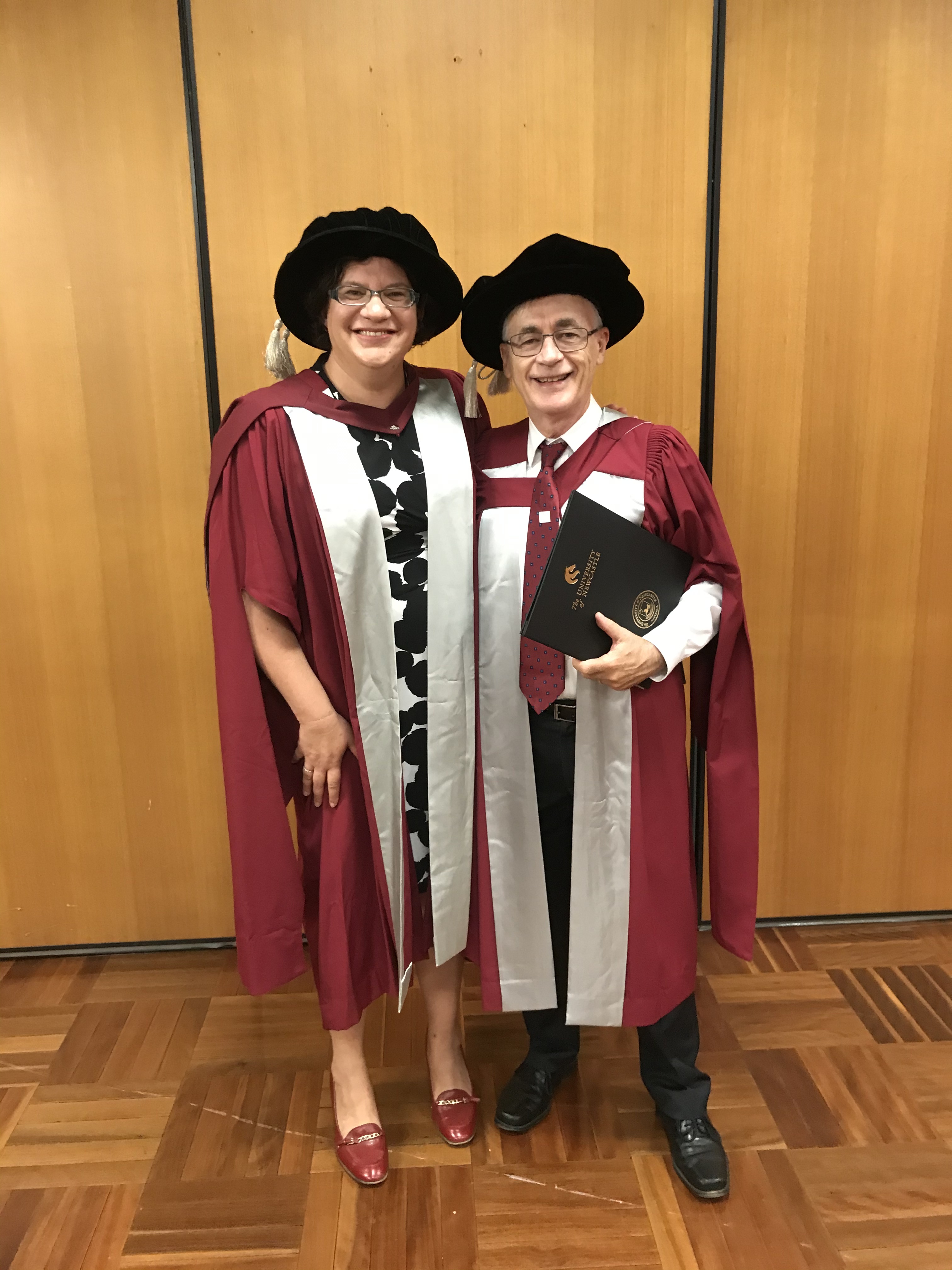
    John’s 2019 PhD Graduation

    Some of John’s pieces on this network include: 

    John Woodward (far left) at the  6th ADR Research Roundtable at the University of Otago in 2017

    Some of John’s scholarly articles include:

    John had a fight on his hands after being diagnosed with an aggressive glioblastoma in mid-2023, and he faced that fight with his usual sense of humour and determination, exceeding the dire predictions of his life expectancy but cautioning me regularly with a grin, “don’t buy me any green bananas.” I had the privilege of supervising John’s PhD thesis at UNSW and then at the University of Newcastle, and as the decade passed, we built a friendship based on a passion for ADR (and also for coffee) that transcended the difference in our life stages.

    Thank you John for all you taught us, for the future generation of lawyers you helped educate, and for showing us all the power of change to make the world a better place. Ave atque Vale (hail and farewell).

    At the 13th ADR Research Network Roundtable in November, we will hold a session in John’s honour.  If you’d like to be involved, please contact me or respond to the call for papers. 

    1. Quote from John’s 2018 blog post about his PhD journey ↩︎

    Save the date, Lucky 13th Australian Dispute Resolution Research Network Roundtable, 27-28 November 2025, Monash University

    The Faculty of Law, Monash University is proud to host the 13th Australian Dispute Resolution Research Network Roundtable on Thursday 27 and Friday 28 November 2025 at the Monash University Clayton Campus (approx. 30 minutes from Melbourne CBD). There are many public transport options to Monash from inner city Melbourne and we will share details for attendees from afar.

    The Roundtable is an opportunity to present work in progress and receive feedback and critique in a supportive and friendly environment, and to network with leading dispute resolution academics. We have honed our format over the years and will adopt the following approach:

    • a focus on work in progress (ie, it’s not a conference, but a collaborative workshop around a table of supportive peers)
    • a limited number of papers selected for in-depth discussion
    • there is at least one appointed commentator for each paper
    • attendance is limited to people who are presenting or commentating upon papers
    • full papers must be submitted for distribution one month prior to the roundtable
    • publication of a blog post based upon the paper is expected for all presenters

    Anyone working in civil justice and any form of dispute resolution including mediation, conciliation, negotiation and arbitration is encouraged to attend. Scholars from outside Australia are also welcome to attend.

    Early Career Researchers and PhD students are particularly encouraged to participate. We are a kind and supportive group of scholars and are very welcoming of newcomers.

    The call for papers will be released in June or July.

    Queries can be directed to the convenor and co-President of the ADRRN: Becky Batagol (Monash University) Becky.Batagol@monash.edu.

    This roundtable will be supported by the Australian Centre for Justice Innovation

    Written Off: Three Steps to Move Forward When You Feel Rejected

    Dan Berstein

    Whatever the reason for it and whoever it comes from, rejection hurts. 

    In 2022 I wrote a book called Mental Health and Conflicts: A Handbook for Empowerment with hopes to teach people skills for managing challenging behaviors without writing off people with mental illnesses. At the time, this book represented a culmination of my life’s work and it meant a lot for to me that it found a home at the American Bar Association (ABA). 

    Three years later, my ABA affiliation was unfortunately terminated following a difficult saga, for me and many others, as I was wrestling with interpersonal struggles and bipolar symptoms.   The news of my termination was very difficult. I have been hospitalized five times due to my bipolar disorder–always during times when I became overwhelmed by similar interpersonal challenges. During each episode, I would break down, my mind would get stuck on a problem, and I would decompensate into mania or even psychosis. My condition has a high risk for instability and suicide, with research showing that each subsequent episode means a decreased odds of returning to normal functioning.1

    Being terminated from the ABA overwhelmed me. It was a sudden emotional crisis that put me at risk. I required emergency medication, emergency therapy sessions, and emergency support from friends and family. We summoned all of the lessons from decades of managing my condition in order to make it through.

    Even though it was an immensely challenging period in my life, this time something was different. In 2023, and as part of my professional work as a conflict resolver, I had developed a system for responding to avoidance, rejection, and social exclusion. I presented a three-step model to get through these especially challenging situations, which I call the 3 R’s, at the Association for Conflict Resolution conference and the Academy of American Law Schools ADR Works-In-Progress conferences.

    Without the skills of the 3 R’s, I do not know how I would have coped with being terminated. That system consists of:

    • Respect.
    • Reply.
    • Reorient. 

    The 3 R’s approach readily lends itself to any situation and can be easily used by anyone when they face rejection from friends, family, colleagues. Here’s how it works:

    1. Respect the person’s decision even if you find it stigmatizing or you disagree with it.

    While it is tempting to try to convince them of your worth, dispel lies or inaccuracies, and seek ways to still have the relationship, it can also be dangerous. 

    Sadly, I’ve learned in my life that, given I’m open with my bipolar disorder, it is easy for people to stigmatize my persistence to fight being rejected. Studies have shown that it is common that people with bipolar disorders are sensationalized in the media (such as TV shows or movies, and other portrayals).2 There is also research that shows people are more likely to worry someone that has a mental health problem is some kind of stalker.3 Amidst that kind of climate, it can be risky to continue contacting someone who may be seeing any follow-up through a stigmatizing lens. Arguing with their portrayal may only feed into the narrative.

    Stigma aside, in any conflict it is helpful to separate the person’s decision to cut contact with you from the explanation you are given or the style with which it is delivered. It may feel offensive, demeaning, disrespectful to be ghosted or to hear a story that does not ring true or clearly is contrived. But no matter how poorly implemented or inaccurate the rejection may seem to be, it still provides notice of a decision: however painful the circumstances, this person wants to diminish or end their relationship to you.

    Years of dispute resolution have taught me to prioritize self-determination,4 and made it easier for me to come to a place of accepting that a person made a rejection decision. 

    While it does not feel good to be rejected, it has been a relief to readily accept it instead of debating. If there are other problems related to what is happening, such as bullying or discrimination, it still can be best not to fight and instead look for other kinds of support.5

    2. Reply one last time to confirm the boundary.

    You may not always get a formal letter or confirmation (such as a letter of termination–like I received) when it comes to rejection and social exclusion with friends, family, or others.

    We live in a world filled with “ghosting” patterns–where people just pull away without contact–and things are left rather ambiguous and unclear.6 Sometimes it can be extremely ambiguous, such as in one of the latest dating trends where people engage in “breadcrumbing” to keep romantic partners on the hook or on hold.7

    This is why, whenever anyone seems to be avoiding contact with me, I send one final reply to let them know that I am acknowledging what I perceive to be their boundary to be and that I plan to follow it. Depending on your personal boundaries, you might also let them know you are available in the future if they change their mind on reconnecting. In the course of my mental illness discrimination advocacy work, I typically take that approach, with hopes that one day the people or organizations who are avoiding me will evolve and want to engage. In that case, I want them to know the door is still open for that.

    Sending this reply is important because it is possible–given any ambiguity–that there was a misperception. Sometimes people will immediately let you know that they didn’t mean to make you feel rejected and they might undo the boundary. On the other hand, if they are intent on the rejection, your reply documents that you are honoring their boundary and that record can be helpful, particularly to guard against the stigmas mentioned earlier.

    3. Reorient to next steps rather than stay stuck in pain.

    This is my favorite “R” because this approach has truly changed my life. Before the 3 R’s, I would stay fixated obsessing on hating myself, endorsing self-stigmas, wallowing, and reliving the loss over and over whilst descending into a dark place in my mind.

    But there is another way. If we commit to focusing on reorienting ourselves to discover new opportunities, we can enrich our lives. Since I started using the 3 R’s model in my life, I have connected with new friends and colleagues, developed new projects and partnerships, and become active in new communities–all because I decided to immediately accept the person’s decision to cut contact with me and start looking for new people and places to be involved instead. Since 2023, when I first created this system, my life has grown at a meteoric rate with many new opportunities which I have found and nurtured every time I reorient.

    My initial connection to Australia came by my efforts to reach out to someone in early 2024 and during a time when I received a different rejection letter related to my anti-discrimination advocacy work. This new relationship was a welcoming one where we collaborated on programs, and eventually led to a conference invitation from someone else and then to my writing on this Blog. None of this would have happened if I had not decided to reorient and move forward. And that example is just a fraction of the rich relationships I have developed when I took chances on reorienting toward new things instead of fighting to cling onto what I had already lost.


    I am sad that my bipolar disorder and interpersonal struggles led to difficult circumstances with the ABA and led to my termination. At the same time, I am grateful that the 3 R’s helped me get through it and land on my feet. This method has helped me in a time of need where I have felt unwelcomed in any community or with any person. Remembering to do it when I am feeling hurt has allowed me to make healthier, more empowering decisions.

    Even when I was so dysregulated by my serious mental illness and wrestling with an influx of distressed energy, I was still able to tap into those 3 R’s to ensure I made the best possible decisions to:

    1. Respect peoples’ choices instead of fighting to prove my worth,
    2. Reply to work things out instead of begging to return, and,
    3. Reorient to fill my life with opportunities that were a better fit for me and my sometimes-challenging mental health problems.

    I will still love the American Bar Association, albeit from afar and via nostalgic memories, I still have a page posted summarizing much of my anti-discrimination work there and other projects from my four years as Co-Chair of the ABA’s Dispute Resolution Section Diversity Committee. During this time, I made many friends and did a lot of important work. Though I will certainly miss being connected with so many great opportunities and new ideas, I will keep reorienting amidst the loss. Meanwhile, I will always recommend that anyone who does have access avail themselves of the myriad of resources disseminated by the ABA and often developed from their community of over 200,000 members.

    The 3 R’s have helped me prevent complete breakdowns and manage challenging times in my life. These skills have helped me find and new opportunities during times I might have otherwise fallen apart. Anyone can use this simple yet powerful system when they face rejection in their lives.

    Author Biography

    Dan Berstein is a mediator living with bipolar disorder who uses conflict resolution best practices to promote empowering mental health communication and prevent mental illness discrimination.  His company, MH Mediate, has helped thousands of professionals and organizations be empowering, accessible, and non-discriminatory toward people with disclosed or suspected mental health problems. Dan holds degrees from the Johns Hopkins School of Public Health and the Wharton School. He is the author of the 2022 book, Mental Health and Conflicts: A Handbook for Empowerment.


    1. Gergel, T., Adiukwu, F., & McInnis, M. (2024). Suicide and bipolar disorder: opportunities to change the agenda. The Lancet Psychiatry; Peters, A. T., West, A. E., Eisner, L., Baek, J., & Deckersbach, T. (2016). The burden of repeated mood episodes in bipolar I disorder: results from the National Epidemiological Survey on Alcohol and Related Conditions. The Journal of nervous and mental disease204(2), 87-94. ↩︎
    2. Klin, A., & Lemish, D. (2008). Mental disorders stigma in the media: Review of studies on production, content, and influences. Journal of health communication13(5), 434-449. ↩︎
    3. Wheatley, R., & Underwood, A. (2023). Stalking and the impact of labelling “There’sa difference between my offence and a stalker”. Journal of criminal psychology13(2), 91-104. ↩︎
    4. Baruch Bush, R. A., & Berstein, D. (2023). Orienting Toward Party Choice: A Simple Self-Determination Tool for Mediators. J. Disp. Resol., 1. ↩︎
    5. Tuckey, M. R., Li, Y., Neall, A. M., Chen, P. Y., Dollard, M. F., McLinton, S. S., … & Mattiske, J. (2022). Workplace bullying as an organizational problem: Spotlight on people management practices. Journal of occupational health psychology27(6), 544. ↩︎
    6. Freedman, G., Powell, D. N., Le, B., & Williams, K. D. (2019). Ghosting and destiny: Implicit theories of relationships predict beliefs about ghosting. Journal of Social and Personal Relationships36(3), 905-924. ↩︎
    7. Navarro, R., Larrañaga, E., Yubero, S., & Víllora, B. (2020). Psychological correlates of ghosting and breadcrumbing experiences: A preliminary study among adults. International journal of environmental research and public health17(3), 1116. ↩︎