The ADR Research Network is a group of Australian dispute resolution academics. Blogging & tweeting high quality, critical dispute resolution scholarship.
We clocked over 20,000 views by over 13,000 visitors to our adrresearch.net WordPress site, another record of annual growth since we started it in 2013.
This is our 65th post for the year, showing that we have kept to our commitment to regular posting. A big thank you to all our monthly blog editors who take responsibility for organising at least one post per week.
2019 readers accessed adrresearch.net from Australia, the UK, USA, Canada, India, New Zealand, Ireland, Singapore, South Africa, Hong Kong, Germany, Kenya, Spain and many more.
@ADRResearch on Twitter has 1,590 followers.
The most frequent place for people to visit the ADRRN was on our home page, but the other popular posts, with over 300 reads each during 2019, were:
Some of the above posts were made some years ago. Thank you for engaging with our short ideas on here!
Contributions to the ADRRN WordPress blog can be made by anyone in the dispute resolution research community (ie you!). Please read Blogging Basics for Beginners and send your draft post to the Editor in Chief, who will be able to advise the monthly blog editor and coordinate timing. Editor in Chief is Olivia Rundle until February 2020 when Nussen Ainsworth takes the reigns.
We’ll be back in January with more posts based upon papers workshopped at our 8th Roundtable in early December.
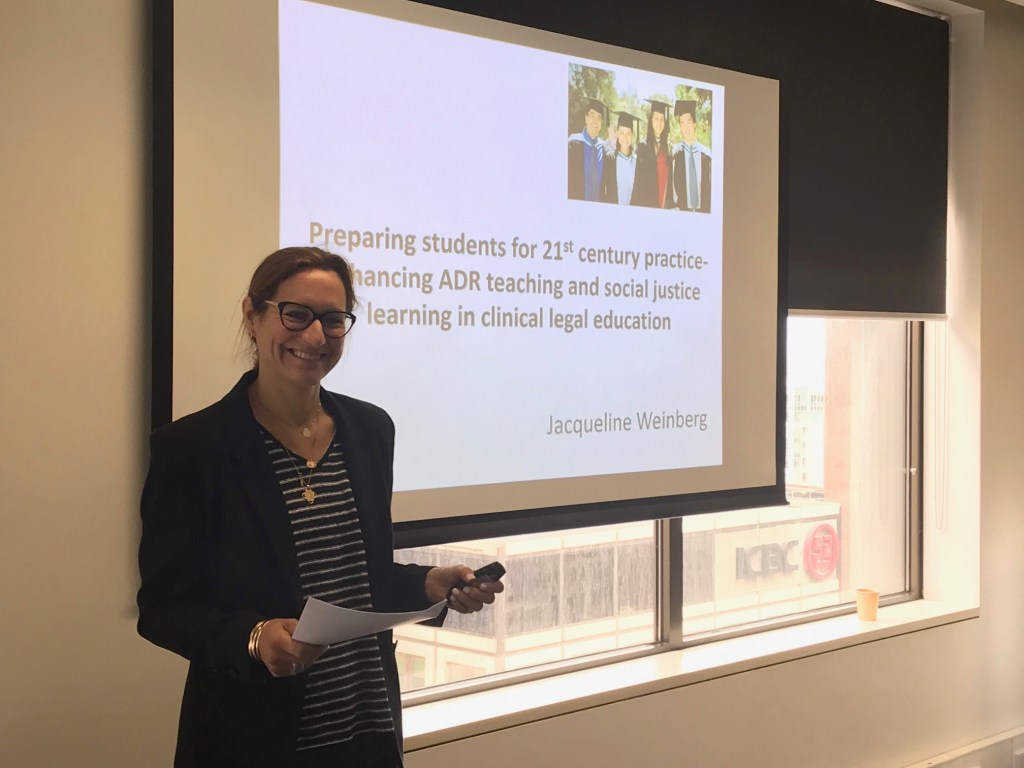
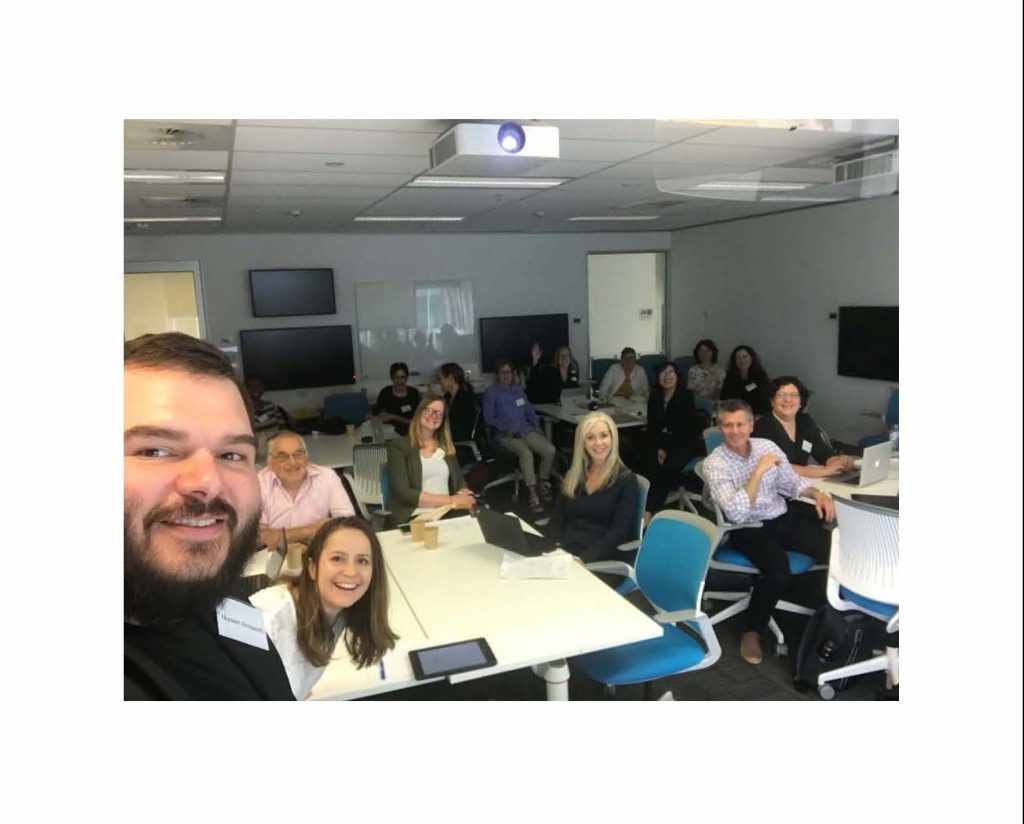
image by Claire Holland – ADRRN Roundtable 2019Image by Claire Holland – ADRRN Roundtable 2019Image by Claire Holland of Jackie Weinberg. ADRRN Roundtable 2019Claire Holland and Tina Hoyer – ADRRN Roundtable 2019
This post is by Dr John Woodward, of University of Newcastle, and was workshopped at the ADRRN Roundtable 9-10 December 2019. John is the 2020 President of the Australasian Dispute Resolution Research Network.
For all of our progress in advancing the cause of mediation in Australia, there is one problem that remains tantalisingly difficult to resolve. It is the problem of persuading lawyers (including some judges and court administrators) to embrace facilitative mediation in a way that is consistent with the core beliefs that are valued by mediation theory. These include the facilitative role of the mediator, the idea that the mediator is there to assist the parties to work through their problem together, to view their interests and the interests of the other through first-hand discussion and active participation in the consensus building and option creation activities that lead to secure and durable solutions.
This is a problem that can be traced back through what Boulle described as the three stages of mediation development in Australia (Mediation: Principles, Process, Practice 3rd ed p 349-350). The hostile reaction to uncritical acceptance of mediation, concerns that it has the potential to develop a ‘two-tiered’ justice system with only a form of ‘second-class justice’ available for the underprivileged and concerns that vulnerable parties (particularly women) would lose the protection offered by the rules and procedures of the formal justice process are all underpinned by the unarticulated assumption that the rules and procedures of the formal justice process somehow offer a superior form of justice against which all others should be measured.
Lawyers’ instinctive tendency to frame dispute narratives in terms of a rights-based story, their reluctance to look beyond solutions that are consistent with “what the court would order” and their insistence in maintaining control of disputants’ conversations in mediation sessions are all problematic for optimum outcomes in facilitative mediation. They are also redolent of the three core elements of legal professional culture identified by Macfarlane in her work The New Lawyer: How Settlement is transforming the practice of law.
Given the distance we have travelled in advancing mediation as an accepted part of the justice institutions in Australia, and the obvious successes it has enjoyed as a dispute resolution process, it is worth exploring why there remains an undercurrent of resistance from the legal profession and what, if anything, might be done to correct it. The course of my own PhD journey suggests a few preliminary observations which I think are worth making.
Firstly, it is notable that throughout the whole empirical project, not a single lawyer research respondent disagreed with the proposition that mediation is a good thing and is to be applauded and encouraged as an effective means to bring an end to disputes. Of course it is entirely possible that some of those responses were a result of social acceptability bias and that no self-respecting lawyer should, in the twenty first century, be seen as opposing a measure that has gained such wide acceptance among lawyers and justice administrators. However, it is unlikely that their unanimity can be explained in that way. The research data revealed some highly developed and nuanced conversations about various features of mediation, disputant behaviours, issues around enforcement and other matters of practical significance to disputants and their lawyers.
Secondly, lawyers’ perceptions of problems with mediation were almost always framed in rights-based terms. They complained that too much time was taken up with petty, emotional, irrelevant matters that were inadmissible in the case or that mediators were too facilitative and not directive enough so that the parties were not getting the benefit of what the mediator considered would happen if the case were to proceed to trial. The latter complaint explained why some research respondents preferred to have a retired judge as mediator. It was, they said, a more legitimate process if the mediator could bring judicial expertise to the mediation so that the parties could see what would happen if the case were to be decided by that judge. This tendency to “legalise” the mediation process is well recognized in the literature and was described in the Australian Productivity Commission’s Report Access to Justice Arrangements of 5th September 2014, which (at page 13) noted a “creeping legalism” by which institutions which were set up to provide low cost alternatives to the court with an emphasis on self-representation were becoming increasingly formal with the introduction of legal representation, lawyers behaving as if they were in court and bringing an adversarial tone to the proceedings.
A third observation, and one which emerged as a major concern for lawyers engaged in court-connected mediation, is the uncertain limits of confidentiality and admissibility of communications in and around the mediation process. In fact this feature emerged from the research as the single most problematic inhibitor of lawyers’ engagement in court-connected mediation. It deserves further attention and is the subject of my paper to the 8th ADR Research Roundtable in Melbourne.
Confidentiality is one of the foundational pillars of mediation (Morris and Shaw p 320). It features in every published book on mediation. Some books dedicate entire chapters to the subject of confidentiality in mediation. As Hardy and Rundle have observed, there are competing public policy considerations in relation to whether or not parties should be able to use information disclosed in mediation in later court proceedings. On one hand, there is a public interest in parties being able to resolve their disputes outside the court using a frank and open exchange of information without the fear of that information returning to haunt them if, despite their best endeavours, the dispute should prove incapable of resolution by negotiation. See Field v Commissioner for Railways (NSW) (1957) CLR 285. On the other hand there is also a public interest in ensuring that the best evidence is available in court proceedings to ensure that a just and equitable outcome is possible by way of court determination. See AWA Ltd v Daniels t/as Deloitte Haskins and Sells (1992) 1 ACSR 462.
The parliaments of Australia have attempted to reconcile these two competing public policies by introducing legislation to prohibit the introduction into evidence of information obtained during settlement discussions or in mediations. Statutes such as the Evidence Act, 1995 (NSW) and the Civil Procedure Act 2005 (NSW) have been very effective in protecting client settlement privilege and preventing privileged communications from being disclosed in court proceedings. They have thus well-served the interests of the traditional justice institutions.
But they have not well-served mediation whose very different interests are not so much in non-disclosure of protected information as in preventing misuse of protected information as the research data revealed. Mediation’s concern is much broader than merely the exclusion of protected information from evidence. As Boulle explained, one of mediation’s great benefits is:
“…its attraction to potential users wishing to avoid adverse publicity and increase parties’ willingness to enter mediation and engage in open and frank negotiations in the knowledge that disclosure cannot damage them publicly among competitors or prospective adversaries.”
An examination of the relevant statutes in NSW reveals that lawyers’ expressed anxieties around the limits of mediation confidentiality may well be justified and that the values identified by Boulle and others may not be available to disputants who mediate in the shadow of the law. Even if this conclusion paints an unduly pessimistic picture of the objective reality of court-connected mediation in NSW, the research evidence clearly revealed that lawyers’ perceptions of mediation are that they must be cautious in allowing their client to speak or otherwise to participate directly in mediation except through their lawyer. Many research respondents explained that they counselled a cautious approach when advising their clients about mediation and most preferred that their clients not speak. A few admitted positively forbidding their clients from saying anything at mediation.
There is evidence going back as far as Rosenthal in 1977 to support the view that settlement outcomes are directly and proportionately related to the level of client involvement in the subject matter of the dispute. Since then a long line of social researchers from Pruitt (1981), Daubman (1984), Johnson, Mertz and Robinson (1985) have conducted research experiments which have confirmed these findings.
In 1986 Carnevale and Isen conducted a series of experiments designed to establish the effect on disputants’ ability to engage in integrative bargaining of suggestion by their lawyers. Participants in the study were subject to a contrived negotiation under control conditions in which some respondents were provided with supportive and positive reinforcement (called ‘positive affect’) and others were not. The study concluded that negotiators in whom positive affect had been induced achieved consistently higher outcomes than negotiators not in a positive state.From this literature and the results of my own empirical researches it is concluded that the quality of court-connected mediations in NSW is being compromised and that it will continue to be so until we are able to come to terms with the need to construct an appropriate framework of mediation confidentiality which goes beyond the present limited protections afforded by the statutory provisions for settlement privilege.
This post is by John Zeleznikowfrom Victoria University and was workshopped at the ADRRN Roundtable at Latrobe University on 9-10 December 2019.
Whilst there is no generally accepted definition of Online Dispute Resolution (ODR), we can think of it as Using the Internet to perform Alternative Dispute Resolution (ADR).
ODR is a natural evolution of the trend towards using alternative approaches to litigation across a wide range of civil, commercial, family and other contexts.
One reason for this phenomenon is that average trials are getting longer and more complex, and the cost of pursuing traditional legal recourse is rising. A second reason for the trend towards ADR lies its growing acceptance by mainstream conflict systems, including court systems; this acceptance has trickled down to affect the attitudes of litigants themselves.
ODR provides solutions for cases that do not justify long, complex trials – such as in the case of low-value transactional disputes, in cross-border and cross-jurisdictional contexts. The unsatisfied purchaser of a Madonna CD on eBay is more likely to prefer an online process for achieving redress rather than pursuing litigation with the seller, who may be based in another country.
While the focus of ADR has largely been on face-to-face processes, incorporating technology into ADR processes has quietly been commonplace for a long time. Primarily, this has taken the form of using the telephone as a simple measure for convene people who cannot or should not be together in the same room, whether owing to geographical situations or to extremely vitriolic situations, or those where violence has occurred.
As Internet technology has become widespread, much attention has been directed at using these tools for dispute resolution. In some ways, ODR is a natural evolution of convening over the telephone. Technology now offers parties different levels of immediacy, interactivity and media richness to choose from. Through some platforms, parties can choose to communicate through text; through others, they can convene in real-time video, allowing them to see each other and, possibly, a mediator.
Recently, ODR has moved beyond Ecommerce – ODR is being used for non-financial disputes. In 2002, Zeleznikow suggested that the internet could prove invaluable in supporting the growing number of pro se litigants. Today, ODR is being suggested as being capable of supporting Self Represented Litigation. This however brings forward the issue of whether Self Represented Litigants can sufficiently understand legislation, cases and the technology to adequately represent themselves in dispute resolution forums.
Zeleznikow’s initial approach, in the Split-Up system, for providing ODR support about the distribution of marital property following divorce in Australia was to use machine learning to provide advice about BATNAs (a BATNA is used to inform disputants of the likely outcome if the dispute were to be decided by decision-maker e.g. judge, arbitrator or ombudsman) re the distribution of marital property following divorce.
Despite using Artificial Intelligence, it involved the development of 94 Toulmin argument structures to model the domain as it existed in 1995. Twenty-five years later, the theoretical principles behind AI software have not changed. But computer hardware is much. cheaper and data can be much more easily stored. This has led to the development of ‘quicker; systems’, which the community has seen as ‘more intelligent’.
The Split-Up system was viewed as futuristic work – for example the media speculation about its use on the Charles and Diana Divorce in the London Daily Telegraph of July 4 1996 and in a ten minute program on GTV9’s Current Affair on Monday 26 August 1996.
Whilst the Split-Up system provides advice about BATNAs, it is not a Negotiation Support System. The Family Winner System provided advice to disputing parents on how they could best negotiate trade-offs. The disputing parties were asked to indicate how much they valued each item in dispute. Using logrolling, parties obtained what they desired most. The Family Winner software won its heat of the ABC (Australia) TV series science show The New Inventors.
The discussion on the show raised issues on how to appropriately use ODR. In particular Do we use ODR as a tool to support decision-making or should the ODR system be fully automated? What should be the level of automation of ODR systems? Many Artificial Intelligence and ODR followers believe in using robots and developing systems that are fully automated. But doing so leads to ethical problems as well as losing one of the major benefits of Alternative Dispute Resolution – the ability for disputants to craft their individual solution.
The automation vs decision support conflict raises issues on the purpose of ODR systems and how users interact with ODR systems.
Given the wide variety of possibilities, it should be clear that there is no universally best approach or technique for providing online dispute resolution. Rather, there is an eclectic bag of methods with properties and performance characteristics the techniques vary significantly depending on the context. What all of the selected ODR Systems have in common is that they provide an alternative to litigation providing a mechanism by which parties involved in a dispute can communicate over the Internet. Many of the illustrated systems are specialized to provide the best approach for a particular path to resolution.
In trying to develop a classification system for Online Dispute Resolution systems, we believe that a truly helpful ODR system should provide the following facilities:
Case management: the system should allow users to enter information, ask them for appropriate data and provide for templates to initiate the dispute. Currently most clients of Victoria Legal Aid phone the organisation to seek help. It is expensive and time consuming for telephonists to enter data. And mistakes are often made. Clients should be able to enter their data and also track what is happening during the dispute as well as being aware of what documents are required at specific times;
Triaging: the system should make decisions on how important it is to act in a timely manner and where to send the dispute. This may be particularly important in cases of domestic abuse or where there is a potential for children to be kidnapped;
Advisory tools: the system should provide tools for reality testing: these could include, books, articles, reports of cases, copies of legislation and videos; there would also be calculators (such as to advise upon child support) and BATNA advisory; systems (to inform disputants of the likely outcome if the dispute were to be decided by decision-maker e.g. judge, arbitrator or ombudsman). Other useful advice that could be included are copies of the relevant Acts, links to landmark cases, relevant books and reports and videos providing useful parenting advice;
Communication tools – for negotiation, mediation, conciliation or facilitation. This could involve shuttle mediation if required. For many ODR providers, the provision of communication tools is their main goal;
Decision Support Tools – if the disputants cannot resolve their conflict, software using game theory or artificial intelligence can be used to facilitate trade-offs. Family Winner and Smartsettle provide such services;
Drafting software: if and once a negotiation is reached, software can be used to draft suitable agreements. Drafting plans (such as parenting plans) once there is in principle agreement for a resolution of a dispute, is a non-trivial task;
No single dispute is likely to require all six processes. However, the development of such a hybrid ODR system would be very significant, but costly and very time and resource consuming. A total system would require us to construct the appropriate systems 1 to 6, and the ultimate solution is to make sure that all the systems are capable of talking to each other. But such a system would be an important starting point for expanding into a world where AI is gainfully used.
Well, what a fabulous 48 hours were had at Latrobe University in Melbourne, Victoria on Monday 9th December and Tuesday 10th December 2019! The ADRRN Roundtable is a deliberately rigorous and kind gathering of dispute resolution related researchers who are brave enough to share their work in progress for face to face review by peers. Especially delightful is the growth in participation by early career researchers, including PhD candidates. It seems that word has got out that there is something pretty special on offer.
Associate Professor Lola Akin Ojelabi of Latrobe University and Jackie Weinberg of Monash University were our most excellent hosts. Lola is a founding member of the network. Jackie has completion of her PhD in sight. Jackie came along to the ADRRN Roundtable earlier in her PhD journey and mentioned at the Roundtable opening the value she now places on that experience.
The 9th Roundtable of the ADRRN will be held in February 2021 in Newcastle, New South Wales, Australia. The exact date will be announced in early 2020 when the Call for Papers will be posted on adrresearch.net.
For an indication of what kind of content is considered relevant for ADRRN Roundtables, see the 2019 Call for Papers and our list of papers workshopped at the 8th Roundtable. We are a broad interest group, drawing together work from a range of disciplines and processes, provided they fall into the spectrum of processes that resolve disputes (other than the formal trial process) or research about conflict and its management.
This post is by Dr. Emilia Bellucci, Deakin Business School, whose paper was workshopped at the ADRRN Roundtable at Latrobe University on 9-10 December 2019. This is the first of a series of posts related to the Roundtable.
ODR systems provide support to negotiations by facilitating communication online and in some circumstances even provide solutions to the dispute. An ODR is considered successful if the outcome represents a similar or better outcome to an ADR process, inferring ODR processes should mimic F2F negotiations. In a recently published paper (Bellucci et al 2019), my colleagues and I report on an ODR study whereby we replicated Boland and Ross (2010)’s finding that the propensity to resolve a dispute is directly related to the EI (Emotional Intelligence) of disputants. Boland and Ross’ (2010) study involved F2F (Face to Face) negotiation, whereas our negotiations were conducted online. Underlying this paper was the assumption that F2F is the preferred format of negotiation, and therefore our findings supported the idea that a successful ODR was one which replicated F2F mechanisms.
In this research I want to challenge this assumption. Why is F2F negotiation the preferred option for negotiation? Do F2F negotiations achieve better outcomes?
In attempting to answers these questions, we need to understand the seminal differences between communicating electronically and in person. These include the use of verbal and non-verbal cues to express ideas, solutions and feedback. Whilst verbal communication is often supplemented by non-verbal cues, such as body language and facial expressions, I am most interested in the effect of non-verbal communication (which is typically missing in an ODR) on a negotiation.
Facial expressions (smiles, frowns), crossed arms, learning forward or back, micro expressions are all examples of non-verbal communication. These expressions, together with the spoken word may reveal a disputant’s joy, anger, sadness, happiness with the negotiation. Whilst emotions revealed during the negotiation may be used to move a negotiation forward, resolve impasses and settle on amicable solution, they can also be used to deceive and unfairly influence the negotiation.
Emotions expressed during negotiation vary depending on the context of the dispute, and include nasty emotions (anger, jealousy), existential emotions (anxiety), emotions resulting from positive and negative life events (disappointment, happiness), and sympathetic emotions (gratitude). Research suggests positive emotions tend to contribute positively to the negotiation, while negative emotions contribute negatively to a negotiation.
In the F2F medium, disputants reveal emotional leakage through verbal and non-verbal cues. Whilst emotions should not be ignored in negotiation, we should not allow emotions to distance the negotiation away from the issues in dispute. Emotions should be managed so outcomes from a negotiation are reflective of the human experience.
F2F negotiation is preferred for two main reasons:
F2F is the richest form of communication. It allows for opportunities to clarify interests and positons of the parties and allows for quick feedback and opportunities to reassess options to resolve the dispute successfully. Without F2F, many fear they will accept a solution which may not reflect the best solution.
Lawyers view ODR with a healthy degree of scepticism, due predominantly to a computer’s lack of creative decision making and inability to understand complex issues. There is a place for ODR as a support to communication (ie video conferencing, email, document management etc) and to resolve small disputes such as in e-commerce (ebay, paypal) where outcomes are set.
So how can apply the positive aspects of F2F negotiation to an ODR? Can we have the best of both worlds?
Here are some ideas for future research:
ODR can filter language initially by expressing negative emotion to more appropriate language conducive to creating a positive environment. Either the software or negotiators may be asked to soften their language for these purposes. Software can also manage a disputant’s emotional responses by using feedback screens to illicit emotional responses, after which, the system can deliver responses to help disputants manage their emotion. These designs are in research currently. What may be some of the obstacles to mainstream use?
Research (one study only) suggests there is no difference between F2F and computer negotiations, specifically relating to how emotion is expressed. People were found to supplement text in ODR with emoticons, capital letters or simply wrote more thoughtfully and clearly to supplement their communication. Future work may involve the design of an empirical study to compare the effectiveness and communication models of ODR and F2F.
It is perceived that ODR processes do not support the law authentically by providing another avenue for legitimate negotiation. How can we change this perception?
Dr. Emilia Bellucci is a Senior lecturer in the Department of Information Systems and Business Analytics at Deakin University, Melbourne Australia. Her major research area is in Online Dispute Resolution Systems with a particular focus on electronic support of family law negotiation and mediations. Emilia completed her PhD in 2004, under the supervision of Professor John Zeleznikow, and resulted in the “Family Winner” computer program which was designed to settle family law disputes. Family Winner was the focus of much media in 2005 with a number of newspaper articles, radio station interviews and television appearances including a win on the science and technology television program, ABC’s “New Inventors”.
Since then, Dr. Bellucci has conducted research in e-health, small to medium enterprises and has recently returned to Online Dispute Resolution with a renewed passion to make justice (through negotiated outcomes) and ODR accessible to all. Dr. Bellucci has published 16 refereed international journal articles, 3 book chapters and 29 refereed conference papers. She has attended and presented her research at numerous international conferences and workshops.
The Australasian Dispute Resolution Research Network 8th Annual Roundtable starts on Monday 9th December. This year’s organisers are Lola Akin Ojelabi and Jacqueline Weinberg. We will be gathering at the La Trobe University in Melbourne, Australia.
The two day Roundtable is an opportunity to share work in progress and to benefit from generous scholarly attention to presenter’s work.
We know that the work is of interest to many who will not be with us in person. We will therefore be live tweeting next week and sharing posts on adrresearch.net about each of the papers throughout the remainder of December and January. The first was a pre-Roundtable post about Emma Lee and Rosemary Howell’s shared research journey.
On Twitter, you can find us @ADRResearch and this year’s Roundtable will use #ADRRN19. The host institution is @latrobelaw
To whet your appetites, here are the papers being presented on Monday 9th December and Tuesday 10th December 2019. Twitter handles of authors are included so you can connect.
Tania Sourdin @TaniaSourdin “Using Technology to support ADR research – the possible and the not so possible (yet)”
John Zeleznikow “The Appropriate Design of Online Dispute Resolution Systems”
Mary Riley “Potential Cost of Failing to Heal Civilian-Police Relations”
Emilia Belucci “Face-to-face dispute resolution and Online Dispute Resolution – Which is preferred?”
Joanna Burnett “Social Work in an Adapted Family Law Mediation Program: Literature Review”
Tania Sourdin @TaniaSourdin and Margaret Castles “Finding a place for ADR in Pre-action process: South Australian case-study”
Becky Batagol @BeckyBatagol “How Can Banks Better Deal with Family Violence Disputes”
Laurence Boulle @LaurenceBoulle and Rachael Field @rachaelfield68 “Elections, Politics and Dispute Resolution”
Claire Holland @Holland_CL and Tina Hoyer “A case for coaching: How to Measure the Effectiveness of the ATO Coaching Model”
Alysoun Boyle @alysounb1420 “Transitional Research Alliance: Innovative Approaches to Mediation Research”
Rosemary Howell @RosemaryJHowell and Emma Lee “Reimagining the narrative and its special place in Conflict Resolution using lessons from Indigenous Australians”
John Woodward @John_woodward1 “Exploring the relationship between Confidentiality and Disputant Participation in Court-Connected Mediation”
Ruth McColl “A discussion on conciliation”
Nussen Ainsworth @nussenainsworth and Svetlana German “NMAS and Distinction between process and substance in Court-Connected Mediations”
Benjamin Hayward @LawGuyPI “Have post-2009 developments in Australia’s arbitration laws promoted efficient, effective and economical arbitration?”
Claire Holland @Holland_CL “Measuring Hope: Levels of Hope in Australian Law Students’ Experience”
Mark Dickinson “The Assessment of Suitability for Family Dispute Resolution”
Jacqueline Weinberg “Enhancing ADR Teaching and Social Justice Learning in Clinical Legal Education”
Dorcas Quek Anderson @DorcasQAnderson “A Matter of Interpretation? Understanding and Applying Mediation Standards”
Pauline Roach @Pauline80074936 “Workplace Mediation Model at the Roads and Maritime Services of NSW – 2003-2013”
Lola Akin Ojelabi @OOAkinOjelabi “SDG 16 (Access to Justice) and the Singapore Convention”
Olivia Rundle @OCRundle, Lisa Toohey @TooheyL and Samantha Hardy @DrSamHardy “Causes of Conflict in HDR Supervision Relationships”
For more information about the Roundtable see the Call for Papers. Please follow us on WordPress or Twitter and look out for the next Call for Papers if you’d like to join the 2020 Roundtable.
The annual ADR Research Network’s Roundtable is a welcoming, safe place for academics in the conflict resolution space to share new ideas about research, explore different ways to join the dots and gain constructive peer feedback about structure and substance.
It was the prospect of this environment that encouraged the two of us to take the next step of exploring the ideas we first shared in our Kluwer Blogpost in July this year. That post drew on an ABC News story about Dr Lee and the remarkable dispute resolution process – ‘love-bombing’ – which was part of the movement to reset the relationship between Aboriginal Tasmanians, government and the broader public.
That was our first effort at collaboration.
Coming from very different academic disciplines and cultural perspectives, we saw the blog as a cautious first step in developing our professional relationship and a beginning to our joint exploration of the potential for a new approach to dispute resolution built on lessons to be learned from our First Peoples.
The response to this first step was encouraging and affirming. We continued to build our own working relationship with the idea of developing a more formal and academic framework for the ideas we were workshopping.
We proposed to the organising committee of the Roundtable that we would develop a piece of work titled ‘Reimagining the narrative and its special place in Conflict Resolution using lessons from Indigenous Australians.’
As the central themes of our paper we identified some important elements of conflict resolution that are missing from the literature namely:
we have failed to undertake significant research to explore and identify the persuasive role of the narrative in conflict resolution; and
we have overlooked the resources of our First Peoples whose oral tradition has provided masterful examples of narrative power
Unsurprisingly, mainstream mediation (which is dominated by mediation in the shadow of the law) adopts a mediation approach dominated by facts and legal arguments where parties are silenced and their narratives unrecognised and unheard. The narrative does not feature and has been consigned to the box in which narrative mediation resides – sidelined as a specialised field of mediation and never to emerge as narrative inmediation.
Research from many fields demonstrates that the narrative is important.
In our paper it was initially our intention to present research from the fields of education, psychology and the social sciences demonstrating the significance of the narrative and the cost of its absence in conflict resolution research.
Our collaboration took us to an entirely different place.
Over the course of our many interactions we came to appreciate the absence of an intersection between the worlds we occupy and between our cultural experiences. It became very clear that if this collaboration were genuinely to add a new piece to the dispute resolution narrative we needed to proceed very slowly and respectfully. It was not an outcome that would arrive fully formed as the result of simply combining our work.
It was remarkable to discover that the expectation that the Roundtable would offer a safe space to present ideas was not shared by both of us. Before proposing our paper we had not recognised and explored the extent of our differences. It became clear this was what we needed to do before we could produce any formal outcome from our collaboration.
So the formal, linear discipline and process of writing about conflict resolution emerged as an impediment. It did not offer a safe way to explore and learn from the conflict resolution learnings springing from unimaginable suffering and cultural appropriation experienced within the framework of an oral tradition. It was a revelation to us both that we could not just assemble our own learnings about the narrative into a single formal document.
We realised that if we were going to find a way to join our stories we needed to slow down the collaborative process. We agreed, with support from the organising committee, that our presentation would be in two parts. The first part would lead participants through the initial concept of the paper – setting the scene for the role of the narrative and why it matters. It would then begin to explain how the collaboration process showed us we needed to do things differently.
Dr Lee would then join the conference via a pre-prepared video in which she explains her perceptions around safety and cultural sensitivity and delivers an invitation to the academics present to support the journey of collaboration that has begun.
We are hoping that the commentators assigned to the session will create a space where the audience engages in contemplating the value of the journey and develops an appetite to discover what the next steps will be.
The authors
Dr Emma Lee
Dr Emma Lee is a trawlwulwuy woman of tebrakunna country, north-east Tasmania, Australia. She is an Aboriginal and Torres Strait Research Fellow at Centre for Social Impact, Swinburne University of Technology. Her research fields over the last 25 years have focused on Indigenous affairs, land and sea management, policy and governance of Australian regulatory environments. Dr Lee has published in diverse journals ranging from Biological Reviews to Annals of Tourism Research. She is the 2018 recipient of the University of Tasmania’s Foundation Graduate Award and has won prestigious fellowships to study in Europe and Asia.
Dr Rosemary Howell
Dr Rosemary Howell is a Professorial Fellow at the University of New South Wales and a Senior Fellow at The University of Melbourne. She has studied Negotiation and Mediation with the Harvard Faculty and worked as a Teaching Assistant to Professor Roger Fisher at Harvard and during his Australia-wide training programs.
Her doctoral work explored ‘How Lawyers Negotiate.’
She has a particular interest in developing experiential learning models for the teaching of Negotiation and Dispute Resolution which draw heavily on the role of the narrative.
Initiated by IMI, the GPC Series 2016-17 was a collection of 28 conferences held in 22 countries across the globe. It was conceived as an opportunity for members of the commercial community to come together and engage in dialogue about commercial dispute resolution (DR), as well as collect actionable data that could be used to challenge the status quo.
A suite of eight GPC North America reports has been created as part of an IMI project funded by the AAA-ICDR Foundation. These reports focus on the findings from the data collected at GPC events across North America between 2016-17. All the reports will be made available on the IMI website.
The GPC North America suite of reports present findings from data that has never been analyzed before.
Clear features of each city have become apparent and similarities and differences between jurisdictions have surfaced. Distinct and actionable recommendations in relation to the findings have emerged. These recommendations have the potential to make a significant impact on the future of commercial DR in North America.
Some results may be expected. Others may be quite surprising.
There are seven reports that present local findings for each city that hosted a GPC event in North America. Each of these reports explores the characteristics of users of DR in each jurisdiction, how the market responds to their needs, obstacles and challenges facing commercial DR and provide a vision for the future.
The final regional report is the culmination of the findings and provides a comparative analysis of jurisdictions across North America.
The complete suite of reports includes:
The GPC Austin Report
The GPC Baltimore Report
The GPC Los Angeles Report
The GPC Miami Report
The GPC New York Report
The GPC San Francisco Report
The GPC Toronto Report
The GPC North America Report
We look forward to your response to these reports in the ongoing Global Pound Conversation and thank the delegates at the North American GPC events for providing the insights that may prompt us to challenge the status quo.
For further information about the GPC and its supporters please see under ‘Research’ in the main menu above. Learn more about the GPC >.









 The Australian Dispute Resolution Research Network