Getting Ahead of the Curve:  A Video for Mediators and Lawyers About AI

Artificial intelligence (AI) is increasingly part of daily life in legal and mediation practice.  Mediators and lawyers (“practitioners”) may wonder how they can use it to provide good client service and remain competitive in the marketplace.  Indeed, some practitioners may wonder whether they’ll be able to do so in the future without using AI.

Recent data show that lawyers’ use of AI in the US is growing rapidly – and many practitioners will need to learn how to use it effectively to succeed in a changing market.  This post highlights a 30-minute video that introduces basic AI concepts and offers practical tips for mediators and lawyers.  It links to a short article explaining how practitioners can use AI to promote client decision-making, improve efficiency, and navigate common pitfalls.

Many Lawyers Are Using AI – and Probably More Will Soon

The 2024 American Bar Association (ABA) Formal Ethics Opinion 512 states that “lawyers should become aware of the [general artificial intelligence] tools relevant to their work so that they can make an informed decision, as a matter of professional judgment, whether to avail themselves of these tools or to conduct their work by other means.”  Indeed, “it is conceivable that lawyers will eventually have to use them to competently complete certain tasks for clients.” (Emphasis added.)

In the past two years, lawyers’ use of AI has grown substantially, and it is expected to keep growing.  According to the ABA’s 2024 Legal Technology Survey, about 30% of U.S. law firms now use AI tools, up from 11% in the previous year.  Another 15% said they were seriously considering using AI tools.  In firms with more than 100 attorneys, 46% currently use AI tools.

Almost half the lawyers in the survey believe that AI will become mainstream within three years.  If they’re right, by the time that today’s 1Ls graduate, they will need to learn how to use AI properly.  This includes knowing how to avoid mistakes – like filing hallucinated documents – and how to create value for clients and employers.  (Here’s a link to a post with a video and article for faculty and students.)

I haven’t found data on mediators’ use of AI, but those who work with lawyers will increasingly encounter it.  Mediators can also find many valuable ways to use it in their own activities.

Academic and Practitioner Perspectives About AI

Academics and practitioners often approach AI from different perspectives.  Academics work in institutions that reward deliberation over rapid adoption of innovations.  Faculty generally experience little immediate pressure to change their practices, and they don’t (yet) face professional risks or lost opportunities if they ignore AI.  Indeed, many are pressed for time as it is, so they may have little incentive to add to their immediate workload – even though AI can enable them to work more efficiently over the long term.  Some approach AI skeptically, raising important critiques of its societal effects, such as environmental harms, de-skilling, and labor displacement.

By contrast, practitioners generally work in a market expecting them to provide professional services efficiently.  For them, AI is less a policy debate than a practical tool.  Even if they are concerned about societal risks, they may still use it because they face pressure to keep up – and have little leeway to wait.  Practitioners may not view AI as entirely good or bad and – thinking like mediators – they may recognize complex tradeoffs that shift with evolving technology and human adaptation.

Given today’s legal and dispute resolution market, many practitioners need to learn how to use AI effectively and responsibly.

Getting Started Using AI

This 30-minute video offers a basic introduction about how you can use AI tools such as ChatGPT.  It provides pointers on how you can write good prompts and avoid common mistakes.  The video includes two demonstrations using RPS Coach, a specialized AI tool for negotiation and mediation.  This 4-page article provides links to the PowerPoint slides and a transcript of the AI demonstrations.

The video and article are designed for mediators and lawyers who want to use AI to improve their work, help clients, save time, and stay competitive in a world where AI is rapidly becoming the norm.

It makes sense to start using AI gradually rather than wait until it becomes expected or unavoidable.  Building skills over time can help you gain confidence and develop sound judgment without the pressure of having to master everything at once – especially if it becomes essential in your work.

AI and Dispute Resolution: Why You’ll Need It Sooner Than You Think

John Lande
This article has been republished and adapted with permission. The original publication can be located within Indisputably.

Imagine doing your work without word processing, spell checkers, email, the internet, search engines, voicemail, cell phones, or Zoom.

That’s how you’ll probably feel in the not-too-distant future about working without artificial intelligence (AI).

Innovations often seem radical at first. In time, people just take them for granted.

ABA Formal Opinion 512 states that lawyers soon may be ethically obligated to use AI. “As GAI [general artificial intelligence] tools continue to develop and become more widely available, it is conceivable that lawyers will eventually have to use them to competently complete certain tasks for clients.”

AI isn’t replacing dispute resolution professionals any more than calculators replaced accountants. But just like calculators, AI tools are becoming essential tools for legal and dispute resolution work.

Remember when everyone freaked out when they first had to use Zoom at the beginning of the pandemic? Now people don’t give it a second thought. It probably will be the same way with AI before you know it.

You Don’t Have to Love AI – But You’d Better Get to Know It Soon

Two companion articles – How I Learned to Stop Worrying and Love the Bot: What I Learned About AI and What You Can Too and Getting the Most from AI Tools: A Practical Guide to Writing Effective Prompts – are designed to help dispute resolution faculty, practitioners, students, and program administrators get comfortable with AI. The first article tells why AI literacy is becoming more important all the time. The second shows how you can easily become more AI literate.

Together, they offer a friendly nudge for people who feel they’re behind – spoiler alert: this may be you – and training wheels so you don’t fall flat on your face.

Love the Bot describes my own reluctance to use AI. Now I use it every day to think and write better, faster, and more creatively.

But I’m not the only one. Law students are already using AI. Practitioners and clients are too.

So this isn’t a quirky corner of practice anymore. It’s the center of a growing professional expectation. Law schools are adding AI courses. Some are embedding it across the curriculum. If professors don’t engage with AI now, they’ll be learning from their students instead of the other way around.

Good Prompting Can Be Your Superpower

Getting the Most from AI Tools is a hands-on guide to producing better results with AI.

It walks you through the mechanics of writing effective prompts. It’s packed with examples for mediators, attorneys, students, faculty, program administrators, and even disputants.

We all know that AI sometimes hallucinates. But you’re hallucinating if you think that you can wait to start using AI tools until they stop hallucinating. Ain’t gonna happen anytime soon.

In the meantime, you can benefit from AI tools if you know how to use them (and how to manage hallucinations and other problems). You don’t need to be an expert – just thoughtful, curious, and careful.

The results from AI tools may depend less on the technology itself and more on users’ skills. Like other skills, it improves with practice.

Becoming AI Literate Is Easier Than You Think

These articles describe AI literacy as a process of continual learning as AI technology continues to evolve.

The first steps are just getting curious and trying it at your own pace. Try starting with simple tasks like:

  • Asking questions you already know the answers to
  • Getting recommendations for movies appealing to your tastes
  • Summarizing something long and boring
  • Brainstorming ideas for a class, article, or paper
  • Polishing a rough email, memo, or draft

As you gain confidence, you can ask it to help with your work. Professors can revise a syllabus. Students can prep for a simulation. Mediators can brainstorm tough moments. Program directors can develop orientation materials. Etc. Etc. Etc.

The possibilities are limited mostly by imagination and fear. These articles help with both.

Don’t Regret Waiting to Get the Benefits of AI

AI isn’t just about efficiency. It’s about equity, ethics, and excellence. You can choose how to express your values through it.

AI tools can reveal students’ thinking, making teaching more responsive. They can also help lawyers and clients make better decisions, especially when time or money is short. And lots more.

If you’ve been hesitant, these articles can help you do things you want to do – and things you haven’t even imagined. But only if you take the first step.

Washington Post columnist Megan McArdle writes, “We are resting in the eye of a gathering [AI] storm, and those who fail to fortify themselves now risk being swept away when the storm finally unleashes its full power.”

Take a look – and don’t get swept away.

Mind the Gap! *NEW* Findings on Practical Legal Training in NSW

Although the legal profession prides itself on rigorous training and high standards, recent research reveals a gap between education and practice.

On 9 April 2025, the New South Wales Legal Profession Admission Board (LPAB) released a research report conducted by Urbis that examined Practical Legal Training (PLT) in NSW (the report). This report offers crucial insights for legal educators, practitioners, and the profession as a whole as it provides a view of the current landscape of legal education.

The Graduate Perspective

Most interestingly, 1 in 3 PLT graduates (33%) did not agree that the coursework was useful and that the course lacked deep relevance to legal practice. Direct feedback included comments like:1

“The core and elective subjects were not particularly helpful for my career”

“… it is difficult to grasp what each subject is intended to achieve”

Many characterised their PLT experience as merely a “box-ticking” exercise, which is gravely concerning considering the program is designed to bridge the gap between academic learning and professional practice. The purpose of PLT is to prepare future lawyers with the knowledge and skills required to practice competently and confidently, though feedback signifies otherwise.

Further, graduates reported that professional experience gained as paralegals or in other legal roles proved more valuable than the coursework itself. This practical exposure apparently delivered what formal PLT could not.

Though this was not a shared experience for all. Some respondents reported inadequate supervision, including being stationed to complete mundane administrative tasks or working under difficult supervisors.

In particular, one participant highlighted the challenges that would typially be faced by ‘first-generation’ lawyers–those who lack established connections within the legal profession–and described witnessing exploitative practices, power imbalances, absent quality control, and a lack of accountability.

The Supervisor Perspective

On the other hand, the supervisor perspective appears to be equally troubling. Over 2 in 5 PLT supervisors (42%) expressed dissatisfaction with the practical legal skills demonstrated by graduates. Even more concerning, 4 in 5 reported that graduates frequently required support to complete basic tasks and that they were not adequately prepared for workplace realities. Supervisors were particularly blunt in their feedback, with some commenting that graduates:2

“… [were] not up to the standards in private practice compared to [those] before the pandemic”

“… [were] unable to construct a sentence, have no idea what a title deed is, how to put together a brief, answer the phone, address an envelope, construct a cogent argument or conduct legal research”

Yikes… the latter response particularly raises some alarm bells to say the least. However, the quality of work will naturally vary from person to person, as one supervisor identified.

Furthermore, and somewhat optimistically, many supervisors explained that essential skills were ultimately better taught “on the job”, particularly in small or ’boutique’ firms. This suggests that graduates who receive proper guidance early on in their careers can develop the necessary practical skills effectively regardless of any deficiencies or challenges they might face in their formal studies or training.

An Extension of an Invitation

On 14 April 2025, the Honourable Andrew Bell, Chief Justice of New South Wales, issued a statement responding to the findings in this report. His honour highlighted these concerns and extended an invitation to members of the profession to make a submission in response.

The Honourable Andrew Bell
Eighteenth Chief Justice of New South Wales, 2022 –
via Supreme Court of New South Wales webpage

I encourage readers, particularly practising lawyers, to peruse that report and consider its relevance to your own legal practice. Perhaps even make a submission to the LPAB with your concerns, reflections, insights, and experience.

A Personal Reflection

As a recently admitted NSW practitioner myself, though not a participant in this research, I can share and appreciate others’ likely frustration post-PLT and the intimidating reality in beginning the journey as a young lawyer.

The major concern emerging from this research is that the current PLT program fails to adequately equip students with the knowledge, skills, and competencies required for professional excellence. And if this is true for PLT, what does it suggest about the overall law curriculum from which it extends?

This gap became immediately apparent to me upon entering the profession. As a ‘second-generation’ lawyer, I was fortunate to have benefited from opportunities that offered invaluable guidance. Having worked with both barristers and solicitors during my PLT and early career–those whom I am most grateful–I received mentorship that provided me with essential skills which were not covered in my formal legal education.

It is unacceptable that not all graduates are afforded the same basic level of guidance and respect by supervisors or colleagues within the profession. It is an absolute privilege to be part of this great legal profession, and it is shameful that some might not recognise that privilege in this same light.

When opportune and appropriate to do so, we all ought to guide future lawyers, colleagues, and even opponents. This is not merely a matter of goodwill but rather a professional duty toward maintaining a competent, credible, and reputable profession.

Addressing this Gap

This gap in education and practice requires our urgent attention and reform.

To address an aspect of this problem, I will be speaking alongside Philippe Doyle Gray, Barrister-At-Law at 8 Wentworth Chambers, at the 2025 Australasian Law Academics Association Conference this July in our address titled “Evidence in a ‘Paperless’ Practice: Bridging the gap between theory and practice in legal education”.

Our address will focus on just one gap, specifically, how the Evidence Law compulsory unit fails to translate theoretical knowledge into professional “real-world” skills. We will explain that theory alone is insufficient in today’s legal landscape, particularly in an increasingly digital practice environment, and that graduands desperately need practical skills development before they enter into the workforce.

What You Can Do

While I have highlighted certain aspects that were revealed within the report, it contains many additional findings worthy of your attention, including issues around the high cost of completing PLT and the shift from face-to-face to online learning.

I strongly encourage all members of the profession to review the report in its entirety and take a keen interest in these issues. The quality of legal education directly impacts the quality of our profession.


  1. See report, 19. ↩︎
  2. See report, 32. ↩︎

The Lawyer-Assisted Family Law Property Mediation: Legal Aid Commission Trial vs The Priority Property Pool: Which Should You Choose?

By Amy Li

This post is part of a series of the best posts written by undergraduate law students enrolled in 2024 in Non-adversarial Justice at Monash University.

Victims of abusive relationships are at a higher risk of being financially disadvantaged and at poverty after separation. They are more likely to accept unfair property settlements and are three times more likely to receive less than 40% of the property pool. Parties who perpetrate abuse can continue to abuse them through the legal system, by delaying legal procedures, sending unnecessary legal letters, deliberately increasing their legal fees and causing the victim to be the subject of harsh cross-examinations. Due to little funding in Legal Aid, only 8% of Australian households are eligible to access a grant to receive legal aid.

Image by <a href=”http://<a href=”https://www.vecteezy.com/free-photos/business”>Business Stock photos by VecteezyArrmypicca

Due to these issues, the Lawyer-Assisted Family Law Property Mediation: Legal Aid Commission Trial and Priority Property Pools were recently established and aimed to increase access to resolving post-separation property matters through efficient and low-cost avenues aimed at parties experiencing family violence and economic abuse.

This article aims to provide a comparative analysis of the evaluation of the Lawyer-Assisted Family Law Property Mediation: Legal Aid Commission Trial (the LAC Trial) and the Priority Property Pools under $500,000 (PPP500) pilot programs. This post is designed to be especially useful for women who are experiencing ongoing severe financial hardship as a result of family violence and are seeking a family law property settlement in the State of Victoria, Australia, where the author is based.

The LAC Trial

The LAC Trial was initially established in 2020 and was funded to be a two-year trial. It provides legally assisted mediation for dividing property where net assets are $500,000 or less (excluding superannuation). The applicant must also be a priority client of the Family Dispute Resolution Service, a Legal Aid service designed to organise family dispute resolution conferences between parties at no cost (excluding the cost of legal representation). Priority clients includes people who have experienced, or is at risk of experiencing family violence.

If the application is successful, the applicant will be appointed a lawyer who will make an application on behalf of the client. A case manager can also provide the applicant with referrals to family violence support services and provide alternative solutions if mediation is deemed inappropriate. In Victoria, financial disclosure must be required before the first conference, which is intended to make the process more efficient. If resolved, parties are encouraged to sign a Heads of Agreement and lawyers apply for consent orders.

This program allows more women experiencing financial hardship to access legal representation for a property settlement. The more intensive case management is helpful for vulnerable parties as they are able to work with non-legal professionals to get the support and advice needed. The legal representation can level out the playing field for a victim who has a lack of bargaining power in private negotiations. Participants are also less likely to agree to a minority settlement as they receive constant advice from their lawyers and have a realistic proposal in mind. Where a party has experienced extensive family violence, mediation can be held between lawyers on behalf of the parties privately. The outcome is legally binding which allows victims to ‘move on’ and have separate finances without a connection. The fact that Legal Aid is involved removes another aspect of systems abuse, as Legal Aid can fund to obtain certain forms of financial disclosure for the vulnerable parties and avoid obstructive behaviour from the aggravating party.

However, the primary reason why this option may not be suitable for some clients experiencing financial hardship is that mediation requires cooperation from the other party. If the case manager does not receive a response from other party or they decline to participate, the matter is closed. The requirement of needing financial disclosure before the first mediation could also backfire for victims of abuse. This is because victims experiencing family violence may have limited access to financial information as well as the necessary documentation. Furthermore, during the pilot program, some legal professionals observed that parties who had a history of perpetrating family violence were likely to be obstructive in their financial disclosure. These parties would ‘drag their feet’ and be very slow with their paperwork, decreasing the efficiency of this program and increasing trauma for victims. There is also less incentive for parties to settle during mediation as they are not funding the process. However, it should be noted that these are aspects of systems abuse and are not unique to the LAC Trial.

Priority Property Pool

The priority property pool (PPP) was established as a pilot program in the Federal Circuit and Family Court of Australia in 2020. It was designed to provide access to more simple and efficient court processes for property dispute settlements in family law. It was created for similar reasons of ensuring the court-led process would mitigate any power imbalances and ensuring that disclosure occurs expediently and efficiently while achieving just and equitable outcomes. To be eligible, the main requirement is for parties to file their initial application seeking a property or financial order only and that the value of the net assets must be less than $550,000 (excluding superannuation). Neither party can seek a parenting order unless the court makes an exception and declares the case to be a PPP case. There are two streams:

  1. a registrar-led stream where a judicial registrar assists the parties to resolve their property and financial arrangements by consent; and
  2. a judge-led limb which is a simpler procedural process and ends in a judicial determination if the registrar-led limb is unsuccessful.

In comparison to standard litigation, PPP is able to assist parties who were unable to negotiate out of court. Vulnerable parties are naturally more intimidated by the court process but can have better access due to simplified forms and reducing the number of forms required during the proceedings. This leads to a much more efficient court procedure, with an average turnaround of 6 months, much shorter than the years long standard litigation process. A timely resolution is important for vulnerable parties as to not increase financial hardship and trauma. Furthermore, the streamlined court process removes the requirement to file affidavit material which could reduce trauma for victims of family violence as they would not need to recount their experience or hear the other party’s affidavit as well. The registrar-led limb also has a more ‘hands-on’ case management approach and are able to identify unequal bargaining power or other dynamics. The other parties seem to be more compliant even in the registrar-limb, which focuses on a consensual solution, and parties take the process more seriously compared to mediation.

Similar to the LAC Trial, there could be difficulties with parties refusing to make frank financial disclosures and vulnerable parties having little access to financial documents, however, in PPP, judges can make orders. The major issue with PPP is that it leaves a gap for people experiencing family violence who fall within the PPP program but are ineligible for legal aid representation. Therefore, for a client who is experiencing financial hardship and unable to afford private representation, PPP may not be as helpful as the LAC Trial. It also excludes victims who are seeking a parenting order as well. While judges can make findings about family violence, the absence of affidavit material can decrease the likelihood for family violence allegations to be identified. Registrars have limited capacity to manage complex dynamics when it comes to non-compliance from the other party and usually requires the matter to be referred to a judge, which could increase the time required to finalise the outcome.

Continuation after the Pilot Programs

The LAC Trial and PPP were very successful during their pilot program period and have since been expanded by Victoria Legal Aid and the Federal Circuit and Family Court of Australia respectively. The LAC Trial has been transformed into the Family Law Property Program and eligibility requirements for clients remain the same. Since the pilot program, funding has been extended twice with a current end date of 30 June 2025. The grants are capped for 20 parties per month and a lawyer can apply through Victoria Legal Aid’s online system, ATLAS.

The PPP program has continued since the pilot program and have expanded to all filing registries since. After an application has been made, a Judicial Registrar will review the application and determine whether it is a PPP case. If the applicant has an asset pool under $550,000, the required documents to initiate the process are the initiating application, a financial summary and a genuine steps certificate.

Overall, the LAC Trial is suited to a client who is in severe financial hardship and has experienced family violence, where the other party is willing to have mediation to resolve the dispute. The PPP is most suited towards a client whose other party is unwilling to engage with the client as the courts can help to make a judicial decision as it is a comparatively more formal setting. Both programs are suited towards clients who have serious financial hardship, however the LAC Trial guarantees legal representation. They are also both sensitive to that fact that a majority of the client base includes parties who have experienced family violence and try to even out unequal bargaining powers.

About Amy Li

Amy Li is a penultimate year student completing her Bachelor of Laws (Honours) and Commerce double degree at Monash University. Amy is currently a paralegal at a plaintiff class actions firm and volunteers to assist refugees. Through her studies, she has developed a strong interest to improving access to the legal system for vulnerable individuals.

Legal Services in Road Traffic Injury Compensation Claims: Who Uses Them?

This post summarises a new study that has just been published in the University of New South Wales Law Journal that looks at the socio-demographic, crash, injury, and recovery factors that are linked to legal service use among people who claim compensation for road traffic injuries. The article is part of my PhD work at Monash University, which looks at claimant legal service use in injury compensation schemes.

This article has been published with my supervisors Drs Janneke Berecki-Gisolf, Becky Batagol, and Genevieve M Grant.

Background: Personal Injury Legal Problems

Personal injury is one of the most common types of legal problem that people experience. A legal problem is a problem that can be resolved using the law. A personal injury is a harm to a person for which compensation can be claimed; this harm can be the result of a road traffic crash, workplace injury, product fault, or other occurrence.

Research by the Law and Justice Foundation of New South Wales shows that seven per cent of Australians aged 15 and above experience a personal injury legal problem within a 12-month period. One fifth of these people sustain their injuries in road traffic crashes. Road traffic injuries are linked to a number of negative outcomes (beyond the injuries themselves) including loss of income and financial strain, stress-related illness, relationship breakdown, and moving house.

Compensation for Road Traffic Crash Injuries

In Australia, compensation for road traffic injuries can be accessed by lodging a claim through the relevant insurer. In Victoria, this insurer is the Transport Accident Commission (TAC).

People who claim compensation for road traffic injuries engage lawyers to help them to access benefits, including through navigating the claims process and resolving disputes with insurers. Because of this, lawyer use is linked to access to justice (or the extent to which claimants can enforce their rights through fair and open processes). But, surprisingly, little is known about the characteristics that are linked to lawyer use in compensation schemes. The role of injury severity and recovery outcomes is especially unclear.

New Empirical Research on Lawyer Use in Compensation Schemes

This study used TAC compensation claims and payments data to look at how much claimant lawyer use was explained by (a) injury severity, (b) individual-level socio-demographic, crash, and injury factors, and (c) short- and long-term recovery outcomes in the TAC scheme.

The study found that although injury severity and other socio-demographic, crash, and injury factors shape claimant decisions about engaging lawyers, the experience of negative recovery outcomes (such as time off work, mental health issues, and/or pain issues) plays by far the most important role.

Because information about injury severity was only available for claimants who had been hospitalised, those who had and had not been hospitalised had to be looked at separately. In the hospitalised group, claimants with more severe injuries were more likely to use lawyers. In both the hospitalised and non-hospitalised groups, the other factors that were linked to lawyer use are shown in the image below:

Scollay diagram march 2020

What Does This Mean for Access to Justice?

This study shows which claimants are likely to need and use lawyers in compensation schemes.

One interesting finding is that socio-economically disadvantaged claimants, who tend not to seek legal advice outside compensation schemes, tended to seek legal advice in the TAC scheme. That is, disadvantaged clients were more likely to seek and obtain legal advice. This finding differentiates access to justice in the compensation scheme context from the rest of the civil legal system. One possible explanation is that personal injury lawyers often provide their services on a ‘no win, no fee’ basis, which takes away cost barriers for disadvantaged claimants. Understanding what leads to better access to justice for this group in the TAC scheme could improve access to justice for this group in other settings.

The study also shows that there are opportunities to improve access to justice in the TAC scheme in some groups, for example among young claimants.


You can find the full advance copy of the article here (open access).

The full citation for the article is Clare E Scollay, Janneke Berecki-Gisolf, Becky Batagol and Genevieve M Grant, ‘Claimant Lawyer Use in Road Traffic Injury Compensation Claims (Advance)’ (2020) 43 University of NSW Law Journal.


Sexual harassment claims are costly and complex – can this be fixed?

This article was originally published in The Conversationon 6 March 2019. 

The #MeToo movement has reminded us that sexual harassment has not gone away. The legal tools we’re using are not working and may even be hiding the true extent of the problem.

Most sexual harassment complaints are resolved confidentially at the Australian Human Rights Commission (AHRC) or its local equivalents. Few go to court. This system has three fundamental problems.

kate jenkins

Sex Discrimination Commissioner Kate Jenkins, speaking at the CSW63 Side Event – Consigning sexual harassment to the dustbin of history – what it would take to achieve cultural change, March 2019. Photo Credit UN Women (CC BY-NC-ND 2.0)


Read more:
Rape, sexual assault and sexual harassment: what’s the difference?


Confidential processes and settlements

Confidentiality is essential to get people to the negotiating table. Who can forget the media scrutiny actors Geoffrey Rush and Eryn Jean Norvill were subjected to?

Even for people who are not famous, the potential media interest in a sexual harassment claim is a strong reason to settle, as it is for employers who fear reputational damage. But it means the community isn’t aware that sexual harassment is still occurring or how it’s being addressed.

Employers usually insist on a confidentiality clause when they settle a claim. I recently interviewed 23 lawyers in Melbourne, asking them how common confidentiality clauses are in discrimination settlements.

A solicitor told me settlement agreements “almost always” include confidentiality. Another described the confidentiality clause as “not negotiable”. A barrister said: “No one I know has ever settled on non-confidential terms.”

The lawyers said employers use confidentiality clauses to avoid opening the “floodgates” to other victims. Employees seek confidentiality if they have left the workplace and worry about what their former employer might say about them.

At their most extreme, confidentiality clauses have a chilling effect on victims, who fear the repercussions of discussing any aspect of their claim. At the same time, they protect the perpetrator at their current workplace and anywhere they work in the future.

A complex, costly legal system

Making a legal claim is complex and costly. A woman who has been sexually harassed could use her local anti-discrimination law or the federal system. The federal system is costly because if she loses at court not only will she have to pay her own legal costs, she risks having to pay the other side’s costs too.

If she’s been discriminated against, unfairly dismissed or has a worker’s compensation claim, three more legal avenues are open to her. These vary in terms of costs, procedures, time restrictions and levels of formality, so they’re difficult to navigate without legal assistance.

It’s not surprising, then, that most people don’t use the formal legal system and those that do tend to settle.

Individual burden

There is no equivalent of the Australian Securities and Investments Commission (ASIC) or the Australian Competition and Consumer Commission (ACCC) that can prosecute employers or represent victims, so the person who has been sexually harassed bears a heavy burden. As one of the lawyers I interviewed put it, the victim has to do “all the heavy lifting”.

Respect@Work

This week, the AHRC released Respect@Work, a lengthy report on sexual harassment. It made 55 recommendations, many of which are designed to improve the legal framework. Will they resolve these weaknesses?

In terms of shedding light on the prevalence of sexual harassment, the recommendations include that the AHRC and its local equivalents should collect de-identified data about sexual harassment claims and settlement outcomes, share this data and prepare coordinated annual reports. This is significant because at the moment they only release numerical annual complaint data. They don’t publish anything about the nature of claims or settlements. Acknowledging that some parties want confidentiality, the AHRC will develop “best practice” principles, which might include preparing a model confidentiality clause and making some disclosures permissible.

Lawyers told me they negotiate damages payments in excess of what courts are likely to order. Because settlements are confidential, they have no impact on the courts’ understanding of the harm of sexual harassment, and victims and their lawyers don’t have a realistic starting point for negotiations. It is pleasing that the AHRC has recommended the government conduct research on damages awards and that this should inform judicial training.

Lawyers repeatedly told me the risk of costs is the main reason victims don’t use the federal system. The AHRC recommended a losing party should only have to pay the other side’s legal costs if their claim is vexatious, which is how the Fair Work system operates. The government should act to remove this barrier right away.

The recommendations to increase funding for community legal centres and bring consistency to federal and local sexual harassment legislation (including adding sexual harassment to the Fair Work Act) will reduce the cost and complexity of the system.


Read more:
Geoffrey Rush’s victory in his defamation case could have a chilling effect on the #MeToo movement


But a problem remains – the burden still rests on the victim. The AHRC has proposed establishing a Workplace Sexual Harassment Council comprised of federal and local equality and workplace safety agencies. But this is a leadership and advisory body, not an enforcement agency.

The AHRC president is conducting an inquiry into reforming discrimination law. Changing the enforcement model and alleviating the burden on the victim must be considered as part of this broader project.The Conversation

Dominique Allen, Senior Lecturer in Law, Monash University

This article is republished from The Conversation under a Creative Commons license. Read the original article.


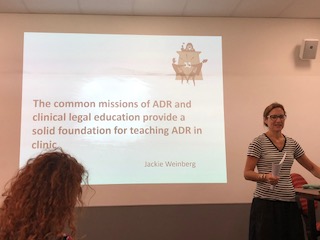
The common missions of ADR and clinical legal education provide a solid foundation for teaching ADR in clinic

This paper is part of a series presented at the 2018 7th ADR Research Network
Roundtable hosted by University of the Sunshine Coast Law School. The 8th ADR Research Network Roundtable will be held in December 2019 in Melbourne, hosted by LaTrobe Law School.

by Jackie Weinberg , Monash Law School

Over recent years, ADR has become an integral part of Australian legal practice. This, along with a number of other forces, has led to a recognition that ADR needs to be taught in law schools. In my PhD research, I explore whether it follows that ADR should be taught in clinical legal education (CLE). In this paper, I report the findings from my PhD research addressing the question of the role of ADR in CLE. Drawing upon interviews with clinicians, I consider whether ADR ‘fits’ within CLE, and if so, on what basis.

jackie paper 2 2018

Jackie presenting her paper on 3 December 2018

My paper shows that clinicians saw CLE as striving to have a strong link to “social justice” and “legal service”. Similarly, they viewed ADR as having access to justice as its focus. Although the links were not always explicitly made by the participants, the implicit connection and “value” of ADR in CLE, in their minds, indicated that they both align with a common goal of furthering access to justice. Clinicians believed that a common mission exists between ADR and CLE in the form of the advancement of social justice. Community Legal Centres (CLCs), incorporating clinical programs, utilise ADR to accomplish their mission of social justice and this facilitates the implementation of clinical practice goals.

Some clinicians expressed caution that there are limitations in relation to ADR providing access to justice. However, in the course of exploring with the participants the issues and concerns of both CLE and ADR, it became apparent that clinicians still viewed ADR as integrally linked to social justice concerns and the advancement of access to justice. Clinicians viewed ADR as a valuable component of CLE, enhancing student awareness about social justice and the various options for dispute resolution. Bloch echoes these views, stating “clinical legal education has always had a broader goal-to teach law students about what lawyers do and to understand lawyers’ professional role in the legal system in the context of having students provide various forms of legal aid services.”[1] Bloch goes on to emphasise that because ADR and clinical education share overlapping goals of advancing the interests of parties and addressing deficiencies in access to justice, ADR education and CLE are “slowly integrating and advancing beyond the teaching and practice of basic negotiation skills that have been included in the clinical curriculum for years.”[2] Bloch opines, “clinical programs that teach and practice ADR can inform, improve, and reform not only legal education, but also-over time-the practice of law and the legal profession as well, thereby furthering the social justice goals of the global clinical movement.”[3]

From my findings and supported literature, I argue that the close association between the social justice “missions” of CLE and ADR, enhanced by their relationships with CLCs and legal aid programs, provides a solid foundation for the teaching of ADR in CLE.

weinberg


Jackie Weinberg is a law lecturer, PhD Candidate, and Clinical Supervisor in Monash Legal Practice Programs at the Faculty of Law, Monash University. Jackie’s research is focused on an exploration of ADR in clinical legal education. Jackie recently published an article in the IJCLE titled: Keeping Up With Change: No Alternative To Teaching ADR In Clinic. An Australian Perspective. In addition to ADR, Jackie has keen interest in student well-being and technology and the law, focusing on access to justice in clinical legal education.


[1] Frank S. Bloch, The Global Clinical Movement (Oxford University Press, 2011) 167

[2] Ibid.

[3] Ibid.

Are we nearly there yet? Reflections on the HDR journey

As we move towards the middle of this my fourth year of PhD candidature, my thesis submission date is drawing rapidly nigh and the anxiety level is elevated a notch,  I thought it might be useful to reflect on the journey thus far and to share with you some of the highlights and low points of the journey although, thankfully, of the latter there is little to report.

child drawing

Image: ‘Child Drawing’ by The Naked Ape, Creative Commons, CC BY-NC-ND 2.0

I think it is fair to say that the journey may never have commenced at all, had it not been for the blindingly obvious conclusion after thirty years of legal practice as a commercial litigator, that the solutions being offered to litigants by the traditional justice system were somewhat less than ideal.  Clients were complaining that the court could not offer the relief they were seeking, the costs of “winning” were prohibitively high and most of the cases in which I was instructed were resolved on some basis well before they reached a hearing.  Try as I might, I could never quite be convinced of the claim that the public interest in having the courts “…explicate and give force to the values embodied in authoritative texts…” (1) or otherwise declare the law for the benefit of the public good, had any real relevance to some of the mundane and routine cases in which I was involved.  In fact, of all of the hundreds of cases in which I acted throughout my career as a lawyer, only two found their way into the law reports.

And so it was that, armed with the vision of a broader view of justice and a transcript of my Masters in Dispute Resolution, I arrived at the academy with a request to be admitted to the RHD program.  It is worth noting at this juncture that the welcoming and supportive culture of the academic community generally and my academic supervisors especially, has been nothing short of outstanding and I believe it is a tribute to their encouragement and support that I have persevered this far.

I am happy to say that my first year of candidature was both vigorous and productive.  Together with my colleague Armin Alimardani I represented the Faculty of Law at UNSW in the Three Minute Thesis competition where we both performed without distinction but were grateful for the experience.  The formulation of an appropriate research question, the preparation of a proposal and writing of a literature review  occupied most of the year and did much to clear my thoughts about the path that lay ahead.  I was delighted to discover that others had trodden the path I sought to travel and there was a rich and abundant supply of research evidence in the general dispute resolution field.  The filtering of this material was as fascinating as it was challenging and the effort was well rewarded because it placed me in an excellent position to approach the confirmation examination with confidence and to receive and consider the reviewers’ comments constructively.  Other features of the year included attendance at a compulsory course on research methodology and the acceptance for publication of the first of three articles which have appeared in the Australasian Alternative Dispute Resolution Journal.

The clear highlight of 2015 was the opportunity of presenting a paper at the 4th ADRN Roundtable at UNSW in September, an event which I shall long remember because it was there that I was introduced to the members of this research network, a group of like-minded thinkers, researchers and teachers who share my passion for a broader framework of justice.  I have attended each of our roundtables since and hope to do so again this year. It is, I think, an important and integral part of the aspiring academic’s learning experience to have the opportunity to present his or her research at as many roundtables and conferences as possible.  It provides an opportunity for practice at presenting, an opportunity to review the work of others and to receive comments and review of one’s own work in a supportive and non-threatening environment.    It also encourages collaboration and the formulation of collaborative networks such as the ADRRN.  For the RHD candidate, it also provides a much needed point of human contact with other researchers.  The road to a PhD can be a lonely journey at times and it is a good thing to meet with others professionally and socially to exchange thoughts and ideas about what is happening in the research discipline.  For me, the ADRRN roundtable is an end-of-year reward for diligence throughout the past year.

The research question with which I am concerned is how lawyers are engaging with court-connected mediation.  In her optimistically titled work, The New Lawyer: How settlement is transforming the practice of law (2) Julie Macfarlane explores the reasons why lawyers have traditionally acted in an adversarial manner in response to conflict and dispute.  She says that it is a cultural issue and that we (lawyers) behave as we do because of our “legal professional culture.”  She posits the existence of three core elements of legal professional culture which guide our thinking and steer us towards adversarial competition whenever a dispute arises.  Those elements are, firstly, the default to a rights based system of justice, secondly a belief in justice as process and thirdly a belief in the superiority of the lawyer as expert.  Using a data collection instrument designed to capture the presence of those elements in research respondents and with ethics approval sought and obtained, I set off in the Spring of 2016 to drive to various country centres throughout New South Wales to speak to lawyers about their views on court-connected mediation.  I spoke with each respondent for an hour, recorded the interviews with their permission on my smartphone and transcribed the interviews later.  (For anyone who may be contemplating this as a strategy for the future, be warned: the transcription time to interview time is 6:1 so for every hour of interview you can expect to spend six hours transcribing).

The verdict is in.  The qualitative data has been analysed and the interviews studied.  In many respects the results are not surprising.   They align with other research done in other places and at other times.  The good news is that, even over the past five years or so, we lawyers have made some progress in embracing court-connected mediation although at times with a begrudging acceptance and a resignation that it is here to stay and we may as well get used to it.  Particular themes emerged and are dealt with in my thesis.  They include, notably, the much vexed issue of disputant participation and the issue of confidentiality.  Understanding of how lawyers grapple with these issues is of particular interest to me because they go a long way to explaining what Olivia Rundle calls “the dilemma of court-connected mediation.”  Other themes which emerged from the data were the inclusion in mediation narrative of non-legal material and the question of whether, in court-connected mediation, mediators should be facilitative or directive.  A better understanding of these issues will give lawyers and their clients a better understanding of mediation and a more satisfying mediation experience.

So, as I turn into the straight for the final run home to what I hope will be a successful conclusion, I am sometimes reminded of family holidays and long car journeys and colouring books when my children would ask: “Are we nearly there yet?” and their mother would patiently reply: “Nearly there.  Just a little while to go. Just keep drawing in your book.  I’m sure you can make it a little better.” 


(1) O. Fiss Against Settlement 93 Yale LJ 1073 1983-1984 at p 1085

(2) J. Macfarlane The New Lawyer: How settlement is transforming the practice of law (Vancouver UBC Press 2008)


Don’t fear robo-justice. Algorithms could help more people access legal advice

John ZeleznikowVictoria University

This post by ADR Research Network member and Professor John Zeleznikow appeared in academic commentary site The Conversation on 23 October 2017.

File 20171018 32345 1tsa5e8.jpg?ixlib=rb 1.1
Should we be afraid of robo-justice?
Maksim Kabakou/Shutterstock

You may have heard that algorithms will take over the world. But how are they operating right now? We take a look in our series on Algorithms at Work.


Algorithms have a role to play in supporting but not replacing the role of lawyers.

Around 15 years ago, my team and I created an automated tool that helped determine eligibility for legal aid. Known as GetAid, we built it for Victoria Legal Aid (VLA), which helps people with legal problems to find representation. At that time, the task of determining who could access its services chewed up a significant amount of VLA’s operating budget.

After passing a financial test, applicants also needed to pass a merit test: would their case have a reasonable chance of being accepted by a court? GetAid provided advice about both stages using decision trees and machine learning.

It never came online for applicants. But all these years later, the idea of using tools such as GetAid in the legal system is being taken seriously. Humans now feel far more comfortable using software to assist with, and even make, decisions. There are two major reasons for this change:

  • Efficiency: the legal community has moved away from charging clients in six-minute blocks and instead has become concerned with providing economical advice.
  • Acceptance of the internet: legal professionals finally acknowledge that the internet can be a safe way of conducting transactions and can be used to provide important advice and to collect data.

This is a good development. Intelligent decision support systems can help streamline the legal system and provide useful advice to those who cannot afford professional assistance.

Intelligent legal decision support systems

While robots are unlikely to replace judges, automated tools are being developed to support legal decision making. In fact, they could help support access to justice in areas such as divorce, owners corporation disputes and small value contracts.

In cases where litigants cannot afford the assistance of lawyers or choose to appear in court unrepresented, systems have been developed that can advise about the potential outcome of their dispute. This helps them have reasonable expectations and make acceptable arguments.

Our Split-Up software, for example, helps users understand how Australian Family Court judges distribute marital property after a divorce.

The innovative part of the process is not the computer algorithm, but dividing the process into 94 arguments, including issues such as the contributions of the wife relative to the husband; the future needs of the wife relative to the husband; and the marriage’s level of wealth.

Using a form of statistical machine learning known as a neural network, it examines the strength of the weighting factors – contributions, needs and level of wealth – to determine an answer about the possible percentage split.

Other platforms follow a similar model. Developed by the Dutch Legal Aid Board, the Rechtwijzer dispute resolution platform allows people who are separating to answer questions that ultimately guide them to information relevant to their family situation.

Another major use of intelligent online dispute resolution is the British Columbia Civil Resolution System. It helps people affordably resolve small claims disputes of C$5,000 and under, as well as strata property conflicts.

Its initiators say that one of the common misconceptions about the system is that it offers a form of “robojustice” – a future where “disputes are decided by algorithm”.

Instead, they argue the Civil Resolution Tribunal is human-driven:

From the experts who share their knowledge through the Solution Explorer, to the dispute resolution professionals serving as facilitators and adjudicators, the CRT rests on human knowledge, skills and judgement.

Concerns about the use of robo-justice

Twenty years after we first began constructing intelligent legal decision support systems, the underlying algorithms are not much smarter, but developments in computer hardware mean machines can now search larger databases far quicker.

Critics are concerned that the use of machine learning in the legal system will worsen biases against minorities, or deepen the divide between those who can afford quality legal assistance and those who cannot.

There is no doubt that algorithms will continue to perform existing biases against vulnerable groups, but this is because the algorithms are largely copying and amplifying the decision-making trends embedded in the legal system.

In reality, there is already a class divide in legal access – those who can afford high quality legal professionals will always have an advantage. The development of intelligent support systems can partially redress this power imbalance by providing users with important legal advice that was previously unavailable to them.

There will always be a need for judges with advanced legal expertise to deal with situations that fall outside the norm. Artificial intelligence relies upon learning from prior experience and outcomes, and should not be used to make decisions about the facts of a case.

The ConversationUltimately, to pursue “real justice”, we need to change the law. In the meantime, robots can help with the smaller stuff.

John Zeleznikow, Professor of Information Systems; Research Associate, Institute of Sport, Exercise and Active Living, Victoria University

This article was originally published on The Conversation. Read the original article.


Honesty and Candour in Mediation: Are They in Short Supply?

Mediation, like negotiation, is at its most basic a process of communication between parties in dispute. The aim in mediation is to find a mutually agreeable solution. The success of mediation might well depend on the ‘honesty’ and ‘candour’ of the parties and their representatives. The parties must be honest and open enough to find a zone of agreement.

The terms honesty and candour need to be defined. Elsewhere I have defined ‘honesty’ as a concept which concerns the accuracy of information conveyed, while ‘candour’ is a concept which goes to the heart of whether or not information is conveyed at all.

13891817217_b5df5d440f

Honesty the flower: credit Creative Commons  see below

https://www.flickr.com/photos/11758041@N08/13891817217/”>Dave_A_2007</a&gt;

While it makes sense for the parties to be honest and open enough to find a mutually acceptable solution, only a fool would rush into a mediation and reveal, at the outset, their BATNAs, WATNAs, and bottom lines.

As for mediators, they are constantly handling information gleaned from the parties in dispute. Often they have to run ‘messages’ back and forth from separate sessions with the parties.

This short discussion looks at the obligations, if any, which fall upon the mediation participants and mediators to be honest and candid.

Parties and their representatives – duties owed to mediators and to each other

Agreements/Legislation

Standard form agreements to mediate and relevant legislation do not usually impose an obligation to be honest and/or candid, although they often require parties to ‘cooperate’ with each other and with the mediator to carry out tasks such as isolation of issues in dispute, exploration of options and so on. Many legislative schemes require the parties to participate in good faith. The terms ‘cooperation’ and ‘good faith’ (and ‘genuine effort’) are rarely defined in agreements to mediate or by relevant legislation but the courts have discerned some common elements (eg attendance at the mediation by someone with authority to settle). Some guidance on behaviour which is not inconsistent with good faith in mediation is also available from cases and commentaries. Good faith does not require a party to act against self-interest and it does not require a party to take ‘any step to advance the interests of the other party’.[1] Good faith does not require the parties to engage in total disclosure. There is no requirement to reveal all of one’s negotiation goals and bottom lines.

Lawyers, as agents for their clients, are also bound by the obligation to act in good faith. A lawyer cannot mislead the mediator or his or her opponent about a material fact for it is recognised that such action (or inaction, where a false statement needs to be corrected) constitutes bad faith.

Negotiation Convention

It is sometimes assumed that interest-based negotiation, which underlies the facilitative model of mediation, requires honesty and candour. Negotiators adhering to an interest-based approach might explain their positions and interests (and refrain from misleading on these matters) with the idea of finding a solution that meets each parties’ interests, but the prescription to be honest and forthcoming with information stops at positions and interests. There is no requirement under this model of negotiation to disclose one’s BATNA or bottom lines.

Rules of Professional Conduct for Lawyers

If the parties are legally represented, the level of regulation intensifies. Legal representatives are subject to the ‘law of lawyering’ including the rules of conduct of the legal profession. These rules set out obligations owed by lawyers to courts and tribunals, clients, opponents and other parties.

Lawyers cannot mislead or deceive the court on any matter. They must advise the court of any adverse legal authorities and legislation. They must be honest and courteous to clients. They must not mislead or deceive their opponents. They must treat everyone with whom they interact, with honesty and courtesy.

Aside from the requirement to advise the court about adverse legal authorities and legislation, the rules do not impose a positive obligation to reveal information unless it is necessary to correct a half-truth or to correct a prior statement which has since become false.

The rules in relation to clients, opponents and others are easily transferable to mediation. The rules in relation to courts are an awkward fit in mediation. It seems that practitioners must treat mediators as courts (see the definition of ‘court’ in the professional conduct rules). If this is the case, practitioners must never mislead or deceive a mediator and they must reveal adverse legal authorities and legislation. I say that this is an awkward fit because mediators do not make substantive decisions and, unless he or she is an evaluative mediator, a mediator seems to have no need for information on adverse authorities and legislation. What is clear is that practitioners do not have to reveal other information either to the mediator or to an opponent save if it is necessary to correct a half truth or correct a statement which has become false (and of course, the practitioner must not reveal information without the consent of the client).

Mediators – duties owed to participants

The NMAS Standards

Assuming that a mediator is accredited under the NMAS and ‘bound’ by the scheme’s Practice Standards (PS), the mediator owes a duty of honesty in regard to matters of advertising and promotion of mediation. But that may be the extent of the mediator’s obligation for honesty under the PS. The mediator might owe an obligation to act with ‘integrity’ but the meaning of that term is not clear.

Rules of Professional Conduct for Lawyers

If the mediator is a lawyer, he or she is still subject to the law of lawyering.

Lawyer mediators owe obligations to the court (not to mislead or deceive). A lawyer mediator is still a lawyer and could not, for example, be a party to a fraud committed during mediation.

The rules governing the relationship of lawyers and opponents seems to have no application to mediators. Mediation participants are not the mediator’s opponents.

Mediation participants are not clients in the traditional sense.

It may be that participants are best considered to be ‘others’ (they are certainly not courts). If this assumption is correct, mediators are obliged to treat mediation participants with honesty and courtesy but there is, at least under the legal profession’s rules, no requirement for candour.

What is the safest course?

The best advice for parties (and their legal representatives) is to reveal information slowly and cautiously. If information is conveyed, care must be taken to ensure that it is accurate. Lawyer mediators must also take care to ensure that any information they convey is accurate. Since there is no general duty of candour, all those who participate in mediation – including mediators – must think before they talk. At times, they may want to take refuge in a silent ‘safe harbour’.


[1] United Group Rail Services Limited v Rail Corporation New South Wales [2009] NSWCA 177 (3 July 2009) [76] (Allsop P).