Revised NMAS Standards

The Australian Mediator Standards Board (MSB) has recently released the revised National Mediator Accreditation System (NMAS).  The revised NMAS will come into effect on 1 July 2015.  It will replace the original NMAS that was introduced in early 2008.  The MSB announced a review of the original NMAS in 2013 citing a desire to improve the clarity and succinctness of the original NMAS, clarify the processes for recognition of experience and non-NMAS qualifications and training, and adjust re-accreditation requirements.

The objectives of the revised NMAS are to:

  1. promote quality, consistency and accountability of NMAS accredited mediators within the diversity of mediation practice in Australia;  and
  2. inform participants in mediation about what they can expect of NMAS accredited mediators.

The new NMAS can be viewed on the MSB website http://www.msb.org.au.

Does the revised NMAS achieve the objectives the MSB set for it?  Are there any further amendments that could have improved the NMAS?

“How to Respond More Effectively to Workplace Grievance” – 16 April 2015

An expert panel will examine short and long-term strategies for responding more effectively to workplace grievances at a Melbourne event hosted by the Victorian Association for Dispute Resolution on 16 April 2015.  The expert panel consists of an investigator (Murray Bickerdike), a labour relations expert (Dr Anna Chapman) and a mediator-trainer (Zandy Fell). David Moore will facilitate the discussions.

See the attached flyer for details:  PANEL april 16th Responding more effectively to workplace grievance

Mediation Quality

The benefits of mediation to society, individuals and the justice system are numerous and these make mediation a process fast increasing in popularity and usage in many quarters. There has been an increase in the use of mediation in the courts, the community sector and even within government. In Australia, mediation quality is promoted through the National Mediator Accreditation System (NMAS) Approval and Practice Standards. Research, however, shows that ensuring quality in mediation goes beyond provisions of the NMAS partly because applying the standards to ethical and practical issues that may arise in a particular context may bring to the fore conflicts between the standards. An example of such a conflict is between the requirements of self-determination and a mediator’s ethical obligation to terminate or withdraw when it appears to the mediator that the proposed outcome is so unfair that it shocks the conscience. Maintaining a balance between the two creates a further dilemma for mediators. How does a mediator address the fairness of a proposed outcome in order to make a decision regarding termination or withdrawal? To address this dilemma, mediators go beyond the NMAS, reaching out to, and making decisions based on personal values, other professional values (and obligations which they may be bound by in any case) and sometimes ask the question: Can I live with this?

What values inform [your] decision-making when faced with ethical dilemmas in mediation?

See: Justice Quality and Accountability in Mediation – a report

ADR in legal education

There is now a groundswell call for increased adoption of ADR in legal education to develop non-adversarial practice in law students.


For example, in 2014 the Productivity Commission has recommended the inclusion of ADR in legal education (see chapter 7).


Whilst acknowledging that legal education must meet the needs of both students and a diverse array of stakeholders the productivity commission has also recognised the need for improved provision of ADR education in a law degree.The future of legal education arguably requires that ADR teachers are recognised and valued for the unique contribution that they provide to legal education.  ADR teachers provide a combination of theory and practice in dispute resolution that enriches legal pedagogy.

Many universities now include ADR as a mandatory course.  We all need to support the mandatory inclusion of ADR in legal education to ensure the development of non-adversarial practice in law

Call for Papers to 4th ADR Research Network Round Table

We are very excited to announce our Call for Papers for the 4th ADR Research Network Round Table to be held at the Faculty of Law, University of New South Wales, on Saturday 12th and Sunday 13th September 2015.

The round tables are designed to encourage a collaborative and supportive research environment in which papers are workshopped and discussed in detail.   Papers in draft form are distributed ahead of time to participants, to enable thoughtful and constructive quality feedback. On the day, speakers are given up to 30 minutes for presentation, with equal time for discussion.

We welcome proposals that consider dispute resolution from a scholarly, critical and/or empirical perspective. We particularly encourage submissions from postgraduate students and early career researchers. All proposals will be considered. Papers must not have been published or submitted for publication, as the focus is work in progress.

There will be a limit to the number of papers able to be part of the round table discussions. A panel will select round table papers from abstracts submitted. The aim is to be as inclusive as time and numbers allow. The following selection criteria will be applied:

– papers take a scholarly, critical and/or empirical perspective on an area of dispute resolution;

– the round table will include a spread of participants across stages of career; and

– a well-balanced range of work will be presented at the round table to provide diversity, to develop the field and to enable cohesive discussion.

Participation is on a self-funded basis.

Deadline for Abstracts:      30 March 2015

(300 words maximum, to adrresearchnetwork@gmail.com)

Date for notification:       15 April 2015

       Draft Papers due:            1 August 2015

Please see the full Call for Papers document for more detail: Call for Papers 4th ADR Research Network Round Table

John Lande discussing Litigation as Violence

John Lande has posted a very thought provoking piece on his blog ‘Indisputably’, discussing a journal article by Professor Vincent Cardi from West Virginia University.   The article is entitled “Litigation as Violence”

Lande in his post brings in many of the themes that preoccupy those of us at the ADR Research network –  the importance of empirical research around litigation and dispute resolution, as well as themes of legal education in dispute resolution, litigant stress, and impact on the wellbeing of the legal profession.

Both the post and the article are well worth reading for legal educators, ADR practitioners and lawyers alike.

Journal Articles by the ADR Research Network in 2014

In a recent post, I highlighted several textbooks that had been published by the ADR Research Network in 2014.  This post is a quick summary of some of the journal articles produced by the network in 2014.

Jonathan Crowe, ‘Ethics and the Mediation Community’ (2015) 26 Australasian Dispute Resolution Journal 20.

Katherine Curnow, ‘Information, power and relationships: Minimising barriers to access to justice for end of life disputes’ (2014) 23(3) Australasian Dispute Resolution Journal 137.

Kathy Douglas and Claire Coburn, ‘Attitude and Response to Emotion in Dispute Resolution: The Experience of Mediators’ (2014) 16 Flinders Law Journal 111.

Susan Douglas and Kathy Douglas, ‘Re-imagining legal education: mediation and the concept of neutrality’ (2014) 7 Journal of the Australasian Law Teachers Association 1.

Stephanie Duffy and James Duffy, ‘An analysis of dispute review boards and settlement mediation as used in the Australian construction industry’ (2014) 30(3) Building and Construction Law Journal 165.

James Duffy and Rachael Field (2014) ‘Why ADR must be a mandatory subject in the law degree : A cheat sheet for the willing and a primer for the non-believer’ (2014) 25(1) Australasian Dispute Resolution Journal 9.

Mary Anne Noone and Lola Akin Ojelabi, ‘Ethical Challenges for Mediators Around the Globe – an Australian perspective’ (2014) 45 Washington University Journal of Law and Policy 145.

Lola Akin Ojelabi, “Dispute Resolution and the Demonisation of Culture” (2014) 25(1) Australasian Dispute Resolution Journal 30.


Textbooks by The ADR Research Network in 2014

2014 was a busy year for the ADR Research Network in terms of research output.  To mark January 2015, here is a quick snapshot of some of textbooks produced by the network last year.  We will follow up with a post about 2014 journal articles in the not too distant future.

122057David Spencer and Samantha Hardy, Dispute Resolution in Australia: Cases, Commentary and Materials (Thomson Reuters, 3rd ed 2014).  Find out more about this book here.

9781862879744 Michael King, Arie Frieberg, Becky Batagol and Ross Hyams, Non-Adversarial Justice (Federation Press, 2nd ed 2014).  Find out more about this book here.

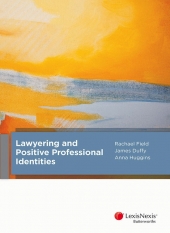
_au_-9780409334463-positive-professional-identititesRachael Field, James Duffy and Anna Huggins, Lawyering and Positive Professional Identities (LexisNexis Butterworths, 2014).  Find out more about this book here.

An economist and a lawyer went to lunch… reflections of the Productivity Commission’s Access to Civil Justice Inquiry

The Australian Centre for Justice Innovation (ACJI) and the Australian Institute of Judicial Administration (AIJA) are hosting a lecture on the Productivity Commission Access to Justice Arrangements Inquiry. The report, released in December last year, had made many recommendations regarding dispute resolution and access to justice, including increased use of ADR by the courts.

The lecture will be delivered by Dr Warren Mundy, a Commissioner of the Productivity Commission and the Presiding Commissioner on the Commission’s Access to Civil Justice Inquiry.

In this lecture, Dr Mundy will reflect on the findings and recommendations of the Productivity Commission’s inquiry into Access to Civil Justice. In particular, he will explore the application of economics to the examination of civil justice policy and institutions and discuss future challenges to improving access to civil justice.

This lecture precedes a full day seminar on 26 June 2015, jointly convened by ACJI and AIJA. Further details will be provided at a later date on the AIJA and ACJI websites.

A flyer for the lecture to be held in the Melbourne CBD at 12.30 pm on Friday 13 February 2015 an be downloaded here.

Jack Cranstoun Scholarship for Young Mediators

The Dispute Resolution Branch of the Queensland Department of Justice and Attorney-General are offering a scholarship for two young people, one male and one female, to gain mediation skills and assessment for National Mediator Accreditation.  The Scholarship honours the memory of Jack Cranstoun, who was one of their staff.

Applications close 6th February 2015.

Full details here:

https://conflictresolvers.files.wordpress.com/2015/01/jack-cranstoun-scholarship.pdf