
This post has been contributed by ADR Research Network member Professor Laurence Boulle and offers insights and wisdom from our esteemed mediation community elder – I mean that in the most respectful way Laurence! The Lockdown DR 101 series resumes on Tuesday 21st April.

In days of yore dispute resolution (DR) processes were identifiable with specific times and places. This seemed natural, logical and everlasting. Under current pandemic conditions of quarantine, physical distancing and restrictions on group meetings (referred to loosely as ‘lockdown’), the factors of time and place have been disrupted, extended and sometimes distorted to accommodate the operation of DR systems under Covid-19 realities.
Contexts determine attitudes and behaviours. The lockdown has caused some people to experience a ‘slowing’ of time, removed from the frenetic demands of commuting and appointments, alarms and dead-lines. Accustomed rhythms of the weeks, the months and the seasons have been disturbed – hours of work and relaxation, and holidays and special days, have all become less precisely time-bound than before. There is more potential opportunity for individuals and groups to re-evaluate time in terms of personal inclinations and social dynamics. This could involve (re)reading Albert Camus’ pandemic novel, The Plague (rich in space and time allusions), or finally conquering Marcel Proust’s monumental In Search of Lost Time (in seven volumes), which is appropriately themed for current times.
In reality the nature of time has always been a pluralistic, and never a unitary concept, and has been much debated by philosophers. In traditional societies notions of time are associated with mythical themes of rebirth and the cycles of nature, while industrial societies operate with linear notions of time – with the metaphor of time’s arrow racing towards us, passing through at pace and retreating into a lost past. This is not the time or place to explore these intriguing theories philosophically – dispute resolution is, after all, a most pragmatic pursuit.
Space, for its part, is traditionally associated with physical locality, something earthy, concrete and bounded. Place and time are sometimes correlated with each other, for example where time is measured in terms of spatial distance – how long it takes to walk from one village to another. However, the concept of space, as with time, has different connotations in different fields, such as physics, psychology or law. Spatial factors are highly regulated in domestic law in relation to land ownership, strata title rights and personal property – how they can be acquired, developed and alienated. In international law spatial considerations are reflected in national boundaries, maritime zones and jurisdictional limits of sovereign states, with implications for the movement of people, for travel and for trade. Space is sometimes reified in legal and economic thinking with serious consequences for those from ‘other spaces’ – asylum-seekers have trespassed spatially on Australian territory and goods are quarantined because they emanate from ‘external’ territories. Border forces enforce spatial borders, and other things besides.
As it has with time, so has the lockdown affected individuals’ and groups’ spatial patterns and practices, and by extension how we organise and experience our sense of self when it is identified with discrete spaces – my home, my club, my firm’s board room. Needless to say, there are very different experiences of pandemic space at present, with some individuals closeted singly in one-room units, others in spacious houses with veggies and views, and yet others on farmland with hectares of space and accompanying sky, bush and wildlife. Different spatial experiences under lockdown can impact the grief, fear and stress and other vulnerabilities associated with new unknown realities.

Time-Space in ‘Traditional’ Dispute Resolution
Time has always been an imperative of justice accessibility – ‘justice delayed is justice denied’. Or as Roman lawyers intoned, ‘Tempus fugit, ergo diem carpe’. Courts, however, have traditionally run on strict clock time, hearings starting punctually at 10.00 (a judge once warned me that, after godliness, punctuality matched the importance of cleanliness) and adjourning predominantly in terms of standard schedules and not in terms of a case’s peculiar evolutionary progression.
As regards space, the courts and jury systems were originally predicated on the presence of all relevant parties in the same court precinct at the same time, the court-room physically representing the symbolic majesty of the law. Procedural fairness required court spaces to be publicly accessible, with evidence given in the same ‘time-space’ for the benefit of all litigants, advisers and observers, without altering space to accommodate individual meetings. Case management systems, hearing adjournments, court recesses and opportunities for judgment writing did accommodate some flexibilities of time and space, subject to the demands of procedural fairness and public access to justice in each dimension.
In their first appearances in the previous century arbitration, mediation and conciliation systems were also time – and space – bound. They were identified with physical locations and with fixed (or negotiated) times for the attendance of parties and advisers, for adjournments and for termination. A variation in the space-and time-bound nature of mediation was, and continues to be, found in the convening of separate meetings for individuals in isolated spaces, in shuttle mediation where parties do not wish to, or could not lawfully, be in spatial proximity with each other, and in telephone mediations where parties are spatially separated but participate in synchronous time. Preparation before the convening of DR processes was conducted in asynchronous time and often in individual virtual spaces as interveners prepared and primed each side individually.
Other changes to time and space determinants in DR systems preceded the pandemic, predominantly during the first decades of this century. The drivers of changes were computing developments, communication technology and algorithms, on one hand, and pressures for service efficiency, measured largely in units of time and money, on the other. Courts and tribunals have for some time been using new technologies to expedite proceedings, reduce backlogs and make justice more accessible for more parties.
Arbitrators, mediators and other DR practitioners also responded to cost and time pressures by engaging technology such as emails, the internet and online services for preparing parties for the respective processes, for facilitating exchanges of documents and for managing organisational matters before participants congregated in a physical location. Pervasive efficiency goals produced strict time limits for some processes, such as arbitration conducted under expedited procedures and statutory conciliations time-limited to three hours.
More extensive changes relating to space and time were introduced in the immediate pre-virus years. Online spaces were providing for virtual mediations and arbitrations, courts and tribunals introduced electronic filing, pleadings and discovery, and distance communication was deployed for experts, criminal accused and witnesses in tribunal and court proceedings. For the first time, private and public DR platforms accommodated not only spatial distancing but also communications in asynchronous time, such as basic emailing, text-based negotiation and more sophisticated forms of on-line practice using virtual internet protocols. Thus, well before the pandemic, service-providers such as the Mediation Room (https://www.themediationroom.com/) allowed for negotiations, mediations and adjudications to occur in asynchronous times and remote places, as did large on-line business and industry institutions and providers of private services in telecommunications, finance and insurance, as well as organisations dealing with global commercial matters such as the determination of domain name disputes.
The pandemic, however, turned attention to spatial and temporal DR changes prompted more out of pragmatic and regulatory necessity than convenience and efficiency.

DR Time and Space under Lockdown
There is some irony in the current pandemic’s choice of timing, and arguably spatial presences, in that DR systems had already broken traditional bounds of time and space. Courts in Australia had been using sophisticated technology for case management, hearings and evidence, arbitrators and conciliators had adapted their systems so they could practice in their pyjamas, and commercial service-providers developed and promoted new technologies and new forms of dispute resolution. In compensation cases over money, text-message negotiations were being used in some contexts, such as where claimant teams required coffee off-site and both sides agreed to continue exchanging dollar proposals. (Based on which the author now teaches text-based negotiation in DR – another story.)
In terms of current realities, we might say that many dispute resolution services were partially pandemic-ready when the virus collided with accustomed patterns of social intercourse.
When lockdown first occurred, however, DR activities initially stalled. Time momentarily stood still, and spaces were vacated. Hearings were deferred to future unspecified dates and some courts locked their panelled doors. Lawyers not involved in transactional work experienced sudden drop-offs in hearings and trial-related practices. A lack of control, accompanied with some desperation, was momentarily, in the air.
The stalling was, thankfully, short-lived. Courts, commissions, arbitrators and others were quick to consider how they could continue their respective services while ensuring compliance with official lockdown requirements. The strictures of lockdown necessitated more extensive and timeous adaptations to the time-space dimensions of DR systems.
Within a short space of time some courts and commissions began conducting hearings and convening mediations with the assistance of telephone communications, video links and digital spaces. Mediators and arbitrators revised their engagement agreements to accommodate the new circumstances; for example, traditionally private and confidential mediation systems required contractual reinforcement of these principles: in virtual space, reinforced by asynchronous time, a zoom or skype meeting can be easily recorded.
The new developments provided new opportunities for commercial on-line services such as Modron and Immediation. To enhance their members’ capacity in the various virtual environments, bodies such as the Resolution Institute and the Australian Disputes Centre have increasingly offered practice-based webinars on the systems.
For entrepreneurial classes of DR practitioners, the new circumstances and the new technologies provide new potential forms of practice. For example, the national cabinet’s requirements for designated landlords and tenants to renegotiate commercial lease terms (where the tenant’s trade had been adversely affected), invited consideration of using impartial online facilitators in these deliberations. Domestic tensions, large and small, caused by family lockdowns in confined spaces could be potentially facilitated by counsellors and conciliators in pop-up DR systems. Neither the leasing or domestic categories service would be space – or time – bound and Australian practitioners could potentially offer such services in any relevant jurisdiction – subject to time differences. In both categories there could also be temporal dynamics not immediately apparent but necessitated by lockdown requirements – renegotiated leases might have to be continually re-evaluated to accommodate changing financial circumstances and domestic issues might require regular interventions of shorter duration, particularly where adolescents are involved. The new-style DR systems could be readily adapted to new dispute categories.
For some practitioners the transition to virtual dispute resolution through online technologies and platforms, whether in synchronous time or not, has been relatively easy. However, issues have inevitably arisen in these circumstances, for example in relation to moving parties from joint to separate meetings and back again, and there have been concerns relating to privacy and confidentiality (or lack thereof) of some online facilities. Practical changes have involved moving away from use of butcher’s paper and whiteboards for agendas, graphs, mud-maps and the like – here inventive use of screen-share and camera focus on the intervener’s board are used as surrogates for the original representations of visuals.

Inevitably practitioners are developing tips and tricks for operating in virtual spaces, and these are also found on relevant websites. Some lessons are learned through trial and error, such as muting microphones in multi-party sessions and training the dog in quietude, some entail sound common sense, such as having part of the torso and not only head on the screen, and yet others require some technical finesse, such as simultaneous use of video, telephone and chat spaces, sharing documents and drafting deeds of release jointly. In multiple party sessions which include advisers, interpreters and others, practitioners ensure prior commitments to longer time periods than ordinarily expected.
The gear-shift to virtual DR practice invites attention to two factors indirectly related to time and space. The first is artificial intelligence which has been perched on the margins of various DR systems for some time and will be more easily engaged, for example in relation to predictive analyses, in digital spaces than in off-line DR. The incorporation of AI developments into the new virtual practices promises not only more accurate forecasting and avoidance of heuristics but additional efficiency in the time dimension.
The second indirect connection relates to the measurements in delivery of DR services. The spatial closure of courts, tribunals and commissions pushes some of the expenses of delivery onto practitioners operating in their home spaces – analogously to how airlines and fast food have pushed costs back to customers. Some mediator outlays on equipment, subscriptions and online DR training will be defrayed through tax write-offs, (and increased practice opportunities 😊), while others will be borne by practitioners themselves. The off-set of some operating expenses will result in greater efficiencies for tribunals and commissions, and constitute obstacles to reverting to off-line operations when the lockdown is no more. Moreover, virtual spatial and temporal realities might make for DR systems being easier to measure – the dreaded ‘mediation metrics’. In-built algorithms are likely to prioritise machine-measurable factors of quantity and efficiency at the neglect of the qualitative-effectiveness promises of DR systems. Metrics always measure first what is easy to compute, and these include unit costs, operating time and duration, settlement rates, and similar ‘throughputs and outputs.’
Technical and practical challenges aside, there are cultural and attitudinal assumptions in the move to non-spacial and temporally asynchronous DR practices. Aboriginal philosopher Tyson Yunkaporta (Sand Talk) writes insightfully about indigenous ways of valuing and being, of knowing and doing, all with spatial and temporal dimensions. The indigenous experience of ‘country’ is difficult to reframe from the spatial to the virtual and societies which still have partly oral cultures require high-context, or field dependent, reasoning times and spaces for their yarning. Care will be required to ensure that, in the rush to digitalise, these ways of being and doing can be accommodated in the emerging DR protocols.
Even the best protocols, however, can be alienating for some participants, whether through the formality, technicality or duration of proceedings or because of disputants’ attributes of culture, ethnicity, religion or education. Even for a seasoned dispute resolver the mildest of new technologies can be a shock – recently I gave distance evidence in committal proceedings and it was an isolated and isolating experience, yet this medium is already regularly used for bail applications and expert evidence and the disconnections could be accentuated by the new DR methodologies. Moreover in cases of interpersonal dispute resolution, such as estate and family matters, the space and time determinants could provide challenges in establishing emotional connectivity among parties and their supporters.
 Future Time, Future Space
As noted above, context is everything. It is not only spatial perspectives that have been disrupted by the lockdown but time as well – these are circumstances in which it is socially difficult to anticipate and plan for the future. While thoughts are always tempted to lapse into past time it is more difficult right now to reflect on future time. Time has always seemed like a quasi-infinite resource which facilitated planning in personal diaries, career, work and leave schedules, and other activities to be undertaken or achieved within designated pods of time.
Most commentators suggest that the ‘new normal’, when it eventually arrives, might be quite different from the ‘old normal’ in its political, economic and social dimensions. The same might be said for dispute resolution. If this is the case, wise heads will need to reconsider simple spatially-related rituals which engage the brain’s right hemisphere and enrich DR experiences: handshakes during introductions, physical circulation and ritualistic signing of engagement agreements, the sound, sight and tactile nature of pouring and drinking water and sharing the tissue box on the mediate table.
If the normative framework of dispute resolution changes permanently, other changes would have to follow. For example, the assumptions of the NMAS might also have to be reconsidered, and the Practice Standards amended accordingly. And space- and time-bound DR walkshops, formerly conducted alongside Sydney’s harbour or Canberra’s lake, will have to discover new environments.
There is DR uncertainty ahead. Only time will tell. Watch this space.
Laurence Boulle
You can contact Laurence at resolveaboulle@gmail.com.
Acknowledgements
Mediator image: Law.com
Corona virus image: Science Alert
Lockdown image: The Body Mechanic
Virtual DR image: ODR Europe
Time and space image: Medium.com
 Conflict is a challenging phenomenon in all contexts – in international relations, societies, families and workplaces. It is pretty much endemic to the human condition and is usually present in some form or at some level wherever human beings are in a relationship or relating to each other in some way. In one of our books on dispute resolution – Australian Dispute Resolution: Law and Practice – Laurence Boulle and I deal extensively with the many facets of conflict and disputes: the definitions, sources and dimensions, how they can escalate and de-escalate, and possible interventions and outcomes. This post is taken from that Chapter.

 The term complaint is sometimes used interchangeably with ‘dispute’. However, the term is usually associated with consumers or clients alleging wrongdoing or irregular practices by business, government or other service-providers.
 The term grievance is often used in workplace and employment contexts where it is used to refer to allegations of various kinds made by employees against employers, supervisors or other employees. The term ‘grievance’ usually implies that there has been a lack of response, or even resistance, from management – for example a supervisor has not responded to allegations of victimisation, the HR department has not addressed bullying concerns or there has been failure to performance manage an employee adequately. Grievances can arise out of conflict situations and could give rise to concrete disputes that require legal interventions such as fact-finding investigations or tribunal hearings. Where an employee brings a grievance claim there could follow a process of investigation, mediation and adjudication in relation to their rights as employees and the alleged wrongdoing of other parties in the workplace.
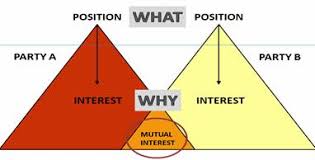


 If the parties adopt positional or argumentative approaches, mediators attempt to divert them into an interest-based or problem-solving mode. This requires interventions which shift the focus from positions (or in other words, what a party wants) to interests, needs and priorities (or why a person wants what they want). Positions are the tip of the iceberg, it’s only once the mediator helps the parties to mutually explore and understand their divergent interests that more diverse options for resolution can be generated.
 The mediator function of facilitating party negotiations is extremely skilful and represents the true art of mediation practice. It requires a deep functioning knowledge and appreciation of the theories and practices of positional and interest-based negotiation – so that mediators can impart constructive techniques for the parties’ benefit. It is difficult to capture the art of facilitated negotiations in mediation in a way that is easily replicable by us in our homes and virtual offices while in lockdown.



 Drawing on mediation practice, there are a range of strategies we can enact. For example, ensuring we find a quiet place to sit comfortably, where we are free from interruptions and the lighting is at an appropriate level. We should choose a room that is relatively neutral, like the living or dining-room, for example, rather than a person’s bedroom. It can be constructive to have a whiteboard – even just a small one, or in the alternative a flip-chart or some paper, or an electronic device – for writing up the agenda and taking notes about possible options and solutions that are discussed. We might also harness relevant physical symbols that make us feel comfortable and productive. For example, having a photo of the children on the table when talking about arrangements for them to keep a focus on their best interests. It’s also a good idea to set up with glasses of water for refreshment.


 In our lockdown communications we can also establish ground-rules like these. We can say out loud at the start of a discussion or negotiation that we are committing to speak and engage respectfully with each other and that only one person will speak at a time. We won’t always succeed in adhering to the ground-rules. But having established them gives each person in the conversation the authority to remind others of them and if, for example, one person starts over-talking another, they can be respectfully reminded that their earlier commitment was not to do that. Something as simple as this can bring a sense of order and structure to communications.

 Our verbal communications are only one dimension of the way we communicate with family, friends, colleagues and others in lockdown. Non-verbal communication is another dimension. Non-verbal communication consists of aspects of communication which can be seen by the other party – the ‘visuals’, and other forms of communication which can be heard – the ‘vocals’. To communicate and negotiate effectively in lockdown it is important for us all to be aware of body language messaging.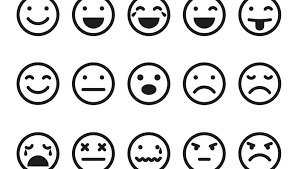




 The Australian Dispute Resolution Research Network