Lockdown Dispute Resolution 101 #16: Effective communication strategies – using the skill of acknowledgement in lockdown

Acknowledgement 1

In post # 15 we noted the importance of reflecting skills for achieving active and effective listening in lockdown. When we enact reflecting skills we give feedback to the person we are communicating with about our understanding of their message. We can do this, for example, by summarising accurately facts, feelings and interests, by asking empathic questions and by using particular verbal cues. Another important way to provide feedback that we are understanding messages being communicated to us is to acknowledge the facts, feelings and interests present in the message.  Mediators use acknowledgement consistently throughout the facilitation of a mediation session.

Acknowledgement is one of the five elements of LARSQ – which stands for listening, acknowledging, reframing, summarising and questioning. This post focuses on the importance of acknowledgement for effective communication and for the prevention, management and resolution of disputes in lockdown.

Acknowledging

Acknowledgement 2

Acknowledgement is an important part of communication because it is critical to human engagement and attention. When a person’s emotions, needs, interests, fears and priorities are acknowledged they feel heard and recognised, they feel understood (even if not agreed with) and they feel as though what they are experiencing matters and is valued. When people feel heard and understood, they are more likely to cooperate, collaborate and engage in constructive problem-solving. This is why acknowledgement is a critical key to preventing, managing and resolving disputes in lockdown.

It isn’t hard to show acknowledgement, however it can be easy to forget to acknowledge the person we are communicating with. We discussed reflective listening verbal cues as acknowledgement in post #15. We can use phrases such as ‘It sounds as though that’s been a difficult time for you?’ ‘What you are saying is that you feel a strong sense of frustration about the situation?’. Or ‘It sounds like the main priority for you is …?’. We can also do something as simple as nodding our head or offering words of acknowledgement from our attending skills set: for example, ‘I see …’, ‘Uhuh …’, ‘Yes …’, ‘Oh really?’. Reframing, summarising and asking empathetic questions are additional ways to achieve acknowledgement (we discuss these skills in coming posts).

In a mediation, a mediator acknowledges each of the parties and also encourages the parties to acknowledge each other. When we don’t have a mediator present to help us in our homes and virtual offices in lockdown, we have to use our dispute resolution agency to reflect on the situation and experience of the person we are communicating with and recognise that experience. Engaging our capacity to acknowledge others requires (at least) 2 things. First, a willingness to acknowledge and engage with emotions; and second, we need to be able to empathise with others.

Acknowledging emotions

Michal Alberstein in an article entitled ‘Forms of Mediation and Law: Cultures of Dispute Resolution’ published in 2006 (cited below) noted that an emphasis on recognising, and allowing the expression of, emotions is a unique characteristic of mediation. Emotions are rarely acknowledged, for example, in adversarial processes like litigation. It is part of the art of mediation to be able to acknowledge emotion in a controlled way, so that the expression and recognition of emotion brings relief and enhances the quality of communications, as opposed to disrupting and damaging communications.

Albertsein says that emotions are an ‘integral part of the conflict picture’, they are important sources of information, and they have a rational level which supports parties in developing their understanding of each other. Bush and Folger have famously said that ‘there are facts in the feelings’. Fisher writing with Shapiro about emotions, has said that emotions can present important positions, needs and interests which cover real concerns that need to be answered and addressed.

Acknowledging emotions 1

In lockdown communications and negotiations, we shouldn’t be afraid of emotions – not of our own emotions nor of the emotions of the person we are communicating with. However, we do need to follow Fisher and Ury’s famous adage of ‘separating the people from the problem’. That is, we need to enact the principle of depersonalization so that emotions are managed constructively.

Professor Kathy Douglas and Dr Clare Coburn published a great article on emotions in mediation in 2014 (cited below). Kathy and Clare are dear friends and colleagues of the ADR Research Network. Kathy is Dean of the Graduate School of Business and Law at RMIT University and was also part of the co-founding cohort of the Network in 2011. Kathy and Clare’s article presents research on emotion in mediation conducted with mediators working with the Victorian Civil and Administrative Tribunal (VCAT). In the article they note the importance of an acknowledgement of the emotional impact of conflict on a person because it can result in increased understanding and also self-understanding. That is, when parties hear their own perspective and emotion reflected back to them by a mediator they develop a deeper self-awareness. Kathy and Clare note that it can also assist the other party to hear the emotional perspective of their ‘opponent’ in ways that may deepen their understanding.

I saw the magic of acknowledgement in this way when mediating with Associate Professor Libby Taylor in the Bond Family Dispute Resolution Clinic. Libby and I are co-directors of the clinic in which we both practice as accredited FDRPs. Libby and I are also co-directors of the Bond Dispute Resolution Centre – started by Professor Laurence Boulle and others back in 1989.

Libby and I were mediating a parenting dispute between two separated young parents who had a toddler. They both clearly loved the toddler very much but they were at odds about a number of issues relating to his care and parenting. The father raised a particular concern about the toddler’s nutrition. He felt the mother was not firm enough about ensuring the child ate fruit and vegetables. In the mediation the father was able to express this concern to the mother and his communications indicated he was very angry about the current state of affairs. fruit and vegetables 1

We asked the mother to tell the father how hearing this made her feel. She explained to the father that she struggled with getting the toddler to eat fruit and vegetables. She felt as though the father was judging her and saying that she was a bad mother and this made her feel very sad and upset. The father was able to acknowledge this sadness, saying that it wasn’t his intention to make her sad and that he thought she was actually a very good and caring mother – his focus was squarely on being concerned about the child’s best interests in relation to the issue of nutrition. The mother was able to acknowledge his focus and share that her focus was also on the child’s best interests. The young parents were able to exchange their different perspectives.

After extensive discussion, the father apologised saying – ‘I’m sorry I’ve been so hard on you about this’. He was able to engage with his own emotions around the issue of nutrition and explained that his own mother had been very strict with him when he was a child – and this was a strong influence in terms of how he looked at the issue of nutrition for children. The mother, knowing her former mother-in-law and her personality, was able to acknowledge that she understood where the father was coming from and that perhaps his own experiences around food in childhood had been difficult. From there Libby and I could begin to help the parents develop a plan about how the toddler’s nutrition could be managed in the different households into the future. The air in the mediation room seemed to clear after these acknowledgements. The parties’ faces seemed relieved and ‘lighter’. Communication on other issues also became easier as a result.

In their article Kathy Douglas and Clare Coburn document some of the empirical research data from interviews with the VCAT mediators. One participant said: ‘Acknowledging [the parties’] emotions is very important … because that’s the very thing that’s been overwritten. If people say [to them], ‘Get a life, get real!’ [That] just shuts people down and they feel that they haven’t been heard. They think: nobody has taken any notice of what I’m trying to say so it’s not very important’ (p.130).

Acknowledging emotions 2

Acknowledgement and empathy

An ability to engage with emotions in lockdown communications and to acknowledge the experience and situation of the person we are communicating with also requires a level of empathy.

Empathy is the ability to put yourself in the shoes of another, to understand things from their perspective. Empathy extends beyond recognition and understanding of another’s feelings and experience: it acknowledges and values the other person’s fundamental human needs. Having empathy for someone is not the same as agreeing with them. It’s also different from feeling sympathetic or compassionate towards them. Instead, when we are empathetic, we convince the person we are communicating with that we have entered their world of understanding. When we use empathic questions, or reflect back with an empathic acknowledgement, we show the other person that we have made an effort to engage with and comprehend what they have said. Acknowledgement, empathy and recognition between people in communications and negotiations can overcome a crisis in interactions.

Empathy 1As human beings, we all have a basic capacity for empathy, and we are also socialised to extend that capacity because in every culture, even though empathy may manifest in diverse ways, some level of empathy is important to the quality of human relations. In order to harness the communication benefits of empathy, we must be present in our communications with others, paying attention and prepared to engage and connect. Listening empathically means that we are focused on what the other person is saying, observing, feeling, needing and requesting.

We noted above that summarising and paraphrasing are ways in which positive acknowledgement might be made by confirming understanding. If someone asks in a conversation ‘Do you know what I mean?’ we could simply reply ‘Yes I understand’. But if we paraphrase what they have said we can convey a much deeper sense of understanding. In expressing empathy, non-verbal communication aspects (see post #5) such as the tone of our voice, are also important. An authentic reflection of our efforts to consciously listen for and understand the feelings, needs and interests of the person we are communicating with can only be communicated with a sincere tone. Further, it’s always better to ask if we have accurately understood, rather than claim that we have understood.

It is important to distinguish sympathy from empathy. Sympathy involves emphasizing our own emotional experience in response to the emotional experience of the person we are communicating with. Empathy on the other hand, involves a focus on care and attention to the other’s distinct individual experience. Having sympathy involves showing concern, perhaps feeling sorry for the plight of a person; whilst empathy is a much more significant affective response of care and consideration for another person’s emotional experience that facilitates and supports interpersonal connection and therefore effective communication. Importantly, as the young parents experienced in the anecdote above, the reception of adequate empathy will be evident in communications when a release of tension is sensed.

As we noted in post #15, some people are just naturally better communicators than others. Some people are inherently and instinctively able to acknowledge the people they are communicating with throughout their communications. But it doesn’t matter if we aren’t a ‘natural’ at acknowledgements. We can change that by learning to employ the skills and strategies discussed in this post. Again, these challenging times of lockdown demand that we harness our dispute resolution agency in this way.

Tomorrow’s Blog: Lockdown Dispute Resolution 101 #17: Effective communication strategies in lockdown – reframing.

References

Joseph P Folger and Robert A Baruch Bush, ‘Transformative Mediation and Third‐Party Intervention: Ten Hallmarks of a Transformative Approach to Practice’ (1996) 13(4) Mediation Quarterly 263.

Daniel L Shapiro, ‘Negotiating Emotions’ (2002) 20 Conflict Resolution Quarterly 67.

Roger Fisher and Daniel L Shapiro, Beyond Reason: Using Emotions As You Negotiate (Penguin Random House, 2005).

Michal Alberstein, ‘Forms of Mediation and Law: Cultures of Dispute Resolution’ (2006) 22 Ohio State Journal on Dispute Resolution 321.

Roger Fisher, William Ury and Bruce Patton, ‘Getting To Yes: Negotiating Agreement Without Giving In (Penguin, 2011).

Kathy Douglas and Clare Coburn, ‘Attitude and Response to Emotion in Dispute Resolution: The Experience of Mediators’ (2014) 16 Flinders Law Journal 111.

Acknowledgements:

Acknowledgement image 1: Alamy

Acknowledgement image 2: RAFREYES

Acknowledging emotions image 1: Developing Minds

Fruit and vegetables image: American Heart Association

Acknowledging emotions image 2: Retail Doctor

Empathy image: Charity Village


Lockdown Dispute Resolution 101 #15: Effective communication strategies – listening to each other in lockdown

We have touched on many useful communication approaches in the sequence of recent posts on learning from the art of mediation for the prevention, management and resolution of disputes in lockdown. Nationally accredited mediators are experts in the practice of the mediation process. They are also required to be experts in communication (their own approaches to communication) and in facilitating the communication of others.

Clouds 1This next sequence of posts continues our learning from the theory and practice of mediation – with an emphasis on specific skills for effective communication. We are focussing on five key skills denoted by the acronym LARSQ. LARSQ stands for listening, acknowledging, reframing, summarising and questioning. The LARSQ approach to understanding and enacting effective communication is a common feature of mediation training. If we can train ourselves in lockdown to use LARSQ techniques regularly in our everyday communications, we will be better able to prevent, manage and resolve disputes.

Listening Emoji 1Effective listening

In a fairy-tale world we would listen to each other carefully and effectively all the time. We would hear factual and content-related messages accurately and we would hear and engage with the messages ‘between the lines’ – those messages relating to emotions, feelings, concerns, interests and underlying needs, hopes and priorities. In such a world we wouldn’t need mediation because mediators would not be required to remind people to listen to each other to achieve proper understanding and acknowledgment.

Lockdown is not a fairy-tale world and we are all waiting to be relieved of its restrictions. In lockdown we are communicating with each other in the context of difficult circumstances – often facing emotional, intellectual and financial challenges. We don’t have a mediator with us everyday to promote effective listening, so we need to harness our dispute resolution agency (see post #2) and all the things we can learn from the art of mediation, to approach our communications with others in lockdown intentionally and in an informed way – so that they are constructive, productive and effective.

A good mediator will spend most of their time listening to the parties. In lockdown communications we need to invest time in carefully listening to each other. Effective listening involves more than simply hearing spoken words. It involves paying attention to, and properly understanding, the various meanings of messages by engaging attentively and being in the moment of communication. This involves: grasping facts and information analytically and picking up on the emotional content, broad narrative patterns and the themes the other person is conveying.

Causes of ineffective listening

Listening may prove to be ineffective due to the following factors relating to the speaker, the listener and the environment of communication:

  • Causes of ineffective listening relating to the speaker include — inaudibility, annoying mannerisms, irritating tone, inappropriate pace of delivery, personal presentation, contentious content.
  • Causes of ineffective listening relating to the listener include — discomfort, fatigue, focused on responding rather than listening, ignorance of subject-matter, psychological deafness, emotional involvement, inability to absorb, judgmental attitude, device distraction.
  • Causes of ineffective listening relating to environmental factors include — external noise, bad lighting, poor acoustics, uncomfortable seating, lack of temperature control, outsider interruptions.

We can contribute to achieving effective listening by avoiding as many of these causes of ineffective listening as possible.

Listening effectively

Listening effectively is hard work. It is not a passive exercise. This is why the term ‘active listening’ is commonly used to describe effective listeners. Active listeners are physically attentive, concentrate on and encourage the other speaker, display an attitude of interest and concern, are non-judgmental, are not be preoccupied with responding to or questioning the other speaker, and are not distracted by ‘non-relevant’ matters.

A Master Listener concentrates not only on spoken words and sentences but on the speaker’s patterns of thought, organisation of ideas and the express and implicit themes in their communication. This requires considerable effort. Paying attention is an important principle of listening effectively. Active listening is critical for the activation of the other elements of LARSQ – such as being able to acknowledge emotions and feelings properly, and being able to summarise, reframe and ask questions appropriately.

Active listening 1

Elements of active listening

Active listening can be broken down into three key elements – attending skills, following skills and reflecting skills:

  1. Attending skills include: being present in the moment with the person you are communicating with, both physically and psychologically, making them feel important and engaging their trust by using physical attention, displays of interest, appropriate body movements, and encouraging noises (for example, ‘I see …’, ‘Uhuh …’, ‘Yes …’, ‘Oh really?’).

Gerard Egan (2014, 134) refers to the macro-skills of listening in terms of the acronym SOLER:

  • Squarely face the person to show involvement.
  • Adopt an Open posture, literally and metaphorically.
  • Lean towards the person at times.
  • Maintain Eye contact most of the time (if culturally appropriate).
  • Relax, be natural in these behaviours.
  1. Following skills include: indicating that you are following the speaker by providing cues, not interrupting, asking clarifying questions, taking notes, summarising and refraining from being judgemental or giving advice.
  2. Reflecting skills involve: giving feedback to the speaker about your understanding of their message; identifying and acknowledging facts, feelings and interests; summarising accurately facts, feelings and interests; asking empathic questions. Friends and colleagues of the ADR Research Network – Mieke Brandon and Leigh Robertson (2007, 151–2) – suggest the following verbal cues as ways to initiate reflecting skills:
  • ‘You sound/feel as though …’
  • ‘You’re saying you believe …’
  • ‘What you are saying is …’
  • ‘Your point/perspective is …’
  • ‘It sounds like …’
  • ‘It seems …’
  • ‘From where you stand …’
  • ‘The main concern for you is …’

Engaging with body language (see posts # 5) is also an important element in active listening. Non-verbal communication can confirm a verbal message, contradict it or scramble it. In our lockdown communications we should aim to identify, clarify and acknowledge the messages in non-verbal behaviours. Much will depend on context.

Acting listening 2

Detracting from effective listening

We are only human after all and lockdown communications can sometimes be difficult and tense, even with our best efforts. There are many diverse natural impulses which might detract from our achieving effective listening. Here is a sample:

  • Focusing on facts and information and ignoring feeling and emotions.
  • Asking too many questions, in particular closed, leading or cross-examining questions.
  • Moralising.
  • Falling into reassurance mode.
  • Falling into an advisory mode.
  • Judging the other person.
  • Lapsing into clichés.
  • Slipping into sympathy (as opposed to empathy – see post #16), hooking into the other person’s emotions, values or judgments.
  • Engaging in self-exposure.
  • Interrupting or finishing other people’s sentences.

Difficult communication situations

The discussion above is premised on the assumption that communications are occurring when people are together – face-to-face. Communication may prove to be even more of a challenge in non-face-to-face environments. For example, on the phone – if we are just using audio – we are entirely dependent on verbal and vocal communication and are unaware of the speaker’s visuals and body language. In these situations we need to make even more of an effort to achieve effective communication.

Effective listener 1

Some people are just naturally better communicators than others. Some people are inherently and instinctively active and effective listeners. But it doesn’t matter if we aren’t a ‘natural’ at effective listening. We can change that by independently learning to employ the skills and strategies discussed in this post. This is what our dispute resolution agency demands of us in these challenging times of lockdown.

Tomorrow’s Blog: Lockdown Dispute Resolution 101 #16: Effective communication strategies in lockdown – acknowledging.

Acknowledgements

The content of this post was adapted and reproduced from Laurence Boulle and Nadja Alexander, Mediation: Skills and Techniques (LexisNexis, 2020) Chapter 6 (paras 6.40-6.46) with the authors’ permission. Many thanks Laurence and Nadja!
See also: Mieke Brandon and Leigh Robertson, Conflict and Dispute Resolution: A Guide for Practice (Oxford University Press, 2007).

Gerard Egan, The Skilled Helper: A Problem-management and Opportunity-development Approach to Helping (Brooks/Cole Cengage Learning, 2014)

Clouds image: Australian Mediation Association

Listening Emoji: Emoji Request

Active listening image 1: Medium Relationships

Active listening image 2: TechTello

Effective listener image: Alexis Maron

The members of the ADR Research Network have written widely on effective communication in dispute resolution contexts. See for example:

Pauline Collins, Victor Igreja, Patrick Danaher (eds), Nexus Among Place, Conflict and Communication in a Globalising World (Palgrave Macmillan, 2019).

Peter Condliffe, Conflict Management: A Practical Guide (LexisNexis, 6th ed, 2019)

Michael King et al, Non-Adversarial Justice (The Federation Press, 2nd ed, 2014)

David Spencer, Lise Barry and Lola Akin Ojelabi, Dispute Resolution in Australia: Cases, Commentary and Materials (Thomson Reuters, 4th ed, 2018)

Tania Sourdin, Alternative Dispute Resolution (Thomson Reuters, 6th ed, 2020)

Bobette Wolski et al, Skills, Ethics and Values for Legal Practice (Thomson Reuters, 2nd ed, 2009)


Lockdown Dispute Resolution 101 #14: Learning from the art of mediation – what do mediators do with conflict that can help us in lockdown?

As we’ve seen in this series of posts about learning from the art of mediation, there is so much we can discover about the prevention, management and resolution of disputes in lockdown from the theory and practice of the mediation process.

Mediator functions relating to conflict

Nationally accredited mediators in Australia have to have knowledge and skills in relation to conflict. How mediators manage conflict will vary in practice depending on their particular model of mediation. Generally speaking, however, mediators aim to:

  • legitimise the common realities of conflict (see posts #12 and #13),
  • normalise the presence of conflict in the dynamics between the parties,
  • and validate the emotions that accompany a relationship where conflict is present.

Normalising conflict 1

It can be said of mediators that they should be the equivalent of medical specialists in all matters of conflict management, prevention and resolution. It is one of their key functions in the mediation process to manage the expression of conflict and the acknowledgement of emotions. These things are important because they are often pre-conditions for reaching resolution.

Conflict resolution image 1

In lockdown we can adopt some of a mediator’s practices. For example, following the general principles above, we can acknowledge with the person we are communicating with that conflict is normal and that it doesn’t have to be a negative thing; that we can use conflict constructively to learn from each other, or to deepen the relationship, or to adopt new and better practices. We can acknowledge that conflict doesn’t feel pleasant and that it can cause angst and anxiety, but this is experienced mutually and not just by one person. And we can expressly commit to giving our best efforts to communicate effectively in order to prevent, manage or resolve a conflict.

Taking from the mediator’s toolkit we can:

  • Allow ourselves to express conflict but ensure that we remain controlled about how we do that. When we don’t have a mediator to pull us up on respectful and appropriate conduct, or to remind us of the ground rules for communication, we need to enact our dispute resolution agency (see post #2) and do this for ourselves. We need to be mindful of the impact that both our verbal and body-language have on the person we are communicating with (see posts #4 and 5).
  • Avoid using phrases like ‘get to the point’ or ‘let me finish’. It’s important to be aware of, and acknowledge, that a natural conversation involves ebbs and flows of interaction and speaking and a certain amount of respectful interruption. A mediator usually manages this exchange but when they’re not present, we need to intentionally do it for ourselves.
  • Analyse the conflict and the dispute it may have led to (see post #13) and adopt a clear structure for discussions (using an agenda). Conflict can seem overwhelming sometimes but if we break it down into its elements and manage each of those elements individually, we are more likely to achieve some progress. Even if we don’t arrive at a complete resolution, we may achieve partial progress – a step at a time – which then can build into a positive outcome of more comprehensively managing or resolving a dispute or conflict. This is how mediators approach conflict.
  • Go back to common ground, or recognize elements of partial agreement, as positive indicators of progress and an ability to cooperate and be on the same page. Common ground is a good foundation on which to build a commitment to managing or resolving the dispute or conflict. Common ground might involve, for example, matters that are already agreed on, shared values, or shared commitments (such as a love for children, or a commitment to keeping the business viable). Mediators often revert to common ground when the parties’ communications are stuck or hit an impasse.

Toolbox image 1

In post #12 we noted that sometimes conflict has moved to a more complex level known as ‘high conflict’. The management of high conflict requires a significant skill level and expertise. If in lockdown we find ourselves in a situation of high conflict it is probably a good idea to bring in the help of an external third-party mediator, so that their sophisticated understanding of the nature and challenges of high conflict can allow it to be managed effectively. A list of nationally accredited mediators is available through the Mediator Standards Board.

In summary, if we are open to giving ‘permission’ for conflict’s expression, subject to our judgment as to its impact and consequences, and if communications in conflict are managed constructively, we can do some of a mediator’s work and achieve real relief of tension, better attention to achieving resolution and the possibility of an enhanced future relationship. Whilst these things are usually managed by a mediator in the mediation process, it’s necessary for us to manage them ourselves if we are to successfully prevent, manage and resolve disputes in lockdown.

From tomorrow we start a sequence of posts on specific skills for effective communication, which is so important to preventing, managing and resolving disputes. In mediation training contexts we commonly use the acronym LARSQ to denote these skills. LARSQ stands for listening, acknowledging, reframing, summarising and questioning.

Tomorrow’s Blog: Lockdown Dispute Resolution 101 #15: Effective communication strategies – listening.

Acknowledgements

The content of this post was adapted and reproduced from Laurence Boulle and Rachael Field, Mediation in Australia (LexisNexis, 2018) Chapter 6.

Image 1: Harvard Business Review

Conflict resolution image: Charles Stone

Toolbox image: 123RF


Lockdown Dispute Resolution 101 #13: Learning from the art of mediation – analysing conflict and disputes

The prevention, management and resolution of disputes in lockdown calls not only for an understanding of dispute resolution knowledge, skills and techniques – and of the art of mediation. It also calls for an appreciation of the nature and causes of conflict and disputes, and ways in which conflict and disputes might be appropriately analysed.

In the last Lockdown Dispute Resolution 101 post we defined the terms ‘conflict’ and ‘dispute’ and explored how in dispute resolution theory, disputes are commonly understood to be a concrete manifestation of conflict. In this post we focus on developing a deeper awareness of the nature of conflict and disputes. This leads us to some key questions we can ask in lockdown in order to better respond to conflict and disputes.

Many disciplines, for example the disciplines that make up sociology, investigate, research and analyse the nature and dimensions of conflict and disputesSociology image 1.  However, this knowledge is not usually something we learn at school or through other public education avenues. There is a strong argument for a broader public education project on dispute resolution knowledge and skills. This is because everyone in communities – both domestic and global – at some point has to deal with conflict and disputes and their consequences.

Conflict and disputes are natural and everyday phenomena encountered in homes, communities, boardrooms, parliaments and war zones around the world.

They are played out vicariously in the news media, television, theatre and computer games. Interestingly, disputes and conflict are not absent from non-human animals’ behaviours as well.

Fighting gorillas image

No matter who the participants are, conflicts and disputes all involve a level of incompatibility among the parties involved, whether over objectives, resources, strategies, perceptions or other inconsistent preferences. These incompatibilities can lead to disagreement and disagreement can lead to a struggle where each side pursues its own preferences in ways not acceptable to the other. At this stage conflict has become a dispute.

Conflicts and disputes are seldom static in nature – they tend to be living organisms involving internal dynamics and fluctuating environmental pressures. The best approach is to prevent disputes from eventuating from conflict. The preferred option if a dispute does arise is, of course, to resolve it. This is not always possible, especially in lockdown. However often, if we adopt strategies from the art of mediation, we can steer a middle path – which is to manage the dispute so that although it may not be completely resolved, the parties involved can live with the situation, and continue their relationship with each other, whatever that might look like.

As we noted in post #12, while the definitive DNA of conflict is yet to be revealed there is increasing knowledge and understanding about the phenomenon. Some commentators refer to three potential aspects to a dispute – the cognitive, the emotional and the behavioural.

DNA image

The cognitive component involves the perceptions, beliefs and understandings of people in dispute. People have a range of subjective perceptions that their needs are not being met because of – what they perceive to be – the incompatible and unreasonable activities of others. For example, in a post-separation parenting situation a parent waiting for their children to be returned after visiting the other parent may perceive that parent to be inconsiderate and unreasonable for not getting the children home on time.

The second dimension is the emotional – which involves the subjective feelings of people in dispute situations, including those directed at others. For example, the waiting parent is upset, frustrated or angry because every week there are delays in returning the children, or because they are now going to be late in getting the children to their sport commitment.

Both the cognitive and emotional facets of conflict might not be known to others if they are suppressed and are not articulated by the party experiencing them. This is not the case with the third dimension, the behavioural, which comprises the external and observable actions which parties in dispute take in expressing their feelings, articulating their views on the situation’s rights and wrongs and pursuing concrete actions in attempting to get their needs met. In the above example, the parent might remonstrate the recalcitrant party, seek legal advice or attempt to get the parenting arrangements changed.

Cognitive emotional behavioural

The dimensions of conflict and disputes may overlap, but also they need not coincide with one another. Thus a small business owner may have negative perceptions (cognitive) about a dispute situation with a large supplier, but chooses to suppress their sense of injustice or to withdraw from the situation (behaviour) for emotional relief (emotion); alternatively they might negotiate a settlement and implement its terms (behaviour) but still regard themselves as having been unfairly treated (cognitive) or experience prolonged anger towards the supplier (emotion).

The emotional and psychological dimensions of conflict are related to the grieving process which parties experience after a significant loss. Where a person has suffered the loss of a limb, their job or their hopes for being able to purchase a house, they are likely to experience some or all of the stages or phases of grief.  These include shock, denial, anger, bargaining and sadness, but they do not occur in a neat linear fashion.

For example, after the breakdown of a relationship, a spouse might be in shock (‘I don’t know why this happened’) or denial (‘They’re just going through a phase, everything will be fine’) – and this means it is not easy to negotiate or make appropriate decisions about things like parenting arrangements or the division of matrimonial property. The grief and loss process may have to be managed before negotiations can be effective. Once a person has reached the ‘acceptance’ stage of the grieving process in relation to conflict or a dispute they are more able to create new meanings for their lives. This is when people are best able to participate authentically in dispute resolution processes such as mediation.

Parties’ beliefs and the meanings they attach to past events affect all the dimensions of conflict and disputes. Where parties are acting out in contested situations their attitudes and behaviours are predicated on beliefs about what they deserve or can reasonably expect. This can be founded on on life experiences, on what others have told them or on their professional advice.

For example, changes in welfare regulations may lessen the benefits for senior citizen Ruby. However, Ruby may have a strong sense of entitlement to benefits, based on her many years of work, on serving with distinction in the military and on paying taxes throughout her life. These together create subjective beliefs as to what is right and wrong in her situation and brings her into conflict, and potential dispute, with welfare agencies and government. Beliefs are not easy to change. This is an area where a mediator or conciliator can bring value through their third-party intervention in a dispute. They are able to acknowledge Ruby’s beliefs and understand their significance for her perceptions and behaviour – and as a result of this acknowledgement Ruby may be assisted through the dispute process.

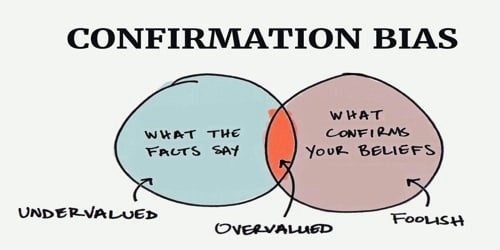
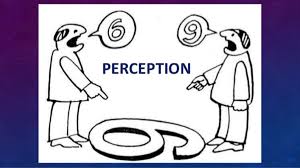
Perception 1Perceptions and subjectivity are therefore important factors in conflict and disputes.  However, conflict situations with the potential to turn into concrete disputes may not do so because they exist only in the perception of one or both parties and not in actual reality – for example two employees perceive themselves to be competitive rivals for one position whereas neither is realistically in line for it. This can be referred to as pseudo conflict in which parties’ perceptions or expectations are false or based on incorrect fears or unjustified apprehensions. False conflicts are based on stereotypes about others in terms of their personal or group attributes, for example about management or unions, or about refugees and security officials, and these can be accentuated by continuing ignorance or withholding of information, or by rumours, confirmation biases and wilful blindness.  There may be little basis to the conflict in reality but it is played out by one or more parties as if there was. With both pseudo conflict and false conflict, the sharing of correct information, the provision of an explanation, or righting a misperception or a misunderstanding can help to resolve the situation.

Key questions to ask ourselves in lockdown to analyse disputes

A deeper understanding of conflict and disputes can inform some key questions we need to ask to analyse a dispute in lockdown. Using our dispute resolution agency means we need to adopt structured and intentional approaches to dealing adequately with a dispute rather than operating merely on gut-feeling.

Question mark 1

Here are some questions to help us to think methodically through the elements of a dispute in lockdown:

  1. Who are the relevant people involved in the dispute?
  2. Why are they in dispute?
  3. Why have past attempts at resolving the dispute failed?
  4. On a scale of 1-10 how is each party coping with the dispute (and the conflict underlying the dispute)?
  5. What are the parties’ positions?
  6. What are the parties’ underlying interests, needs, fears and concerns?
  7. What would life look like if the dispute continues unresolved?
  8. What are some possible options for resolution?
  9. Which ones are realistic?
  10. What ‘package’ of options could optimally satisfy each party?

Tomorrow’s Blog: Lockdown Dispute Resolution 101 #14: Learning from the art of mediation – mediators functions relating to conflict.

Highlighting Works of some of the ADR Research Network Members

See here a sample of the works on conflict and dispute resolution in Australia – many of which are authored by current members of the ADR Research Network:

Bobette Wolski et al, Skills, Ethics and Values for Legal Practice (Thomson Reuters, 2nd ed, 2009)

David Spencer, Lise Barry and Lola Akin Ojelabi, Dispute Resolution in Australia: Cases, Commentary and Materials (Thomson Reuters, 4th ed, 2018)

Tania Sourdin, Alternative Dispute Resolution (Thomson Reuters, 6th ed, 2020)

Peter Condliffe, Conflict Management: A Practical Guide (LexisNexis, 6th ed, 2019)

Michael King et al, Non-Adversarial Justice (The Federation Press, 2nd ed, 2014)

Michael Mills, Commercial Dispute Resolution: A Practitioners’ Guide to Successful ADR (Thomson Reuters, 2018)

Acknowledgements

The content of this post was adapted and reproduced from Laurence Boulle and Rachael Field, Australian Dispute Resolution: Law and Practice (LexisNexis, 2017) Chapter 5. See also, Laurence Boulle and Nadja Alexander, Mediation Skills and Techniques (LexisNexis, 3rd ed, 2020) Chapters 1 and 4.

Sociology circle image: Pinterest

Fighting gorillas image: Africa Adventure Safari

DNA image: Science Mag

Cognitive Emotional Behavioural image: Victorian State Government

Perception image: Psychology Today

Question mark image: Clipart Library


Time and Place in DR: Covid-19 and its Impacts

This post has been contributed by ADR Research Network member Professor Laurence Boulle and offers insights and wisdom from our esteemed mediation community elder – I mean that in the most respectful way Laurence! The Lockdown DR 101 series resumes on Tuesday 21st April.

Boulle Blog_20 April
In days of yore dispute resolution (DR) processes were identifiable with specific times and places. This seemed natural, logical and everlasting. Under current pandemic conditions of quarantine, physical distancing and restrictions on group meetings (referred to loosely as ‘lockdown’), the factors of time and place have been disrupted, extended and sometimes distorted to accommodate the operation of DR systems under Covid-19 realities.

Contexts determine attitudes and behaviours. The lockdown has caused some people to experience a ‘slowing’ of time, removed from the frenetic demands of commuting and appointments, alarms and dead-lines. Accustomed rhythms of the weeks, the months and the seasons have been disturbed – hours of work and relaxation, and holidays and special days, have all become less precisely time-bound than before. There is more potential opportunity for individuals and groups to re-evaluate time in terms of personal inclinations and social dynamics. This could involve (re)reading Albert Camus’ pandemic novel, The Plague (rich in space and time allusions), or finally conquering Marcel Proust’s monumental In Search of Lost Time (in seven volumes), which is appropriately themed for current times.

In reality the nature of time has always been a pluralistic, and never a unitary concept, and has been much debated by philosophers. In traditional societies notions of time are associated with mythical themes of rebirth and the cycles of nature, while industrial societies operate with linear notions of time – with the metaphor of time’s arrow racing towards us, passing through at pace and retreating into a lost past. This is not the time or place to explore these intriguing theories philosophically – dispute resolution is, after all, a most pragmatic pursuit.

Space, for its part, is traditionally associated with physical locality, something earthy, concrete and bounded. Place and time are sometimes correlated with each other, for example where time is measured in terms of spatial distance – how long it takes to walk from one village to another. However, the concept of space, as with time, has different connotations in different fields, such as physics, psychology or law. Spatial factors are highly regulated in domestic law in relation to land ownership, strata title rights and personal property – how they can be acquired, developed and alienated. In international law spatial considerations are reflected in national boundaries, maritime zones and jurisdictional limits of sovereign states, with implications for the movement of people, for travel and for trade. Space is sometimes reified in legal and economic thinking with serious consequences for those from ‘other spaces’ – asylum-seekers have trespassed spatially on Australian territory and goods are quarantined because they emanate from ‘external’ territories. Border forces enforce spatial borders, and other things besides.

As it has with time, so has the lockdown affected individuals’ and groups’ spatial patterns and practices, and by extension how we organise and experience our sense of self when it is identified with discrete spaces – my home, my club, my firm’s board room. Needless to say, there are very different experiences of pandemic space at present, with some individuals closeted singly in one-room units, others in spacious houses with veggies and views, and yet others on farmland with hectares of space and accompanying sky, bush and wildlife. Different spatial experiences under lockdown can impact the grief, fear and stress and other vulnerabilities associated with new unknown realities.

Corona virus

Time-Space in ‘Traditional’ Dispute Resolution
Time has always been an imperative of justice accessibility – ‘justice delayed is justice denied’. Or as Roman lawyers intoned, ‘Tempus fugit, ergo diem carpe’. Courts, however, have traditionally run on strict clock time, hearings starting punctually at 10.00 (a judge once warned me that, after godliness, punctuality matched the importance of cleanliness) and adjourning predominantly in terms of standard schedules and not in terms of a case’s peculiar evolutionary progression.

As regards space, the courts and jury systems were originally predicated on the presence of all relevant parties in the same court precinct at the same time, the court-room physically representing the symbolic majesty of the law. Procedural fairness required court spaces to be publicly accessible, with evidence given in the same ‘time-space’ for the benefit of all litigants, advisers and observers, without altering space to accommodate individual meetings. Case management systems, hearing adjournments, court recesses and opportunities for judgment writing did accommodate some flexibilities of time and space, subject to the demands of procedural fairness and public access to justice in each dimension.

In their first appearances in the previous century arbitration, mediation and conciliation systems were also time – and space – bound. They were identified with physical locations and with fixed (or negotiated) times for the attendance of parties and advisers, for adjournments and for termination. A variation in the space-and time-bound nature of mediation was, and continues to be, found in the convening of separate meetings for individuals in isolated spaces, in shuttle mediation where parties do not wish to, or could not lawfully, be in spatial proximity with each other, and in telephone mediations where parties are spatially separated but participate in synchronous time. Preparation before the convening of DR processes was conducted in asynchronous time and often in individual virtual spaces as interveners prepared and primed each side individually.

Other changes to time and space determinants in DR systems preceded the pandemic, predominantly during the first decades of this century. The drivers of changes were computing developments, communication technology and algorithms, on one hand, and pressures for service efficiency, measured largely in units of time and money, on the other. Courts and tribunals have for some time been using new technologies to expedite proceedings, reduce backlogs and make justice more accessible for more parties.

Arbitrators, mediators and other DR practitioners also responded to cost and time pressures by engaging technology such as emails, the internet and online services for preparing parties for the respective processes, for facilitating exchanges of documents and for managing organisational matters before participants congregated in a physical location. Pervasive efficiency goals produced strict time limits for some processes, such as arbitration conducted under expedited procedures and statutory conciliations time-limited to three hours.

More extensive changes relating to space and time were introduced in the immediate pre-virus years. Online spaces were providing for virtual mediations and arbitrations, courts and tribunals introduced electronic filing, pleadings and discovery, and distance communication was deployed for experts, criminal accused and witnesses in tribunal and court proceedings. For the first time, private and public DR platforms accommodated not only spatial distancing but also communications in asynchronous time, such as basic emailing, text-based negotiation and more sophisticated forms of on-line practice using virtual internet protocols. Thus, well before the pandemic, service-providers such as the Mediation Room (https://www.themediationroom.com/) allowed for negotiations, mediations and adjudications to occur in asynchronous times and remote places, as did large on-line business and industry institutions and providers of private services in telecommunications, finance and insurance, as well as organisations dealing with global commercial matters such as the determination of domain name disputes.

The pandemic, however, turned attention to spatial and temporal DR changes prompted more out of pragmatic and regulatory necessity than convenience and efficiency.

Lockdown 1

DR Time and Space under Lockdown
There is some irony in the current pandemic’s choice of timing, and arguably spatial presences, in that DR systems had already broken traditional bounds of time and space. Courts in Australia had been using sophisticated technology for case management, hearings and evidence, arbitrators and conciliators had adapted their systems so they could practice in their pyjamas, and commercial service-providers developed and promoted new technologies and new forms of dispute resolution. In compensation cases over money, text-message negotiations were being used in some contexts, such as where claimant teams required coffee off-site and both sides agreed to continue exchanging dollar proposals. (Based on which the author now teaches text-based negotiation in DR – another story.)

In terms of current realities, we might say that many dispute resolution services were partially pandemic-ready when the virus collided with accustomed patterns of social intercourse.

When lockdown first occurred, however, DR activities initially stalled. Time momentarily stood still, and spaces were vacated. Hearings were deferred to future unspecified dates and some courts locked their panelled doors. Lawyers not involved in transactional work experienced sudden drop-offs in hearings and trial-related practices. A lack of control, accompanied with some desperation, was momentarily, in the air.

The stalling was, thankfully, short-lived. Courts, commissions, arbitrators and others were quick to consider how they could continue their respective services while ensuring compliance with official lockdown requirements. The strictures of lockdown necessitated more extensive and timeous adaptations to the time-space dimensions of DR systems.
Within a short space of time some courts and commissions began conducting hearings and convening mediations with the assistance of telephone communications, video links and digital spaces. Mediators and arbitrators revised their engagement agreements to accommodate the new circumstances; for example, traditionally private and confidential mediation systems required contractual reinforcement of these principles: in virtual space, reinforced by asynchronous time, a zoom or skype meeting can be easily recorded.

The new developments provided new opportunities for commercial on-line services such as Modron and Immediation. To enhance their members’ capacity in the various virtual environments, bodies such as the Resolution Institute and the Australian Disputes Centre have increasingly offered practice-based webinars on the systems.

For entrepreneurial classes of DR practitioners, the new circumstances and the new technologies provide new potential forms of practice. For example, the national cabinet’s requirements for designated landlords and tenants to renegotiate commercial lease terms (where the tenant’s trade had been adversely affected), invited consideration of using impartial online facilitators in these deliberations. Domestic tensions, large and small, caused by family lockdowns in confined spaces could be potentially facilitated by counsellors and conciliators in pop-up DR systems. Neither the leasing or domestic categories service would be space – or time – bound and Australian practitioners could potentially offer such services in any relevant jurisdiction – subject to time differences. In both categories there could also be temporal dynamics not immediately apparent but necessitated by lockdown requirements – renegotiated leases might have to be continually re-evaluated to accommodate changing financial circumstances and domestic issues might require regular interventions of shorter duration, particularly where adolescents are involved. The new-style DR systems could be readily adapted to new dispute categories.

For some practitioners the transition to virtual dispute resolution through online technologies and platforms, whether in synchronous time or not, has been relatively easy. However, issues have inevitably arisen in these circumstances, for example in relation to moving parties from joint to separate meetings and back again, and there have been concerns relating to privacy and confidentiality (or lack thereof) of some online facilities. Practical changes have involved moving away from use of butcher’s paper and whiteboards for agendas, graphs, mud-maps and the like – here inventive use of screen-share and camera focus on the intervener’s board are used as surrogates for the original representations of visuals.

Virtual DR

Inevitably practitioners are developing tips and tricks for operating in virtual spaces, and these are also found on relevant websites. Some lessons are learned through trial and error, such as muting microphones in multi-party sessions and training the dog in quietude, some entail sound common sense, such as having part of the torso and not only head on the screen, and yet others require some technical finesse, such as simultaneous use of video, telephone and chat spaces, sharing documents and drafting deeds of release jointly. In multiple party sessions which include advisers, interpreters and others, practitioners ensure prior commitments to longer time periods than ordinarily expected.
The gear-shift to virtual DR practice invites attention to two factors indirectly related to time and space. The first is artificial intelligence which has been perched on the margins of various DR systems for some time and will be more easily engaged, for example in relation to predictive analyses, in digital spaces than in off-line DR. The incorporation of AI developments into the new virtual practices promises not only more accurate forecasting and avoidance of heuristics but additional efficiency in the time dimension.

The second indirect connection relates to the measurements in delivery of DR services. The spatial closure of courts, tribunals and commissions pushes some of the expenses of delivery onto practitioners operating in their home spaces – analogously to how airlines and fast food have pushed costs back to customers. Some mediator outlays on equipment, subscriptions and online DR training will be defrayed through tax write-offs, (and increased practice opportunities 😊), while others will be borne by practitioners themselves. The off-set of some operating expenses will result in greater efficiencies for tribunals and commissions, and constitute obstacles to reverting to off-line operations when the lockdown is no more. Moreover, virtual spatial and temporal realities might make for DR systems being easier to measure – the dreaded ‘mediation metrics’. In-built algorithms are likely to prioritise machine-measurable factors of quantity and efficiency at the neglect of the qualitative-effectiveness promises of DR systems. Metrics always measure first what is easy to compute, and these include unit costs, operating time and duration, settlement rates, and similar ‘throughputs and outputs.’

Technical and practical challenges aside, there are cultural and attitudinal assumptions in the move to non-spacial and temporally asynchronous DR practices. Aboriginal philosopher Tyson Yunkaporta (Sand Talk) writes insightfully about indigenous ways of valuing and being, of knowing and doing, all with spatial and temporal dimensions. The indigenous experience of ‘country’ is difficult to reframe from the spatial to the virtual and societies which still have partly oral cultures require high-context, or field dependent, reasoning times and spaces for their yarning. Care will be required to ensure that, in the rush to digitalise, these ways of being and doing can be accommodated in the emerging DR protocols.

Even the best protocols, however, can be alienating for some participants, whether through the formality, technicality or duration of proceedings or because of disputants’ attributes of culture, ethnicity, religion or education. Even for a seasoned dispute resolver the mildest of new technologies can be a shock – recently I gave distance evidence in committal proceedings and it was an isolated and isolating experience, yet this medium is already regularly used for bail applications and expert evidence and the disconnections could be accentuated by the new DR methodologies. Moreover in cases of interpersonal dispute resolution, such as estate and family matters, the space and time determinants could provide challenges in establishing emotional connectivity among parties and their supporters.

Time and spaceFuture Time, Future Space
As noted above, context is everything. It is not only spatial perspectives that have been disrupted by the lockdown but time as well – these are circumstances in which it is socially difficult to anticipate and plan for the future. While thoughts are always tempted to lapse into past time it is more difficult right now to reflect on future time. Time has always seemed like a quasi-infinite resource which facilitated planning in personal diaries, career, work and leave schedules, and other activities to be undertaken or achieved within designated pods of time.

Most commentators suggest that the ‘new normal’, when it eventually arrives, might be quite different from the ‘old normal’ in its political, economic and social dimensions. The same might be said for dispute resolution. If this is the case, wise heads will need to reconsider simple spatially-related rituals which engage the brain’s right hemisphere and enrich DR experiences: handshakes during introductions, physical circulation and ritualistic signing of engagement agreements, the sound, sight and tactile nature of pouring and drinking water and sharing the tissue box on the mediate table.
If the normative framework of dispute resolution changes permanently, other changes would have to follow. For example, the assumptions of the NMAS might also have to be reconsidered, and the Practice Standards amended accordingly. And space- and time-bound DR walkshops, formerly conducted alongside Sydney’s harbour or Canberra’s lake, will have to discover new environments.

There is DR uncertainty ahead. Only time will tell. Watch this space.

Laurence Boulle

You can contact Laurence at resolveaboulle@gmail.com.

Acknowledgements

Mediator image: Law.com

Corona virus image: Science Alert

Lockdown image: The Body Mechanic

Virtual DR image: ODR Europe

Time and space image: Medium.com

Lockdown Dispute Resolution 101 #12: Learning from the art of mediation – understanding the nature of disputes and conflict in lockdown

Since beginning this Lockdown Dispute Resolution 101 series we’ve been using the terms ‘conflict’ and ‘dispute’ without having defined them. These are terms of which people might assume an understanding. However, if our lockdown communications and negotiations are going to be as effective as possible, it is worth taking some time to understand more deeply what makes up ‘conflict’ and ‘disputes’ – and how their meanings are in fact different even though the terms are often used synonymously. A better understanding of these concepts will help us to be successful in preventing, managing and resolving disputes and conflict in lockdown. Of course, a deep appreciation of the nature of conflict and disputes is part of the knowledge set required of mediators in order to practice the art of mediation.

The conflict crucible

Australian dispute resolution law and practiceConflict is a challenging phenomenon in all contexts – in international relations, societies, families and workplaces. It is pretty much endemic to the human condition and is usually present in some form or at some level wherever human beings are in a relationship or relating to each other in some way. In one of our books on dispute resolution – Australian Dispute Resolution: Law and Practice – Laurence Boulle and I deal extensively with the many facets of conflict and disputes: the definitions, sources and dimensions, how they can escalate and de-escalate, and possible interventions and outcomes. This post is taken from that Chapter.

Understanding conflict

While the discovery of conflict’s ‘DNA’ is still elusive, there is currently more knowledge about the phenomenon than when mediation’s development first commenced. Laurence and I use term conflict in our book to denote situations of tension, stress or friction among different individuals, groups or countries, which is accompanied by perceived threats to one or both sides’ interests and goals, but without any specific presenting demands or claims or overt activities.

Adjoining neighbours, for example, might live in a state of conflict over noise, fences and pets, without explicit demands being made of each other. This involves a situation of low-intensity disharmony or latent hostility without actual skirmishes over the fence. External events, such as a late-night disturbance or the need for a new dividing fence, could create conditions for the exacerbation of conflict. On the other hand, an overt dispute could be averted through ignorance, fear or the parties simply deciding to live with the tension and get on with things.

Neighbourhood dispute 1

As a conflict situation evolves, each side develops firmer views as to how they would like it to play out. Each side attempts to impose their understanding on what the problems mean on the other side, and they deploy the power and influence at their disposal to achieve outcomes that advantage them. In the international domain, for example, conflicts among nation states can be caused by political, trade or financial tensions, sometimes extending over decades. International conflict-prone situations are exacerbated by factors such as disparities in military and economic power, access to natural resources and population size.

In some contexts, high conflict develops. There is a significant literature on ‘high conflict situations’, ‘high level conflicts’ and ‘high conflict people’, and most lawyers could provide rueful anecdotes on each of these phenomena. High-level conflicts are characterised by extreme emotions of anger, fear, frustration and sadness, and desires for revenge, punishment and vindication. They may be associated with conflict-prone individuals, such as narcissists or border-line personalities. Whatever their cause, high emotions, such as anger in one party, can invoke counter emotions such as hostility in the other, and a pattern of escalating emotions can ensue until what might have started as a low-level conflict escalates to the higher end of the spectrum. These situations provide special challenges for mediators and require sophisticated practitioner responses in customised mediation processes. They pose particular challenges in lockdown. If a situation involves high conflict – it is probably necessary to get the help of an expert mediator to facilitate communications and negotiations safely.  Sometimes a professional therapeutic intervention may also be necessary.

More generally conflict is a looser notion than a dispute – disputes emerge out of conflict situations. For example, conflict could transform into an overt dispute in the above neighbourhood illustration, if one of the neighbouring parties calls the police or sends a threatening letter to the other.

Understanding disputes

The term dispute refers to a situation which is more concrete than a conflict. Disputes often emerge from conflict situations when one party opposes what the other actively proposes to do or achieve. Disputes can arise from specific events, such as a lawyer’s letter requesting contributions for a newly-erected fence which is met by a blanket refusal, or silence. It could arise from a series of events, such as email correspondence containing allegations and counter-allegations, accompanied by verbal abuse, threats and invocation of authority figures such as the local council.

In the international domain the structural factors between nation states that give rise to conflict situations cannot easily be changed and they provide the circumstances for the emergence of disputes which might need to be dealt with by international bodies such as the UN Security Council or the International Court of Justice (ICJ). For example, two countries’ differences over maritime boundaries might develop from a long-term conflict situation into an international law dispute needing adjudication by the ICJ.

UN Security Council 1

Laurence and I use the term ‘dispute’ to denote a situation of greater specificity and legal relevance than is the case with conflict, but no real precision of meaning is possible. In the above maritime dispute, for example, if the ICJ referral does not lead to finality and armed hostilities ensue, this situation would be described as armed ‘conflict’. But it in fact involves more than the conflict-induced state of tension referred to above. In other words, conflicts can be both overt and intense, depending on the circumstances – and for these reasons some literature in the international relations and political science arenas refers to conflicts as more extreme kinds of dispute.

Complaints and grievances

Consumer complaint 1The term complaint is sometimes used interchangeably with ‘dispute’. However, the term is usually associated with consumers or clients alleging wrongdoing or irregular practices by business, government or other service-providers.

For example, a complaint might be made when a bank includes unexplained fees in a customer’s statement, or a government agency fails to respond to a licence application. Complaints can be managed effectively through the provision of information or explanation, by having a fair process for addressing the complaint, or by the complaint target complying with their obligations, so that they never become concrete disputes. If, however, a complaint is ignored, denied or poorly managed, for example the bank refuses to furnish the client with an explanation, a conflict situation could emerge, which could in turn escalate into a dispute if the client uses the available regulatory channels to bring specific claims against the recalcitrant bank.

Grievance 1The term grievance is often used in workplace and employment contexts where it is used to refer to allegations of various kinds made by employees against employers, supervisors or other employees. The term ‘grievance’ usually implies that there has been a lack of response, or even resistance, from management – for example a supervisor has not responded to allegations of victimisation, the HR department has not addressed bullying concerns or there has been failure to performance manage an employee adequately. Grievances can arise out of conflict situations and could give rise to concrete disputes that require legal interventions such as fact-finding investigations or tribunal hearings. Where an employee brings a grievance claim there could follow a process of investigation, mediation and adjudication in relation to their rights as employees and the alleged wrongdoing of other parties in the workplace.

The implications of conflict

As we noted above, conflict can be accompanied by personal and communal stress, sadness, anger and hostility, as well as by social disruption, employment problems and financial losses. Parents dealing with parenting differences, for example, or families dealing with a contested will could experience high-level emotions over short-, medium- and long-term periods and find the conflict distressing and disempowering. People’s attitudes towards conflict are affected by many factors, including cultural assumptions and values. A reality of life is that when individuals and groups are in conflict, they can be short-sighted, irrational, simplistic and self-defeating in their decision-making. Mediation can help with some of these challenging factors because it provides a forum in which conflict can potentially be analysed, expressed, constructively managed and sometimes resolved.

Groups and individuals are responsible for how they respond to conflict. We may need to take a step back from conflict or a dispute and use our dispute resolution agency (see post #2) to actively seek out ways to better understand and cooperate with each other in conflict or dispute situations. We need to be ready to acknowledge if we have erred or hurt someone or made a situation difficult. We need to get better at recognizing when more constructive communication approaches or an apology is necessary. We can learn from the art of mediation to achieve these things.

In lockdown we are having to work hard to prevent, manage and resolve disputes ourselves. So, it’s important for us to skill-up in order to be able to recognize when conflict has manifested into a dispute – and then also be able to analyse the dispute effectively and respond to it constructively. Importantly in lockdown, we also need to know when a dispute has become too difficult for us to manage ourselves and be prepared to reach out for professional assistance. A register of nationally accredited mediators can be found here. Governments also often offer free or low-cost mediation services, as do other local community service providers.

If you are interested in training to be a mediator, at Bond University Law Faculty we run short courses in mediation and family dispute resolution through our Dispute Resolution Centre.  You can see the schedule for courses coming up here. During COVID-19 lockdown all courses will be conducted online.

Next Blog Monday 20th April: Lockdown Dispute Resolution 101 #13: Learning from the art of mediation – how to analyse a dispute in lockdown.

Acknowledgements

Some of the content of this post was also adapted and reproduced from Laurence Boulle and Rachael Field, Mediation in Australia (LexisNexis, 2018) Chapter 6. Laurence is an esteemed member of the ADR Research Network and has long been a leader in the Australian and international dispute resolution communities.

Neighbourhood dispute image: Queensland Government

The UN Security Council image: Alamy

Consumer complaint image: CartoonStock

Grievance image: LabourMan Consultants

Further Australian DR scholarship

See also the following works on conflict and dispute resolution in Australia – many of which are authored by current members of the ADR Research Network: Bobette Wolski et al, Skills, Ethics and Values for Legal Practice (Thomson Reuters, 2nd ed, 2009); Greg Tillett and Brendon French, Resolving Conflict: A Practical Approach (Oxford University Press, 4th ed, 2010); David Spencer and Samantha Hardy, Dispute Resolution in Australia: Cases, Commentary and Materials (Thomson Reuters, 3rd ed, 2014); Tania Sourdin, Alternative Dispute Resolution (Thomson Reuters, 5th ed , 2016); Peter Condliffe, Conflict Management: A Practical Guide (LexisNexis, 6th ed, 2019); Michael King et al, Non-Adversarial Justice (The Federation Press, 2nd ed, 2014); Laurence Boulle and Rachael Field, Australian Dispute Resolution: Law and Practice (LexisNexis, 2017); Michael Mills, Commercial Dispute Resolution: A Practitioners’ Guide to Successful ADR (Thomson Reuters, 2018); Laurence Boulle and Nadja Alexander, Mediation Skills and Techniques (LexisNexis, 3rd ed, 2020).

See on the topic of ‘high conflict’: Bill Eddy, High Conflict People in Legal Disputes (Janis Publications, 2007).

On the topic of workplace conflict see, for example: Bernadine Van Gramberg, Managing Workplace Conflict: Alternative Dispute Resolution in Australia (Federation Press, 2005); Therese MacDermott and Joellen Riley, ‘Alternative Dispute Resolution and Individual Workplace Rights: The Evolving Role of Fair Work Australia’ (2011) 53(5) Journal of Industrial Relations 718; Anthony Forsyth, ‘Workplace Conflict Resolution in Australia: The Dominance of the Public Dispute Resolution Framework and the Limited Role of ADR’ (2012) 23(3) The International Journal of Human Resource Management 476.

Lockdown Dispute Resolution 101 #11: Learning from the art of mediation – summarising the key mediator process functions: providing a structured process and generating a positive communication environment.

Summary 1

Today’s post concludes the sequence of posts focussed on considering the ways in which mediators expertly facilitate party negotiations using the special skills and techniques of mediation practice. We summarise the key mediator process functions into two key concepts: providing a structured process and enabling a positive communication environment.

In lockdown, we need to be intentional in our own approaches to preventing, managing and resolving disputes and conflict. We will have a better chance of being successful in this endeavour if we can enact just these two factors of the way mediators practice their art.

Our lockdown communication and negotiation interactions are not usually moderated or facilitated by anyone – not unless there’s someone in the house or online who is trained as a mediator or has advanced negotiation skills – and is prepared to take on this role. This means that generally we are communicating and negotiating directly with each other, and responsibility for how effective our discourse is lies squarely with us.

If we did have a mediator in the house – what would they do to help facilitate our discussions? How would they assist us to negotiate more productively and effectively in diverse ways? How can we transfer those approaches to our lockdown communications when a mediator is absent? We have offered some answers to these questions in earlier posts this week – so now is a good time to distil the message into two key, simple-to-enact concepts: providing a structured process and generating a positive communication environment.

Providing a structured process

In the mediation room, mediators provide structure, procedure and control for the parties’ negotiations. Mediators use the process of mediation to move the parties sequentially through the logical stages of information-exchange, issue identification, agenda setting, exploration and discussion of the issues, option generation, bargaining and final decision-making.

Mediators make decisions, or assist the parties to make decisions, about, for example, how the discussions will be organised, how information will be exchanged and how any relevant documents will be managed. Mediators also play an educative role for the parties, helping them prepare for their participation in the process, coaching them through the process, and acknowledging and supporting their efforts. At the closing stages of negotiation, mediators assist the parties with making final trade-offs and packaging up agreements, with managing the last gap, with recording and documenting settlements and with formally terminating the process.

In lockdown communications we can ensure we intentionally adopt a structured process for our communications and negotiations. It is possible to use the process stages of mediation effectively for ourselves. We can start with exchanging information, then from that shared information we can identify the issues that need discussion or decision-making. We can use an agenda to structure how we explore and discuss each of those issues. We can be intentional about saying to each other – ‘let’s try and generate a range of potential viable options’. We can be careful and considerate in the way we bargain about those issues – supportively and cooperatively moving towards final decision-making.

We can also explicitly acknowledge that we need to make process decisions together. We can ask: How will we organize the discussions? How will we share and exchange information? What do we need to do to prepare ourselves for talking with each other? What cues will effectively remind us to take responsibility for acknowledging and supporting each other’s efforts?

Generating a constructive communication environment

Mediators take a positive attitude to negotiations in mediation and use their diverse skills to generate a constructive communication environment. Mediators are always optimistic that a mutually agreeable outcome can be reached. And if not a total agreement, then perhaps positive steps can be made through the recognition of common ground, and the reaching of partial agreements. In order to do this, mediators focus on mutual interests and problem-solving, they ask helpful questions and reframe negative statements; they manage the parties’ expectations and encourage settlement, as well as negate questionable negotiation tactics.

Mediators manage, reframe and ignore attributions of blame and other negative features of conflict and disputation. They support the making of apologies – which are sometimes deal-breakers in progressing negotiations. They defuse antagonism and assist the parties to engage appropriately. Mediators also promote the reciprocity principle in terms of both parties giving and accepting acknowledgements of their individual concerns, needs, fears and emotional responses. Mediators create an environment in which mutual trust is possible. They assist the parties to identify and discuss their interests and priorities, both short-term and long-term, and help them with assessing options through risk analysis. Mediators support each disputant to make careful and systematic decisions without revenge or vindication. Mediators also assist with creating a positive negotiation environment by challenging the parties’ unrealistic expectations. They organise the discussions to take place in a constructive physical environment, and control the tone and vocabulary of the communications to ensure they are as positive as possible.

We don’t need to be a nationally accredited mediator to achieve these things. It is possible in our own homes, and in online communications, to enact many of these positive strategies ourselves. We need to plan and think intentionally about our approaches – and then we just need to do it!

Tomorrow’s Blog: Learning from the art of mediation – developing a deeper understanding of conflict and disputes in lockdown.

Acknowledgements

The content of this post was adapted and reproduced from Laurence Boulle and Rachael Field, Mediation in Australia (LexisNexis, 2018) 180-183. Laurence is an esteemed member of the ADR Research Network and has long been a leader in the Australian and international dispute resolution communities.

Summary image: Shutterstock


Lockdown Dispute Resolution 101 #10: Learning from the art of mediation – achieving effective negotiations in lockdown through interest-based approaches

Interests and positions 1

This post continues our exploration of how mediators expertly facilitate party negotiations using the mediation theory and process. In lockdown, if we can enact some of the ways in which mediators practice their art, we can achieve more effective communications and negotiations. This means in turn that we will be better able to prevent, manage and resolve lockdown disputes and conflict.

The focus of this post is on the important distinction between positional and interest-based negotiations, and the techniques mediators use in supporting parties to help them focus on a more positive, interest-based approach. As we discussed briefly in post #9 a party’s position (what a party wants) is just the tip of the dispute resolution iceberg. It’s through identifying, acknowledging and exploring each of the parties’ priorities, needs and interests (why a party wants what they want) that the real magic of mediation comes into play.

Negotiation

Negotiation is a ubiquitous feature of life – we negotiate with ourselves, with friends and colleagues, with personal and business partners, with large corporations and with the state – and each of these entities negotiates with the others. Negotiation is also conceptually an intrinsic part of mediation. Mediation can be seen as an extrapolation of the negotiation process with the additional agency and expertise of a mediator’s interventions.

In mediated negotiations, mediators assist the parties to advance their rights and remedies, discuss their interests and priorities, and adjust their positions and strategies in efforts to achieve settlements and outcomes that are mutually agreeable – or at least something the parties can live with. It is because agreement only ensues once there is a level of consensus among the parties, that each party effectively wields a potential veto over any outcome. As a third-party helping professional, it’s a mediator’s expertise – their practice skills and techniques – that are the critical aspect of their intervention in a dispute that supports the parties in coming to a level of consensus. The ways in which mediators help parties to focus on interests as well as positions (rather than solely on positions) is instructive for how we can communicate and negotiate effectively in lockdown.Mediation skills and techniques

Mediation theory meets negotiation theory

In mediation theory, a distinction is usually made between different styles of negotiation. One of the key styles is the positional (or settlement) style. This approach is focused on the parties’ positions – that is, what the parties want. The other is the interest-based (or problem-solving) style – which is about addressing the parties’ priorities, needs and interests – that is, getting to the why question – what needs, emotions, concerns and so on sit behind what they want?

In positional approaches to negotiation, the parties often make extreme opening requests, sometimes called ‘ambit claims’, and attempt to persuade, coerce or deceive the other side into moving closer to this initial demand. They usually end up making incremental concessions towards a settlement figure somewhere between their original claims. Negotiation theorists Howard Raiffa, John Richardson and David Metcalfe in their famous 2002 work Negotiation Analysis: The Science and Art of Collaborative Decision Making have called this the ‘negotiation dance’. This approach is commonly focused on easily quantifiable factors, of which money is a favourite, and in practice it is often encountered in areas such as workers’ compensation or personal injury negotiations – although many other dispute contexts, such as commercial, contractual and matrimonial property disputes, can also be the subject of the use of this style.

Positional negotiation may involve sufficient concessions by the parties to result in a compromise settlement, or the incremental concession-making may falter before agreement and negotiations terminate without settlement. The compromise point, if any, is somewhere adjacent to the mid-point between the parties’ opening claims, the exact end location depends on their relative bargaining strengths, the techniques and strategies they deploy and their respective needs for resolution.

Positional negotiation can be a competitive and adversarial experience which assumes that resources are limited, that the parties’ goals are mutually exclusive and that a gain for one side will entail a loss for the other. It involves each negotiator using influential sources of power at their disposal, as well as tactics of persuasion, bluffing, threats, deception and demanding last-minute ‘add-ons’.

Unfortunately, it is rightly associated with legal cultures in which adversarial negotiation – and a focus on rights, duties and damages – can be a precursor to adversarial litigation. However, while there is evidence of positional negotiating behaviour in legal cultures, the efforts of non-adversarial lawyers, the ADR Research Network and others to include dispute resolution knowledge, skills and attitudes in lawyering and legal education make it dangerous to over-generalise on this point moving forward.

Interest-Based Negotiation

Interest-based negotiation approaches are preferred over positional methods in mediation. Dispute resolution experts advocate that interest-based negotiation is the more positive and holistic approach. Interest-based styles of negotiation look less at the parties’ positional and monetary demands and legal arguments, and more at the parties’ personal, business, reputational and other interests and priorities. This is done in a co-operative and collaborative way.

While acknowledging different, and at times competing party interests, interest-based negotiation attempts to identify goals that are not mutually exclusive and promotes outcomes which go beyond compromise and add value to all involved. This means moving away from zero-sum assumptions and game theories of negotiation, and instead trying to uncover the parties’ real personal and commercial interests, needs and priorities. Focusing on interests tends to move negotiations from a core monetary issue towards multiple subsidiary issues.

Interests in negotiation can be immediate and personal, such as saving face and being treated with dignity, or general and social, such as resisting business competitors or receiving public recognition. For example, in an apparently simple breach of contract claim for late supply of retail goods, the supplier or purchaser, or both, may have multiple interests: preservation of business reputations, avoidance of negative publicity, mutual exoneration from blame, validation for past conduct, preservation of commercial relationships, external approval for settlements, a fair negotiation procedure and mutually-appropriate timing, place and method of settlement  payments. The range of diverse interests at the negotiating table increases the resources over which to bargain and trade and ultimately the value that is on the table for distribution among the negotiators.

While parties may indeed compete over certain interests, such as publicity versus privacy, some interests may dove-tail and others may overlap. Where, in the example above, parties might have become deadlocked if focused only on financial compensation, a broader appreciation of personal, commercial, procedural and relational interests could provide a platform for constructing creative solutions which meet as many current and future needs as possible.

Interest-based negotiation does not, however, imply simplistic surrender on substantive issues. Rather, it requires the development of productive working relationships in which the parties share information, disclose their own interests and attempt to accommodate the other side’s, communicate constructively and otherwise negotiate in problem-solving ways. To promote interest-based negotiation in deep-seated conflicts, mediators help parties to shift from a competitive bargaining to a collaborative analytical and problem-solving approach, and to commit themselves to a genuine exploration of a wide range of possibilities.

Agreement 1

Learning lockdown communication strategies from the art of interest-based negotiation in mediation practice

As home-based negotiators and communicators in lockdown, what we can learn from the art of mediation is that we need to ask more than one question when we are communicating and negotiating with others. We certainly need to understand what we and the other person wants. But we also need to ask the why question. Why do we/they want that? What are our/their priorities, needs and interests? Is there a creative way to mutually satisfy the needs and interests of each of us?

In addition, we need to engage with our dispute resolution agency. It’s in our power to create productive working relationships with our families and our colleagues (and others outside the home). We need to actively share information, disclose our interests and attempt to accommodate the other side’s. We need to work on communicating as constructively and positively as possible and to adopt problem-solving ways. We need to intentionally shift from a competitive bargaining approach to an analytical, problem-solving approach. And we need to commit ourselves to a wide exploration of a spectrum of potential possible solutions and outcomes. If we need outside help with these things, we need to seek that out. A register of nationally accredited mediators is available via the Mediator Standards Board.

Ultimately the relationship between cooperation and competition in negotiation and dispute resolution processes is complex. If we are collaborative on our own we are likely to be exploited – therefore self-interest requires some level of competitiveness. If, however, we – and the person on the other side of our communications or negotiation – are persistently competitive, we could both suffer loss through high opportunity costs, protracted disputation, bedeviled relationships or the loss of the value of what is being contested. How to move from individual self-interest to mutual trust and collaboration is a strategic challenge in any negotiation. When expert mediators aren’t in the house or virtual office to help us with that process – the responsibility to work it out falls to us.

This is a challenge – but it’s one we can meet!

Endnote: If you are interested in training to be a mediator there are many training options available. I have the privilege of being a co-director with Associate Professor Libby Taylor of the Bond University Dispute Resolution Centre (DRC – started by Laurence Boulle and others in 1989). At the DRC we run short courses in mediation and family dispute resolution.  You can see the schedule for courses coming up here. During COVID-19 lockdown all courses will be conducted online.

Tomorrow’s Blog: Learning from the art of mediation – additional mediator functions in negotiation.

Acknowledgements

The content of this post was adapted and reproduced from Laurence Boulle and Rachael Field, Mediation in Australia (LexisNexis, 2018) 174-180. Laurence is an esteemed member of the ADR Research Network and has long been a leader in the Australian and international dispute resolution communities.

Howard Raiffa, John Richardson and David Metcalfe, Negotiation Analysis: The Science and Art of Collaborative Decision-Making (Harvard University Press, 2002).

Positions and interests image 1: Gary Tremolada

Agreement image: steemit


Lockdown Dispute Resolution 101 #9: Learning from the art of mediation – how mediators facilitate party negotiations

Negotiation 1

Looking at the ways in which mediators intentionally put the mediation process and theory into practice is a useful way to explore the skill of negotiating to help us to communicate more effectively in lockdown and to positively prevent, manage and resolve disputes.

This post identifies some of the ways in which mediators assist the parties in a mediation by facilitating the negotiation process for them.

Facilitating parties’ negotiations

Mediators contribute expertise in numerous dimensions to assist parties to negotiate more constructively, efficiently and productively – managing and influencing the parties’ bargaining efforts. All mediator functions, in particular those relating to conduct of the process and assisting with the parties’ communications (see post #8), have bearings on the progress of negotiations.

The role of facilitating the parties’ negotiations is prominent in the process stage of mediation commonly referred to as exploration – which occurs after the problem-defining (or agenda setting) stage of mediation. The mediator brings focus and refinement to the parties’ negotiation efforts, systematically going through each of the items on the agenda and supporting the parties to communicate effectively about them. These discussions then enable problem-solving and option generation leading to the possibility of mutually acceptable decisions about the issues that were previously in contention.

Iceberg 1If the parties adopt positional or argumentative approaches, mediators attempt to divert them into an interest-based or problem-solving mode. This requires interventions which shift the focus from positions (or in other words, what a party wants) to interests, needs and priorities (or why a person wants what they want). Positions are the tip of the iceberg, it’s only once the mediator helps the parties to mutually explore and understand their divergent interests that more diverse options for resolution can be generated.

Mediators use strategies such as encouraging the parties to separate the interpersonal aspects of disputes from substantive aspects, they look for and identify areas of common ground between the parties and they use objective criteria to develop settlement options. Mediators also stimulate parties to take account of future needs and interests. They act as catalysts for creative problem-solving by brainstorming with the parties about possible options or alluding to settlement options emerging from similar past situations.

When parties persist in positional bargaining mediators assist with predictable problems, such as responding to ‘final offers’ or ‘crossing the last gap’ (the last gap is a final issue on which the parties refuse to budge from their position or compromise). A mediator might secure the parties’ advance commitment to ways of dealing with the last gap, or when it does occur suggest procedures for dealing with it – such as referring to an expert or using random chance (for example, drawing options out of a hat or tossing a coin). Mediators assist parties in linking tradeable issues, making conditional offers or exchanging some losses for other gains. They educate parties about negotiation realities, for example by normalising difficulties in making final concessions for fear of losing face or jeopardising reputation. Mediators coach parties in separate meetings on how to make apologies or how to respond to apologies from the other side.

Mediators also have the function of assisting the parties to disclose their interests. This is important because people in conflict or dispute often conceal their real needs (and why they want what they want) from both the other side (and sometimes even their own advisers). In addition, sometimes it’s the case that the parties’ needs become obscured in the heat of discussions. When these things happen, the mediator works to assist the parties to articulate their substantive, procedural and emotional needs using skills such as clarifying questioning, active listening and reframing. Mediators also acknowledge the parties’ needs, and seek each party’s recognition of the other’s needs, in order to reorient each towards the other which helps the parties to develop new and shared perceptions of their problem and their relationship. Finally, mediators have the function of assisting parties in clarifying and defining disputed issues. The development of joint conflict definitions can provide a basis for developing settlement options beneficial to both sides.

Mediation skills and techniquesThe mediator function of facilitating party negotiations is extremely skilful and represents the true art of mediation practice. It requires a deep functioning knowledge and appreciation of the theories and practices of positional and interest-based negotiation – so that mediators can impart constructive techniques for the parties’ benefit. It is difficult to capture the art of facilitated negotiations in mediation in a way that is easily replicable by us in our homes and virtual offices while in lockdown.

The expert mediator might be absent from our homes and virtual offices, but there are definitely some positive take-home messages from the theory discussed above that can help to improve the way we approach lockdown communications and negotiations. Here are some key points.

We can enact our dispute resolution agency in lockdown communications and negotiations by:

  • Adopting an interest-based or problem-solving mode.
  • Ensuring we look not only at what people in the conversation want, but also why they want it.
  • Separating the interpersonal aspects of disputes from substantive aspects.
  • Identifying areas of common ground.
  • Using objective criteria to develop settlement options (for example, recognised authoritative research on a point, information made available by the Government, or the law).
  • Taking account of future needs and interests.
  • Creative problem-solving and brainstorming about possible options.
  • Looking at past successful options to inform the present situation.
  • Negotiating ways to deal with the last gap in advance of commencing a discussion or negotiation (such as referring to an expert or using random chance (for example, drawing options out of a hat or tossing a coin).
  • Working on ways we can improve how we make apologies and how we respond to apologies from other people.
  • Ensuring we disclose our interests and don’t keep them hidden.
  • Proactively ensuring we use effective communication strategies such as clarifying questioning, active listening and reframing (discussed in future posts).
  • Acknowledging and recognising our own needs, as well as the needs of other people.
  • Ensuring we proactively look to develop new and shared perceptions of a problem and of relationships.
  • Actively working to clarify and define the issues in dispute or contention.

Posts in coming days will continue to explore negotiation practice and theory a little more deeply.

Endnote: If you are interested in training to be a mediator, at Bond University Law Faculty we run short courses in mediation and family dispute resolution through our Dispute Resolution Centre.  You can see the schedule for courses coming up here – during COVID-19 lockdown all courses will be conducted online.

Tomorrow’s Blog: Learning from the art of mediation – understanding more about effective negotiations in lockdown

Acknowledgements

The content of this post was adapted and reproduced from Laurence Boulle and Rachael Field, Mediation in Australia (LexisNexis, 2018) 102-104. Laurence is an esteemed member of the ADR Research Network and has long been a leader in the Australian and international dispute resolution communities.

Negotiation image 1: Daksya Learning

Iceberg image: Negotiation Experts


Lockdown Dispute Resolution 101 #8: Learning from the art of mediation – how mediators assist parties to communicate

Communication 1

It has been a consistent theme in recent posts that there is much we can learn from the mediation process and from mediation theory. Using some of the tools of mediation in our own lockdown communications and negotiations can help to make them more constructive and effective. When our communications go well, we are in a much better position to positively prevent, manage and resolve disputes while we’re locked down.

This post identifies some of the ways in which mediators assist the parties in a mediation to communicate. We extend these discussions on communication and negotiation in further posts this week.

How mediators assist communication between the parties in a mediation

When people are in dispute or conflict, or having difficult conversations, they tend not to communicate accurately, comprehensively or constructively. Poor communication can cause disputes and conflict to arise and escalate. In lockdown, we are faced with the added stressors of anxiety, fear and sadness about the current global pandemic and its impact on the world, our families, friends and colleagues and on our livelihoods and the world’s economies.

Mediators work to improve the quality of communications between parties in multiple ways and assist them with speaking with, and listening effectively to, each other. Mediators have a professional responsibility to have a deep knowledge of communication patterns in conflict. They are also highly trained in negotiation and communication skills, such as listening, questioning, reflecting, reframing and summarising (we post about all of these skills in more detail in upcoming posts). Providing parties with opportunities to have a voice requires mediators to speak less rather than more within the totality of the discourse, but it also requires positive interventions and the provision of communication assistance at the right times.

The mediator’s role as communications facilitator has several dimensions. First, mediators must themselves present as effective communicators and model good speaking and listening skills, attending to non-verbal messages and other signals within mediation dynamics. Second, mediators intervene directly in the event of poor inter-party communication. Where disputants are not listening to or comprehending each other, for example, mediators can ‘interpret’ communications or reframe a segment of dialogue to emphasise positive sentiments which might otherwise be lost. Mediators transmit messages between parties, and they can present offers and counter-offers in ways conducive to negotiation success. To ensure clarity and accuracy in the parties’ dialogue mediators use visual aids, such as whiteboards, and maintain written notes of points of agreement. Third, in separate meetings with the parties individually (also known as private caucus or private sessions) mediators advise and coach the parties on effective communication techniques, for example on how to respond to proposals or make counter-proposals without offending the other side.

Communication 2

How can we adopt the skills of a mediator for effective lockdown communications and negotiations?

The benefits of the process of mediation, and the presence of a third-party communications expert in these ways, are lost to us when we are managing our own communications and negotiations in lockdown. But we can draw from a mediator’s approaches to make our own methods of negotiating and preventing, managing or resolving disputes, as effective as possible. For example, we can:

  • Ensure we always speak politely when communicating with others and listen carefully to what other people are saying.
  • Attend to non-verbal messages and other signals that come up as discussions progress.
  • Check in with the people we are communicating with to ensure that our understanding or interpretation of what they have said is accurate.
  • When dialogue becomes negative, we can reframe what has been said to emphasise positive sentiments which might otherwise be lost.
  • Work hard to enact positive communication methods – for example, active listening, acknowledging, summarising and appropriate questioning.
  • Actively seek to generate a range of offers and counter-offers so it’s possible to package up an agreement on matters that each person can live with.
  • Consciously be deliberate in using our dispute resolution agency to understand and empathise with the person we are communicating with and acknowledge their positions, needs, emotions and interests.
  • Use visual aids, such as whiteboards or flipcharts, to assist with clarity and structure in our dialogue.
  • Keep records of discussions, the identified common ground and matters on which agreement is reached.

Posts in coming days will explore negotiation practice and theory a little more deeply. Then subsequent posts will break the negotiation skill-set down to consider in further detail some of the more manageable elements of negotiation theory and practice in the mediation context that we can enact ourselves in lockdown. We’ll focus on understanding the nature of, and being able to analyse, disputes and conflict, and we’ll consider in detail how to practice some of the fundamental skills of effective communication (listening, acknowledging, reframing, summarising and questioning). If we intentionally enact these skills in lockdown communications and negotiations we will definitely be positively supporting the prevention, management and resolution of disputes.

Endnote: If you are interested in training to be a mediator, at Bond University Law Faculty we run short courses in mediation and family dispute resolution through our Dispute Resolution Centre. During COVID-19 lockdown all courses will be conducted online.

Tomorrow’s Blog: Learning from the art of mediation – how mediators facilitate party negotiations.

Acknowledgements

The content of this post was adapted and reproduced from Laurence Boulle and Rachael Field, Mediation in Australia (LexisNexis, 2018) 102-104. Laurence is an esteemed member of the ADR Research Network and has long been a leader in the Australian and international dispute resolution communities.

Communication image 1: Independence Plus Healthcare at Home

Communication image 2: envato market