
You are invited to the 11th ADR Research Network Roundtable 2023
Monday 6th and Tuesday 7th February 2023
The 2023 Roundtable will be held in-person at the Faculty of Law, Bond University, Robina, Gold Coast.
Please see more details of the draft program below.
There is no registration fee for the 2023 Roundtable.
Catering will be provided courtesy of Bond University’s Faculty of Law during the day. The Faculty will also coordinate an informal self-funded dinner for participants on Monday 6February close to Bond campus. Participants will be responsible for their own travel and accommodation costs.
Please register using this Eventbrite link: https://www.eventbrite.com.au/e/11th-adr-research-network-roundtable-2023-tickets-505842387197
We are delighted to announce that the 2023 ADRRN Roundtable will be an opportunity for conversation with eminent international scholars.
Professor Julie Macfarlane CM (Emerita Distinguished University Professor of Law, University of Windsor, Ontario, Canada) and Professor Sue Prince (Professor of Law, Exeter University, UK) will be presenting keynote papers on Monday 6 February with the opportunity for personal discussions with these renowned dispute resolution thought leaders.
Keynote Speaker – Professor Julie Macfarlane (Windsor)
Paper title: What ADR Research and Practice Tells Us About the Misuse of NDAs
The widespread and virtually default use of non-disclosure agreements (NDAs) in a wide range of civil settlement agreements rests on twin myths that ADR scholars and practitioners can easily explode. The first is that restricting the use of NDAs to their original purpose of protecting trade secrets and intellectual property will result in a collapse of settlement rates (consistent in common law jurisdictions for 35 years). The second is that the party who is insisting on the NDA (the defendant or their organization) will “walk” if an NDA is refused – whereas taking the matter into the public domain would be an even worse outcome for them.
The structure of NDAs requires that a victim or other plaintiff must protect the confidentiality of the perpetrator or alleged perpetrator in order to be assured their own privacy – an exchange transaction in a negotiation typically characterized by significant power imbalance. Scandals around the silencing of victims of harassment, assault, bullying, fraud and other misconduct have led legislatures around the world, including Australia, to consider restricting the use of NDAs to their original purpose, the protection of trade secrets. The Can’t Buy My Silence campaign, co-founded by Dr Julie Macfarlane and Zelda Perkins, have lobbied for legislation that has passed or is progressing in Ireland, Canada, the US and the UK.
Many mediators and arbitrators have integrated NDAs into their settlement agreements, with a template NDA clause now commonly appearing in settlement releases/ waivers. Some mediators have changed up their terms of mediation to include an indefinite NDA, rather than process confidentiality. What is the ethical and professional responsibility of the third party in this situation? And how can the ADR community educate both lawyers and the public to use confidentiality responsibly and ethically rather than as a means of silencing victims and covering up misconduct?
Dr Julie Macfarlane has spent her adult life teaching in law schools on four continents, researching and working on progressive causes that she feels passionately about.
Julie is a Distinguished University Professor and Professor of Law (Emerita) at the University of Windsor. Julie’s first job as a law teacher was at University College, Cork (Republic of Ireland) in 1981, and then at Anglia Polytechnic University in England. Julie has also held numerous visiting appointments including at the City University of Hong Kong, the Kroc Institute of International Peace Studies at the University of Notre Dame, the University of Sydney and the University of New South Wales.
Julie grew up on the Isle of Wight and on the Sussex Downs in England. She lived in London, England, in the 1980’s where she completed her doctoral work while working as a parliamentary lobbyist to pay the bills. Learning to write speeches and legislation, and seeing change happen (or not), she caught the activism bug.
After a stint in Hong Kong where she designed a Bar Admission Program and founded a Free Women’s Legal Advice Centre, Julie moved to Canada in 1992. Support from many funders has enabled her to pursue research that tries to better understand, through lived experiences, misunderstood or ill-understood topics: from self-represented litigants to Islamic shari’a to survivors’ experiences reporting sexual harassment and violence.
Julie has received many awards for her work, including the International Academy of Mediators Award of Excellence (2005), the Institute for Social Policy Understanding Scholar of the Year Award (2012), the David Mundell Medal for Legal Writing (2016), one of Canada’s 25 Most Influential Lawyers (2017), the John M. Haynes Distinguished Mediator Award from the Association for Conflict Resolution (2017). She and the National Self-Represented Litigants Project have won multiple CLAWBIES (the Canadian legal “Oscars”!) for her blog, podcast and the project’s resources for self-represented litigants. In 2020 she was named to the Order of Canada.
Julie now writes, speaks, and lobbies on a range of social justice issues.
Keynote Speaker – Professor Sue Prince (Exeter)
Paper title: Coping with the demands of the future: the role of mediation in small claims proceedings in England and Wales
Statistical data has exposed the growing inefficiencies and lack of effectiveness of the courts at the present time, especially of lower courts dealing with small claims matters. Backlogs, the pandemic, cuts to services, the cost-of-living crisis have impacted on the user experience and led to a renewed interest in compulsory mediation.
Greater investment in court modernisation and technology are all part of His Majesty’s Court and Tribunal Service (HMCTS) Reform Programme. This has been operating since 2016 with a view to modernising processes and practices. One area of interest to senior policymakers is the use of Online Dispute Resolution (ODR). This has led to the creation of Online Civil Money Claims (OCMC) process for claimants and defendants which is digital from start to finish. Similar projects elsewhere in the world have made use of pathways and decision-trees to guide parties along an online route, which includes mediation as an integral aspect of the civil justice process.
Several government bodies and committees have reviewed the effectiveness of current processes related to low value cases. Relevant reports on small claims (2022); pre-action protocols (2021); and ADR (2021) have all concluded that more focus should be given to increasing the use of ADR. In the summer of 2022 the Ministry of Justice issued a formal consultation entitled ‘Increasing the use of mediation in the civil justice system’. In this consultation the government proposed automatic referral to the HMCTS Small Claims Mediation Service, for all cases with a value of less than £10,000 (the small claims limit).
This paper considers the role of mediation in the current small claims process and asks whether English courts are prepared for a mandatory system in the future.
Professor Sue Prince studied Law at the University of Exeter and completed her PhD in 2003. She has previously held senior University roles including Associate Academic Dean for Students, Associate Dean (Education) and Interim Head of the Law School. She has been awarded a University Fellowship Award for Excellence in Teaching and is a Principal Fellow of the Higher Education Authority. She is the Director of the new Global Legal Education and Entrepreneurship Lab.
Sue’s research interests focus on access to justice in the civil courts looking particularly at the role of court-based mediation and compulsory mediation. She is currently involved as a consultant in the HMCTS Evaluation of the Opt Out scheme for mediation in civil cases. She has conducted a number of empirical studies of the impact of mediation in the courts for bodies such as the Civil Justice Council and the Ministry of Justice. Sue has published on the topic of mandatory mediation in Canada and has researched and published on mandatory projects in Florida and also in New Orleans after Hurricane Katrina. She was a member of the Civil Justice Council Advisory Group on ODR led by Professor Richard Susskind, set up to explore the role that Online Dispute Resolution can play in resolving civil disputes in the courts. The initial report was published in February 2015 and has had huge impact on the development of the online courts in England and Wales. Sue was a member of the JUSTICE group on Preventing Digital Exclusion which published its Report in 2018. She has presented on the subject of ADR at the OECD and as part of the ADR Research Network in New Zealand.
Sue is currently on the panel of the national Law Society Learning and Development Steering Group with responsibility for learning design. She is also working with LawTechUK, a branch of TechNation on the development of start-ups for law students.
DRAFT PROGRAM
Monday 6 February
9:30am-9:45am Welcome and opening
9:45am-11:15am Keynote: Julie Macfarlane (Windsor)
11:15am-12:00pm Claire Holland and Judith Rafferty (JCU)
12:00pm-1:00pm Lunch
1:00pm-2:30pm Keynote: Sue Prince (Exeter)
2:30pm-3:00pm Break
3:00pm-3:45pm Jennifer Hurley (RMIT)
3:45pm-4:30pm Dorcas Quek Anderson (SMU)
Tuesday 7 February
9:30am-10:15am Lola Akin Ojelabi and Alysoun Boyle (RMIT)
10:15am-10:45am Break
10:45am-11:30am Nadja Alexander (SMU)
11:30am-12:15pm Kathy Douglas (RMIT)
12:15pm-1:15pm Lunch
1:15pm-2:00pm Laurence Boulle (Bond)
2:00pm-2:45pm Emily Schindeler (Griffith)
2:45pm-3:15pm Break
3:15pm-4:00pm Craig Jones (QUT)
4:00pm-4:30pm Closing and future plans
We very much look forward to welcoming you to Bond University for the 2023 ADR Research Network Roundtable!
Professors Jonathan Crowe and Rachael Field, Bond University Faculty of Law
2023 ADR Research Network Co-Presidents and Roundtable Convenors
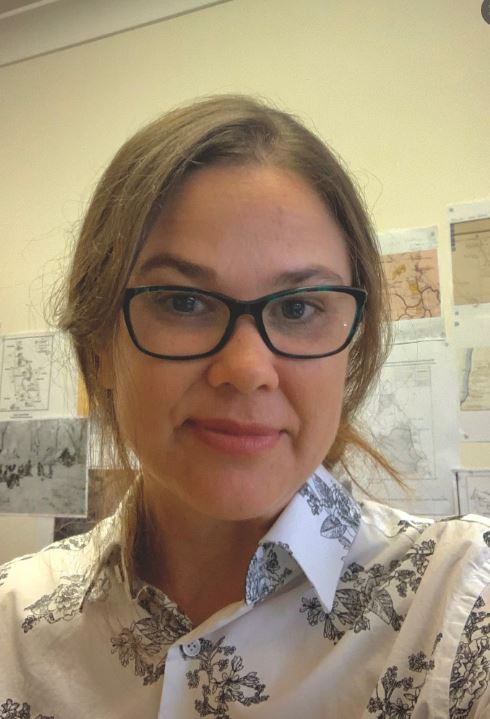 Pascale Taplin is an anthropologist with over twenty years’ experience in community-led development projects and native title research in the Northern Territory and North Queensland. Pascale’s current research interests include disinformation and Australian conspiracist communities.
 Claire is a Senior Lecturer and Director of the Conflict Management and Resolution Program at James Cook University. She is a practicing mediator, conflict coach, workplace facilitator, and conflict management trainer. Her research interests include mediation and conflict resolution processes, interfaith dialogue, coaching and capacity building.













 The Australian Dispute Resolution Research Network