Lockdown Dispute Resolution 101 #6: Learning from the art of mediation – intentionally establishing a procedural framework for effective communications and negotiations

Mediation

There is much we can learn from the theory and practice of mediation. As a professor of law, a nationally accredited mediator, registered family dispute resolution practitioner and co-director of the Bond University Dispute Resolution Centre, I am very passionate about mediation and its positive value in society and in law. I really believe that aspects of how mediators practice their art can help all of us to enact our dispute resolution agency for effective lockdown communication and negotiation.

Mediators are third parties who use the mediation process to assist people in dispute to communicate effectively about their positions, needs and interests. Mediators add value when they put the mediation process into action by creating favourable conditions for people to talk, problem-solve and make decisions together. As experts in negotiation and communication, mediators provide structures, procedures and interventions which parties and partisan advisers are unable to achieve on their own. The art of mediation can teach us how to create favourable conditions for our own interactions with friends, family, work colleagues and others during lockdown.

Mediation 3

In this blog we explore how mediators establish a constructive procedural and structural framework to support parties in dispute to communicate and negotiate effectively. We consider what we can do as individuals in lockdown to replicate these approaches in our own efforts to negotiate matters and also as we work to prevent, manage and resolve disputes.

Mediators provide a procedural framework for parties to communicate with each other by managing and supervising the stages of the mediation process. As ‘chair’ of proceedings, mediators establish conduct rules, provide order, sequence and continuity, ensure adequate air-time for all parties, call and oversee adjournments and manage procedural snags. In doing so, they establish an environment of impartiality, security and control designed to support effective communication and negotiation.

Mediation 2

In our own lockdown communications – particularly when we need to have difficult conversations or if we are attempting to manage or resolve a dispute – we usually don’t have an impartial, expert third-party assisting with a process and structure for the discussions. But we can improve our chances of things going well if we enact our agency to ensure that we do that for ourselves.

One important aspect of creating a supportive procedural framework that we can adopt from mediation practice is the establishment of ground-rules, or in other words, guidelines for each person’s conduct in the discussions. A second important aspect of the mediation process is the identification of common ground, or areas of established agreement. And a third aspect that can inform effective communication between individuals in lockdown is the use of an agenda, that is, the identification of a list of issues for discussion.

Establishing ground-rules: At the start of a mediation, mediators ask the parties to commit to certain ground-rules and these ground-rules become a critical rule of engagement in the process. Two of the most commonly used ground-rules are, first, that everyone in the process will behave respectfully towards each other, and, second, that only one person will speak at a time. These conduct guidelines help keep discussions constructive and on-track.

Ground rules 1In our lockdown communications we can also establish ground-rules like these. We can say out loud at the start of a discussion or negotiation that we are committing to speak and engage respectfully with each other and that only one person will speak at a time. We won’t always succeed in adhering to the ground-rules. But having established them gives each person in the conversation the authority to remind others of them and if, for example, one person starts over-talking another, they can be respectfully reminded that their earlier commitment was not to do that. Something as simple as this can bring a sense of order and structure to communications.

Identifying agreement the common ground’: When we are communicating in lockdown in order to negotiate, and particularly when we are aiming to prevent, manage or resolve a dispute, there are often issues about which there is some disagreement. However, there are also often areas of agreement – or what mediators might call ‘common ground’. It is positive communication practice, and part of the role of a mediator, to identify and acknowledge existing areas of agreement between the parties and recognize that they represent an element of success in the communications that has already been achieved. Identifying agreement provides common ground on which decisions are not necessary and on which a constructive conversation can build. The practice of identifying common ground can promote an optimistic frame of mind and provide an effective foundation for the negotiations that follow. For this reason, it’s an important element of the procedural framework of mediation that we can adopt.Common ground 1

Issues on which there is agreement, the common ground, might involve matters substantive to the discussion. For example, if a couple are negotiating about who will get to use the home office for the morning it might be acknowledged and agreed that getting work done effectively at home is important to each person. Common ground can also exist on procedural matters, for example, each person might agree that they will set aside the time necessary for the discussion to achieve an outcome. Sometimes it is only possible to identify common ground at general levels, for example if parents are in disagreement about how much screen-time the children should have in a day, it might be agreed and acknowledged that both parents love their children and that each parent is concerned about the children’s best interests.

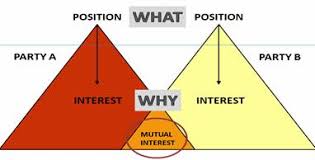
Defining and ordering the issues for discussion – setting an agenda: An agenda is a list of issues on which decisions are required. Issues can be defined in terms of positions – what people want – and also in terms of needs and interests – or in other words, why people want what they want. In a mediation, it’s the mediator’s role to present issues neutrally, in plain language and, as far as possible, in mutualised terms. This involves high-level skills of listening, synthesis and reframing. Mediators usually display issues visually to provide a source of reference for the remainder of a mediation – they commonly use a whiteboard to document the agenda so that everyone in the mediation can see and refer back to the identified issues. Parties in mediation are invited to prioritise the issues to provide a clear sequence for their discussion. The list of issues provides an important structural framework for discussions – establishing with clarity the matters requiring negotiation and decision- making; ordering the discussion of problems and issues; disaggregating overall problems into discrete elements; and suggesting a sense of finiteness to a negotiation or dispute.

Agenda 1

In our lockdown communications we can borrow from mediation practice to assist with the effectiveness of discussions by setting an agreed list of issues for discussion and decision-making, making the list visible for all (on a whiteboard or even just on a piece of paper), determining an order of priority for the discussion of the issues and then keeping discussions on track by using the list to keep focused and on point.

Mediation is a principled and positive approach to facilitating constructive discussions about often difficult issues. If you are interested in training to be a mediator, at Bond University Law Faculty we run short courses in mediation and family dispute resolution through our Dispute Resolution Centre.  You can see the schedule for courses coming up here – during the COVID-19 lockdown all courses will be conducted online.

Next Blog Monday 13th April: Learning from the art of mediation – intentionally managing the emotional and physical environment of communications.

Acknowledgements

The content of this post was adapted and reproduced from Laurence Boulle and Rachael Field, Mediation in Australia (LexisNexis, 2018) 77-78, and 99-100. Laurence is an esteemed member of the ADR Research Network and has long been a leader in the Australian and international dispute resolution communities.

Mediation figures: Shutterstock

Mediation scrabble image: Adamson, Bernays, Kyle and Jones Lawyers

Mediation post-it notes: Gard

Ground-rules: Shutterstock

Common ground: Professionally Speaking


Lockdown Dispute Resolution 101 #5: It’s not all about the words – effective communication and body language in lockdown

Bodylanguage 1Our verbal communications are only one dimension of the way we communicate with family, friends, colleagues and others in lockdown. Non-verbal communication is another dimension. Non-verbal communication consists of aspects of communication which can be seen by the other party – the ‘visuals’, and other forms of communication which can be heard – the ‘vocals’. To communicate and negotiate effectively in lockdown it is important for us all to be aware of body language messaging.


The term ‘visuals’ refers to all aspects of communication and messaging conveyed by the sender which are observed, as opposed to being heard, by the receiver. Body language is the most prominent form of visual communication. It involves our bodily appearance as well as our movements which express attitudes, feelings, emotions and other messages. For example, it could include a sender’s clothing, posture, body and limb movements, hand gestures, facial expressions, eye motions, and physiological reactions such as blushing, sweating and quickened breathing. The face and eyes are often portrayed as the most important conveyers of body language but micro-signals in these areas are not always easy to read and interpret.

Facial expression

We can fake body language to some degree, but it’s not always easy, for example in relation to eye signals, facial expressions, blushing or shortness of breath. Children, in particular, find it difficult to conceal body language and their crossed legs or averted eyes may betray the apparent innocence of their spoken words. Unlike verbal communication, body language never stops and when a person is verbally silent it remains the only way in which they are communicating.

It is important for us all to be aware of the stark contrasts in body language messaging across diverse cultures, but some generalised features of body language and their possible meanings in western societies are:

  • Open limb positions — receptivity towards what is being said.
  • Crossed or folded limbs — defensiveness towards what is being said.
  • Forward-leaning body posture — attentiveness to speaker.
  • Backward-leaning body posture — indifference to speaker.
  • Open hands — plain dealing and honesty.
  • Closed fists, pointed fingers — aggression, threatening attitude.
  • Direct eye contact — sincerity, openness, honest dealing.
  • Averted gaze, avoidance of eye contact — deceit, guilt, shame. (Although in certain cultures direct eye contact may be impolite and, conversely, avoiding eye contact may be intended as a sign of respect rather than an admission of guilt or liability.)

Body language expert Allan and Barbara Pease make the following observations (2017: 10):

  • More than 65 per cent of a message is conveyed non-verbally.
  • Non-verbal communication has a significance in communication five times that of verbal communication.
  • In general, non-verbal communication conveys interpersonal attitudes while verbal communication imparts information.
  • Some non-verbal signals are learned and some we are born with.
  • A single gesture may have many meanings and should be interpreted in the context of associated verbal and non-verbal communication, as well as the person’s culture and the social environment in which it takes place.

Body language can either confirm or contradict what is being said verbally, or it might simply confuse. When it comes to interpreting body language it is dangerous to place too much weight on a single factor.

Body language in the form of ‘visuals’ also includes messages received from the broader environment such as the size of an office, the shape of a table, the size and height of chairs, seating placements, and lighting for example. These factors can sometimes convey power, strength, status, domination, tranquility or equality and other such messages more emphatically and unequivocally than words. Without any spoken terms, body language or other express communication, can convey a whole mood and atmosphere.

‘Vocal’ aspects of communication refer to the many messages sent and received in verbal communication over and above the actual words, terms and language used. They are sometimes referred to as paralanguage and include volume, pitch, pace, tone, inflection, emphasis, intonation, rhythm, resonance and silence. One can add to this litany things like laughter and sighs. The vocal elements of communication disclose emotion, attitudes and states of mind which are not conveyed through words themselves in verbal communication.

As the vocals are auditory signals (except of course for silence), it is difficult to demonstrate them through written words. However, the following illustration shows the different meanings which the same five words can have, depending on where the emphasis is placed by the speaker:

  • LexisNexis mediation books are awesome (but not mediation books from other publishers).
  • LexisNexis mediation books are awesome (but not LexisNexis books on meditation and medication).
  • LexisNexis mediation books are awesome (but not LexisNexis mediation DVDs, you-tubes or blogs).
  • LexisNexis mediation books are awesome (I had my doubts but now that I’ve read them …).
  • LexisNexis mediation books are awesome (they are unbelievably good, top class, of the highest quality).

Mediation in Australia

As with body language, some forms of vocal communication are difficult to disguise. Where the vocal messages contradict the spoken words, listeners tend to be influenced more by the vocal message than the words spoken. This can be demonstrated in relation to sarcasm where emphasis and tone can give spoken words a meaning diametrically opposed to their literal meaning. So, if you say the above sentence with the relevant emphasis and tone on both syllables of ‘awesome’ it can be received as a contemptuous comment on the books’ merits. There are many subtle deviations from literal verbal meaning that can be detected from vocal communication.

In our COVID-19 lockdown communications and negotiations our aim in playing the lockdown language game is to prevent, manage and resolve disputes effectively. For this reason, it’s important that we harness our dispute resolution agency and work hard to observe and interpret vocal messages and body language appropriately and with care. We need to take care not to assign a mistaken meaning to another person’s conduct – perhaps by using a summarising technique or asking clarifying questions (both these skills are discussed in more detail in later posts in the series).

In other words, sometimes we need to make tentative interpretations of visuals and vocals and check-in with the person we are communicating with to see if our interpretation is correct, never reading too much into a single cue. For example, a person’s sudden body movement might be caused as much by discomfort, habit or a medical condition as by anger or boredom. If a person frowns at something it might be that they are disapproving or upset, or it might simply be that they are distracted by something completely different or are unable to see clearly without their glasses. Where behavioural signals occur in clusters, for example dilation of the pupils, heavier breathing and distressed hand movements, they are easier to diagnose tentatively than where they are isolated occurrences.

Non-verbal signals are most significant where they are incongruent with the verbal message, for example where the verbal messages signify assent but the crossed legs or nervous eye-movements suggest resistance, or where the words suggest honesty but the higher pitched voice suggests deceit.

In lockdown, making intentional, positive choices about our own non-verbals, as well as about the ways in which we interpret the visual and vocal body language of others, is one way we can harness our dispute resolution agency for constructive communications and positively prevent, manage and resolve disputes.

Acknowledgements

The content of this post was adapted and reproduced from Laurence Boulle and Nadja Alexander, Mediation Skills and Techniques (LexisNexis, 3rd ed, 2020) paras 6.29-6.39 with the kind permission of the authors. Thank you Laurence and Nadja! Both Laurence and Nadja are esteemed members of the ADR Research Network and have long been leaders in the Australian and international dispute resolution communities.

See also, Allan Pease and Barbara Pease, The Definitive Book of Body Language (Harlequin, 2017).

Body language image: Essential Personnel

Facial expression image: Backstage

Lockdown Dispute Resolution 101 #4: Choosing our words wisely – playing the lockdown language game(s)

We all have our own personal communication style. That’s what makes communicating in lockdown a challenge but also interesting! What we might not realise is that there is science and theory behind how we speak to each other and the terminology we choose to use. Harnessing our dispute resolution agency in making good communication choices is essential to preventing, managing and resolving disputes that might arise while we’re all locked down.

In this post we explore how the idea of a ‘language game’ can help us understand the background norms structuring our communication environment in lockdown.

Chessboard

Ludwig Wittgenstein – a German philosopher born in 1889 in Vienna – used the notion of a language game to explain the underlying conventions of different forms of social discourse and to make explicit some of the implicit expectations that lie behind different forms of social interaction. Diverse communication environments reflect different expectations as to appropriate or expected forms of speech and behaviour. For example, people communicate differently in more formal environments (such as a courtroom) compared with less formal environments (such as a party). Different contexts have different rules of engagement – different language games that must be played – for communication to be effective.

Wittgenstein

Wittgenstein’s point is that people are often unable to participate seamlessly in a language game unless they already understand, to a certain extent, the rules that apply to the specific communication context. He illustrated this point through the example of the name of a piece in chess. If you are shown a piece from a chess set and told, ‘This is the king’, it does not inform you how to use the piece. An understanding of the rules of the game of chess is required to know what to do with a ‘king’. On the other hand, if you do know the rules of the game and you are told that a certain piece is the ‘king’, then you will know exactly how to use it. The name ‘king’, when affixed to a specific piece, will tell a competent chess player to only move it one square in any direction, to protect it from threats by opposing pieces and so on.

Chess

The same idea applies to different communication environments. In a courtroom, for example, there are well-documented difficulties that arise when an unrepresented litigant attempts to engage in courtroom advocacy. At a party, certain types of comments will contribute to smooth conversation, while other types (such as offensive jokes, inappropriate questions or sharing of overly personal information) may cause social discomfort and be ignored or shunned by other party-goers.

Wittgenstein describes a language game as a set of rules for the use of language in social interaction, with ‘the speaking of language [being] part of an activity, or of a form of life’ (Philosophical Investigations, 11 [23]). Wittgenstein notes that language fundamentally influences – and, indeed, constructs – the ways in which people interact. Language is linked to social behaviour and to the social dynamic. People associate certain words and phrases with particular forms of behaviour and vice versa.

In the context of our current global COVID-19 crisis we are having to learn the rules of a new language game – the lockdown language game. An added layer of complexity is that the language game of lockdown is different in different contexts – the language game associated with communicating with family members under stress and confined at home will differ from that connected with communicating with anxious work colleagues over Zoom.

We need to think carefully about our new communication environments and harness our dispute resolution agency to respond appropriately. A failure to do so may result in a ‘clash of genres’ or what French philosopher Jean-François Lyotard called the differend. A clash of genres occurs when a person operates within one language game when the communication context is governed by a different language game.

One base-line element – a fundamental rule – of achieving effective communication in the context of the diverse manifestations of the lockdown language game is that there is an imperative for us to choose our words wisely. If we choose negative, accusatory, threatening, challenging or unhelpful words we will probably exacerbate the potential for conflict, contestation and struggle to arise as a result of our communication approach. On the other hand if we craft our communications from a positive perspective, we are more likely to negotiate and communicate effectively, and also prevent, manage or resolve disputes.

In mediation practice we use a skill called ‘reframing’. Reframing is where the mediator takes negative language the parties might be using and proactively reframes it in appropriate language. A later post in the series will discuss the art and science of reframing in more detail.

When mediators reframe, that is choose to use less negative and more appropriate terms, they can have a positive influence on the tone of the communication environment. The use of constructive words can also induce the people we are communicating with to think about matters more helpfully and from a new perspective, and it can help people to be more open to embracing productive approaches to problem-solving.

For example, instead of saying ‘You’re lying’, we could ask ‘Are you sure you’re accurate about that?’

Here are some further examples:

Negative statement Instead we could say
It’s all your fault. My expectations were a bit different.
I hate that. I feel quite strongly about it.
He’s very rude. I thought his language was not appropriate.
I can’t stand it when … I feel uncomfortable when …
She totally ignored me. I needed further consultation about that.
I’ve got no room to move. I feel as though my options are limited.
You’re always late. I’d like to talk with you about punctuality.
You never return my calls. I’d like to talk with you about our pattern of communication.
You never listen to my instructions properly. I’d like to talk with you about the importance of good communication and responsiveness.

Communicating effectively in lockdown with our families, work colleagues and others is a challenging experience when we are also trying to manage feelings of uncertainty, stress and sadness. Harnessing our dispute resolution agency to make positive choices about the words we employ in our communications will help us to avoid clashes of genres in how we engage with the lockdown language game(s). The consequences of such actions are unavoidably positive: more effective communication and proactive achievement of the prevention, management or resolution of disputes.

Tomorrow’s post: It’s not all about the words – effective communication and body language.

Acknowledgements:

The idea for a post on choosing words wisely was inspired by Laurence Boulle and Nadja Alexander, Mediation Skills and Techniques (LexisNexis, 3rd ed, 2020) paras 6.27-6.28 and Table 6.2. Both Laurence and Nadja are esteemed members of the ADR Research Network and have long been leaders in the Australian and international dispute resolution communities.

The content about the notion of language games was adapted and reproduced from Rachael Field and Jon Crowe, Mediation Ethics – From Theory to Practice (Edward Elgar, 2020) Chapter 7. See also Rachael Field and Jonathan Crowe, ‘Playing the Language Game of Family Mediation: Implications for Mediator Ethics’ (2017) 35 Law in Context 84. Jon Crowe is another esteemed member of the ADR Research Network and a dear friend, co-author and colleague.

For further relevant scholarly sources see for example, Ludwig Wittgenstein, Philosophical Investigations (Macmillan, 2nd ed, 1968); Leonard Linsky, ‘Wittgenstein on Language and Some Problems of Philosophy’ (1957) 54(10) Journal of Philosophy 285; Max Black, ‘Wittgenstein’s Language-Games’ (1979) 33(3/4) Dialectica 337; Norman Malcolm, ‘Wittgenstein on Language and Rules’ (1989) 64(247) Philosophy 5; Hilde N Lindemann, ‘Wittgenstein Meets “Woman” in the Language-Game of Theorizing Feminism’ in Naomi Scheman and Peg O’Connor (eds), Feminist Interpretations of Ludwig Wittgenstein (Pennsylvania State University Press, 2002); Dale Jacquette, ‘Wittgenstein on Lying as a Language-Game’ in Daniele Moyal-Sharrock (ed), The Third Wittgenstein: The Post-Investigations Works (Routledge, 2004) 159; Kenneth Mølbjerg Jørgensen, ‘Conceptualising Intellectual Capital as Language Game and Power’ (2006) 7(1) Journal of Intellectual Capital 78; Jean-François Lyotard, The Différend: Phrases in Dispute (Georges van den Abbeele trans, University of Minnesota Press, 1988).

Wittgenstein image: Funny Face: How Ludwig Wittgenstein “Invented” Emojis

Chessboard image: Chess Board Dimensions | Basics and Guidelines

Chess pieces image: Wikipedia Chess


Lockdown Dispute Resolution 101 #3: Effective communication – the basics and the complexities

It hardly seems necessary to say out loud that effective communication is important to preventing, managing and resolving disputes.

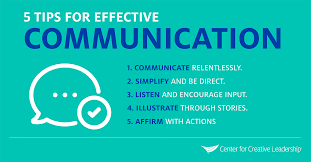
5 tips for effective communication

Communication is an indispensable ingredient in all forms of personal and professional engagement and is a major discipline in its own right. Effective communication skills can help to ensure that our interactions with others are clear, positive and balanced. We can use communication strategies to reassure the people we are communicating with, to form alliances with them, and to create a positive communication environment. When we’re communicating with others, we need to ensure that we connect with them. We need to choose approaches specific to their communication needs so that they feel understood, listened to, and heard.

In harnessing our dispute resolution agency (see yesterday’s Blog) we have four broad responsibilities in our communications with others:

  1. We need to be effective communicators and adopt appropriate communication practices. Words are our main, but not only, tool.
  2. We need to work hard to ensure our communications with others are as accurate, explicit, comprehensible, constructive and appropriate as possible.
  3. We need to keep learning and improving our effective communication techniques.
  4. We need to foster environments which encourage effective communication.

sender receiver image 2

The beginners’ guide to communication would say simply that human communication involves (at least) two parties: a ‘sender’ and a ‘receiver’. The sender wishes to transmit a message to the receiver and sends it by way of verbal, vocal and visual messages. The receiver takes delivery of the message and the communication is complete. Unfortunately, it is not quite as simple as beginners’ guides are prone to suggest.

The passing of a message from one person to another is not as mechanical as the passing of a baton from one relay runner to the next. This is because both the sender and receiver are affected in the communication process by a range of factors: the social context of the communication, the respective emotions, cultural expectations, past experiences and assumptions, biases and prejudices. These are all subjective and highly variable factors which can differ significantly from one person to another — even when people are from the same cultural background.

This means that the sender ‘encodes’ his or her message; that is, the words, the vocal effects and the body language used are based on their perceptions of the world. Likewise, the receiver ‘decodes’ the message in terms of their perceptions, biases and frames of reference. Because of the subjective nature of both the encoding and decoding functions, there may be substantial differences between what the sender thought they were communicating and what the receiver thought was being communicated. In other words, the intention of the message being communicated does not always match its impact on the receiver. Hence the need to move beyond basic assumptions about the simplicity of communication to more sophisticated understandings.

In reality, communication seldom consists of a single message from one person to another. In families, workplaces and communities it often involves a series of ongoing messages among three or more people. This makes things both easier and more complex at the same time. It is easier because the receiver of a message usually responds to it and this can help to clarify perceptions. Receivers can give feedback to the sender through verbal, vocal or visual means. Thus, the receiver may ask a clarifying question which gives the sender the opportunity to resend the message more clearly, more emphatically or more accurately than before. Moreover, the sender may detect from the receiver’s body language that the message has not been understood, or has been misunderstood, and instantly clarify it. In larger communicating groups – such as workplace meetings or family conversations – one receiver can give feedback that benefits the effectiveness of the communication for all.

In situations of stress, if the communication environment is tense and the communication approach is fast and furious, then the encoding of each person may be clumsy and the decoding may be defective. In such circumstances, if a receiver is intently focused on the words being used by the sender, they might pick up on the factual information in the message but overlook the attitudes and feelings accompanying it. Likewise, where a sender uses aggressive language or body language this may cause the receiver to overlook important factual information being conveyed.

In an attempt to systemise the complexity of interpersonal communication, Schulz von Thun (2010) has identified four meanings to every message.

  1. The factual meaning: what do the words in the message convey in terms of their factual, objective and rational meaning?
  2. The self-disclosure meaning: what does the message reveal about the sender himself or herself?
  3. The relationship meaning: what does the message say about how the sender views the receiver and the relationship between them?
  4. The appeal or request: what does the sender want the receiver to do?

Von Thun Example

In conflict and dispute situations it is common for receivers of a communication to hear only one aspect of the message (generally one that fuels the conflict) and partially or completely miss the other meanings. An awareness of the four-message model can help us to remember to look for the meanings that may have gone unnoticed by a receiver. Yet another layer of complexity is added to communication dynamics by the fact that senders are not always explicit about all four meanings in their messages.

If as receivers and senders of communication we can aim for as much clarity in the transmission of our meanings and understandings as possible, we will be communicating more effectively. And this in turn will ensure that we are doing what we can to positively prevent, manage and resolve disputes as we navigate lockdown in our families, workplaces and communities.

In the Blogs ahead we’ll be focussing on some of the more detailed elements of effective communication: for example, the importance of the words we choose, body language and ways to harness it as an effective non-verbal form of communication, helpful approaches to vocal communication, the critical nature of effective listening and how to listen actively and effectively, the importance of acknowledgement, how to ask questions appropriately, and the communication tools of summarising and reframing and how to do them well.

Tomorrow’s Blog: Choosing our words wisely

Acknowledgements:

Parts of this post were adapted or reproduced from Laurence Boulle and Nadja Alexander, Mediation Skills and Techniques (LexisNexis, 3rd ed, 2020) paras 6.15-6.22 with the authors’ kind permission. Both Laurence and Nadja are esteemed members of the ADR Research Network, and have long been leaders in the Australian and international dispute resolution communities.

F Schulz von Thun, Miteinander Reden 1 (Rowohlt, 2010)

5 tips for effective communication image: The Centre for Creative Leadership

The von Thun example from daily life: Madame Marinita Schumacher

Sender/receiver image: Health Service Management


Lockdown Dispute Resolution 101 #2: Dispute resolution agency

close up of gear shift over black background

Photo by Pixabay on Pexels.com

In the current climate there are many things we can’t control. It can feel a little overwhelming. However, there are many things that do still remain within our personal individual control. Included in that list are our approaches to communicating with others, and acting intentionally so as to positively prevent, manage or resolve disputes.

In order for us to develop a strong foundation for using dispute resolution skills purposefully in our daily lives, it’s important that we recognise that we have the ability to decide to act intentionally as agents of positive engagement with each other.

Things within my control:

  • My choices.
  • My words.
  • My attitude.
  • My effort.
  • My actions.
  • My beliefs.
  • My opinions.
  • My responses.
  • My thoughts.
  • My boundaries.
  • My own social distancing.
  • My engagement with the news and social media.

Agency involves taking individual control over a situation. People with agency feel that they are able to act independently and have the capacity to make their own free choices and decisions. When a person has agency, they are able to act on their own will and of their own accord.

Words associated with the notion of agency include: individual control; intentional action; empowerment; and free choice.

There are always external influences on us, and on our actions, as human beings. However, when we have a sense of agency, we feel as though we are able to manage those influences (as well as issues that arise in relation to, or as a result of, them). Having agency means we have a sense of control over our life: we have choices, a capacity to act and decision-making power for ourselves.

Our agency in relationships is enacted in our choices about how we behave and communicate. Relational agency concerns how we choose to interact with and impact on other people. We can choose to make those interactions positive and constructive even when faced with stresses, worries and challenges. But this requires effort, energy and intentionality. An investment in our dispute resolution agency is worth the effort, however, and can only have positive and empowering consequences.

Now is the time for all of us to harness a sense of agency in relation to how we choose to communicate with others, and in terms of how we navigate the stressors and challenges of living and working in lockdown. Effective communication – to be discussed in Blogs in the coming days – is one important key to the prevention, management and resolution of disputes. Some basic aspects of resilience building and self-management are another essential enabler of preventing, managing and resolving disputes.  And of course, equipping ourselves with specific negotiation and dispute resolution skills is critical. We’ll be blogging about all these things across the Lockdown Dispute Resolution 101 series.

In accepting our own agency in relation to the quality of our relationships with others, we are accepting that we have the power to make positive choices about how we communicate and interact. It could even be said that in our current global situation we have a responsibility to do so.

Tomorrow’s Blog: Effective communication – the basics and the complexities.

Some scholarly resources on agency: Mustafa Emirbayer and Ann Mische, ‘What Is Agency?’ (1998) 103(4) American Journal of Sociology 962; Jack Martin, Jeff Sugarman and Janice Thompson, Psychology and the Question of Agency (SUNY Press, 2003); Albert Bandura, ‘Toward a Psychology of Human Agency’ (2006) 1(2) Perspectives on Psychological Science 164; Bryan W Sokol et al, ‘The Development of Agency’ in Richard M Lerner (ed), Handbook of Child Psychology and Developmental Science (Wiley, 7th ed, 2015) 284.

Acknowledgement: Some of the content of this Blog was adapted from Rachael Field, James Duffy and Anna Huggins, Lawyering and Positive Professional Identities (LexisNexis, 2nd ed, 2020)

Evaluative mediation in Family Law financial cases – observations and distinctions. By Paul Lewis, Partner Gadens

This post is by Paul Lewis – an expert family lawyer and leading mediator who is a partner of Gadens in Sydney. Paul has been nominated for the Mediator of the Year category of the 2020 Australasian Law Awards.

The classical model of mediation is ”facilitative mediation” during which the mediator’s primary function is to encourage meaningful and constructive dialogue between the parties, without providing any comment or opinion on the substance of the dispute or providing suggestions or ”options” to assist the resolution of the dispute.

The requirement that a facilitative mediator refrain from ”entering the fray” springs from one of the underlying foundations of facilitative mediation, namely, the concept of ”self-determination” and the related concept of ”party autonomy”. It is worth noting that the advent of facilitative mediation arose through the germination and growth of ”community mediation” in the United States of America from the 1960s through to the 1970’s. Community mediation settled in Australia with the passage of the Community Justice Centres Act 1983 (NSW), the legislation explicitly adopting the principles of facilitative mediation.

References to evaluative mediation, sometimes called ”advisory mediation”, arose after the formal justice system began to co-opt mediation in to its prescriptive rules and case management procedures. This happened in Australia from the early 1990’s onwards and occurred earlier in North America. Under the model of evaluative mediation, the mediator is permitted to provide his or her views and professional observations about the content of the dispute on the basis that the mediator is a ”subject matter expert” in relation to the dispute.

The NADRAC glossary of dispute resolution terms (first published in 1997 and updated in 2012) describes evaluative mediation as follows:

”Evaluative mediation is a term used to describe processes where a mediator, as well as facilitating negotiation between the parties, also evaluates the merits of the dispute and provides suggestions as to its resolution. (See also combined processes.) Note: evaluative mediation may be seen as a contradiction in terms since it is inconsistent with the definition of mediation provided in this glossary.”

Standard objections to the evaluative model of mediation in civil cases include the following:

  • that the introduction of an evaluative component by the mediator may cruel, or at least stifle dialogue between the parties;
  • that the selection of an evaluative mediation model may see the parties, or one of them, adopt a passive stance in order to find out what an independent mediator thinks of the dispute, thereby defeating the intrinsic value of the mediation as an opportunity to reach a negotiated agreement; and
  • that a professional viewpoint or opinion expressed by a mediator will merely be one view among a range of possible views, and therefore not helpful in moving the parties towards agreement.

In the context of the evaluative mediation of financial cases under the Family Law Act 1975 (”the Act”), the above objections are, in practice, overstated. The law in relation to property settlements under the Act is described, in jurisprudential terms, as a ”discretionary property regime” in contrast to a ”community property regime” seen in overseas jurisdictions such as New Zealand, South Africa, California and other states of the United States of America. Similarly, the determination of spousal maintenance cases under the Act involves the exercise of discretion by the Court within the parameters of the legislative framework and statutory criteria, and the associated caselaw.

Systems of family law based on discretion, rather than fixed rules, are rationalised on the basis that they provide individualised justice and better justice in the vast majority of cases. The disadvantage of discretionary regimes is said to be unpredictability, and there is merit in that assessment. Community property regimes provide greater certainty or predictability but at the expense of just outcomes in many cases (being equivalent to a ”one size fits all” approach.)

In a discretionary family law system, mediation calls for an evaluative model, at least in financial cases. Many parties, even when they are legally represented, have firmly held views about ”fairness”, such views being highly subjective and often contrary to well-established legal principles in the vast majority of cases. It is advantageous to have a subject matter expert as the mediator in such financial cases, and for the mediator to be able to inject an evaluative component during the mediation if it might resolve an impasse, correct a misstatement of the law or bridge the gap between the parties’ respective bargaining positions by the identification of unexpressed needs and generation of additional options .

A good evaluative mediator is judicious with the expression of his or her evaluative opinion or input during the mediation. Indeed, the reason that evaluative mediation is often described as a ”blended process” in the mediation literature is because a good evaluative mediator will approach the mediation in the early stages as a facilitative mediation. An evaluative mediator hangs back and checks out whether the parties may be able to reach a negotiated agreement ”under their own steam.” The latter observations are critical in deflecting the criticisms inherent in the typical objections to the evaluative mediation process, as stated above.

It is important that the process of evaluative mediation is explained to parties during their preliminary conferences (separate preliminary conferences are the norm in family law cases, not just parenting cases). Further, the nature of the process must be clearly identified and described in the agreement to mediate.

At a micro level, the ways in which the mediator introduces an evaluative component must always strive to meet the other process requirements in mediation of impartiality and procedural fairness. Mediation clients readily understand the concept of the evaluative mediator having the liberty or discretion to inject his or her viewpoint during the mediation if the mediator believes ”that doing so may assist the parties reach a resolution of the matter.”

Paul A. Lewis Gadens, Sydney ©

Introduction to Lockdown Dispute Resolution 101

Welcome to the Australasian Dispute Resolution Research Network’s COVID-19 crisis inspired series on basic skills and strategies for effective communication, negotiation and dispute resolution practices. The series is written by dispute resolution experts who are members of the Network and is designed for this difficult and challenging time of worldwide lockdown.

Covid-19 | New Scientist

It is clear that relationships are being tested as a result of the social isolation strategies currently in place in response to COVID-19. As we spend more time confined in our homes, and work remotely from our colleagues, it can be a struggle to maintain civil communications – it’s a perfect environment for nerves to become frayed and for disputes and conflict to develop. The reliable advice seems to be that we are really only at the beginning of trying to overcome the virus – so now is an absolutely critical time to equip ourselves with positive strategies to support relationships – personal relationships, work relationships and relationships with others we encounter when we get to go outside.

There are many stories of acts of kindness and generosity in families and the community. See for example. However, the significant stressors of living through this pandemic cannot be denied. A man in Woolworths the other day pushed rudely in front of me and then turned around and said abruptly ‘It’s all for one these days’. I think he actually meant ‘It’s every person for themselves’ (?!). In any event his actions demonstrated that he was losing his capacity to be civil and to cope.

1993 Skybox The Three Musketeers All For One, And One For All! #73 ...

The ADR Research Network is a network of leading dispute resolution scholars who collaborate to foster, nurture and enrich high quality dispute resolution research and scholarship. The Network is inclusive and forward-looking, highly collegial and supportive. In ‘these troubling times’ we want to share some of our expertise in support of individual, family, workplace and community harmony and peace in lockdown.

Starting today we will be positing a new Blog every day for the rest of April exploring ways in which we can all prevent disputes from arising, as well as manage and resolve disputes when they do arise. We’ll be covering topics such as effective communication strategies (for example, effective listening, appropriate ways to ask questions and the benefits of using tools such as summarising and reframing in communications), mental health strategies relevant to dispute resolution practice (such as reflective practice, resilience-building and self-management), conflict management approaches (conflict analysis and de-escalation) and dispute resolution practices with a focus on negotiation tips and tricks. We’ll be highlighting some of the great work of Network members and pointing you towards additional useful resources.

We always welcome your comments and feedback. Please be in touch with us via the comments function on the Blog.

Tomorrow’s Blog: Dispute resolution agency – it’s our responsibility at this time to take agency and build our communication, negotiation and dispute resolution skills.

Acknowledgements:

Coronavirus image: https://www.newscientist.com/term/covid-19/

All for one and one for all image: https://kronozio.com/card/c76070ce-7059-46e2-81e1-d1067b228cbb/1993-Skybox-The-Three-Musketeers-All-For-One-And-One-For-All–73

ADRRN: Lockdown Dispute Resolution 101

Image may contain: textThe Australasian Dispute Resolution Research Network brings together leading dispute resolution scholars and provides a collaborative environment to foster, nurture and enrich high quality DR research and scholarship. The Network is inclusive and forward-looking. 

In this time of crisis, the Network will use our April Blog to support societal, family and individual well-being during lockdown. Starting on Monday April 6th we will be offering daily Blogs entitled Lockdown Dispute Resolution 101. The Blogs will draw on the extensive scholarship and expertise of our Network members, offering DR tips and strategies for effective communication, negotiation and the resolution of disputes while in lockdown.

Watch this space!

Legal Services in Road Traffic Injury Compensation Claims: Who Uses Them?

This post summarises a new study that has just been published in the University of New South Wales Law Journal that looks at the socio-demographic, crash, injury, and recovery factors that are linked to legal service use among people who claim compensation for road traffic injuries. The article is part of my PhD work at Monash University, which looks at claimant legal service use in injury compensation schemes.

This article has been published with my supervisors Drs Janneke Berecki-Gisolf, Becky Batagol, and Genevieve M Grant.

Background: Personal Injury Legal Problems

Personal injury is one of the most common types of legal problem that people experience. A legal problem is a problem that can be resolved using the law. A personal injury is a harm to a person for which compensation can be claimed; this harm can be the result of a road traffic crash, workplace injury, product fault, or other occurrence.

Research by the Law and Justice Foundation of New South Wales shows that seven per cent of Australians aged 15 and above experience a personal injury legal problem within a 12-month period. One fifth of these people sustain their injuries in road traffic crashes. Road traffic injuries are linked to a number of negative outcomes (beyond the injuries themselves) including loss of income and financial strain, stress-related illness, relationship breakdown, and moving house.

Compensation for Road Traffic Crash Injuries

In Australia, compensation for road traffic injuries can be accessed by lodging a claim through the relevant insurer. In Victoria, this insurer is the Transport Accident Commission (TAC).

People who claim compensation for road traffic injuries engage lawyers to help them to access benefits, including through navigating the claims process and resolving disputes with insurers. Because of this, lawyer use is linked to access to justice (or the extent to which claimants can enforce their rights through fair and open processes). But, surprisingly, little is known about the characteristics that are linked to lawyer use in compensation schemes. The role of injury severity and recovery outcomes is especially unclear.

New Empirical Research on Lawyer Use in Compensation Schemes

This study used TAC compensation claims and payments data to look at how much claimant lawyer use was explained by (a) injury severity, (b) individual-level socio-demographic, crash, and injury factors, and (c) short- and long-term recovery outcomes in the TAC scheme.

The study found that although injury severity and other socio-demographic, crash, and injury factors shape claimant decisions about engaging lawyers, the experience of negative recovery outcomes (such as time off work, mental health issues, and/or pain issues) plays by far the most important role.

Because information about injury severity was only available for claimants who had been hospitalised, those who had and had not been hospitalised had to be looked at separately. In the hospitalised group, claimants with more severe injuries were more likely to use lawyers. In both the hospitalised and non-hospitalised groups, the other factors that were linked to lawyer use are shown in the image below:

Scollay diagram march 2020

What Does This Mean for Access to Justice?

This study shows which claimants are likely to need and use lawyers in compensation schemes.

One interesting finding is that socio-economically disadvantaged claimants, who tend not to seek legal advice outside compensation schemes, tended to seek legal advice in the TAC scheme. That is, disadvantaged clients were more likely to seek and obtain legal advice. This finding differentiates access to justice in the compensation scheme context from the rest of the civil legal system. One possible explanation is that personal injury lawyers often provide their services on a ‘no win, no fee’ basis, which takes away cost barriers for disadvantaged claimants. Understanding what leads to better access to justice for this group in the TAC scheme could improve access to justice for this group in other settings.

The study also shows that there are opportunities to improve access to justice in the TAC scheme in some groups, for example among young claimants.


You can find the full advance copy of the article here (open access).

The full citation for the article is Clare E Scollay, Janneke Berecki-Gisolf, Becky Batagol and Genevieve M Grant, ‘Claimant Lawyer Use in Road Traffic Injury Compensation Claims (Advance)’ (2020) 43 University of NSW Law Journal.


Sexual harassment claims are costly and complex – can this be fixed?

This article was originally published in The Conversationon 6 March 2019. 

The #MeToo movement has reminded us that sexual harassment has not gone away. The legal tools we’re using are not working and may even be hiding the true extent of the problem.

Most sexual harassment complaints are resolved confidentially at the Australian Human Rights Commission (AHRC) or its local equivalents. Few go to court. This system has three fundamental problems.

kate jenkins

Sex Discrimination Commissioner Kate Jenkins, speaking at the CSW63 Side Event – Consigning sexual harassment to the dustbin of history – what it would take to achieve cultural change, March 2019. Photo Credit UN Women (CC BY-NC-ND 2.0)


Read more:
Rape, sexual assault and sexual harassment: what’s the difference?


Confidential processes and settlements

Confidentiality is essential to get people to the negotiating table. Who can forget the media scrutiny actors Geoffrey Rush and Eryn Jean Norvill were subjected to?

Even for people who are not famous, the potential media interest in a sexual harassment claim is a strong reason to settle, as it is for employers who fear reputational damage. But it means the community isn’t aware that sexual harassment is still occurring or how it’s being addressed.

Employers usually insist on a confidentiality clause when they settle a claim. I recently interviewed 23 lawyers in Melbourne, asking them how common confidentiality clauses are in discrimination settlements.

A solicitor told me settlement agreements “almost always” include confidentiality. Another described the confidentiality clause as “not negotiable”. A barrister said: “No one I know has ever settled on non-confidential terms.”

The lawyers said employers use confidentiality clauses to avoid opening the “floodgates” to other victims. Employees seek confidentiality if they have left the workplace and worry about what their former employer might say about them.

At their most extreme, confidentiality clauses have a chilling effect on victims, who fear the repercussions of discussing any aspect of their claim. At the same time, they protect the perpetrator at their current workplace and anywhere they work in the future.

A complex, costly legal system

Making a legal claim is complex and costly. A woman who has been sexually harassed could use her local anti-discrimination law or the federal system. The federal system is costly because if she loses at court not only will she have to pay her own legal costs, she risks having to pay the other side’s costs too.

If she’s been discriminated against, unfairly dismissed or has a worker’s compensation claim, three more legal avenues are open to her. These vary in terms of costs, procedures, time restrictions and levels of formality, so they’re difficult to navigate without legal assistance.

It’s not surprising, then, that most people don’t use the formal legal system and those that do tend to settle.

Individual burden

There is no equivalent of the Australian Securities and Investments Commission (ASIC) or the Australian Competition and Consumer Commission (ACCC) that can prosecute employers or represent victims, so the person who has been sexually harassed bears a heavy burden. As one of the lawyers I interviewed put it, the victim has to do “all the heavy lifting”.

Respect@Work

This week, the AHRC released Respect@Work, a lengthy report on sexual harassment. It made 55 recommendations, many of which are designed to improve the legal framework. Will they resolve these weaknesses?

In terms of shedding light on the prevalence of sexual harassment, the recommendations include that the AHRC and its local equivalents should collect de-identified data about sexual harassment claims and settlement outcomes, share this data and prepare coordinated annual reports. This is significant because at the moment they only release numerical annual complaint data. They don’t publish anything about the nature of claims or settlements. Acknowledging that some parties want confidentiality, the AHRC will develop “best practice” principles, which might include preparing a model confidentiality clause and making some disclosures permissible.

Lawyers told me they negotiate damages payments in excess of what courts are likely to order. Because settlements are confidential, they have no impact on the courts’ understanding of the harm of sexual harassment, and victims and their lawyers don’t have a realistic starting point for negotiations. It is pleasing that the AHRC has recommended the government conduct research on damages awards and that this should inform judicial training.

Lawyers repeatedly told me the risk of costs is the main reason victims don’t use the federal system. The AHRC recommended a losing party should only have to pay the other side’s legal costs if their claim is vexatious, which is how the Fair Work system operates. The government should act to remove this barrier right away.

The recommendations to increase funding for community legal centres and bring consistency to federal and local sexual harassment legislation (including adding sexual harassment to the Fair Work Act) will reduce the cost and complexity of the system.


Read more:
Geoffrey Rush’s victory in his defamation case could have a chilling effect on the #MeToo movement


But a problem remains – the burden still rests on the victim. The AHRC has proposed establishing a Workplace Sexual Harassment Council comprised of federal and local equality and workplace safety agencies. But this is a leadership and advisory body, not an enforcement agency.

The AHRC president is conducting an inquiry into reforming discrimination law. Changing the enforcement model and alleviating the burden on the victim must be considered as part of this broader project.The Conversation

Dominique Allen, Senior Lecturer in Law, Monash University

This article is republished from The Conversation under a Creative Commons license. Read the original article.