
Unknown's avatar

About Dr Rachael Field

Rachael is a Professor of Law in the Bond University Faculty of Law, and Co-Director of the Bond Centre for Dispute Resolution and Bond’s Centre for Professional Legal Education. Her areas of teaching and research expertise include dispute resolution, family law and domestic violence, lawyer and law student well-being and legal. Rachael has published widely in the dispute resolution field and completed a PhD on mediation ethics in 2011. Amongst other works, she is the author of Australian Dispute Resolution (2022) and co-author with Laurence Boulle of Mediation in Australia (2018). Rachael founded the Australian Wellness Network for Law and co-founded the ADR Research Network. She has been involved with Women’s Legal Service, Brisbane since 1993 and is now an Ambassador for the Service. In 2013 Rachael was named Queensland Woman Lawyer of the Year and in 2020 she was elected to be a life-long Honorary Academic Bencher of the Inner Temple in London.

Lockdown Dispute Resolution 101 #3: Effective communication – the basics and the complexities

It hardly seems necessary to say out loud that effective communication is important to preventing, managing and resolving disputes.
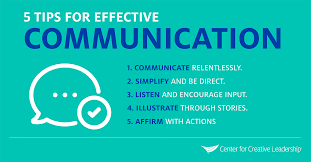
5 tips for effective communication

Communication is an indispensable ingredient in all forms of personal and professional engagement and is a major discipline in its own right. Effective communication skills can help to ensure that our interactions with others are clear, positive and balanced. We can use communication strategies to reassure the people we are communicating with, to form alliances with them, and to create a positive communication environment. When we’re communicating with others, we need to ensure that we connect with them. We need to choose approaches specific to their communication needs so that they feel understood, listened to, and heard.

In harnessing our dispute resolution agency (see yesterday’s Blog) we have four broad responsibilities in our communications with others:

  1. We need to be effective communicators and adopt appropriate communication practices. Words are our main, but not only, tool.
  2. We need to work hard to ensure our communications with others are as accurate, explicit, comprehensible, constructive and appropriate as possible.
  3. We need to keep learning and improving our effective communication techniques.
  4. We need to foster environments which encourage effective communication.

sender receiver image 2

The beginners’ guide to communication would say simply that human communication involves (at least) two parties: a ‘sender’ and a ‘receiver’. The sender wishes to transmit a message to the receiver and sends it by way of verbal, vocal and visual messages. The receiver takes delivery of the message and the communication is complete. Unfortunately, it is not quite as simple as beginners’ guides are prone to suggest.

The passing of a message from one person to another is not as mechanical as the passing of a baton from one relay runner to the next. This is because both the sender and receiver are affected in the communication process by a range of factors: the social context of the communication, the respective emotions, cultural expectations, past experiences and assumptions, biases and prejudices. These are all subjective and highly variable factors which can differ significantly from one person to another — even when people are from the same cultural background.

This means that the sender ‘encodes’ his or her message; that is, the words, the vocal effects and the body language used are based on their perceptions of the world. Likewise, the receiver ‘decodes’ the message in terms of their perceptions, biases and frames of reference. Because of the subjective nature of both the encoding and decoding functions, there may be substantial differences between what the sender thought they were communicating and what the receiver thought was being communicated. In other words, the intention of the message being communicated does not always match its impact on the receiver. Hence the need to move beyond basic assumptions about the simplicity of communication to more sophisticated understandings.

In reality, communication seldom consists of a single message from one person to another. In families, workplaces and communities it often involves a series of ongoing messages among three or more people. This makes things both easier and more complex at the same time. It is easier because the receiver of a message usually responds to it and this can help to clarify perceptions. Receivers can give feedback to the sender through verbal, vocal or visual means. Thus, the receiver may ask a clarifying question which gives the sender the opportunity to resend the message more clearly, more emphatically or more accurately than before. Moreover, the sender may detect from the receiver’s body language that the message has not been understood, or has been misunderstood, and instantly clarify it. In larger communicating groups – such as workplace meetings or family conversations – one receiver can give feedback that benefits the effectiveness of the communication for all.

In situations of stress, if the communication environment is tense and the communication approach is fast and furious, then the encoding of each person may be clumsy and the decoding may be defective. In such circumstances, if a receiver is intently focused on the words being used by the sender, they might pick up on the factual information in the message but overlook the attitudes and feelings accompanying it. Likewise, where a sender uses aggressive language or body language this may cause the receiver to overlook important factual information being conveyed.

In an attempt to systemise the complexity of interpersonal communication, Schulz von Thun (2010) has identified four meanings to every message.

  1. The factual meaning: what do the words in the message convey in terms of their factual, objective and rational meaning?
  2. The self-disclosure meaning: what does the message reveal about the sender himself or herself?
  3. The relationship meaning: what does the message say about how the sender views the receiver and the relationship between them?
  4. The appeal or request: what does the sender want the receiver to do?

Von Thun Example

In conflict and dispute situations it is common for receivers of a communication to hear only one aspect of the message (generally one that fuels the conflict) and partially or completely miss the other meanings. An awareness of the four-message model can help us to remember to look for the meanings that may have gone unnoticed by a receiver. Yet another layer of complexity is added to communication dynamics by the fact that senders are not always explicit about all four meanings in their messages.

If as receivers and senders of communication we can aim for as much clarity in the transmission of our meanings and understandings as possible, we will be communicating more effectively. And this in turn will ensure that we are doing what we can to positively prevent, manage and resolve disputes as we navigate lockdown in our families, workplaces and communities.

In the Blogs ahead we’ll be focussing on some of the more detailed elements of effective communication: for example, the importance of the words we choose, body language and ways to harness it as an effective non-verbal form of communication, helpful approaches to vocal communication, the critical nature of effective listening and how to listen actively and effectively, the importance of acknowledgement, how to ask questions appropriately, and the communication tools of summarising and reframing and how to do them well.

Tomorrow’s Blog: Choosing our words wisely

Acknowledgements:

Parts of this post were adapted or reproduced from Laurence Boulle and Nadja Alexander, Mediation Skills and Techniques (LexisNexis, 3rd ed, 2020) paras 6.15-6.22 with the authors’ kind permission. Both Laurence and Nadja are esteemed members of the ADR Research Network, and have long been leaders in the Australian and international dispute resolution communities.

F Schulz von Thun, Miteinander Reden 1 (Rowohlt, 2010)

5 tips for effective communication image: The Centre for Creative Leadership

The von Thun example from daily life: Madame Marinita Schumacher

Sender/receiver image: Health Service Management


Lockdown Dispute Resolution 101 #2: Dispute resolution agency

close up of gear shift over black background

Photo by Pixabay on Pexels.com

In the current climate there are many things we can’t control. It can feel a little overwhelming. However, there are many things that do still remain within our personal individual control. Included in that list are our approaches to communicating with others, and acting intentionally so as to positively prevent, manage or resolve disputes.

In order for us to develop a strong foundation for using dispute resolution skills purposefully in our daily lives, it’s important that we recognise that we have the ability to decide to act intentionally as agents of positive engagement with each other.

Things within my control:

  • My choices.
  • My words.
  • My attitude.
  • My effort.
  • My actions.
  • My beliefs.
  • My opinions.
  • My responses.
  • My thoughts.
  • My boundaries.
  • My own social distancing.
  • My engagement with the news and social media.

Agency involves taking individual control over a situation. People with agency feel that they are able to act independently and have the capacity to make their own free choices and decisions. When a person has agency, they are able to act on their own will and of their own accord.

Words associated with the notion of agency include: individual control; intentional action; empowerment; and free choice.

There are always external influences on us, and on our actions, as human beings. However, when we have a sense of agency, we feel as though we are able to manage those influences (as well as issues that arise in relation to, or as a result of, them). Having agency means we have a sense of control over our life: we have choices, a capacity to act and decision-making power for ourselves.

Our agency in relationships is enacted in our choices about how we behave and communicate. Relational agency concerns how we choose to interact with and impact on other people. We can choose to make those interactions positive and constructive even when faced with stresses, worries and challenges. But this requires effort, energy and intentionality. An investment in our dispute resolution agency is worth the effort, however, and can only have positive and empowering consequences.

Now is the time for all of us to harness a sense of agency in relation to how we choose to communicate with others, and in terms of how we navigate the stressors and challenges of living and working in lockdown. Effective communication – to be discussed in Blogs in the coming days – is one important key to the prevention, management and resolution of disputes. Some basic aspects of resilience building and self-management are another essential enabler of preventing, managing and resolving disputes.  And of course, equipping ourselves with specific negotiation and dispute resolution skills is critical. We’ll be blogging about all these things across the Lockdown Dispute Resolution 101 series.

In accepting our own agency in relation to the quality of our relationships with others, we are accepting that we have the power to make positive choices about how we communicate and interact. It could even be said that in our current global situation we have a responsibility to do so.

Tomorrow’s Blog: Effective communication – the basics and the complexities.

Some scholarly resources on agency: Mustafa Emirbayer and Ann Mische, ‘What Is Agency?’ (1998) 103(4) American Journal of Sociology 962; Jack Martin, Jeff Sugarman and Janice Thompson, Psychology and the Question of Agency (SUNY Press, 2003); Albert Bandura, ‘Toward a Psychology of Human Agency’ (2006) 1(2) Perspectives on Psychological Science 164; Bryan W Sokol et al, ‘The Development of Agency’ in Richard M Lerner (ed), Handbook of Child Psychology and Developmental Science (Wiley, 7th ed, 2015) 284.

Acknowledgement: Some of the content of this Blog was adapted from Rachael Field, James Duffy and Anna Huggins, Lawyering and Positive Professional Identities (LexisNexis, 2nd ed, 2020)

Evaluative mediation in Family Law financial cases – observations and distinctions. By Paul Lewis, Partner Gadens

This post is by Paul Lewis – an expert family lawyer and leading mediator who is a partner of Gadens in Sydney. Paul has been nominated for the Mediator of the Year category of the 2020 Australasian Law Awards.

The classical model of mediation is ”facilitative mediation” during which the mediator’s primary function is to encourage meaningful and constructive dialogue between the parties, without providing any comment or opinion on the substance of the dispute or providing suggestions or ”options” to assist the resolution of the dispute.

The requirement that a facilitative mediator refrain from ”entering the fray” springs from one of the underlying foundations of facilitative mediation, namely, the concept of ”self-determination” and the related concept of ”party autonomy”. It is worth noting that the advent of facilitative mediation arose through the germination and growth of ”community mediation” in the United States of America from the 1960s through to the 1970’s. Community mediation settled in Australia with the passage of the Community Justice Centres Act 1983 (NSW), the legislation explicitly adopting the principles of facilitative mediation.

References to evaluative mediation, sometimes called ”advisory mediation”, arose after the formal justice system began to co-opt mediation in to its prescriptive rules and case management procedures. This happened in Australia from the early 1990’s onwards and occurred earlier in North America. Under the model of evaluative mediation, the mediator is permitted to provide his or her views and professional observations about the content of the dispute on the basis that the mediator is a ”subject matter expert” in relation to the dispute.

The NADRAC glossary of dispute resolution terms (first published in 1997 and updated in 2012) describes evaluative mediation as follows:

”Evaluative mediation is a term used to describe processes where a mediator, as well as facilitating negotiation between the parties, also evaluates the merits of the dispute and provides suggestions as to its resolution. (See also combined processes.) Note: evaluative mediation may be seen as a contradiction in terms since it is inconsistent with the definition of mediation provided in this glossary.”

Standard objections to the evaluative model of mediation in civil cases include the following:

  • that the introduction of an evaluative component by the mediator may cruel, or at least stifle dialogue between the parties;
  • that the selection of an evaluative mediation model may see the parties, or one of them, adopt a passive stance in order to find out what an independent mediator thinks of the dispute, thereby defeating the intrinsic value of the mediation as an opportunity to reach a negotiated agreement; and
  • that a professional viewpoint or opinion expressed by a mediator will merely be one view among a range of possible views, and therefore not helpful in moving the parties towards agreement.

In the context of the evaluative mediation of financial cases under the Family Law Act 1975 (”the Act”), the above objections are, in practice, overstated. The law in relation to property settlements under the Act is described, in jurisprudential terms, as a ”discretionary property regime” in contrast to a ”community property regime” seen in overseas jurisdictions such as New Zealand, South Africa, California and other states of the United States of America. Similarly, the determination of spousal maintenance cases under the Act involves the exercise of discretion by the Court within the parameters of the legislative framework and statutory criteria, and the associated caselaw.

Systems of family law based on discretion, rather than fixed rules, are rationalised on the basis that they provide individualised justice and better justice in the vast majority of cases. The disadvantage of discretionary regimes is said to be unpredictability, and there is merit in that assessment. Community property regimes provide greater certainty or predictability but at the expense of just outcomes in many cases (being equivalent to a ”one size fits all” approach.)

In a discretionary family law system, mediation calls for an evaluative model, at least in financial cases. Many parties, even when they are legally represented, have firmly held views about ”fairness”, such views being highly subjective and often contrary to well-established legal principles in the vast majority of cases. It is advantageous to have a subject matter expert as the mediator in such financial cases, and for the mediator to be able to inject an evaluative component during the mediation if it might resolve an impasse, correct a misstatement of the law or bridge the gap between the parties’ respective bargaining positions by the identification of unexpressed needs and generation of additional options .

A good evaluative mediator is judicious with the expression of his or her evaluative opinion or input during the mediation. Indeed, the reason that evaluative mediation is often described as a ”blended process” in the mediation literature is because a good evaluative mediator will approach the mediation in the early stages as a facilitative mediation. An evaluative mediator hangs back and checks out whether the parties may be able to reach a negotiated agreement ”under their own steam.” The latter observations are critical in deflecting the criticisms inherent in the typical objections to the evaluative mediation process, as stated above.

It is important that the process of evaluative mediation is explained to parties during their preliminary conferences (separate preliminary conferences are the norm in family law cases, not just parenting cases). Further, the nature of the process must be clearly identified and described in the agreement to mediate.

At a micro level, the ways in which the mediator introduces an evaluative component must always strive to meet the other process requirements in mediation of impartiality and procedural fairness. Mediation clients readily understand the concept of the evaluative mediator having the liberty or discretion to inject his or her viewpoint during the mediation if the mediator believes ”that doing so may assist the parties reach a resolution of the matter.”

Paul A. Lewis Gadens, Sydney ©

Introduction to Lockdown Dispute Resolution 101

Welcome to the Australasian Dispute Resolution Research Network’s COVID-19 crisis inspired series on basic skills and strategies for effective communication, negotiation and dispute resolution practices. The series is written by dispute resolution experts who are members of the Network and is designed for this difficult and challenging time of worldwide lockdown.

Covid-19 | New Scientist

It is clear that relationships are being tested as a result of the social isolation strategies currently in place in response to COVID-19. As we spend more time confined in our homes, and work remotely from our colleagues, it can be a struggle to maintain civil communications – it’s a perfect environment for nerves to become frayed and for disputes and conflict to develop. The reliable advice seems to be that we are really only at the beginning of trying to overcome the virus – so now is an absolutely critical time to equip ourselves with positive strategies to support relationships – personal relationships, work relationships and relationships with others we encounter when we get to go outside.

There are many stories of acts of kindness and generosity in families and the community. See for example. However, the significant stressors of living through this pandemic cannot be denied. A man in Woolworths the other day pushed rudely in front of me and then turned around and said abruptly ‘It’s all for one these days’. I think he actually meant ‘It’s every person for themselves’ (?!). In any event his actions demonstrated that he was losing his capacity to be civil and to cope.

1993 Skybox The Three Musketeers All For One, And One For All! #73 ...

The ADR Research Network is a network of leading dispute resolution scholars who collaborate to foster, nurture and enrich high quality dispute resolution research and scholarship. The Network is inclusive and forward-looking, highly collegial and supportive. In ‘these troubling times’ we want to share some of our expertise in support of individual, family, workplace and community harmony and peace in lockdown.

Starting today we will be positing a new Blog every day for the rest of April exploring ways in which we can all prevent disputes from arising, as well as manage and resolve disputes when they do arise. We’ll be covering topics such as effective communication strategies (for example, effective listening, appropriate ways to ask questions and the benefits of using tools such as summarising and reframing in communications), mental health strategies relevant to dispute resolution practice (such as reflective practice, resilience-building and self-management), conflict management approaches (conflict analysis and de-escalation) and dispute resolution practices with a focus on negotiation tips and tricks. We’ll be highlighting some of the great work of Network members and pointing you towards additional useful resources.

We always welcome your comments and feedback. Please be in touch with us via the comments function on the Blog.

Tomorrow’s Blog: Dispute resolution agency – it’s our responsibility at this time to take agency and build our communication, negotiation and dispute resolution skills.

Acknowledgements:

Coronavirus image: https://www.newscientist.com/term/covid-19/

All for one and one for all image: https://kronozio.com/card/c76070ce-7059-46e2-81e1-d1067b228cbb/1993-Skybox-The-Three-Musketeers-All-For-One-And-One-For-All–73

ADRRN: Lockdown Dispute Resolution 101

Image may contain: textThe Australasian Dispute Resolution Research Network brings together leading dispute resolution scholars and provides a collaborative environment to foster, nurture and enrich high quality DR research and scholarship. The Network is inclusive and forward-looking. 

In this time of crisis, the Network will use our April Blog to support societal, family and individual well-being during lockdown. Starting on Monday April 6th we will be offering daily Blogs entitled Lockdown Dispute Resolution 101. The Blogs will draw on the extensive scholarship and expertise of our Network members, offering DR tips and strategies for effective communication, negotiation and the resolution of disputes while in lockdown.

Watch this space!

A positive professional ideology for lawyers: Fidelity to the good of dispute resolution (DR)

s-l300A positive professional ideology for legal DR practice should incorporate a genuine fidelity to the good of DR. This ‘good’ derives from the values and goals of DR that are firmly situated within the framework of the rule of law in Australia’s Western liberal democracy. Core DR values include justice, party autonomy and community. Lawyers practising DR need to be professionally committed to working to realise these values across the matrix of DR processes, as they constitute an anchor of belief and perspective, and represent the grounding positive contribution that lawyers as DR practitioners make to society. DR values should influence professional lawyering and decision-making, guiding judgments as to what is acceptable and ethical. DR process goals — procedural and substantive justice, impartiality, self-determination and participation, and access to justice — represent the procedural objectives for putting such values into practice. Together DR values and goals provide the foundations of DR as a societal ‘good’, and form an ethical, just foundation for a positive professional ideology for lawyers.

Parties who seek the services of DR legal practitioners are almost always in a position where they are struggling to manage or resolve their disputes themselves. This is why they need access to legal DR expertise. They find themselves without the necessary knowledge, skills and attitudes to achieve effective dispute resolution, or conflict management, on their own. Being in dispute or conflict is often a difficult, stressful and disheartening time for people. Through a fidelity to the good of DR, lawyers not only contribute constructively to society but they can also achieve positive interpersonal and individual change for their clients. This positive impact has the potential to extend to healing, wholeness, harmony and optimal human functioning.

It is difficult to measure or quantify the exact actual benefit of DR practice for societal harmony, for legal certainty, for the quality of business and personal relationships, and for the well-being of citizens. It is nonetheless our contention that lawyers practising DR are, by putting the values and goals of DR into action, contributing to and sustaining, an inherent public good.

These thoughts have been adapted from Chapter 13 of Laurence Boulle and Rachael Field, Australian Dispute Resolution: Law and Practice (Lexis Nexis, 2017). We welcome your responses to them.

Laurence Boulle and Rachael Field

Acknowledgement of image: https://www.google.com.au/search?q=images+for+fidelity&rlz=1C1CHZL_enAU769AU769&tbm=isch&tbo=u&source=univ&sa=X&ved=2ahUKEwjF3sen79rdAhXY7WEKHdGNB5gQ7Al6BAgAEA0&biw=853&bih=386#imgdii=MAkGkWr9xEeZIM:&imgrc=EEsqx8d9gM18PM:


30 Years of the Australasian Dispute Resolution Journal!

IN 2019 ADRJ WILL CELEBRATE 30 YEARS OF PUBLISHING ADR ARTICLES

The Australasian Dispute Resolution Journal, published by Thomson Reuters (then Law Book Co), was a pioneer in venturing into the field of publishing academic articles relating to mediation. This came about through the efforts of the late Micheline Dewdney and Ruth Charlton, supported by ADRA and encouraged by the late Sir Laurence Street.

Sir Laurence contributed the first article for publication in February 1990 and remained till his death the Chief Editorial Consultant of the Journal. That article, still fresh and relevant today, is to be republished in Part 2 of Volume 28 as a tribute to his vast contribution to ADR.

Innovation and research continues to expand our knowledge in the broad field of dispute resolution. Thus the Journal would welcome the receipt of unpublished topical articles (up to 5000 words) and book reviews (up to 1000 words). All articles are peer reviewed.

Contributions should be emailed to the Thomson Reuters Editor at lta.adrj@thomsonreuters.com

Posted on behalf of Ruth Charlton

ADRJ Editor

A Tribute to Mediation’s Grassroots


sps_1473 staff on call1While mediation has become a generic and ubiquitous brand it is worth recalling its 1980s Australian genesis in community justice programs throughout the country. Despite the contemporary preponderance of mediation within courts, tribunals, commissions and other legal institutions or legal contexts, the community justice programs have continued in less prominent forms and have increased their scope and services over time. While it is tempting to consider multiple future adaptions of mediation through replacement and disruptive technology and in many different dispute areas, it is appropriate to recognise the anchoring effect of its earliest community manifestations. While disruption (or, more positively, transformation) is a vogue concept of the age there is also a value in those who maintain the practice of traditional forms of mediation. While welcoming the inn


This is not, however, to pine wistfully for a return to mediation’s original intent and identity, as is sometimes heard at conferences. The system now has multiple intents and numerous identities; its future must be considered in the light of the present, and we reject an over-nostalgic view of mediation’s past. As we said in Australian Dispute Resolution, it is important to engage with ‘the discontinuities in the history of DR in Australia to help us learn from the past, avoid reinventing the wheel, remind us of the ideas and approaches that have been jettisoned, and appreciate why they have been discontinued or replaced’.

sps_1330 mediation scene

We hope you have enjoyed the series of posts from Chapter 12 of our new book Mediation in Australia (LexisNexis, 2018).

Laurence Boulle and Rachael Field

The future of legal practice and legal education: Mediation

Our series of posts from Chapter 12 of Laurence Boulle and Rachael Field, Mediation in Australia (LexisNexis, 2018) is almost at an end. This is our penultimate post:

The institutionalisation of mediation (discussed in Chapter 8 of Mediation in Australia is so central to the future of legal practice that (as we argued at some length in our other work Australian Dispute Resolution: Law and Practice (LexisNexis, 2017)) ‘it should also be central to every law graduate’s experience of legal education’. The recent nod to this position is the inclusion of DR in the core compulsory subject ‘Civil Procedure’ in the Priestley 11 subjects (the core compulsory subjects required for eligibility for admission to legal practice in Australia). Some in the mediation community, including some of our most esteemed colleagues in the ADR Research Network, see this as a positive and sufficient development. We agree that it is a positive development. However, we respectfully consider the approach to be insufficient.

Gavel,Law theme, mallet of judge

In 2012 a national study by NADRAC found that only eight law schools at that time included in their curriculum a mandatory subject in which 50 per cent or more of the teaching focused on DR. The NADRAC Report made the point that ‘the amount of ADR teaching that currently occurs in the majority of Australian law schools is not sufficient in light of the increasing role that lawyers will play in advising clients about and assisting them in ADR processes’. At the time of writing, NADRAC’s successor — the Australian Dispute Resolution Advisory Council — is conducting a follow-up project led by Dr Kathy Douglas of RMIT. This new project will provide current, accurate and up-to-date nation-wide data about the presence of DR subjects in Australian law schools.Another chess board

In our view, until that data reflects that every law school graduate has experienced a dedicated DR subject in their degree (including content on mediation theory and practice), the current Australian legal education system will be failing to adequately prepare law students to enter legal practice with the necessary knowledge, skills, attitudes and ethical attributes to enable them to succeed and thrive within and outside the profession in the 21st century. As long as DR is taught to future lawyers predominantly through elective subjects, it will be only those law graduates who have the acumen to choose DR as an elective who graduate with foundational levels of DR competence. The legal academy must support the work-readiness and future employability of students through DR education, if the legal profession is to have the capacity to manage positively the diverse challenges it faces into the future.

We welcome your comments and responses to these thoughts.

Laurence Boulle and Rachael Field

Evaluating mediation anew

smiley face optionsThe new conceptualisation of mediation discussed in the previous post, inclusive of diverse practice, responsive, relational and ethically focused on the achievement of party self-determination in specific party contexts, will require ongoing evaluation and measurement of the extent to which the system does or does not live up to this recalibrated identity. Evaluation and measurement, both in absolute terms, and in comparison with other practices, will be critical for mediation’s future legitimacy and credibility, as it has been to the establishment of mediation’s current standing and acceptability in legal and social contexts.

However, the methods and approaches to how we evaluate mediation into the future will need to move past approaches with historical emphases on documenting settlement rates and satisfying statistical masters on time and resource factors. The profundity of methods for assessing mediation to date have been hampered by confidentiality, and by the confirmation bias associated with the need to establish mediation’s effectiveness and efficiency. Continued research is important into the future but will need to be more rigorous and sophisticated — to gauge the value of mediation in general as well as the efficacy of specific skills and interventions from the KSAE (the knowledge, skills, attitudes and ethics discussed previously).

More nuanced qualitative and interdisciplinary methodologies that explain the phenomenon of mediation more effectively will be necessary, such as narrative and phenomenographical methods, including approaches such as observation-based case studies, clinical reflective mediator practice, and individual anecdotes of existential experiences revealed through interviews and focus groups. Research design will include more variables and evaluation systems being built into the foundations of mediation programs to ensure more systematic collection of hard data and soft perceptions. Researchers and policy-makers will interrogate the problem of ‘what do we need to know about mediation’ more closely in order to design appropriate methods to extract the most useful and valid data. Researchers will also need to overcome confidentiality issues, look more critically at the quality of parties’ experiences, expose the shortcomings of mediation, evidence its diverse benefits and question the sustainability and justice of outcomes. Increased rigour in the measurement and evaluation of mediation and its bundle of attributes will better assist theory to meet practice and better inform policy development and the further institutionalisation of mediation.stock-photo-note-with-time-to-evaluate-on-the-wooden-background-534770503

In particular, we suggest that a closer evaluative eye is required on the operation of evaluative mediation, and the ability of evaluative mediators to achieve party self-determination ethically. It will be necessary to use research to ensure that if evaluative mediation becomes the normative approach, as well it might, that quality control and ethical frameworks exist to prevent rogue mediators making de facto determinations.

‘Forever learning’ is the potential mission statement of the mediation community into the future, as there is still much to be measured in, and understood about, mediation practice. Limitations in the ‘search for mediation knowledge’ will need to be overcome, and a deeper understanding of mediation practice will need to be revealed through a greater array of approaches and sources. Research efforts of greater depth and rigour will inform the future development of mediation’s bundle of attributes and micro-skills, as well as contribute to stronger awareness of the various pressures influencing and impacting the system. Understanding mediation is a long-term project for the mediation movement. Ultimately this understanding will contribute to mediation connecting more closely with the legal, social, economic and political contexts referred to in our previous posts.

images

We welcome your comments and responses to these thoughts.

Laurence Boulle and Rachael Field

Acknowledgement of images: https://www.google.com.au/search?q=images+for+evaluation&rlz=1C1CHZL_enAU769AU769&tbm=isch&tbo=u&source=univ&sa=X&ved=2ahUKEwiSpP3ekpvdAhWJdt4KHR_fDGwQsAR6BAgGEAE&biw=853&bih=357; https://www.shutterstock.com/search/evaluation?kw=&gclid=CjwKCAjw8ajcBRBSEiwAsSky_aHUdL8UeqEvanh81SIPbwLQOdKVIRBA7b_9no0Drcgc8SAZuTTy2BoCOfoQAvD_BwE&gclsrc=aw.ds&dclid=CJCt2r-Wm90CFZYxKgodIl4Enw