The ADR Research Network is a group of Australian dispute resolution academics. Blogging & tweeting high quality, critical dispute resolution scholarship.
I am pleased to announce the details of the 14th Australian Dispute Resolution Research Network roundtable. It will be held at RMIT University on the 18th and 19th November 2026 at our city campus. Thanks again for the hard work of the organizers for the 13th roundtable which was a big success!
RMIT last hosted our community of ADR scholars in 2014, and after many years, I am so pleased to have the opportunity to again host ADR researchers. In 2012, Professor Rachael Field and I co-organized an important ADR forum at RMIT where we welcomed presentations relating to ADR in Legal Education and Promoting Student Well-Being (see attached agenda). While of course supporting all current ADR research for our 2026 gathering, I would like to devote a section of the roundtable (an afternoon) to the evolving story of ADR in Legal Education. Current links between ADR and Student Well-Being would also be valuable to explore.
Please book a placeholder in your diaries for our annual event.
Negotiation has always been a practical skill best learned by doing. For decades, negotiation education across law, business, and the social sciences has relied on roleplays and debriefing as its signature pedagogy. These activities remain powerful because they immerse learners in conflict scenarios, expose them to different perspectives, and create space for reflection, a point long recognised in negotiation scholarship on learning through experience and transfer of skills.
But the context in which negotiation is practised is changing.
Today, many negotiations happen online, through digital platforms, hybrid meetings, or technology-mediated environments. At the same time, universities are grappling with larger cohorts, hybrid delivery, and growing expectations that learning experiences be authentic, inclusive, and scalable. Against this backdrop, we have been exploring a simple question: can immersive technologies such as Virtual Reality (VR) meaningfully extend negotiation pedagogy without replacing its core strengths?
This blog reflects on our experience using a VR negotiation simulation in higher education, and what it might offer educators working in dispute resolution, mediation, and negotiation more broadly.
Why revisit negotiation pedagogy now?
Negotiation education has long been anchored in experiential learning. Whether in law schools, business programs, or professional development courses, learners typically practise through roleplays followed by structured debriefing. This approach is effective because negotiation is not just about tactics or frameworks; it is about judgement, emotional intelligence, communication, and adaptability, which are capabilities that develop through cycles of action and reflection, as articulated in David Kolb’s experiential learning theory.
However, traditional roleplays also have limitations:
They are labour-intensive to run well
Quality depends heavily on participant engagement
Experiences vary widely between groups
Opportunities for repetition and skill mastery are limited
Accessibility and equity can be uneven
At the same time, negotiation itself is evolving. Online dispute resolution (ODR), legal technology, and AI-mediated communication are increasingly part of professional practice. Students need opportunities to practise negotiation in environments that resemble how difficult conversations now occur in real workplaces.
This combination of pedagogical pressure and professional change prompted us to explore immersive learning as a complement to traditional approaches.
What does VR add to negotiation learning?
Virtual Reality is often associated with novelty, but its real value in negotiation education lies elsewhere. When designed carefully, VR can support three things that are difficult to achieve at scale with traditional roleplays: presence, consistency, and repetition.
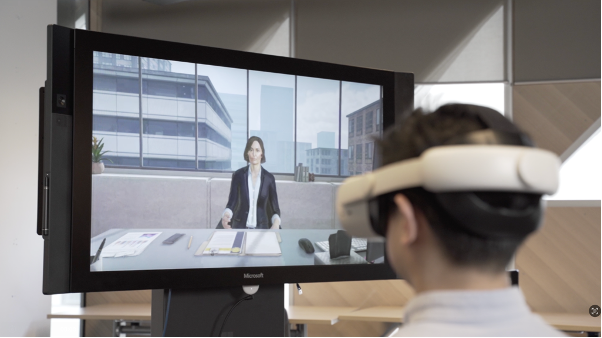
In a VR negotiation simulation, learners step into a scenario where they are physically and emotionally “present” in the conversation. They sit across the table from a virtual counterpart who responds to their words, tone, and decisions. Facial expressions, pauses, and emotional cues all matter. Research on immersive learning suggests that this sense of presence and emotional engagement can be particularly valuable for developing interpersonal and professional skills
Equally important is consistency. Every learner encounters the same scenario, the same counterpart, and the same decision points. This allows educators to design learning and assessment around a shared experience, while still allowing individual agency in how the conversation unfolds.
Finally, VR enables repetition. Learners can replay the same negotiation, try different approaches, and immediately see how alternative choices change outcomes. This aligns closely with how complex skills are developed in practice: through cycles of action, feedback, and reflection.
The negotiation scenario
In our case, the VR simulation places learners in the role of a technology consultant meeting with a senior executive who is sceptical about a proposed organisational change. The executive is concerned about employee resistance, workload, and unintended consequences. The learner’s task is not to “win” the negotiation, but to work collaboratively toward a solution that addresses shared interests.
This framing is deliberate. The simulation is grounded in integrative negotiation, where the aim is to create value rather than claim it. Throughout the conversation, learners make choices about how to respond: whether to acknowledge concerns, ask clarifying questions, provide evidence, or push too quickly for agreement. Each choice influences the direction of the conversation and the executive’s reactions.
Figure 1: VR Experience
What makes this powerful is that learners experience the emotional consequences of their decisions. A dismissive response leads to defensiveness. A well-timed question builds trust. A failure to listen can derail the conversation entirely. These dynamics are difficult to convey through lectures alone, but they become immediately visible in an immersive setting.
Reflection remains central
One concern often raised about technology-enhanced learning is that it risks prioritising experience over understanding. We would argue the opposite: without reflection, VR is just a simulation; with reflection, it becomes learning.
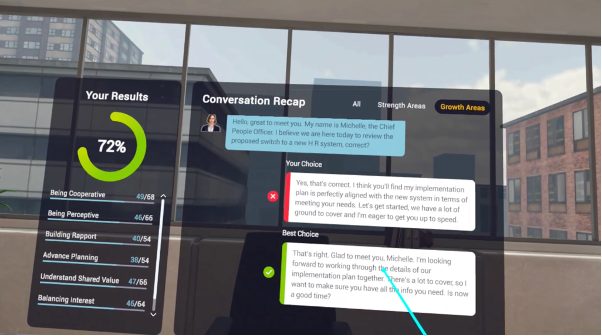
Figure 2: Conversation Recap with Evaluation Points for Learners
In our design, the VR experience is always paired with structured reflection. After completing the simulation, learners receive detailed feedback, including a transcript of their conversation and indicators of strengths and areas for growth. They are then asked to analyse their performance, connect it to negotiation theory, and articulate how they would approach the conversation differently in the future.
This reflective component does several important things:
It slows down the experience and turns action into insight
It connects practice back to theory
It legitimises “failure” as a learning opportunity
It encourages learners to think critically about their own habits and assumptions
In many cases, students who struggled in the simulation produced the most thoughtful reflections. The technology does not replace judgement; it exposes it.
What did students experience?
Learner responses to the VR negotiation have been strikingly consistent. Many describe feeling nervous before starting, as they would before a real workplace conversation. Others note that the executive’s reactions felt “uncomfortably real”. These emotional responses are precisely what make the experience valuable.
Students frequently highlight three benefits:
Confidence building – practising difficult conversations in a safe environment reduces anxiety about real-world negotiations
Insight into their own behaviour – seeing how small choices affect outcomes is eye-opening
Opportunity to improve – replaying the scenario allows experimentation without real-world consequences
Importantly, accessibility has also been a design priority. The simulation can be completed using a VR headset or on a standard computer, ensuring that no learner is excluded due to equipment or physical constraints.
Lessons for ADR and negotiation educators
Our experience suggests that VR is not a replacement for traditional negotiation pedagogy, but a complement. Roleplays, clinics, and live simulations remain essential, particularly for developing interpersonal sensitivity and peer learning. However, immersive simulations can extend what is possible, especially where scale, consistency, or access are challenges.
Several lessons stand out:
Pedagogy must lead technology. VR works best when grounded in clear learning objectives and theory.
Reflection is non-negotiable. Immersion without reflection limits learning.
Blended approaches are powerful. Combining VR with roleplays, discussion, and debriefing enriches all elements.
Staff capability matters. Educators need support to design, facilitate, and interpret immersive learning effectively.
Looking ahead
As negotiation increasingly takes place in digital and hybrid environments, it makes sense that negotiation education evolves alongside it. Immersive learning offers a way to rehearse difficult conversations, develop emotional intelligence, and build professional confidence in settings that feel authentic to contemporary practice.
For ADR educators, the challenge is not whether to adopt new technologies, but how to integrate them thoughtfully, in ways that preserve the reflective, human-centred core of the field.
Virtual Reality is not a silver bullet. But when used carefully, it can open new possibilities for learning how to negotiate well, ethically, and with empathy, skills that matter now more than ever.
Authors Biography
Dr. Alvedi Sabani is a Senior Lecturer and Program Manager of the Bachelor of Commerce at the College of Business and Law (CoBL), RMIT University, and the EdTech Project Lead. His research interests are broad and interdisciplinary, spanning artificial intelligence, blockchain, cloud computing, digital transformation, electronic government, gamification, innovative pedagogy, and inclusive technology adoption. As a co-founder of the RMIT GamifiED Hub, Dr. Sabani has been instrumental in driving scholarly innovation in learning and teaching through gamification. This initiative has produced cutting-edge resources that enhance the student learning experience, aligning closely with RMIT’s strategic emphasis on Active, Authentic, and Applied learning.
Professor Kathy Douglas leads the College of Business and Law learning, teaching and quality portfolio including governance, student satisfaction, program development and innovation in pedagogy. She is an experienced Executive leader who has focused on developing transformative educational experiences and impactful research. She was a member of academic board for several years and in 2020 chaired the Higher Education Committee. Previously, Kathy was the Dean of the Graduate School of Business and Law at RMIT (2018-2022). She led a high performing school focused on industry engaged learning and research. Kathy was awarded the Vice Chancellor’s leadership award for Imagination in 2020 for her innovative practices. Kathy has a passion for impactful leadership that benefits students, staff and the communities that RMIT engages with, including industry. In 2025 she was awarded the Francis Ormond Award for Innovation at RMIT.
Legal education in Australia increasingly acknowledges the need to teach about technology and law schools have included elective and core curriculum dealing with such issues (Judy Gutman and M Riddle, ‘ADR in Legal Education: Learning by Doing’ (2012) 23 Australasian Dispute Resolution Journal194; Kathy Douglas, Josephine Lang and Meg Colasante, ‘The Challenges of Blended Learning Using a Media Annotation Tool’ (2014) 11(2) Journal of University Teaching and Learning Practice 1, 3-4). There are now subjects that provide the opportunity to build computer apps (applications) to solve legal problems and core courses include information on issues such as smart contracts and blockchain. For example, FineFixer, an application devised to help the public implement strategies to deal with fines, was initially developed by RMIT University students in an elective course and was later made available through the Moonee Valley Legal Service, funded by a grant from the Victoria Law Foundation. Higher education is evolving with faculty increasingly engaged ‘with options and technologies, including collaboration tools, video and media’ where video, as a visualisation media, taps into ‘the brain’s inherent ability to rapidly process visual information, identify patterns, and sense order in complex situations.’ (New Media Consortium and EDUCAUSE, NMC Horizon Report: 2018 Higher Education Edition (2018) 11 March 2019, 35) ADR teaching also needs to adopt the latest technology in teaching about areas such as negotiation, mediation, arbitration and collaborative law.
Teachers of mediation have often relied on videos to demonstrate mediation skills to prepare for role-plays. However, merely watching a video may not be as effective as also engaging with peers. The watching of video, combined with a subsequent online discussion of mediation skills, can enhance student learning as students become active rather than passive learners. After watching videos and discussing the legal skills online, students can later be asked to demonstrate these skills in role plays. Our article in the latest edition of the Australasian Dispute Resolution Journal discusses an example of the use of video and online discussion to scaffold learning about mediation (Kathy Douglas, Tina Popa and Christina Platz, ‘Teaching Mediation Using Video and Peer Discussion: An Engaged Video Learning Model’ (2019) 29(3) Australasian Dispute Resolution Journal 182). Students watch a video of a mediation, discuss the mediator interventions online and then undertake role plays at an intensive weekend seminar. The scaffolding of student learning through watching the video and subsequent online discussion prepares students to demonstrate the mediation skills. The article concludes with a model of ADR learning with video that serves as a useful guide to implementing active video learning activities. This model can be used to make further videos such as specific contexts of mediation that is family, workplace or community mediations. The model could be used to develop videos on other ADR options such as conciliation, arbitration and collaborative law. We hope this model might assist the ADR community to use technology effectively in their teaching of ADR skills and theory.
Susan Armstrong recently posted about the value of research in family dispute resolution. She pointed out the benefits of research led practice. I also advocate this approach but am researching the context of conflict in strata title (multi-owned housing) and the best ways to deal with disputes where parties live in close proximity and share assets. My research focusses particularly on the development growth in apartment towers, medium density townhouses and master planned estates. Master planned estates often include shared assets such as a country club with pool and tennis courts. These developments are growing in inner suburbs in infill sites and in the outer suburbs where there may be large amounts of detached housing surrounded by medium density townhouses.
Conflict arising in apartment buildings, medium-density housing and master planned estates is an important issue as strata title developments become more prevalent in Australia. The research is also important as conflict can impact negatively on the experience of residents in these strata developments. In Victoria, the Owners Corporations Act 2006 (Vic) (‘OC Act’) provides for a dispute resolution scheme for conflicts arising in strata developments. A recent co-written article will appear soon in the Adelaide Law Review describing our research into dispute resolution under the OC Act, and in particular into the effectiveness of the model rules for dispute resolution provided in the associated regulations. The research, which was conducted in Victoria in 2011, gathered data from a range of key stakeholders in owners corporations, including 34 strata managers of owners corporations. This article reports on the range of conflicts experienced by the strata managers who participated in the study. Analysis of the data provided by the strata managers shows that difficulties with conflict and the model rules for dispute resolution under the OC Act were most evident in small and large developments. The participants most satisfied with the model rules were managers in medium-sized owners corporations. Whilst a majority of managers used the model rules, over a third used their own informal rules. These findings lead us to argue that there is a need for differentiated rules for dispute resolution that are dependent upon the size of the development. Additionally, we suggest that further research is needed into the informal rules applied by a significant proportion of managers to ascertain their effectiveness and to provide owners corporations with added choice in dispute resolution.
Given a recent review into the OC Act in Victoria we hope our research will asset in reform of the legislation. I am presenting on an associated issue at the Mediation Conference in September where I will explore what further research in this area might look like to engage OC residents in better dispute resolution design.
Historically most Australians have lived in detached homes. However, particularly in Melbourne and Sydney, this is changing rapidly. Australians now also live in apartments, medium density housing and master planned estates. This increase in higher density living mirrors trends worldwide, where apartment-style developments are common in countries that traditionally favoured detached housing. The greatest increase in apartments is occurring in high rise towers and many residents are finding vertical living poses some challenges, including significant levels of conflict. Apartments require joint infrastructure which may simply be lifts, foyers and stairwells or may also include joint lifestyle assets, such as swimming pools and gyms. In Victoria and New South Wales the legal entity holding the joint assets is known as an owners corporation. Individuals purchase their own apartment and have an interest in shared assets. Legislative governance arrangements require a committee of management to manage the shared assets. Generally, a property manager (owners corporation manager) is employed to manage the legal entity and assets. Conflict may arise over the management and use of shared assets and also the greater density of living including disputes over noise, pets and renters. Arguably, there is a lack of appropriate education about conflict engagement for committees and the property managers who assist in the management of owners corporations. Recently the Victorian government has announced a review of owners corporation legislation. As part of this the government is considering requiring more of property mangers in terms of education and this change may include compulsory training in conflict resolution. This may be the first step to better equipping property managers to engage with conflict. It may also help mangers to develop strategies for conflict prevention due to the building of community and the skilling of committees and residents in this area. With the widespread growth in apartments we need to ensure that conflict is not allowed to fester in vertical communities. The answer is to train property managers in skilled conflict so they can deal with disputes in a timely fashion. This will be positively impact on the many Australians who will live in apartments and other higher density developments.
2016 is promising to be an important year for presenting about research into ADR as there are a number of upcoming conferences (see previous posts for details). First there is the upcoming conference at the ACIJ at Monash University’s law premises in the city of Melbourne. This Conference on the Civil Justice system will address, along with a range of civil issues, the place of ADR in our legal system. Second, there is the National Mediation Conference in September at the Gold Coast. This biannual event is always the highlight of research for me as there is a mix of practitioners, industry bodies and researchers. I have fond memories of meeting with people from industry and later collaborating on projects sprung from conversations held at this Conference.
Later in the year is our own ADR Research Roundtable which will be held in December in Tasmania at UTAS. It promises to be another exciting venue for cutting edge research. The Roundtable in Sydney in 2015, held at UNSW, was a big success.
My paper at the conference dealt with conflict in planning. It was a work in progress paper that I received valuable feedback about. I will give you a short description of the paper and then outline the feedback to highlight the value of presenting research in ADR. As you are probably aware planners routinely deal with issues involving conflict. Planners working in development approval roles in particular are regularly engaged in situations involving people who may be upset, angry and at times aggressive. Individuals involved in planning disputes may represent powerful vested interests or hold passionate personal views, heightening emotions for a whole range of reasons.
My joint paper with Professor Robin Goodman reported on recent interviews conducted with 17 planners employed in four differing local governments in Melbourne, Australia. In these semi-structured interviews planners discussed their experience with conflicts, the adequacy of their training in areas of conflict resolution and reflected on their preparation for some of the most challenging aspects of their profession. The results confirmed the need for greater emphasis to be placed on teaching a range of personal and professional behaviours relating to conflict in planning education.
The interesting feedback that we received at the Sydney Roundtable queried whether we had realised that many of the issues relating to planners and conflict were likely caused by poor dispute resolution design. If the design was more innovative, allowing for better “voicing” of community concerns, it may be that planners would not bear the brunt of objectors and developers anger. This feedback has led us to a new fork in our research, exploring the development of innovative dispute resolution design in planning conflicts. We hope to present our new paper at the National Mediation Conference. This is one example of the value of presenting your research because the peer feedback can give that “aha” moment beloved of researchers!
Consider getting involved in presenting…..it can have some great benefits!
For all those interested in presenting about their research into Mediation!!!!
To all researchers, Academics and Research Higher Degree students in Arts, Humanities, Law, Justice, Judicial Science, Social Science, Psychology (clinical, child psychology, counselling) and other DR related fields.
The National Mediation Conference Queensland Board encourages you to present and share your work with like-minded researchers at the bi-annual National Mediation Conference 2016 which will be held from Monday, 12 – Wednesday, 14 September 2016 at the Gold Coast Convention and Exhibition Centre on the Gold Coast, Queensland. Pre-conference workshops will be held on Sunday 11th September 2016. See www.mediationconference.com.au
A specific Dispute Resolution Research Forum will be held post-conference on Thursday, 15 September 2016 at Bond University. Attendance to the DR Research Forum is included in the cost of the Conference.
The conference theme is ‘Thought, Innovation and Creativity: The Next Decade’
This is a unique opportunity to exchange ideas, results, evaluations, proposals for future research and to discuss thought, innovation and creativity in DR research area for the next decade!
Abstracts are due 15 March 2016. As in past conferences, presenters at the Research Day will not receive a speaker’s fee and will have to register for the day if they are not attending the whole conference.
Early Career Researchers along with more established researchers are encouraged to participate in presenting on their latest research.
Delegates include academics, policy makers, and practitioners across the DR spectrum, authors, and participants from the private and public sectors, agencies and organisations.
Presentations will be disseminated via the Conference website and become freely available. Additionally each presenter will be encouraged to publish their material in recognised journals such as the Australasian Dispute Resolution Journal (ADRJ), Conflict Resolution Quarterly, Australian Journal of Family Law, Family Law Review and the Arbitrator & Mediator, Resolution Institute Journal, formally the IAMA Australia Journal.
Please forward this invitation to your networks and others who may be interested to attend the Conference and or present at the Research Forum.
Opportunity to explore, time to surprise and impress
One of the original aims of the modern mediation movement was to give parties “voice” in proceedings that related to litigation. In court parties have very little opportunity to directly speak, although they may give evidence. In mediation, in the facilitative model and many other models such as the transformative model, there is the opportunity for parties to tell the story of their dispute. How easily though in court connected mediation can this opportunity be curtailed through the presence of lawyers who may not wish a client to speak. Lawyers can be all too aware of the possibility that their client may divulge information that may “harm” their argument and could impact on any later litigation. But this opportunity for voice, a key notion in the idea of procedural justice, is one of the key reasons that mediation can be a very different process than court. The opportunity to tell a story can impact on settlement and give rein to emotional dialogue that may lead to more satisfaction with the process of mediation. There are other aspects of procedural justice that are also important to mediation i.e. respectful treatment; evenhanded or “neutral” treatment (acknowledging that neutrality is a contested term); trust and fairness. All of these aspects of procedural justice have an impact on the process of mediation. The theory can be used as a framework for improved party satisfaction; mediator practice and as a rationale for the wider use of mediation in our court system. Procedural Justice needs to be researched in Australia and internationally to highlight its benefits to mediation.
i am in Bali, enjoying the sun and the mountains, temples and beaches. I am struck by the calm and graceful people and their approach to life and culture
It seems a world away from the adversarial culture of many Australian
the question is how much does culture play in dispute resolution and is there a way to change the traditional adversarial culture of many Western nations?
Many mediators have their own strategies in conflict resolution and these may depend on their personality, style and personal mediator philosophy. How mediators practice can include known communication skills, such as open questions, summarizing and reframing. Increasingly researchers are interested in the many other mediator strategies such as use of humour, improvisation and intuition. Such mediation strategies can be controversial as they don’t usually appear in mediation standards or training programs. However, these kinds of strategies may be just as effective as the traditional communication interventions. For example, whether a mediator can use humour to lighten the mood, improve rapport and open participants to new ideas. Improvisation can be used by mediator to move away from the set steps of mediation in order to be flexible and fluid to meet parties’ needs. Intuition operates in a mediation to assist the mediator to make strategic choices informed by years of experiences. All of these kinds of strategies could be said to be part of “artistry” in mediation practice… where some mediators show a more sophisticated approach to how they mediate.
As research in the mediation field matures I think researchers will increasingly be interested in unpacking how mediators with experience practice to inform both mediator education and to share skills in our community of practice.


 The Australian Dispute Resolution Research Network