
Insights from cognitive psychology: Applying priming to conflict management

This post has been written by Judith Rafferty, adapted from her Open Educational Resource (OER) Neuroscience, psychology and conflict management (2024), licensed under a Creative Commons Attribution NonCommercial 4.0 Licence by James Cook University.

Neuroscience, psychology and conflict management

In a previous post, I discussed the value of neuroscience and psychology knowledge to inform conflict management theory and practice. In this post, I discuss specific learnings gained from cognitive psychology, focusing on memory and the phenomenon of priming.

Memory in conflict management

Conflict management practitioners – these include mediators, facilitators, coaches and negotiators – and negotiating parties often need to handle complex issues and juggle multiple pieces of information during a conflict management process. For example, conflict parties frequently must remember what they said, thought and did in the past, and process new information for future decision-making. These tasks require all types of the human memory, including:

  1. sensory memory
  2. short-term memory
  3. long-term memory

In this post, I focus on long-term memory and the phenomenon of priming, due to its applicability to conflict management. Before discussing priming in more detail, let’s have a brief look at what the long-term memory comprises.

Long-term memory

The long-term memory can be categorised as explicit and implicit memory.

The explicit memory, also known as declarative memory, refers to the type of memory that a person is consciously aware of. “You know that you know the information” (Gluck et al., 2020, p. 280). It comprises both memory of facts and general knowledge (semantic memory) and memory of personal experiences (episodic memory).

The implicit memory, by contrast, refers to memory that operates without the learner being consciously aware of it. Implicit memory is formed by:

  • procedural memory
  • priming
  • learning through classical conditioning
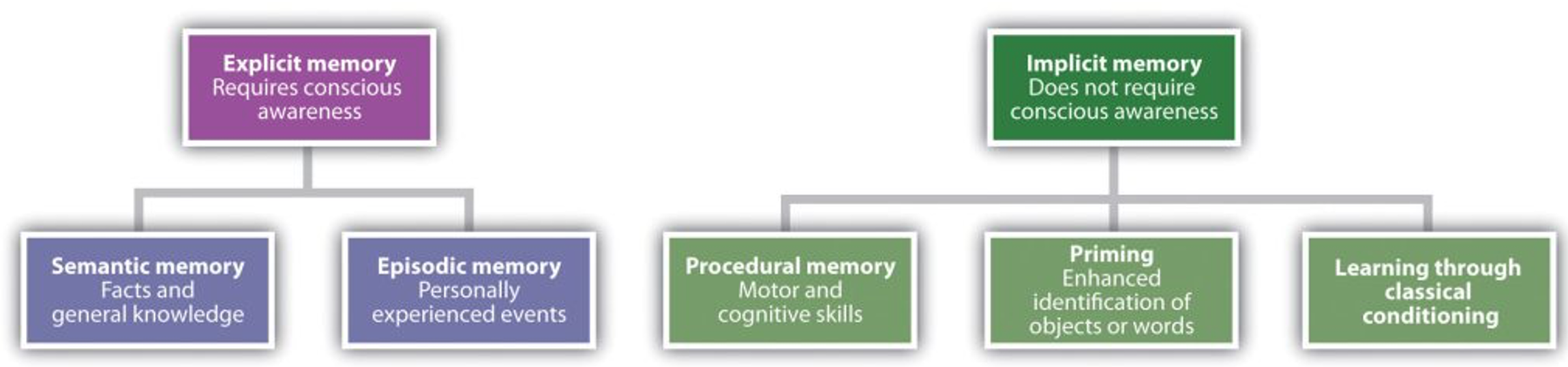
Figure 2.4.3. Types of Memory by Jennifer Walinga and Charles Stangor used under a CC BY-NC-SA 4.0 licence in Rafferty, J. (2024). Neuroscience, psychology and conflict management. James Cook University. https://doi.org/10.25120/k4vd-86×5

Priming

Priming is a psychological phenomenon where exposure to a stimulus influences how we respond to subsequent stimuli, and how we perceive and interpret new information. As defined by Gluck et al. (2020), priming is

“a phenomenon in which prior exposure to a stimulus can improve the ability to recognize that stimulus later” (p. 88).

Similarly, Kassin et al. (2020) describe priming as

“the tendency for frequently or recently used concepts to come to mind easily and influence the way we interpret new information” (p. 118).

In essence, priming makes certain concepts or ideas feel familiar, even if we aren’t consciously aware of the exposure.

For example, research has shown that if we’re subtly exposed to specific words or images, we may later be more likely to recognise or choose something related to those stimuli (Gluck et al., 2020; Goldstein, 2019; Kassin et al., 2020).

The impact of priming on social behaviour

Exposure to a stimulus can also lead people to behave in a particular way without their awareness, especially when the stimulus was presented subconsciously. The impact of priming on social behaviour has been demonstrated in research, including in a series of provocative (and debated) experiments by Bargh, Chen and Burrows (1996). In this study, participants were primed with different words that were thought to influence their behaviour.

For example, in experiment 1, participants were primed to activate either the constructs “rudeness” or “politeness” and were then placed in a situation where they had to either wait or interrupt the experimenter to seek some information. The research found that participants whose concept of rudeness was primed interrupted their experimenter more quickly and frequently than did participants primed with polite-related stimuli.

In experiment 2, participants were primed with words that activated elderly stereotypes. The study found that participants for whom an elderly stereotype was primed walked more slowly down the hallway when leaving the experiment than did control participants, consistent with the content of that stereotype.

How does priming relate to conflict management?

The phenomenon of priming can both help understand what creates conflict and how we can support parties in conflict management/ resolution. Most of the publications discussed in this post focus on mediation, but many of the findings could also find application in other conflict management process such as group facilitations and one-on-one conflict management coaching. 

Priming in mediation

Daniel Weitz, in his article The brains behind mediation: Reflections on neuroscience, conflict resolution and decision-making discusses how priming can influence the mediation process. He suggests that using words like “listen to,” “hearing each other,” “dialogue,” “options,” and “future” in their opening statements, mediators may be able to “prime” parties for collaboration rather than competition (p. 478).

Similarly, Hoffman and Wolman in their article The psychology of mediation note that the mediator’s initial description of the mediation process is the most powerful form of priming in mediation. Based on priming studies (which the authors mention but don’t specifically list), they suggest that mediators may wish to include expressions such as “being ‘flexible’ and ‘open-minded,’ the goal of reaching ‘a fair and reasonable resolution,’ and the need for ‘creativity’ and ‘thinking outside the box’” in their opening statements (p. 3).

Beyond the mediator’s opening statement, Sourdin and Hioe, in their article Mediation and psychological priming, discuss other opportunities for priming during the mediation process. They suggest that mediators can “strategically moderate the environment” to foster a positive atmosphere and encourage successful outcomes (p. 79). Such moderation can be achieved, for example, by carefully selecting and setting up the physical location of the mediation, including considerations of room colour, temperature, and the provision of food and water.

Amanda Carruthers, in her article on The impact of psychological priming in the context of commercial law mediation, explores factors such as the physical appearance of the mediator and legal representatives, the choice of venue, language use, and the influence of stress and references to money. She concludes that mediators and legal practitioners should avoid overt priming cues related to strength, power, and money to improve the positions of both parties in a commercial mediation.

How priming can affect perception

People are particularly likely to rely on the priming effect when new information is ambiguous. This is because we rely more on top-down processing than bottom-up processing when we are confronted with an ambiguous stimulus.

Bottom-up processing begins with our receptors, which take in sensory information and then send signals to our brain. Our brain processes these signals and constructs a perception based on the signals. When our perception depends on more than the stimulation of our receptors – and this is frequently the case when information is ambiguous – we speak about top-down processing. During top-down processing, we interpret incoming information according to our prior experiences and knowledge. This process is frequently referred to as concept or schema-driven. As we learned earlier, when we have been primed, frequently or recently used concepts come to mind more easily and influence the way we interpret new information.

In her blog post Priming in psychology, Kendra Cherry discusses how the priming effect influences what people hear when confronted with ambiguous auditory information, referring to the 2018 Yanny/Laurel viral phenomenon.

As an example for visual perception, Lisa Feldman Barrett explains in her book How Emotions are made how priming can significantly influence our visual perception of others’ emotions. She emphasises that facial expressions are often much more ambiguous than many popular readings suggest, which would make us particularly susceptible to the effects of priming. For instance, if we’re told a person in a photo is screaming in anger, we are more likely to see anger in their expression, even if this is inaccurate.

The person might actually be celebrating something positive, such as winning an important tennis match, potentially involving a whole mix of (positive) emotions, but the priming narrows our interpretation. With contextual information provided, we are likely to interpret the facial configuration more accurately than when taken out of context.

How does the priming effect and perception relate to conflict management?

A mediator might misinterpret facial configurations of parties in a mediation, perceiving emotions like anger, based on preconceived ideas of how people may “show” that emotion on their face, or influenced by comments made by the other mediation party.

Knowing about priming can sensitise us to potential misinterpretations of emotions and encourages us to use multiple cues and information to perceive parties’ emotions more accurately. For a more detailed discussion on the cues that we can use to more accurately perceive others’ emotions, see Chapter 3, Topic 3.4 in Neuroscience, psychology and conflict management. These cues and the topic of emotions in conflict is also discussed in much more detail in Sam Hardy’s course on Working with Emotions in Conflict.  

Priming to improve inter-group relationships

Recent research by Capozza, Falvo and Bernardo explored whether activating a sense of attachment security through priming can reduce the tendency to dehumanise “outgroups”—groups with which individuals don’t feel a connection. They conducted two studies:

  • The first study primed attachment security by showing participants images of relationships with attachment figures and then measured how they humanised an outgroup, in this case, the homeless.
  • The second study had participants recall a warm, safe interaction to activate a sense of interpersonal security and then measured how they humanised another outgroup, the Roma.

Both studies found that attachment security led to greater humanization of outgroups, with the second study showing that increased empathy played a key role in this effect. These findings suggest that fostering a sense of security can enhance intergroup relations, which has implications for intergroup conflicts. The successful use of priming to boost feelings of security highlights the importance of applying cognitive psychology to conflict management.

The calming effect

Capozza, Falvo and Bernardo, in their article, discuss several further positive effects of security priming, many of which are relevant to conflict and conflict management/resolution. For example, they emphasise the calming effect of security priming, noting that “even a momentary sense of security can shift the attention from one’s needs to others’ needs…” (p.3).

Conflict management processes often aim to help individuals in conflict consider the needs and concerns of others. Understanding the calming effect of security priming and its ability to foster perspective-taking may provide conflict management practitioners with additional strategies to support their clients. Such strategies could consider aspects like:

  • The choice of physical setting for a mediation or coaching session (or other conflict management process).
  • The language used by the practitioner, such as during the mediator’s opening statement.
  • The types of questions the practitioner asks throughout the process.

Remaining questions and considerations

This post explored the priming effect and its relevance to conflict management, particularly in understanding why conflicts arise and how practitioners can support parties to manage or resolve them. Research suggests that there are multiple opportunities to prime parties during a conflict management process, such as mediation, as discussed in the sources mentioned throughout this blog. However, many questions remain, such as how much control a practitioner truly has over priming in a conflict management process Additionally, practitioners should consider the ethical implications, including the potential for manipulation, when applying priming techniques to their practice.

A full reference list of the readings referred to in this post that have not been linked in the text can be found here.

Author Biography

Judith Rafferty is an Adjunct Senior Research Fellow at the Cairns Institute, JCU, and a Senior Trainer at the Conflict Management Academy. She integrates over 12 years of experience as a conflict management practitioner, researcher, and educator/trainer. She holds a PhD in Conflict Resolution, a Master of Conflict and Dispute Resolution, a Graduate Business Administration Diploma, and a Graduate Certificate in Psychology. As a Senior Lecturer and former Director of the postgraduate Conflict Management and Resolution program at James Cook University, Judith played a key role in developing curriculum and training resources that assist professionals in navigating complex conflict situations.
Judith can be contacted on:
Email: judith@conflictmanagementacademy.com
LinkedIn: https://www.linkedin.com/in/judith-rafferty-770a329b


Enhancing Conflict Management Theory and Practice through Insights from Psychology and Neuroscience

This post has been written by Judith Rafferty, adapted from her Open Educational Resource (OER) Neuroscience, psychology and conflict management (2024), licensed under a Creative Commons Attribution NonCommercial 4.0 Licence by James Cook University.

Conflict Management: A Multidisciplinary Field

While there are designated conflict management scholars and practitioners, many ideas that inform both theory and practice come from outside the field. Individuals involved in conflict management often come from a broad spectrum of disciplines, particularly in the social sciences, such as psychology, sociology, history, geography, communication studies, political science, international relations, organizational behavior, and anthropology.

Contributions to conflict management are also made from the formal sciences like mathematics, physics, biology, and neuroscience. By exploring some of these disciplines in more detail, we can gain valuable perspectives that deepen our understanding of conflict formation, escalation, management, and resolution. Psychology and neuroscience offer some especially useful perspectives and are the focus of this post.

The Role of Psychology in Conflict Management

Psychology and some of its branches are highly relevant for both theory and practice in conflict management. For instance, the American Psychological Association has a division specifically dedicated to applying psychology knowledge to conflict situations, called “The Society for the Study of Peace, Conflict, and Violence: Peace Psychology”. In fact, peace psychology is a distinct field of study with an International Centre for Peace Psychology, and the journal Peace and Conflict: Journal of Peace Psychology.

Similarly, the Australian Psychological Society (APS) highlights the contributions psychologists make to understanding and managing conflict. According to the APS, psychology provides key insights into the psychological factors that underpin social conflict and aims to identify effective ways to foster positive relationships and productive outcomes. These approaches include strategies for resolving conflicts and governance models that prioritise cooperation over coercion (APS, 2023).

Understanding Psychology: A Foundation for Conflict Management

Psychology focuses on the study of mental processes and behaviour (and their relationship) (Zimbardo, Johnson, & McCann, 2009). The field of psychology comprises multiple sub-groups, or branches of psychology (Mullin, n.d.). Some of these branches are especially relevant to conflict management, including personality psychology, cognitive psychology, and social psychology. So, what do these branches focus on and how are they relevant to conflict management?

Cognitive psychology

Most generally, cognitive psychology is concerned with the study of mental processes such as thinking, learning, remembering, perception, information processing, language, problem-solving, decision-making, and reasoning. Cognitive psychology also considers people’s emotions and the impact of emotions on cognition. All cognitive processes mentioned earlier, as well as the effect of emotions on them, are highly relevant to the experience and management of conflict. For example, multiple mental processes and emotions are involved when people try to resolve conflicts, e.g. they must retrieve information about past conflict events and make decisions as to how to move forward. At the same time, mental processes and emotions are likely to have contributed to and have been affected by the conflict in the first place. For example, many conflicts arise because people have perceived events differently. More information about how cognitive psychology may relate to conflict management can be found here.

Figure 2.2.1. Six or Nine? Image generated with Adobe Firefly; Rafferty, J. (2024). Neuroscience, psychology, and conflict management. James Cook University. https://doi.org/10.25120/k4vd-86×5

Personality Psychology

Personality psychology is the scientific study of the whole person (McAdams, 2009). It focuses on human individuality and may address questions like:

  • Why does Paul act more violently than Peter in the same situation?
  • Why do Tracey and Sam have such different ways of communicating and managing conflict?

Personality psychology is distinct from other branches of psychology by focusing more on the person than on the situation. This is not to say though, that personality psychology neglects the situation. But rather than exploring how most people would act under certain circumstances, personality psychology tries to explain or predict how a specific type of person would most react in each situation. Conflict management practitioners and theorists have noted the effects that individual differences in personality may have on the formation and escalation of conflict, as well as on conflict resolution processes and their outcomes (Sandy et al., 2014). More information on how personality psychology may inform conflict management can be found here.

Social psychology

Social psychology seeks to answer questions like:

  • Why do people act differently when they are in a group compared to when they are on their own?
  • Why do people behave differently among their co-workers compared to when they are with their friends and family?
  • Why do people hold prejudice and stereotypes against certain groups and how may these affect their behaviours?
  • How can social cohesion best be strengthened to prevent social division and conflict?

Social psychology may be defined as “the scientific study of how individuals think, feel, and behave in a social context” (Kassin et al., 2020, p. 4). All three areas, thinking, feeling, and behaving are involved and affected during the emergence, escalation, management, and resolution of conflicts. Several notable books in the field have focused on the applications of social psychology for conflict theory and practice, such as:

A more detailed discussion of the application of social psychology for conflict management can be accessed here.

Neuroscience and Conflict: Bridging the Gap

Beyond psychology, the field of conflict management is increasingly looking to neuroscience for insights into why conflicts occur and how they can be effectively managed or resolved. Many conflict management scholars and practitioners recognise that people’s brains and bodies are significantly involved in facilitating societal conflict.

For instance, Mary Fitzduff (2021) notes in her book Our brains at war that recent advancements in genetics, brain science, and hormonal research suggest that many personality characteristics are rooted in the brain’s biology. By offering “new and more sophisticated and nuanced insights into the way that people actually think”, neuroscience makes a critical contribution to the field of conflict management (Burgess, 2022). As another example, Bruneau (2015), in her book chapter Putting neuroscience to work for peace, emphasises the value of directly examining neural activity to transform psychology-based conflict theories into mechanistic understandings (p. 143).

Knowledge from neuroscience can also help inform and evaluate the purpose, potential, design and principles of justice and conflict resolution processes, as well as the role and skills of conflict practitioners. For instance, findings from neuroscience can increase our understanding of aggression in people, which again may have implications for processes like restorative justice, as discussed in a Ted Talk by Dan Reisel. Other examples of how neuroscience can inform conflict management theory and practice, as well as links to related readings, can be found here.

Neuroscience Meets Psychology: A Synergy for Conflict Management

Neuroscience is the scientific study of the nervous system and an interdisciplinary field that integrates biology, chemistry, psychology, and more. Of particular interest for conflict management theory and practice are the intersections between neuroscience and psychology. It may help to think of neuroscience as dealing with the ‘physical’ (brain) and psychology dealing with the ‘abstract’ (mind).

The functioning of our brain, hormones and neurotransmitters significantly affects our behaviours, cognitions, and social experiences. That is why the links between neuroscience and different areas of psychology are increasingly being recognised, studied, and taught. The growing recognition of these links has led to the emergence of new interdisciplinary fields, such as social neuroscience and cognitive neuroscience (Ito & Kubota, 2022). Both are highly relevant to conflict management theory and practice.

Knowledge from social neuroscience, for instance, can increase our understanding of intergroup and social conflict, including the sources and factors that create, perpetuate, contribute to, and escalate intergroup conflict. This knowledge may again inform the planning and design of conflict intervention initiatives to help manage intergroup and social conflict. You can find further readings about social neuroscience and intergroup conflict in the previously mentioned Peace and Conflict: Journal of Peace Psychology as well as other Peace Psychology publications, including the newsletter The Peace Psychologist and the blog Dialogues with Peace and Conflict.

Conclusion

The integration of psychology and its branches, as well as of neuroscience offers critical insights into the questions why conflict occurs, how it develops and how it may be managed. By exploring the connections between the human mind, brain, and behavior, conflict management can be more effective and nuanced. Many of these connections are discussed in more detail in Judith’s (2024) eBook Neuroscience, psychology and conflict management, from which this post has been adapted. A course on Neuroscience, Psychology and Conflict Management will also be developed next year to be offered through the Conflict Management Academy.

A full reference list of the readings referred to in this post can be found here.

Author Biography

Judith Rafferty is an Adjunct Senior Research Fellow at the Cairns Institute, JCU, and a Senior Trainer at the Conflict Management Academy. She integrates over 12 years of experience as a conflict management practitioner, researcher, and educator/trainer. She holds a PhD in Conflict Resolution, a Master of Conflict and Dispute Resolution, a Graduate Business Administration Diploma, and a Graduate Certificate in Psychology. As a Senior Lecturer and former Director of the postgraduate Conflict Management and Resolution program at James Cook University, Judith played a key role in developing curriculum and training resources that assist professionals in navigating complex conflict situations.
Judith can be contacted on:
Email: judith@conflictmanagementacademy.com
LinkedIn: https://www.linkedin.com/in/judith-rafferty-770a329b

Ongoing Research Required for Strategies to Engage with Conspiracy Theory Believers

Claire Holland and Pascale Taplin

Conspiracy theories and disinformation impact upon legal practice, and have the potential to cause conflict between parties who have different views on legal rights and personal interests. The term “disinformation” is appropriate to describe conspiracy theories because the actors who amplify conspiracy theories often deploy false information strategically, and with an intent to disrupt legal proceedings or conflict resolution processes. This blog will highlight insights into the nature and impact of Sovereign Citizen narratives and the importance of research informed approaches for legal and conflict resolution practitioners to engage with individuals holding such narratives.

The Sovereign Citizen Superconspiracy

The Sovereign Citizen conspiracy theory holds that government and legal institutions are illegitimate, and that an individual can declare themself sovereign (Berger, 2016).  Conspiracy theories are often adopted and adapted, or ‘localised’ for best fit. In defining Sovereign Citizen conspiracy beliefs Taplin, Holland & Billing (2023) suggest the term ‘superconspiracy’ is helpful as a term that describes how several conspiracies or beliefs can be interrelated into a metanarrative. When individuals share or repeat certain conspiracy theory beliefs, those beliefs can form an individualised narrative that may be adopted into an individual’s identity (Taplin & Holland, 2023). In a recent article published in The Journal of Information Warfare, Taplin and Holland (2023) suggest that,

In order to be considered in research, Sovereign Citizen rhetoric must be defined and distinguished as a discrete social phenomenon. Definitional clarity in relation to “Sovereign Citizens” as a group of people is difficult or impossible to achieve because many people influenced by Sovereign Citizen rhetoric do not subscribe to a consistent set of related beliefs (Vargen & Challacombe 2023). Nor do they always self-identify as holding something in common with others influenced by the same rhetoric. Because they do not constitute a definable group, Sovereign Citizen rhetoric (rather than Sovereign Citizens) is used here. ‘Rhetoric’ is preferred to other commonly used terms such as ‘movement’ or ideology because the disinformation amplified in Sovereign Citizen rhetoric is designed to make an argument— specifically, to delegitimise government and laws.

The question of when and how to counter the influence of Sovereign Citizen narratives is a vexed issue in Australia, where the right to freedom of expression and the right to protest are valued elements of the democratic system. Taplin and Holland (2023) suggest that this right to freedom of expression can be leveraged by individuals or groups and is often used to justify the amplification of Sovereign Citizen disinformation that is spread between individuals and groups (Campion, Ferrill & Milligan, 2021). Research that will assist policy makers, legal and conflict resolution practitioners, and security agencies in articulating the harms caused by Sovereign Citizen rhetoric and to inform the design of effective and strategic policy responses is therefore extremely important.

Sovereign Citizen rhetoric in Australia can be traced to well-documented Sovereign Citizen narratives in the United States (Taplin, Holland & Billing 2023). In the United States, Sovereign Citizen rhetoric emerged from problematic Christian Identity, Patriot, and anti-tax movements and gained momentum in the 1970s (Hodge 2019).

Taplin, Holland & Billings (2023) suggest that Sovereign Citizen rhetoric is diverse, but identifiable by key themes and tropes, including;

  1. that government, laws, and institutions of national and global governance are illegitimate;
  2. that government and courts are in fact controlled by a group of conspirators who are hostile to the interests and freedom of all other people;
  3. that these conspirators take action to trick people into relinquishing their freedom by coercing them to comply with illegitimate laws or regulations; and,
  4. that a person can escape this control by doing or saying certain things, including acting illegally.

Risks of the spread of Sovereign Citizen rhetoric

Sovereign Citizen rhetoric has the potential to be weaponised because it triggers an audience based on identity and then narrates an imminent threat to that identity. Sovereign Citizen rhetoric targets Western audiences’ narratives of hyper-individualised personal identity. Central to Sovereign Citizen rhetoric is the primacy of individual freedom as a basic right. Individual freedom is seen as a supreme right. For this reason, people influenced by Sovereign Citizen rhetoric may hold beliefs surrounding a ‘personalised sovereignty’. From the perspective of a Sovereign Citizen, the regulation of his or her behavior by laws of the State (for example, a requirement to pay taxes), constitutes a crime against him or her personally (Taplin and Holland, 2023).  In this way Sovereign Citizen rhetoric manipulates meaning-making narratives by conflating, problematising, and manipulating concepts of personal autonomy, sovereignty, and justice. In this newly narrated reality, the threat becomes any regulation or control, by laws or government, that represses “personal sovereignty”.

The risk to vulnerable audiences is that Sovereign Citizen narratives, which may be spread through social media and popular platforms of information sharing within target audiences, can create problematic ingroup and outgroup divides (Taplin, 2023). Sovereign Citizen rhetoric has the potential to influence individual behaviour by manipulating meaning-making and suggesting law abiding citizens have an uniformed view of the world and legal actions of the State are personal affronts to individual freedom.

What is the best way to engage with individuals who believe in conspiracy theories?

Further research is required for how best to engage with Sovereign Citizen rhetoric, with particular attention paid to the safety of all participants in the conversation and with an understanding of the enduring nature of conflicts to an individual’s core identity. Research has been conducted into the best ways to rebut science denialism (Rutjens & Veckalov, 2022; Schmid & Betsch, 2019). Testing conversational approaches and communication responses to other conspiracy theory contexts is an important future focus. There is increasing attention in the media of interactions between self-declared Sovereign Citizens and members of the Australian Police Force. Subsequent legal proceedings and interactions between Sovereign Citizens and the court system has highlighted numerous challenges in how Sovereign Citizens interact with the court and accept (or not) legal outcomes (see for example State of New South Wales v Kiskonen (Preliminary) [2021] NSWSC 915).

Grant Lester (2005), Consultant Psychiatrist at the Victorian Institute of Forensic Mental Health, described the pathology of vexatious litigants and suggested guidelines for judicial officers to manage difficult complainants (summarised and further discussed in a paper deliver to the Queensland Magistrates’ State Conference in 2022 by Judge Glen Cash), which could be applied to Sovereign Citizens:

  1. ‘First do no harm.’ The aim should be containment of the issues. This would entail not trying to change a Sovereign Citizen’s mind about ‘the system’ (including about the injustice of the legal system), but minimizing harm to proceedings by redirecting focus to the matter at hand.
  2. Be prepared Sovereign Citizen litigants are typically volatile, feel victimised, and seek vindication. Be prepared by providing information about Sovereign Citizen narratives and typical modus operandi.
  3. Adherence to rules and procedures will assist in the aim of containment.
  4. Ensure formality. This might differ in practitioner’s preferences for running conflict resolution processes.
  5. Be fair. Litigants may appear hyper-competent, but they are in truth overwhelmed by the court process. Cash J’s point reminds us to maintain empathy and patience in explaining process and procedure. This becomes particularly important when confronted with uncomfortable worldmaking narratives that position the practitioner as either villainous or a victim. Maintaining focus on the matter at hand is imperative
  6. Maintain focus. Keep the discussion on track.
  7. Silence is golden. Silence can be the best and only way to allow a person to speak their piece in a process before moving onto a more relevant topic. This approach has benefits but also risks. At times allowing a person to speak in full also provides other attendees a better opportunity to assess the broader narrative and all its implications. But silence also may have costs and risks, where a Sovereign Citizen confuses other participants (particularly where they appear “hyper-competent”). Determining when and how to best to use silence can only be made in-situ, and judgement of appropriate interventions improves with practice. Responding professionally and adhering to established procedures assists in building trust in process, organizations, and staff.   
  8. Set boundaries and time limits. As practitioners we cannot always “control the limits” as suggested by Cash, but we can set parameters while facilitating processes and discussions. When discussion gets off-track we can confidently ask process participants to remain focused on the matter at hand.
  9. Keep a thick skin and do not personalise the encounter. This one may be difficult in some circumstances – in one case in Canada a Sovereign Citizen threatened to behead the Judge in accordance with her understanding of the law under the MAGNA-CARTA! Cash’s advice not to allow an encounter to become personalized is key. Personalizing accusations of villainy is a common ‘tactic’ of Sovereign Citizens, who may accuse practitioners of all manner of terrible things. Conflict resolution and legal practitioners deserve a safe workplace, and there is no argument for normalization or acceptance of abusive behaviour. That said, improving one’s understanding of the Sovereign Citizen worldmaking narrative allows practitioners to understand the context of this behaviour, and might inform a sophisticated response that avoids further personalisation.

These suggestions could be further tested into frameworks for officers of the State and individuals who will potentially engage with Sovereign Citizens. Engagement with Sovereign Citizen rhetoric calls for education on citizen responsibilities and understanding that you cannot ‘opt out’ of the legal system in which you exist. However, the problematic views of many self-identified Sovereign Citizens that has led some to engage in behaviour that undermines the democratic and legal foundations of our country are clearly a rising concern. This is a topical area ripe for further research.

Are you the next Scholar-in-Residence at the International Academy of Mediators?

The International Academy of Mediators (IAM) is soliciting applications from academics
interested in serving as the next IAM Scholar-in-Residence (SIR).
IAM is an organization of peer-selected preeminent commercial mediators from around the
globe. The mission of IAM is to foster the highest standards of integrity and competence in the mediation of commercial disputes (www.iamed.org).
The purpose of the SIR Program is to help bridge the gap between the theory and practice of mediation. Interaction between the scholar-in-residence and IAM members can help
practitioners learn more about prevailing theories and studies, while exposing academics to
the environments and challenges facing professionals who make mediation their day-to-day
business. The SIR program provides an opportunity to test current practice models while
subjecting emerging academic theories to the pragmatic rigor of every-day practice.
IAM is now soliciting applications for its sixth Scholar-in-Residence. The IAM’s prior scholars-in residence have been:

  • Professor Hal Abramson (2014 – 2016)
  • Professors Dwight Golann and Lela Love (2017 – 2020); and
  • Professors Doug Frenkel and Jim Stark (2021 – 2024)

Professor Hal Abramson in particular, helped IAM design and formalize this innovative
opportunity for academics to collaborate with many of the best known and experienced
mediators from different regions of the world. Distinguished scholars following him have
brought engaging and provocative ideas to the front for this cohort of prominent mediators.


Timing
The Scholar-in-Residence tenure is two years. The start of the upcoming term is flexible, ideally beginning between October and December, 2024.

Compensation
The SIR program does not offer any compensation although fees are waived for participating in IAM conferences which take place once a year.

Application and Deadline
Any interested academic should submit a letter-application to the IAM SIR Committee Chair,
Jennifer Egsgard at jegsgard@egsgardmedation.com before September 30, 2024. The IAM SIR Committee will review applications and announce the new IAM SIR before end of the year.

Letter/Application should include:

  1. Name, email address, and phone number;
  2. Brief narrative of why interested in becoming the IAM’s scholar-in-residence;
  3. Description of possible research/publication project that would be informed by access
    to the IAM membership (one to two paragraphs); and
  4. Academic resume should be attached, emphasizing experience and scholarship.

When selecting the SIR, the IAM SIR Committee will consider the following factors among
others:

  • History/length of academic experience and contributions;
  • Past research and publication relating to mediation and ADR processes;
  • Mediation experience, which is not required but is considered an asset.

Possible Scope of Scholar-in-Residence Activities – Further Detail
Illustrations of the sorts of activities in which the SIR might engage are outlined in this section. The opportunities can be expanded as the SIR program develops and evolves under the oversight of the SIR Committee.


a. Contribute to IAM Webinars and Conferences
The SIR can assist in designing workshops for IAM webinars and conferences. This might include programs based on the expertise that the person brings to the position, or hosting an academic speaker on a subject that might be of interest to the membership.
IAM Conferences are held once a year and have historically been cutting edge, with top tier
presenters and panelists. The next IAM Conferences are currently scheduled for May 27 – 30, 2025 in Queensland, Australia, and end of May 2026 near Boston, USA.

The IAM also hosts regular webinars for its global membership and the SIR is encouraged to
propose programs for these webinars.


b. Contribute to the IAM’s List Serv Discussion Group
The SIR is encouraged to participate in the IAM confidential List Serv by posing questions of
theory, ethics, and strategy and commenting on threads. The threads provide a lively exchange of ideas. However, no member content may be distributed or republished by the SIR without express permission.


c. Engage in Scholarship that Draws on the Expertise of the Membership
The SIR should prepare an article or other work that will be informed by discussions or
collaboration with members of IAM.
The SIR also is available to help members prepare articles and speeches by serving as a
sounding board and offering advice on the timeliness of topics and options for publication,
providing the possibility for significant mutual enrichment between the IAM and the SIR.

Public expectations and confidence in the legal system: A brief thought

On the 6th of June 2024, I attended a panellist event held at the Sydney Jewish Museum where the topic of concern was ‘Nazis in Australia: When History and the Law Collide’. Discussion surrounded the prosecutions brought against four suspected Nazi war criminals for crimes allegedly committed during World War II.

The panel consisted of Hon Greg James AM KC, Graham Blewitt AM, and historian Professor Konrad Kwiet. However, at the time of the prosecutions (during the late 80’s until the early 90’s) their involvement was as Chief Prosecutor, Head of the Special Investigations Unit, and expert historian called to the stand during proceedings.

Of the four cases launched against those suspected war criminals, none were successful.

During questioning, a guest in the crowd asked the panel about whether they saw their efforts as a failure–since no conviction was found. Messrs James and Blewitt emphasised that although, to some, this outcome might be regarded as a failure, the purpose of their efforts and involvement were not merely to obtain a conviction, but also to investigate those, and other, suspected war criminals living in Australia.

Mr Blewitt further explained that the Special Investigations Unit within the Attorney-General’s Department saw to investigate over 800 separate cases, with some suspects being renounced by virtue of those investigations.

It seemed as though few were dissatisfied with this response as I heard murmuring within the crowd. I imagine this kind of reaction arose from certain societal expectations of the criminal justice system not being met; and perhaps, it follows that the level of confidence in that system diminishes.

An established public confidence in a system or institution, whether it be the criminal justice system or otherwise, underpins its effective functioning–an idea that academics, such as Mack et al, continually raise. Notwithstanding its importance, a recent survey by the NSW Bureau of Crime Statistics and Research reported that the public were not overly confident (55%) that the criminal justice system brought people to justice.

Perhaps it is as former Chief Justice Gleeson put it: “Much of what we call public confidence consists of taking things for granted”. And perhaps, this is especially true for public confidence in the criminal justice system, where it is, taking that panellist event as an example, the overwhelming complexity of the legal system is what has been ‘taken for granted’.

To understand and navigate the legal system is complex to say the least. Even with the study and training required to become a lawyer and the further experience gained from one’s practise, it remains a life-long journey for a lawyer to continually add and update their knowledge as well as consider the deeper components which underpin the effective functioning of that legal system.

If this may be the case for us lawyers, how might non-experts struggle to comprehend and navigate the legal system, not to mention, that deeper level of understanding?

It appears that society is more generally outcome focused. I suggest this because, as per the Bureau of Crime Statistics and Research 2020 report, the majority (66%) expressed that criminal sentences were ‘too lenient’ and (56%) that the criminal justice system did not meet the needs of victims. That report acknowledges that levels of confidence in the criminal justice system have not improved over the decade, and by comparison with earlier snapshot reports published by the NSW Sentencing Council, this indeed appears to be the case.

In an effort for us lawyers to ensure we are doing the most we can to uphold public confidence in the legal system, moreover the criminal justice system, we must do what we can to positively transform societal expectations.

Taking us now back to the beginning when that guest asked their question, the response provided by Messrs James and Blewitt was, in my mind, a perfect one. Notwithstanding the apparent dissatisfaction by some guests in that crowd, it was a response equipped with information to evoke a positive transformation of one’s expectations of the criminal justice system. As lawyers, we should aim to do the same in our communication with others, that is, to respond in a way which evokes positive transformation by the listener. By doing so, we work towards bettering societal expectations of the legal system–one person at a time.