
A reflection on the National Mediation Conference 2021 by Elizabeth Rosa
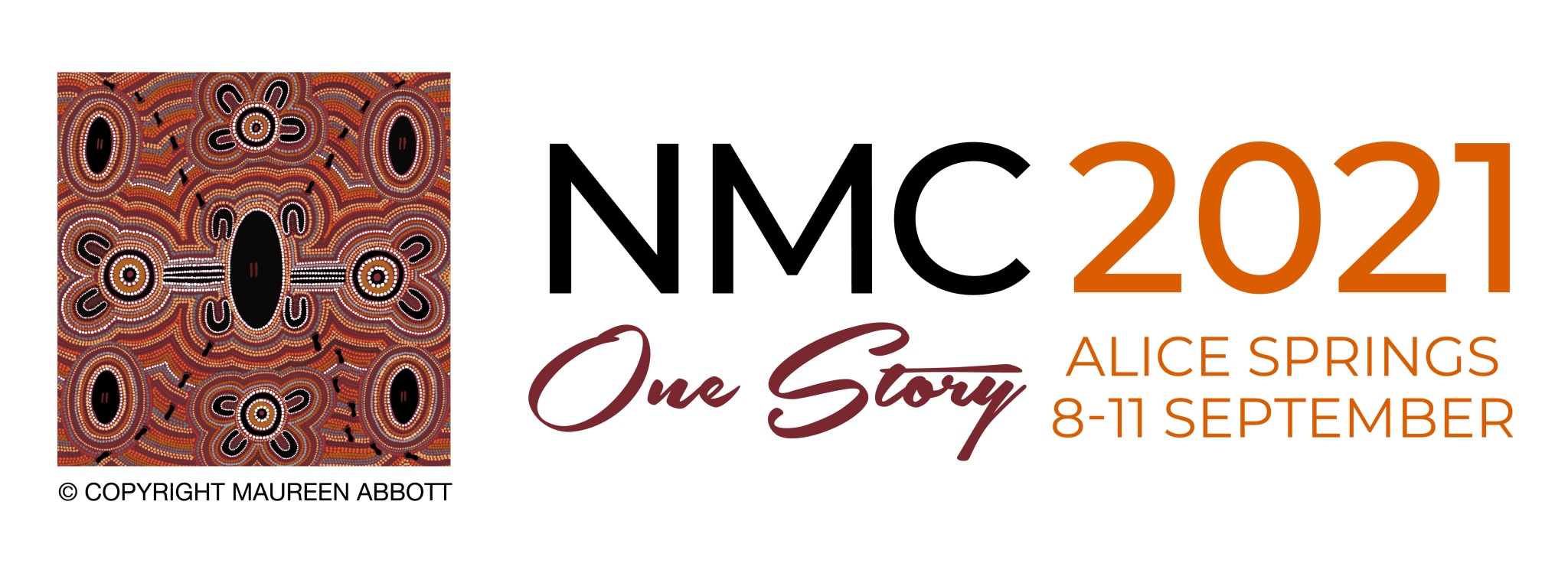
This year the National Mediation Conference (NMC) was recently held in Alice Springs, but delegates could only attend virtually as dictated by the Covid-19 restrictions in many states. It was intended that the conference explore the practice of mediation, in particular the dispute resolution work of Indigenous communities in this area, the Red Centre – the heart of the land we call Australia. There is something about the fact that the conference still went ahead, through a virtual platform, that could be regarded as a metaphor for our profession and the work that we do.
There had been many hopes both on the part of the NMC organisers and the delegates; many travel plans and many preparations for presentations. There were the hopes of the Indigenous peace-makers, and other Alice Springs mediators, that their distant Australian colleagues would be amongst them for a few days and would learn of the work that they do. The health emergency interrupted these plans. The organisers and hosts of the conference included Traditional Owners and Elders of the land of the Arrernte people around Alice Springs (Mparntwe). Indeed, the conference was held at the invitation of the Elders. The organisers and Elders were looking forward to welcoming the delegates, and the delegates were no doubt disappointed at the missed opportunity for the connection that they had hoped for, as well as the experience of being in Alice Springs, close to the heart of the land and its Indigenous population.
As mediators, we deal with loss. We deal with certain expectations that the mediation participants have had, for example, for a good marriage or even a good workplace relationship. But those expectations have not been met and the mediator works to understand how the parties feel about this and their capacity to propose options to create a new reality.
In their work, the mediator delves into the participants’ experience of the change that has occurred. The mediator works with heart to listen empathetically to the participants, to try to connect with them in order to understand their wants, needs and fears. Listening with heart could also be called listening with ‘the spirit’, as Susan Hamilton-Green, a family mediator from Melbourne, discussed in her talk on Motivational Interviewing. Susan looked at how listening this way can help a participant explore what it is that they want and how they can overcome the barriers to achieving this.
The organisers of the conference no doubt considered what their hopes for the event were and what those of the delegates would have been. And for them, there was the question: ‘How to accept that the opportunity of a face-to-face conference has been lost and how can the needs of the delegates be met in a different way?’
What were the needs of the delegates? I venture to guess, that for many, the need was to learn further skills to reinforce their existing practice; to hear about new and diverse ways of approaching their work; to learn about areas of dispute resolution different from their own; to be informed of peace-keeping approaches used by mediators in the Indigenous communities and First Nation Peoples around Alice Springs, and to hear of stories of the lives of the Elders and co-hosts. In addition, a conference gives the opportunity to connect with colleagues – catching up with familiar acquaintances and meeting new ones, perhaps through casual chit-chat. There is always the desire for connection and the feeling that this brings, of being part of something bigger than oneself, a professional community.
And so, the organisers would have considered these needs and the question of whether they could be met in another way. And so, the virtual conference was born. The planned-for talking circles of the conference hosts and Elders took place virtually. The speakers’ presentations were pre-recorded, and although the ‘live’ feel wasn’t there, there was the opportunity to ask questions of the speakers through chat. There were also opportunities at the conference for people to catch up through virtual break-out rooms during breaks, even at dinner-time one evening!
An ingenious touch for those of us missing the reality of actually being in Alice Springs was live-streaming of footage of the town and the country around it during the opening event. It was wonderful to see three of the Elders and co-hosts sitting in the view of the MacDonnell ranges: Harold Furber, Maureen Abbott, Dr Patricia Miller AO, Kumali Riley and Helen Bishop. (Other co-hosts not present on the occasion were Veronica Perrule Dobson AM and Marlene Rubuntja.) They spoke in a semi-circle, near a clutch of trees over dry land, gently introducing us to the land. As they spoke, the rays of the setting sun shone in golden streams over them. I felt almost as though I were there.
Maureen Abbott was the Co-Chair of the Design Committee. She created the painting that is used for the logo of the conference. Maureen has conducted dispute resolution in a variety of contexts and is an expert in Indigenous conflict management. She has also conducted mediation training for Indigenous communities across the Northern Territory and the APY Lands in South Australia. Helen Bishop is a PhD candidate in Conflict Resolution and Indigenous perspectives. She works in dispute resolution with First Nation communities across the Northern Territory. She believes that alternate dispute resolution practices and peace-building opportunities should be used to support community-led solutions.
On the Thursday morning, we were treated to another live-stream from the ground for a conference welcome: children from Yipirinya school cooking kangaroo tail over an outdoor fire and later singing to us from their school hall.
I had imagined being present at the talking circles at Alice Springs and sitting in the presence of the Elders. It was different to see them on screen and yet they took to the live format generously, sharing their stories with humility about what they had suffered. I felt that I was present with them in the room and was honoured to have the opportunity to hear of their life experiences.
I embraced conducting my presentation by Zoom rather than face-to-face. I interviewed Katelyn Betti, a family mediator, about what workplace mediators can learn from the practice of Family Dispute Resolution. We discussed the techniques that Family Mediators use to enhance emotional safety and constructive dialogue. We explored Katelyn’s particular perspectives on this, plus my own reflections on how these perspectives could help in the workplace context. I was glad that Zoom gave me an opportunity to speak with Katelyn in the west coast of Australia in Perth, from my place in the east coast, in Sydney.
In the virtual break-out rooms that I attended during the breaks, the delegates saw each other through cyber-space squares, like virtual window panes. We sought to connect with each other and yet there was the distance through the virtual platform. But we persevered and I found that I got to know new people, particularly when they coincidentally appeared at another ‘meal break.’
Again, the conversations through the breakout rooms was a metaphor for the mediator’s desire for connection with participants. With all participants in mediation, there are barriers: their own world view coloured by their disappointments, their emotions, their need for control. In all of life, in fact, there are barriers to connecting with others because of our own perceptions, erroneous assumptions, lack of time due to busy lives and other commitments. Even partners who live together can struggle to really know each other. But mediators strive with purpose to connect with participants in mediations and to know and understand them during the time that they work with them. Mediators are a breed who enjoy getting to know and understand others. And so, at the conference, it was palpable how much the delegates wished to connect, striving with purpose in the digital format to learn more about their colleagues.
In the final event, the wrap-up by NMC Chair, Professor Laurence Boulle AM and Co-Chair of the Design Committee, Alysoun Boyle, we heard of the hopes and the challenges to bring the conference to fruition. Alysoun, from her own locked-down location, spoke with gratitude and emotion of how the Elders, who hosted all of us, had helped her and taught her during her time of preparations. And she spoke of how she had got to know Maureen Abbott and Helen Bishop, and how they had so generously guided her through the process of putting together the conference program.
We would have all been disappointed to have missed the opportunity to meet the co-hosts, to be on their country, the land of the Arrernte peoples, and to be in the heart of the land. We would have been sad to miss being present on the ground at the talking circles to hear the Elders and co-hosts speak of their experiences in their country and the losses and pain of the stolen generation. We may have had the opportunity to even sit in the circle with them or a chance to speak to them, to learn even more about their lives and their hopes for their communities and the peace-making work that they do. We would have wondered how we would have felt if we had been there, present with the Elders. To be in their country. To be on the red earth under a cloudless sky. How connected would we have felt; what emotions would have been conjured up? What would we take away with us?
But hearing the emotion with which Alysoun spoke of her work with the co-hosts and the connection that she developed, made us feel like we were there. Alysoun and the co-hosts brought the heart of the land straight into our homes through our computer screens.
17 September 2021
Elizabeth Rosa is a Nationally Accredited Mediator, Workshop Facilitator and the Founder of Resolve at Work.


 The Australian Dispute Resolution Research Network