
Contemporary Conflict Mapping
Claire Holland* and Rikki Mawad**
* Claire Holland is the Director of the James Cook University (JCU) Conflict Management and Resolution Program. She is a senior lecturer and researcher in Alternative Dispute Resolution (ADR) and conflict resolution processes.
** Rikki Mawad is a Conflict Management and Communications Consultant, and a lecturer in the JCU Conflict Management and Resolution Program.
This blog post discusses new perspectives on conflict analysis and conflict mapping. The authors invite commentary around a more contemporary conflict mapping matrix that integrates modern perspectives and practices.

Why Map Conflict?
At its most basic level, Gary Furlong, author of The Conflict Resolution Toolbox: Models & Maps for Analyzing, Diagnosing, and Resolving Conflict, states managing conflict effectively is a two-step process:
- Assessing conflict
- Deciding what action (or inaction) to take to address it.[1]
Assessing conflict, also known as conflict analysis or “conflict mapping,” is a process of reviewing a conflict context through a third party/neutral lens by following a logical, structured review process. The mapping acts as a guide for the intervening party to design a process that meets the parties’ substantive, procedural and psychological needs.[2] The overarching aim of conflict mapping is to increase comprehension and clarity of the situation and facilitate appropriate and well-considered conflict management or conflict resolution strategies.
When there is lack of clarity or poor understanding of the conflict and time pressures to make decisions, people and systems tend to react to conflict rather than respond. This has the effect of escalating conflict rather than moving towards resolution or positive change. Due to time pressures, lack of resources, and lack of access to support systems, for many individuals and organisations there is limited scope for reflection on the underlying causes of the conflict. Adequate consideration of underlying conflict causes can inform choices on how to respond to a person or situation, and the likely impact of those choices on future interactions or occurrences. Mapping a conflict prior to an intervention is a key step in setting the intervention up to succeed. Conflict mapping and making considered choices may end up saving individuals and organisations time, money and energy by identifying the best forum and appropriate practitioner or intervention team at the outset.
Existing Approaches and Perspectives on Conflict Mapping
Models of conflict mapping, such as Shay Bright (PhD) The Conflict Mapping Chart, list specific elements for consideration. Bright, drawing on the Wehr Conflict Mapping Guide[3] and Sandole’s Three Pillar Approach,[4] leads the reviewer through the six key pillars of a conflict framework, which includes identifying and analysing:
- Conflict parties;
- Conflict history;
- Conflict context;
- Party orientation;
- Conflict dynamics; and,
- Conflict intervention.[5]
Under each heading, it is possible to include additional models and maps for analysing, diagnosing and intervening in conflict. Furlong highlights eight models for analysing conflict: 1) The circle of conflict; 2) The triangle of satisfaction; 3) The boundary model; 4) The interests/rights/power model; 5) The dynamics of trust; 6) The dimensions model; 7) The social styles model; and 8) Moving beyond conflict.[6] These conflict analysis models are often also considered in light of overarching conflict theories such as negotiation theory, mediation and practice frameworks, human needs, conflict transformation, theories of change, and peacebuilding.
The mapping process involves considering theory, research, and understanding of conflict to provide greater clarity about the conflict situation, understanding of the needs, interests, goals, and resources of different parties to the conflict, and awareness of options for interventions to move towards resolution or engage in effective ongoing conflict management. As Daniel Druckman states in his seminal text Doing Research: Methods of Inquiry for Conflict Analysis, there are aspects of both art and science in the field of conflict analysis and resolution.[7] While maps, charts and tools can be scientifically followed, the ‘art’ of interpreting and applying information is a learned skill. A contemporary conflict matrix that expands Bright’s model with a seventh and eighth pillar aims to increase the factors for consideration in conflict analysis, allowing greater opportunity to identify and design appropriate intervention strategies that accommodate the realities of the parties and structures in which the conflict exists.
Building on Bright’s Framework: Pillars 7 and 8

Pillar 7: Multidisciplinary Knowledge
The authors suggest that there is merit to adding a seventh pillar in Shay Bright’s Chart, Multidisciplinary knowledge, which is to bring in elements of neuroscience, emotional intelligence and trauma-informed approaches to managing conflict at an intrapersonal level through to a transnational level. What is currently lacking is a clear and structured conflict analysis chart that includes consideration of party’s psychologies, worldview formation, self-analysis, and additional models analysing cultural considerations and emotional states – particularly for enduring conflict that involves ongoing uncertainty for parties. Many established conflict theories use a rational mind approach that focuses on individualistic and neoliberal response to conflict. The majority of well-known and cited authors in the conflict management and resolution field are US based researchers who, while having worked globally, often bring an Anglo Christian, male perspective to conflict mapping and interventions. An unintended effect from potential unconscious bias, is that key elements of a conflict that relate to elements such as gender, race, religion, and sexuality may not be properly considered in both the mapping or intervention. Clear articulation in mapping tools for greater cultural and emotional intelligence in conflict analysis and intervention design are important for a more holistic analysis. If outcomes such as true party self-determination are important, then consideration of resolution options that are co-designed with the parties to that conflict, culturally appropriate, and representative of the party’s actual needs, interests and priorities, will arguably be more sustainable.

Bringing in the work of practitioners, researchers and emerging thinkers such as Daniel Kahneman[8], Daniel Goleman,[9] Van der Kolk[10] and Brene Brown[11] for example (and to name only a few), gives the conflict practitioner a new lens and additional pillar to mapping the conflict, designing and delivering the best fit intervention. One example of including multidisciplinary knowledge in the conflict mapping process, would be to consider Dr Brene Brown’s grounded theory social research into courage, vulnerability, shame and empathy as a lens to help both people in conflict and third parties assisting with conflict to grow the options for resolution. Brene’s recent work in Dare to Lead for example, is a key asset to conflict managers.[12] Brown talks about harnessing the power of empathy to understand ourselves and others as a way to change perspective and open space for difficult conversations. Brown’s work around rumbling, leaning into hard conversations, and BRAVING are incredibly complimentary for conflict management practitioners and in helping anyone understanding, navigate and more productively work with conflict.
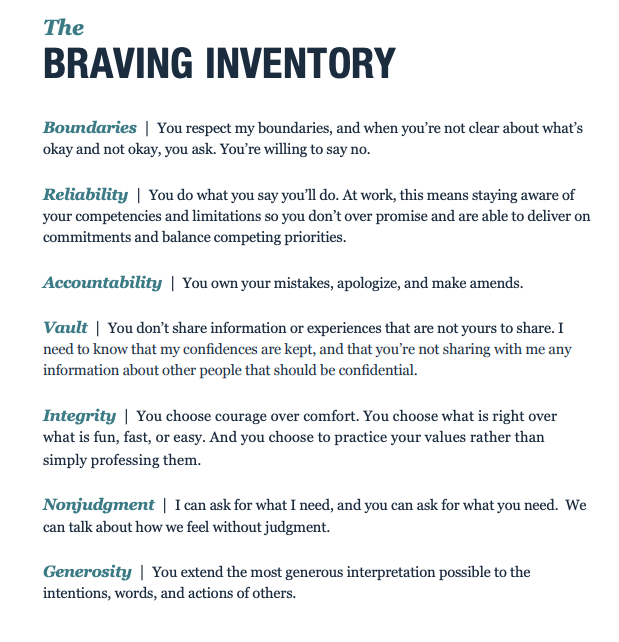
As a way to add to hallmark features of conflict management processes, the BRAVING inventory modernises the conflict theory principles of non-judgment and choice theory and provides a framework for growing connection through empathy and understanding which generates options for transformation and resolution of conflict at various levels and across contexts.
Pillar 8: The Practitioner and the Process
The authors also suggest an eighth pillar to the Shay Bright Conflict Map, The Practitioner and the Process, that looks at the macro and micro skills required of a practitioner for an effective intervention. Along the lines of fitting the ‘forum to the fuss’, it is important to consider fitting the ‘practitioner to the process’. Depending on the outcome of the conflict analysis, there may be a good reason to require certain practitioner characteristics, knowledge or skills. In order to best serve the parties and support a conflict management or resolution process that considers and adapts to the parties needs, interests and priorities, there may be evidence-based and/or practice informed reasons for seeking practitioners who have certain characteristics (for example age, gender, race, or religion) or knowledge and skills (for example, contextual understanding, cultural competency, emotional intelligence, trauma informed practice, working with vulnerability and shame).
Without a high level of emotional and cultural intelligence, the conflict management practitioner designing and delivering an intervention could hinder options for resolution or transformation of the conflict. Practitioner micro skills may also play an important role in establishing psychological safety and meeting party’s needs.
Developing self-awareness and skills building are essential parts of education and professional development for conflict resolution practitioners. Self-awareness is an element of emotional intelligence, as defined by Daniel Goleman. Emotional Intelligence can be referred to as EI or EQ. For the purposes of this blog we will use the term EQ. At its most basic definition, EQ is the ability to understand and manage your own emotions, and recognise and manage the emotions of other people around you. Daniel Goleman first wrote about EQ, and introduced an EQ framework of four generic domains: self-awareness; self-management; social awareness; and relationship management.[13] The five dimensions of emotional intelligence Goleman suggests are self-awareness; self-regulation; motivation; empathy and social skills. The importance of EQ and using EQ in leadership and communication has been increasingly researched and discussed by academics and practitioners over the past 30 years. It is recognised that EQ can be trained,[14] higher EQ positively impacts academic grades and performance[15] and influences conflict styles.[16]
Applying an EQ lens across the conflict map can increase both party, self, issue and other awareness as well as ensure that an intervening party is positioned to de-escalate and effectively ‘climate control’ the process. The less we understand ourselves and our own emotions, the less likely we are to recognise and understand other people’s and the entire conflict situation. This leads to challenges with empathy, general social skills and can also create and escalate conflict.
A lack of EQ in parties and practitioners can lead to conflict escalation rather than regulation and resolution. Without self-regulation, we cannot control or redirect our thoughts, feelings and actions and therefore are trapped in a cycle of reacting rather than responding. The inability to self-regulate then inhibits our levels of motivation, resilience and achievement and our relationships with others, and could also thwart the sustainability of a negotiated outcome. Once a practitioner understands themselves, their emotions, and their motivations they can work on developing skills to assist others in self-regulation, social skills, communication and emotional management. A growth mindset, recognising that talents and skills can be developed overtime and through hard work, is an important frame of mind.[17] Applying a level of self-assessment on behalf of the conflict practitioner to the conflict at hand, recognition of what the situation may call for based on the conflict map, and recognition of one’s ability and skillset, can help determine who might be the best person to intervene in a certain situation.
In conclusion, there are new opportunities to apply the work of emerging scholars and practitioners from different disciplines into our understanding of conflict. It is important that practitioners remain up to date with new understandings, emerging research, and ideas that can inform the field of conflict management and resolution.
References
[1] Furlong, G. (2005). The Conflict Resolution Toolbox: Models & Maps for Analyzing, Diagnosing, and Resolving Conflict. Canada: John Wiley & Sons, p 2.
[2] Described by the triangle of satisfaction in Moore, C. (2003). The Mediation Process, Third Edition, San Francisco: Jossey-Bass.
[3]Willmot, W.W., and J.L. Hocker. 2001. Interpersonal Conflict. New York: McGrawHill.
[4] Sandole, D. J. (1998). A comprehensive mapping of conflict and conflict resolution: A three pillar approach. Peace and Conflict Studies, 5(2), 4.
[5] Bright, S. (2001). The Conflict Mapping Chart. Retrieved September 1, 2020. Available at https://www.in-mediation.eu/wp-content/uploads/file/ConflictMapping.pdf
[6] Furlong, G. (2005). The Conflict Resolution Toolbox: Models & Maps for Analyzing, Diagnosing, and Resolving Conflict. Canada: John Wiley & Sons.
[7] Druckman, D. (2005). Doing research: Methods of inquiry for conflict analysis. Sage Publications, p 3.
[8] Kahneman, D. (2011). Thinking, fast and slow. Macmillan.
[9] Daniel Goleman is a Psychologist, Author and visiting scholar at Harvard University see further http://www.danielgoleman.info/
[10] Van der Kolk, B. A. (2015). The body keeps the score: Brain, mind, and body in the healing of trauma. Penguin Books.
[11] Dr Brene Brown is an Author and Researcher at the University of Houston, see further https://brenebrown.com/
[12] Brown, B. (2018). Dare to Lead: Brave Work. Tough Conversations. Whole Hearts. Penguin, Random House (UK)
[13] Goleman, D. (2011). The brain and emotional intelligence.
[14] Mattingly, V., & Kraiger, K. (2019). Can emotional intelligence be trained? A meta-analytical investigation. Human Resource Management Review, 29(2), 140-155.
[15] MacCann, C., Jiang, Y., Brown, L. E., Double, K. S., Bucich, M., & Minbashian, A. (2020). Emotional intelligence predicts academic performance: A meta-analysis. Psychological Bulletin, 146(2), 150.
[16] Gunkel, M., Schlaegel, C., & Taras, V. (2016). Cultural values, emotional intelligence, and conflict handling styles: A global study. Journal of World Business, 51(4), 568-585; Chen, H. X., Xu, X., & Phillips, P. (2019). Emotional intelligence and conflict management styles. International Journal of Organizational Analysis; de Villiers, J., Marnewick, A., & Marnewick, C. (2019, June). Using emotional intelligence during conflict resolution in projects. In 2019 IEEE Technology & Engineering Management Conference (TEMSCON) (pp. 1-6). IEEE; Rahim, M. A., Psenicka, C., Polychroniou, P., & Zhao, J. H. (2002). A model of emotional intelligence and conflict management strategies: A study in seven countries. International Journal of Organizational Analysis, 10(4).
[17] Dweck, C. S. (2008). Mindset: The new psychology of success. Random House Digital, Inc.; Dweck, C. (2016). What having a “growth mindset” actually means. Harvard Business Review, 13, 213-226.



 The Australian Dispute Resolution Research Network