ADR: Bringing Islam into the conversation

This Blog presents an opportunity to showcase the work of our students as the next generation of researchers and dispute resolvers. I am delighted to post another example here. Over to you, Zaynab..

islam and ADR blog

written by Zaynab Gul

I am Zaynab – an Australian, a Muslim, or better put: a true blue Muzzie. Over the last two and a half months, I studied ADR and the very useful role that it plays in resolving conflicts between parties outside the confines of the court system. The more I learnt about the purpose of ADR within the Australian framework, the more I wondered why a process that is commended for its flexibility fails to accommodate for cultural and religious practices.

Zaynab

Zaynab Gul

Given just how diverse Australia’s population is, it’s not hard to see why our state and federal legislations sideline culture and religion to create a uniform set of rules and regulations. But in an area like ADR, where the processes are no doubt more flexible and informal, it would make sense for Australian’s to be able to draw on their personal values and beliefs and use them to inform the approach taken to dispute resolution.

Our country’s ADR system didn’t come out of the blue. Instead, the western world’s interest in ADR first sparked in the 1960’s, and has developed over the recent decades to form ADR as we know it today. Though the 60’s may have given birth to ideas around ADR in the west, the practice itself existed amongst cultures and religions for many years prior.

Taking Islamic law as an example, over 1,400 years ago, the Qur’an not only established ADR as a tenet of civil justice, but also codified it with clear rules and regulations. There are also traces of ADR present in the customary law of our country’s first people. So, if ADR has been tried and tested for many centuries amongst various religions and cultures, why is the Australian ADR space so reluctant to recognise and learn from them?

Reshaping the ADR space?

As an Australian Muslim, I expect to be supported in being able to practice my religion, so long as it is in line laws of the land. Ancient Islamic law features processes like Sulh (which can be likened to western mediation) and Tahkim (the equivalent of arbitration). Though the nitty gritty of the rules may differ between the west and Islam, the basics are pretty much the same; both encourage the efficient and peaceful resolution of disputes.

A peaceful co-existence of religious based ADR and a western legal framework is not impossible. It’s been done for decades in the UK in response to the country’s growing number of Muslim migrants. There is a growing number of Muslims in Australia, given that Islam is the second most prevalent religion in our country.

Whether it be through the establishment of state sanctioned Islamic tribunals or the backing of religious mediators, there are many ways in which Islamic ADR can be recognised in Australia. As a country, we encourage diversity and are happy to embrace it in terms of food and entertainment, but when it comes to law, there’s clear hesitation.

It’s a long shot to call for a drastic change overnight. The first step for us all is to foster comfortable conversations about change and acceptance in an area like ADR where the law has the benefit of flexibility.


It’s time we started talking about neurodiversity in dispute resolution

This Blog provides a platform to showcase new and emerging research in the field of dispute resolution. As such, I have invited Danielle and David Hutchinson who have an interest in neurodiversity, including its implications for mediation, to write a piece. Thank-you for sharing, Danielle and David.

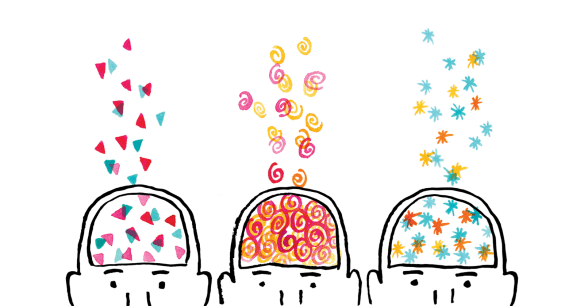
three skulls 5e271a18e3ddc8eba8bdb4f4_neurodiverse-talent

By Danielle Hutchinson[1] and David Hutchinson[2]

Research into neurodiversity is on the rise. As the concept makes its way into the zeitgeist, it’s time for us to start thinking about the many implications for mediation.

What is neurodiversity?

Neurodiversity is an overarching term that refers to the variation in people’s behaviours and traits arising out of neurodevelopmental difference. While there is still debate about what differences fall under this umbrella, it typically includes autism spectrum disorder[3][4] (ASD), attention deficit hyperactivity disorder (ADHD), dyslexia, dyscalculia, dyspraxia and Tourette’s syndrome[5].

Within the current understanding, neurodiversity differs from mental Illness in that it is not about a person’s state of mental health or wellness. Instead it is a healthy state that is simply neurologically distinct from that of ‘neurotypicals’. One of the common features of neurodiversity is that the difference between strengths and weaknesses are often magnified. For example, there may be an unusually large disparity between a person’s verbal reasoning and their working memory. While the variation is unique to each neurodiverse person, a familiar trope is that of the absent-minded professor. Diagram 1 shows common strengths and weaknesses for each condition[6].

neurodiversity model

Diagram 1

Why is this important to mediators?

Research into neurodiversity is still in its early days. However, it is starting to become apparent that that this disparity between finding some things extremely easy and other tasks almost impossible, can lead to confusion, frustration and misunderstanding in a range of contexts. This can be particularly so where the neurodiverse person has chosen not to share their diagnosis or is unaware of their neurodiversity.

Unfortunately, recent research into neurodiversity has shown that it is not uncommon for “employers, work coaches and authority figures to conclude that the individual is ‘not trying’, when undertaking particular tasks. Inconsistent performance is mistaken for a bad attitude or poor motivation, which leads to discrimination and perceptions of unfairness on behalf of the individual.”[7]

Given the potential for conflict to arise in such situations, and current estimates that as much as 30% of the population may have some form of be neurodiversity[8], it seems inevitable that as mediators we will need to consider the different ways that neurodiverse people make meaning of their interactions with others. More importantly, if we are to ensure that our practices are truly inclusive, we must start to consider the ways in which our practices may be premised on neurotypical assumptions.

For example, the following table outlines a few differences common to ASD and/or ADHD that may be misinterpreted as the neurodiverse person being deliberately difficult or as demonstrating traits of a high conflict personality.[9]

Difference Traits that may impact on traditional mediation techniques
Alexithymia
  • Difficulty experiencing, identifying and expressing emotions
  • Challenges with introspection, observing own mental and emotional processes, and/or identifying and responding to emotions in others
  • May struggle to communicate emotions to others
Black and white thinking
  • Polarised thinking patterns e.g. an argument or lack of agreement means the end of a friendship
  • Difficulty picking up on nuances and non-verbal gestures
  • Literal interpretation of conversations or agreements
Cognitive rigidity
  • Strong preference for rules and routines
  • Difficulty changing mental states or thinking about things in a different way
Executive functioning
  • Difficulty with tasks such as planning, problem solving, organisation, time management and working memory
Impulsiveness and inhibition
  • Acting without thinking things through or accounting for potential consequences
  • Difficulty allowing others to speak uninterrupted
  • Emotional self-regulation
Rejection sensitivity
  • Extreme sensitivity to being criticised or rejected, whether real or perceived
Sensory sensitivity
  • Can manifest as hyper or hypo-sensitivity
  • Bright lights, noise or smells can be distracting or distressing and inhibit ability to engage in activities

When we consider the typical facilitative mediation, it becomes apparent that we may have unintentionally set some neurodiverse people up to fail.

Where to next?

Each of these neurodevelopmental conditions manifests uniquely in each person, hence the catchphrase, “When you have met one neurodiverse person, you have met one neurodiverse person”. As mediators, it is not our role to diagnose or make assumptions. However, it is important that our practices are inclusive and can enable the full participation of all people involved. In providing an inclusive environment we can start harnessing the many strengths of neurodiverse participants to find mutually beneficial and sustainable outcomes for all.

[1]Danielle Hutchinson is a lawyer, mediator, author and co-founder of Resolution Resources. Danielle has lived experience of neurodiversity and, in consultation with experts in the field, is investigating neuroinclusive practices in mediation.
[2] David Hutchinson is an autistic researcher and writer in the field of autism
[3] Difference as opposed to disorder is now being used by some researchers in the field e.g. Fletcher-Watson & Happe (2019) and preferred by many in the ASD community
[4] The DSM-5 now includes Asperger’s Syndrome within ASD as ASD1. Even so, many people identify strongly with being an ‘Aspie’ and the term remains in use for those who wish to identify as such.
[5] First coined in 1998 by Australian sociologist, Judy Singer in research into Autism. While there is no formal definition, the term has been adopted broadly and is widely accepted as encompassing the neurodevelopmental disorders described above; see also ‘What is Neurodiversity?’ National Symposium on Neurodiversity at Syracuse University (webpage, 2011) https://neurodiversitysymposium.wordpress.com/what-is-neurodiversity/
[6] Neurodiversity, Dyslexia Scotland (webpage)  https://www.dyslexiascotland.org.uk/sites/default/files/library/Neurodiversity%20Model_SDMar16.pdf
[7] Ashley Weinberg & Nancy Doyle, Psychology at work: Improving wellbeing and productivity in the workplace (British Psychological Society, 2017) 44.
[8] ‘Neurodiversity and other conditions’, ADHD Aware (web page, 2018)  https://adhdaware.org.uk/what-is-adhd/neurodiversity-and-other-conditions/
[9] See the work of Bill Eddy and Grant Lester on high conflict personalities and the vexatious litigant.

Learning from our First People – using Yarning to Resolve Conflict

earthy comments

This Blog presents an opportunity to showcase the work of our students as the next generation of researchers and dispute resolvers. I am delighted to post another example here. Over to you, John..

John Lidbetter

My name is John Lidbetter. I am a fourth year Actuarial Studies and Law student at UNSW. I began learning about yarning whilst studying ‘ADR in Practice’, a law elective at UNSW taught by Dr Rosemary Howell. I am extremely grateful for Rosemary’s guidance and assistance on this topic. I welcome any comments or suggestions the reader may have.

Conflict resolution is not new. All cultures have a conflict resolution tradition, offering opportunities for learning to current academics and practitioners. Australia’s First Peoples have powerful tools to resolve conflict; these techniques have been refined over centuries, which provide opportunities for us to do things differently and better in the ADR space.

This blogpost focuses on Aboriginal traditions of yarning. Yarning involves written and oral storytelling, which emphasises joint discussion of the past in order to build a relationship between the storyteller and listener.[i] Digging into the literature reveals some powerful benefits which Yarning makes accessible to ADR professionals. In particular, yarning provides effective strategies and tactics which enable us to more deeply understand other parties’ perspectives. Additionally, Western forms of ‘narrative mediation’ already acknowledge and adopt narrative practice – recognising the benefits of storytelling. These benefits are worth digging into a bit more deeply.

Yarning to promote mutual understanding

Why are we compelled by stories which arouse our emotions? One explanation is that emotional stories invite us to empathise with the storyteller’s perspective. If we can empathise with the storyteller, we may become more inclined to listen and understand the individual’s point of view. Yarning provides a medium to communicate emotion and understand competing perspectives as it involves describing experiences and personal stories. For example, Tara June Winch’s novel, The Yield, illustrates the impact of returning to a home that is becoming repossessed by a mining company. Through describing personal experience, Winch creates a connection with the audience which invites readers to learn from the storyteller’s message. In Winch’s case, we begin a process of understanding the cultural significance of land for Indigenous peoples.[ii] In the ADR space, the learning opportunities are limitless; telling stories allow us to listen and understand each other’s’ perspectives – facilitating the resolution of conflict.

Repetition and Silence

However, to resonate with another person’s perspective, we must be able to digest the information. To digest new ideas, we often need time to pause and think. If we have time to process what is said, we become better equipped to understand our counterparty’s perspective and brainstorm ideas. However, studies suggest that Anglo-cultures view silences and pausing negatively – inhibiting our capacity to retain information.[iii] Learning from yarning may help resolve this deficiency.

In the Aboriginal yarning context, pauses are not interpreted negatively; instead, silence is used to reflect.[iv] Furthermore, repetition is often used in yarning to reinforce the underlying structure and logic of new ideas.[v] By incorporating silence and repetition into our repertoire, we enable ourselves to understand complex factual scenarios and interests to a greater extent. In doing so, we become more likely to understand our counterparty’s perspective – assisting in the resolution of conflict.

Inclusive Language

It is often easier to work together on a problem when both parties feel included in the process. Yarning provides subtle techniques which enable our counterparty to feel engaged in the conversation. For example, in the historical novel, Dark Emu, Bruce Pascoe uses plural personal pronouns such as ‘we’, ‘our’ and ‘us’ in his dialogue.[vi] By including the audience, the reader does not feel alienated or accused. Instead, inclusive language avoids what Fisher and Ury describe as ‘the people problem’.[vii] By separating the people from the problem, we ensure both parties fight the same issue, together. We could all benefit from including, rather than excluding our counterparty as it facilitates collaborative discussion which may facilitate conflict resolution.

How Does Narrative Mediation Incorporate Yarning?

Despite the apparent benefits arising from yarning, how can we know that storytelling techniques will translate to successful conflict resolution in the ADR space? Well, we can consider the use of storytelling in Western ‘narrative mediation’ contexts. Narrative mediation styles have incorporated aspects of yarning. The important similarity between yarning and narrative mediation is the joint emphasis upon telling personal stories. Both processes promote the power of storytelling as an ends in itself, which inadvertently facilitates successful conflict resolution. Neither processes pressure parties into settlement, which frees individuals to focus upon mutual understanding, rather than bargaining. In doing so, narrative mediations enable parties to reconcile their differences through utilising the power of joint discussion of personal stories. As a result, narrative mediation processes are highly successful in resolving conflict due to the acknowledgement of the power of yarning.

Where do we go from here?

Learning and adopting new forms of communication styles is difficult. However, adding yarning to our repertoire may allow us to better resolve conflicts and maintain stronger relationships. The main benefit of telling our stories is that it humanises the conflict. At its core, conflicts are relationship-based. We can disarm and relieve tensions through sharing our personal perspective. In doing so, we may create a connection and achieve mutual understanding, which better equips us to resolve conflict. Interestingly, there is scarce academic research concerning yarning in the context of dispute resolution, or its connection to Western forms of narrative mediation. Consequently, this blogpost aims to spark discussion and further research about how we can maintain better relations with others through acknowledging and learning from yarning.

[i] Lynore Geia, Barbara Hayes and Kim Usher, ‘Yarning/Aboriginal storytelling: Towards an understanding of an Indigenous perspective and its implications for research practice’ (2013) 46(1) Contemporary Nurse 13, 15; Dawn Bessarab and Bridget Ng’andu, ‘Yarning about Yarning as a Legitimate Method in Indigenous Research’ (2010) 3(1) International Journal of Critical Indigenous Studies 37, 38; Tyson Yunkaporta, ‘Aboriginal pedagogies at the cultural interface’ (PhD Thesis, James Cook University, 2009) xiii.
[ii] Tara June Winch, The Yield (Hamish Hamilton, 2019) 33–4.
[iii] Michael Walsh, ‘Conversational styles and intercultural communication: an example from northern Australia’ (1991) 18(1) Australian Journal of Communication 1, 2.
[iv] Ilana Mushin and Rod Gardner, ‘Silence is talk: Conversational silence in Australian Aboriginal talk-in-interaction’ (2009) 41 Journal of Pragmatics 2033, 2033.
[v] Tyson Yunkaporta, ‘Aboriginal pedagogies at the cultural interface’ (PhD Thesis, James Cook University, 2009) xvii.
[vi] Ibid 14.
[vii] Roger Fisher, William Ury and Bruce Patton, Getting to Yes: Negotiating Agreement without Giving In (Houghton Mifflin Harcourt, 2nd ed, 1992) 13.

Seven Keys to Unlock Mediation’s Golden Age

As co-editor of the ADR Research Network Blog this month, I have invited Michael Leathes to talk about an international collaboration that he curated called The Seven Keys to Unlock Mediation’s Golden Age. Leathes’ original 2010 article, 2020 Vision – Where In The World Will Mediation Be In 10 Years, has inspired 40 dispute resolution thinkers — users, practitioners and scholars — to look a further 10 years into the possible development of mediation, not to predict the future, but to help invent it. I invited Michael to tell us more…

Seven car keys

An overview of the Seven Keys by Michael Leathes

As modern mediation enters its 5th full decade, it is timely to admit an inconvenient truth: global uptake of mediation appears to have plateaued far short of its potential. Is the mediation field around the world just going to do the same things over and over while hoping for a major uptick in growth? Einstein famously called this “insanity”.

Several great thinkers have memorably noted that the way to predict the future is to invent it. But this is a challenge in a deeply fragmented, highly competitive, often misunderstood field. The Seven Keys to Unlock Mediation’s Golden Age aims to mobilise an international conversation about how the field can trigger exponential growth over the next 10 years.

The introduction by Professor Nadja Alexander and Lela P. Love exhort stakeholders to imagine a new order illustrated by over 20 peer-reviewed propositions by 40 writers in 16 countries. Seven contributors are Australasians. Each piece is no longer than 1,111 words. The propositions are clustered into Seven Keys: Leadership, Data, Education, Profession, Technology, Government and Usage. They intersect to create what Professors Alexander and Love characterise as a whole greater than the sum of its parts.

Dr Rosemary Howell and Alan Limbury, with Ken Cloke and Joan Goldsmith, frame the work with a plea for the main players to come together and provide collaborative, mediative leadership with both a unified vision for the field and a clear mission and path to achieve it. A vision and mission that empower stakeholders to become the owners, and not merely renters, of the field’s future. The propositions that follow this call for mediative leadership all describe elements that can help shape the vision and implement it through the mission and include:

  • Generating credible science to support mediation skills and processes and to develop new theories from empirical and other field-sourced research data
  • Repeating the Global Pound Conference series periodically
  • Developing a “Negotiation Index” app packed with instant wisdom and evidence to aid mediators and parties
  • Widely teaching mediation as a core subject
  • Training mediators more thoroughly, not least in culture and neuroscience
  • Ensuring mediation is publicly respected as a true professional practice
  • Seeing mediators openly declare what they believe
  • Subscribing to a Code of Disclosure
  • Leveraging technology more effectively
  • Engendering visible Government engagement, including walking the talk and implementing the Singapore Mediation Convention
  • Proactively marketing mediation to users
  • Promoting mediation to facilitate deal making
  • Increasing peer mediation programs in schools
  • Promoting the value of women mediators
  • Making mediation a pre-requisite to litigation and more systemically encouraged and fused in arbitration
  • Helping inexperienced mediators gain a practice foothold with mentoring and practice programmes, and finally
  • If the main players collaborate to share leadership internationally and develop a single vision with a credible mission and a comprehensive budget, it should be fundable on a worldwide scale – it’s been done before!

Joanna Kalowski concludes with Many Paths, One Way. She calls upon the world’s leading stakeholders in mediation to chart the new future, adopt and build upon the Seven Keys as a springboard, and develop it collaboratively with energy and enthusiasm on a global scale.

Seven Keys to Unlock Mediation’s Golden Age was serialised on Mediate.com in June and July 2020.
The complete downloadable pdf of the Seven Keys is anticipated to be made available as part of the mediate.com 25th Anniversary in September 2020 as a no-charge e-book. Once published, the work may be reproduced in accordance with a Creative Commons licence provided within the document.
Interviews with many of the Seven Keys’ contributors have also been recorded and will be made available in conjunction with this publication.


Could COVID-19 see the end of Halsey?

The continuing development of ADR processes has brought with it a significant growth in litigation which explores issues such as  enforceability, good faith negotiation and cost sanctions for failing to mediate. These cases add to our understanding of how the field of ADR is continuing to develop.

With this in mind we have been fortunate to receive permission from Alan Limbury, Senior Fellow,  Melbourne Law School, to reproduce his recent Kluwer Blogpost. Please read Alan’s blogpost below.

Future-300x203

Written by Alan Limbury, Kluwer Arbitration Blog 22 June 2020


The impact of the COVID-19 pandemic on the administration of justice has led to commendable judicial innovation, such as the use of virtual hearings, while much of the workload has been postponed until the resumption of face to face hearings is declared safe.

In a message to judges in the UK Civil and Family Courts in March, the Lord Chief Justice said:

“It is clear that this pandemic will not be a phenomenon that continues only for a few weeks. At the best it will suppress the normal functioning of society for many months. For that reason we all need to recognise that we will be using technology to conduct business which even a month ago would have been unthinkable. Final hearings and hearings with contested evidence very shortly will inevitably be conducted using technology. Otherwise, there will be no hearings and access to justice will become a mirage. Even now we have to be thinking about the inevitable backlogs and delays that are building in the system and will build to an intolerable level if too much court business is simply adjourned. I would urge all before agreeing to adjourn any hearing to use available time to explore with the parties the possibility for compromise.”

Unless or until overturned by legislation or judicial decision, the situation in the UK is governed by the 2004 decision of the Court of Appeal in Halsey v Milton Keynes General NHS Trust [2004] EWCA Civ 576 (11 May 2004) , in which Dyson LJ (with whom Laws LJ and Ward LJ agreed) said:

“…it seems to us likely that compulsion of ADR would be regarded as an unacceptable constraint on the right of access to the court and, therefore, a violation of article 6 [of the European Convention on Human Rights].”

In 2010 the European Court of Justice differed, holding that a mandatory out-of-court settlement procedure is not contrary to European law so long as it does not result in a binding decision, does not cause a substantial delay in litigating, does not oust the court’s jurisdiction due to limitation periods and is not excessively costly: Rosalba Alassini and others v Telecom Italia SpA and others.

That was not the end of Halsey however, because Dyson LJ continued:

“Even if (contrary to our view) the court does have jurisdiction to order unwilling parties to refer their disputes to mediation, we find it difficult to conceive of circumstances in which it would be appropriate to exercise it. We would adopt what the editors of Volume 1 of the White Book (2003) say at para 1.4.11:

‘The hallmark of ADR procedures, and perhaps the key to their effectiveness in individual cases, is that they are processes voluntarily entered into by the parties in dispute with outcomes, if the parties so wish, which are non-binding. Consequently the court cannot direct that such methods be used but may merely encourage and facilitate.’”

Comment: that unfortunately erroneous passage from the White Book fails to address the substance of Harvard Professor Frank E A Sander’s well-known and compelling statement: “There is a difference between coercion into mediation and coercion in mediation.”

Dyson LJ went on:

“If the court were to compel parties to enter into a mediation to which they objected, that would achieve nothing except to add to the costs to be borne by the parties, possibly postpone the time when the court determines the dispute and damage the perceived effectiveness of the ADR process. If a judge takes the view that the case is suitable for ADR, then he or she is not, of course, obliged to take at face value the expressed opposition of the parties. In such a case, the judge should explore the reasons for any resistance to ADR. But if the parties (or at least one of them) remain intransigently opposed to ADR, then it would be wrong for the court to compel them to embrace it… we reiterate that the court’s role is to encourage, not to compel.”

Halsey established a regime whereby the courts may impose cost sanctions against successful litigants on the grounds that they unreasonably refused to engage in ADR. Such penalties are, of course, necessarily imposed after the decision on the merits of the case, whereas a power to order parties into mediation would be exercised before the final decision.

Even before the 2010 Alassini decision, Sir Anthony Clarke, in The Future of Civil Mediations, (2008) 74 Arbitration 4, 419 said:

“It is of course a cliché that you can take a horse to water but whether it drinks is another thing entirely. That it is a cliché does not render it the less true. But what can perhaps be said is that a horse (even a very obstinate horse) is more likely to drink if taken to water. We should be doing more to encourage (and perhaps direct) the horse to go to the trough. The more horses approach the trough the more will drink from it. Litigants being like horses we should give them every assistance to settle their disputes in this way. We do them, and the justice system, a disservice if we do not.”

Using the same cliché, in Wright v Michael Wright Supplies Ltd & Anor [2013] EWCA Civ 234 (27 March 2013) , Sir Alan Ward said:

“You may be able to drag the horse (a mule offers a better metaphor) to water, but you cannot force the wretched animal to drink if it stubbornly resists. I suppose you can make it run around the litigation course so vigorously that in a muck sweat it will find the mediation trough more friendly and desirable. But none of that provides the real answer. Perhaps, therefore, it is time to review the rule in Halsey…”

A year later, in Bradley & Anor v Heslin & Anor [2014] EWHC 3267 (Ch) (09 October 2014) , Norris J said:

“…The Court cannot oblige truly unwilling parties to submit their disputes to mediation: but I do not see why, in the notorious case of boundary and neighbour disputes, directing the parties to take (over a short defined period) all reasonable steps to resolve the dispute by mediation before preparing for a trial should be regarded as an unacceptable obstruction on the right of access to justice.”

In its 2017  Interim Report on ADR and Civil Justice , the Civil Justice Council ADR Working Group said at 9.32:

“… if the Working Group were free to choose we would be minded to allow judges to make orders in particular cases compelling an unwilling party or unwilling parties to attend a mediation or engage in some form of ADR.”

In its 2018  Final Report, the Working Group refrained from suggesting such a course, instead advocating increased encouragement into ADR at various stages and, at 9.24, proposing a system, as in British Columbia, in which a formal Notice to Mediate from one party to another triggers mediation by a mediator on a court-approved panel. The court is not involved unless the parties cannot agree on the mediator or otherwise seek its intervention.

While such a scheme would undoubtedly be useful, both in disposing of cases and in increasing awareness of ADR, the missing element is what I see as the clearly desirable power of the court, as it considers appropriate, to order parties into mediation whether or not they consent. In my 2018 Kluwer blog, I touched upon the way in which Australian courts use their statutory power to make such orders.

In his recent article Mediation – Don’t panic in the Pandemic – be prepared , Colin Manning, mediator, says:

“If, as seems likely, there is a risk that the courts will become overwhelmed by a wave of commercial cases, a combination of the number of adjourned cases built up during the lockdown together with a rush of new litigation arising from the pandemic, then there will be lengthy delays to hearings and trials. It must be possible that the judges will have to take practical steps to ease the pressure. One obvious step is to require all parties to engage, or re-engage in some form of ADR, almost certainly mediation, as a condition of bringing or continuing litigation.”

Perhaps the pressure caused by the COVID-19 pandemic makes this time for the UK to dump Halsey and adopt this approach.