
What Makes Us Whole #ADRRN18

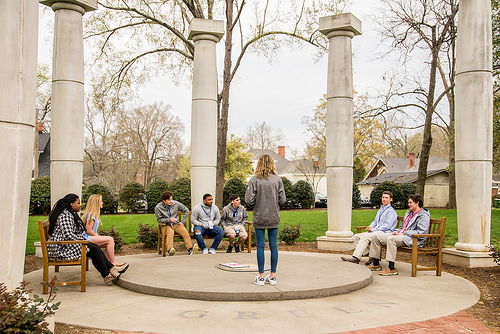
On Monday 3 December, around 25 excited dispute resolution scholars will gather on the Sunshine Coast, Queensland for the 7th Annual Roundtable of the Australian Dispute Resolution Research Network.

This is a meeting that provides respite for many of us. It is an academic experience designed to support dispute resolution research and researchers and to provide high quality, critical feedback on the papers presented there. It is so rare to find a scholarly forum where the emphasis is on feedback and where research development is central.  You can see details of our previous meetings here.

In 2018 we are being hosted by Dr Susan Douglas of the University of the Sunshine Coast. Dr Lola Akin Ojelabi is the co-organiser of the roundtable. We are excited to welcome a number of international ADR scholars again, showing how attractive our forum is to dispute resolution scholars internationally. It is also wonderful to see so many PhD and research students presenting. We take the responsibility of providing a rigorous academic apprenticeship seriously.

Papers in the 2018 program include:

  • Laurence Boulle and Rachael Field: Rethinking Mediation’s Fundamental Value of Self-Determination
  • Kate Seear and Becky Batagol: The need for a new ethical rule for lawyers in family violence intervention order matters
  • Kathy Douglas, Christina Platz and Tina Popa: Teaching Advocacy and Mediation in a Blended Learning Design: Scaffolding Learning Through Video Annotation/Discussion
  • Jackie Weinberg: The common missions of ADR and clinical legal education provide a solid foundation for teaching ADR in clinic
  • Lola Akin Ojelabi: Legislation-based DR Processes and Access to Justice
  • Alex Crampton: Mandatory Family Court Mediation as Variably Empowering and Coercive: Ethnographic Exploration of a U.S. Family Court Mediation Program
  • Claire Holland and Tina Hoyer: A case for coaching: Influencing cultural change in the ATO
  • Cris Vianna Veras: Teaching mediation in Brazil and Australia: can we improve access to Justice?
  • Re-Accreditation of Mediators and further issues of regulation: Janet Barnes with Kathy Douglas and Alysoun Boyle from ADRAC
  • Mary Riley: Is there a place for restorative justice in civil mediation?
  • Danielle Hutchinson and Emma-May Litchfield: Mixed Modes (Hybrid) Processes Research
  • Pauline Roach: The importance of the Intake Interview in a workplace dispute
  • Joanne Burnett: Lessons from the Literature: Developing A Framework for Practice in A Social Work Study of Family Violence in Family Law Mediation
  • Alysoun Boyle: Sample Populations in Empirical Studies of Mediation: Ramifications for What We Know About Mediation, and About Who Uses It
  • John Woodward: Mediation in chains: The problem with the thinning vision of self-determination in court-connected facilitative mediation
  • Sabrina Korva and Drossos Stamboulakis: Online courts: A possibility for consumers in Australia?

Stay tuned to the blog as we post workshop papers in December and January. Follow the hashtag #ADRRN18 for frequent updates on Monday and Tuesday.

Expanding the Concept of the Shadow of the Law in Family Dispute Resolution

Shadow of law

The literature on informal dispute resolution and family law has long recognised the influence of the shadow of the law on legal option generation and negotiations outside the courtroom. The term ‘shadow of the law’ was first coined by Robert Mnookin and Lewis Kornhauser in an influential 1979 article in the Yale Law Journal. They used the term to refer to the impact of substantive law on informal negotiations and dispute resolution processes, with particular emphasis on family law matters.[1] Even in informal dispute resolution contexts, Mnookin and Kornhauser observed, the law still provides the implicit backdrop and framework for negotiations.

Later authors have added sophistication and depth to Mnookin and Kornhauser’s analysis.[2] None of this research, however, directly answers the question of how participants in family dispute resolution in the current digital age source their information about the legal context. A recent article by Rachael Field, Lisa Toohey, Helen Partridge, Lynn McAllister and myself sets out to explore this issue through an empirical study of participants in family dispute resolution.[3] The information gathered through this research helps us to better understand the sense in which family dispute resolution may be said to take place in the shadow of the law.

The data from our study exposes the current conception of the shadow of the law as incomplete and insufficient. In particular, our results show that individuals acquire legal information of varying levels of reliability and credibility by relying on a range of formal and informal sources. Online sources are particularly influential in shaping parties’ understanding of the law, while discussions with family and friends also play an important role. Professional legal advice, by contrast, plays a relatively minor role for many participants. A significant proportion of parties do not or cannot access professional legal advice, while those who do access such advice do not necessarily regard it as the more important factor in their perceptions.

Our article therefore argues for a broader understanding of the concept of the shadow of the law and a more realistic conception of how that shadow influences the decision-making of parties in family law disputes. Family dispute resolution, we suggest, does not take place in the shadow of the positive law (the law contained in statutes, case law and other formal legal sources), so much as the shadow of the folk law (the law as depicted in informal sources such as online materials and popular media). Furthermore, there is not just one shadow of the law, reflecting the current state of the positive legal materials; rather, there are multiple shadows, depending on the parties’ socio-economic backgrounds and where they are gaining their information.

Government agencies, mediation providers and others involved in providing post-separation advice and information need to be aware of the influence that the folk law exerts on parties’ expectations. For government agencies and other advisors, there is a need to provide straightforward, accessible and digestible information about post-separation options, recognising that this information is likely to be accessed alongside a multiplicity of other sources. Mediators, likewise, need to be mindful that parties to family dispute resolution may come to the process with divergent understandings of the legal framework for their dispute. Mediators may need to reflect upon their own understandings of the law and ask how closely they might match or differ from the folk law that influences the parties.

[1] Robert Mnookin and Lewis Kornhauser, ‘Bargaining in the Shadow of the Law: The Case of Divorce’ (1979) 88 Yale Law Journal 950.

[2] See, for example, Becky Batagol and Thea Brown, Bargaining in the Shadow of the Law: The Case of Family Mediation (Federation Press, 2011); Jeremy Feigenbaum, ‘Bargaining in the Shadow of the “Law”: The Case of Same-Sex Divorce’ (2015) 20 Harvard Negotiation Law Review 245; Herbert Jacob, ‘The Elusive Shadow of the Law’ (1992) 26 Law and Society Review 565.

[3] Jonathan Crowe, Rachael Field, Lisa Toohey, Helen Partridge and Lynn McAllister, ‘Bargaining in the Shadow of the Folk Law: Expanding the Concept of the Shadow of the Law in Family Dispute Resolution’ (2018) 40 Sydney Law Review 319.

Call for Papers, Advances in Comparative and Transnational ADR, Hong Kong March 2019

Lots to blog about this morning!

I saw this call for papers on our US sister blog, Indisputably, and thought it was too good not to share here too.

The Law Faculty at the University of Hong Kong will be hosting a research forum March 8-9, 2019 on Advances in Comparative & Transnational ADR: Research into Practice to which we  warmly invite submissions for consideration.


  • The focus of the forum is on exploring the challenges and opportunities of understanding and assessing developments in systems of dispute resolution in diverse social and political contexts through comparative research.  Papers may cover topics such as practical considerations in conducting comparative work in the field of transnational and cross-border dispute resolution, insights from recent multi-country studies, and consideration as to how research may inform policy reform in ADR institutions regionally and transnationally. We hope the forum will facilitate research collaboration that will also translate into positive policy applications and directions for future study.
  • For those wishing to submit a paper for consideration:
a) By 10 December 2018, please e-mail us:
(i) an abstract of your paper (up to 200 words);
(i) your biography (100 words);
(iii) indicate whether you intend to submit your paper for the conference publication; and
(iv) indicate whether you have any objections to being a discussant at the forum.
Submissions may be sent to: sali@hku.hk
More info here.

Harvard program on negotiation – graduate research fellowships

I saw this and thought some of our graduate research scholars who follow this blog might be interested. 

student harvard

Accepted Students Day 2018 by PresbyPhotos (CC BY-NC 2.0)

Harvard University’s Law School invites applications for graduate research fellowships under its programme on negotiation. This supports dissertation research and writing in negotiation and related topics in alternative dispute resolution and gives fellows an opportunity to immerse themselves in the diverse resources available at the programme on negotiation. The purpose is to give doctoral students who are writing their dissertations the opportunity to be part of the programme on negotiation community.

PhD students enrolled in programmes outside of the US may apply. Candidates in the fields of economics, psychology, sociology, anthropology, international relations, public policy, urban planning, business and law are encouraged to apply. Candidates must have completed all degree requirements except for their dissertation. Graduate law students are eligible in connection with scholarly research undertaken to satisfy their Doctor of Juridical Science thesis requirements.

The fellowship lasts for one year and includes a stipend of USD 26,000, communal work space, library access and other privileges at Harvard.


  • Closing date 08 Feb 19
  • Deadline information This call is repeated once a year.

The Challenges of Elder Mediation: Part II

The Challenges of Elder Mediation

Part II: Problems and Solutions

D.M.

This is Part II of a two part series of posts by D.M., a current JD student at Bond University.

As mentioned in my previous blog post, there are several challenges unique to elder mediation. A significant challenge regarding capacity that elders face is an incorrect perception by the mediator or the other party of their capacity to participate in the mediation. Such perceptions are often rooted in ageism, a physical or psychological disability (such as dementia) or cognitive defects stemming from illness or distress. As a result, an elder may feel disempowered because of their dependence on their caretaker or an underlying mental health condition.

Furthermore, if the mental health issue is known to the mediator or the other party, this may create a bias regarding the elder’s capacity or the mediator may incorrectly assess the elder’s capacity, further aggravating the power disparity.[1] An addition problem is that older adults may bargain away their rights in an attempt to preserve relationships with family members who are applying pressure or coercion to obtain access to their assets. They may also be afraid of retaliation from an abuser.[2]

The role of the mediator

Mediators face special challenges in elder mediation. For example, even though ground rules are necessary in mediation, the elderly sometimes comment that they feel constrained by them. This is a complex challenge because such ground rules may also work to reduce bullying from other parties (who may include abusers). The establishment of ground rules, however, is confined to the mediation, which only yields temporary empowerment of the elderly party.[3]

Mediators may also face challenges in managing elders’ contributions. Self-determination is nourished by allowing the parties to discuss and pursue their interests, but some forms of abuse may be tough for the elderly to articulate or confront. Another issue concerns the dilemma of whether medical documentation of the elderly should be shared with the mediator. On the one hand, it may create bias concerning the elder’s capacity. On the other hand, the mediator may need this information to ensure the elder’s self-determination.

Possible solutions

Appropriate responses to these challenges will differ from case to case, but some guidelines can be suggested.  Until proven otherwise, elder adults should be deemed to have full capacity to participate in mediation. However, where capacity is in doubt, this needs to be properly established and not simply assumed. One possible way to ameliorate this challenge is to hire a medical professional to make that determination. Another possible way is for a social worker to assess the party’s capacity, as they may have more relevant expertise than the mediator.[4]

Older adults are legally presumed to be capable of making decisions about their finances. However, due to ageism or cultural norms and stereotypes, as adults get older professionals may increasingly speak to family members about the older person’s financial issues rather than speaking to the older person directly. In such cases, it has been suggested that a professional in the relevant field (in this example, an accountant or financial advisor) be consulted.[5]

Mediator training and professional development also plays a key role. Mediators who deal regularly with elder parties should seek training in identifying and responding to issues concerning capacity and mental health. This training could help avoid the cost involved with consulting medical professionals in some cases, but it will also help the mediator identify when additional expertise or support is needed.

[1] Rebekah Doley, ‘Accommodating Common Mental Health Issues in Mediation’ (2016) 27 ADRJ 84, 85-6.

[2] Joan Braun, ‘Elder Mediation: Promising Approaches and Potential Pitfalls’ (2013) 7 Elder Law Review 1, 3, 6.

[3] Alexandra Crampton, ‘Elder Mediation in Theory and Practice: Study Results From a National Caregiver Mediation Demonstration Project’ (2003) 56 Journal of Gerontological Social Work 423, 426.

[4] Ibid 434.

[5] Braun, ‘Elder Mediation’, 6.

The Challenges of Elder Mediation: Part I

Elder Mediation

The Challenges of Elder Mediation

Part I: Foundational Concepts

D.M.

This is Part I of a two part series of posts by D.M., a current JD student at Bond University.

Elder mediation is an important and growing topic in dispute resolution. This area of dispute resolution is important because Australia’s elderly population has been projected to grow to 8.8 million by 2057 (22% of the population). This is an increase from 3.8 million (15 % of the population) today. With such a dramatic increase, the demand for elder mediation seems sure to grow exponentially in the future.

‘Elder’ can be defined as ‘a person of greater age or seniority’. In an Australian context, this might be defined as a person who is aged 75 years or over. The highest prevalence of abuse within this age group is from the age of 80–85 years. Abuse of various forms is an important driving force behind the emergence of elder mediation.[1] Abuse can manifest as financial, emotional, physical or sexual abuse or neglect.

Why mediate elder disputes?

Elder mediation, when used correctly, can be an effective preventative process for current or potential elder abuse. Mediation efficacy decreases as abuse severity increases. Thus, mediation at an earlier stage of abuse or neglect will act as a more effective preventative measure. Furthermore, elder parties often prefer mediation over litigation as it is a more discreet method of alleviating an abusive situation and it is easier to maintain the relationships between the parties.[2]

Elder parties may prefer to mediate because it is less confrontational than litigation and confronting an abuser, especially when they are also the caretaker of the elder party, can strain the relationship if the matter proceeds to litigation. Thus, mediation retains the relationship between both parties while keeping the process confidential, which further works to retain these potentially decades-old relationships.[3]

Mediation is also preferable from an ethical standpoint because one of its purposes is for the elder party (generally the weaker party) to gain self-determination. Self-determination in elder mediation is achieved by not only informing the elder party of their rights, but also helping them achieve some independence in relationship with the other party. If the mediator correctly establishes the elder’s capacity, this may also correct any ageism biases and other incorrect perceptions of this issue.

Features of elder mediation

The parties to elder mediation are often family members, friends, fellow residents of aged care homes, caregivers or any combination of these roles. As a result, the mediator must consider questions such as whether parties should meet separately with the mediator or who should be present at each stage of the mediation. Power imbalances may arise in elder mediation due to the potential existence of abuse or neglect, combined with the fact that the perpetrators in the majority of elder abuse cases are the children or caretakers of the elderly party.

The circumstances of elder mediation may pose a challenge to the focus mediation places on self-determination. Power disparities may also create a real or perceived incapacity of the elder party to enter mediations.[4] Capacity is central to a process based on the principle of self-determination which requires parties to make their own informed choices on settlement options. The issue of capacity can be influenced by mental  or physical health problems (both chronic or temporary) or ageism.

My next blog post will examine the challenges of elder mediation in more detail and recommend some possible strategies and solutions.

[1] Joan Braun, ‘Elder Mediation: Promising Approaches and Potential Pitfalls’ (2013) 7 Elder Law Review 1, 5.

[2] Alexandra Crampton, ‘Elder Mediation in Theory and Practice: Study Results From a National Caregiver Mediation Demonstration Project’ (2003) 56 Journal of Gerontological Social Work 423, 425.

[3] Braun, ‘Elder Mediation’, 4.

[4] Rebekah Doley, ‘Accommodating Common Mental Health Issues in Mediation’ (2016) 27 ADRJ 84, 85-6.

New Milestones for the Australasian Dispute Resolution Research Network

113_19692_full1.jpg

It is now nearly five years since the Australasian Dispute Resolution Network blog was founded in late 2013.

Since that time we have now built up a loyal following of over 10,000 readers, plus additional subscribers through our Twitter presence.    To all of you who have supported us, thankyou!

Associate Professor Becky Batagol, who has served  tirelessly as our Editor-in-Chief for the past five years,  has handed stewardship of the blog to another long-time supporter of the Network,  Dr Olivia Rundle.

As always, the blog remains the primary means of communicating the work of the Australasian Dispute Resolution Network.    We consciously do not maintain any other burdensome administrative structures, such as a formal membership structure or mailing lists.  You can read more about our policies here.   We welcome and encourage participation from anyone wishing to disseminate research about dispute resolution and especially encourage PhD students and emerging academics to participate – and we are not limited to Australasia.   If you would like to become a guest blogger, or a permanent member, please contact Olivia.

We look forward to this next phase of evolution for the Network and the blog,  thank Becky for her hard work and welcome Olivia!

Multicultural Implications in Mediation: Part III

Multicultural Implications in Mediation

Part III: Solutions and Strategies

Niharika Ahuja

This is Part III of a three part series of posts by Niharika Ahuja. Niharika holds an LLM in dispute resolution with high distinction from Bond University. She is currently training as a family mediator in Alberta, Canada.

In order for there to be progress in implementing a culturally sensitive approach to mediation, there must be changes and improvement at all stages of the mediation process. This would involve, first, being mindful of the type of mediators that are selected to deal with multi-cultural disputes and, second, training the mediators to become competent in different types of cultural experiences. These two approaches would need to be supported by clear guidelines or requirements within the mediation training and accreditation systems.

Mediator selection is particularly important in this discussion. The type of mediator that is chosen to deal with the parties’ conflict plays an important role in how the emotions, mindset or cultural background of the parties are understood and accommodated. Selecting the appropriate mediator can also help to bridge the cultural differences between parties.[1] Harold Abramson argues, for instance, that a mediator’s credentials should include being trained to deal with cultural differences that may arise in a particular dispute and having the ability to approach the mediation in a way that fits the cultural needs of the parties.[2]

Training and accreditation

Training and accreditation processes also play an important role. In Australia, there have been inclusions of cultural sensitivity in the Practice Standards for the National Mediation Accreditation System (NMAS). In spite of this, studies show that there has been insufficient research done on how mediators can be culturally trained.[3]  Siew Fang Law found that the reason for this is due to the complex nature of culture itself, the lack of the practitioners’ or students’ motivation to deal with the complexity of cultural issues and, finally, the fact that the predominant expert theorists are male, white and from middle-class backgrounds.[4]

However, Law also posed some interesting suggestions on how these hurdles could potentially be overcome. The strongest suggestion was that intercultural training programs should be included and implemented in the accreditation training for mediators.[5] She proposes the following questions and challenges that the mediation training providers should consider:

  • Is the current mediation training program effective in producing culturally sensitive practitioners?
  • How many hours of training should be devoted to the intercultural component?
  • Are the existing mediation trainers capable of teaching intercultural mediation?
  • Are there sufficient and appropriate intercultural training resources?
  • How should intercultural mediation competence be assessed?

Competence and professionalism

The final element of this picture is mediator competence and professionalism. The ideal mediator would have to adapt and adjust the mediation according to the mix of cultures that are present in the session. However, in order for this to be possible, the mediator would be required to play an active and responsive role. As mediators have the duty to be a neutral and non-interventionist figure, this intervention would have to be dealt with cautiously. The mediator would have to exercise judgment in understanding different cultural experiences through a party’s behavior or emotions and determining how to adjust the mediation accordingly.

Law also made a list of four qualities a culturally aware and sensitive mediator should ideally possess.[6] The first was for the mediator to be self-aware and willing to learn. Secondly, the mediator ought to have awareness of the importance of reflection, in order to have the ability to question his or her cultural and practical assumptions and seek feedback on these assumptions from third parties. This would allow for mediators to recognise and understand the perspectives of others, rather than simply assuming or imposing their own viewpoint.

The third quality would be for the mediator to understand cross-cultural communication patterns and how to use interpreters and translators. This is important, as it would allow the mediator to understand how the parties in the mediation communicate and thereby avoid any misunderstandings that might otherwise occur. The last quality would be for the mediator to comprehend the relationship between language, culture, and power and to adopt a flexible attitude to accommodate for such habits throughout the mediation. Law argues persuasively that these essential skills can enhance the competency of a culturally aware mediator.

[1] Hilary Astor and Christine M Chinkin, Dispute Resolution in Australia (Lexis Nexis, 2nd ed, 2002) 253.

[2] Ibid 254.

[3] Siew Fang Law, ‘Culturally Sensitive Mediation: The Importance of Culture in Mediation Accreditation’ (2009) 20 ADRJ 163.

[4] Ibid 164.

[5] Ibid 166.

[6] Ibid 168.

Multicultural Implications in Mediation: Part II

Multicultural Implications in Mediation

Part II: Cultural Approaches to Conflict

Niharika Ahuja

This is Part II of a three part series of posts by Niharika Ahuja. Niharika holds an LLM in dispute resolution with high distinction from Bond University. She is currently training as a family mediator in Alberta, Canada.

What is cultural diversity and why is it important in mediation? Finding a precise definition for ‘culture’ is difficult. Siew Fang Law defines culture as ‘a set of values and beliefs acquired from learning, experiences and social upbringing, which creates implicit social rules or a code of ethics and behaviour within a specific group.’[1] Clarifying what cultural diversity means is essential in order for mediators to understand what aspects form an individual’s cultural experience.

In the mediation process, acknowledging different cultural experiences is important in understanding the parties’ emotions and attitudes. This may be even more complex than it may seem as different cultures have their own unique perceptions and expectations of how conflict must be dealt with. Western cultures differ importantly from Asian and Middle Eastern cultures, for example, in the appropriate ways to negotiate and resolve conflicts (and what a resolution looks like). Another important case study in Australia involves the distinctive perspectives and habits of Aboriginal and Torres Strait Islander (ATSI) people when resolving disputes.

Mediation and ATSI cultures

Mediation appeals to ATSI communities as it is more in tune with their traditional ways of settling disputes within their community than adversarial litigation. Further, mediation is an effective and useful method to re-empower ATSI people by encouraging them to take full ownership and control of the dispute or conflict. However, this may also be dangerous as it may push a certain style of mediation or decision-making process that is inconsistent with the values or beliefs of ATSI cultures. Therefore, to ensure that the advantages are available and are utilised, mediators must remain mindful to conduct the mediation in accordance with the parties’ values.

The Victorian Aboriginal Legal Service (VALS) noted that ATSI dispute resolution should ideally be segregated from mainstream dispute resolution.[2] This was based on the reasoning that mainstream dispute resolution adopts a Western style, potentially alienating ATSI people by not accommodating their values. For an instance, studies show that people from ATSI backgrounds can shift contexts and identities with speed in conflict situations.[3] This may particularly be a problem where the mediation sessions are conducted in a fixed order, according to the agenda.

The traditional cultural framework for settling disputes in ATSI cultural contexts relates to the settlement that occurs within the community, not merely a settlement between individuals. Cultural perceptions of settlement or resolution within ATSI communities are therefore not solely in relation to individual finances or legal consequences, but the collective interests of the group. Furthermore, the Western perception of ‘resolutions’ being finished and not revisited is also contrary to many ATSI traditions. For these communities, the resolution may be continual and social in nature.

Risks and challenges

The VALS study mentioned above noted the consequences and risk of distrust towards the dispute resolution process and the possible missed opportunities.[4] VALS further identified the key inconsistencies between Western-style mediation and the Aboriginal perception of mediation as involving mediator neutrality, confidentiality and communication barriers.[5] Each of these features is potentially at odds with aspects of ATSI cultures mentioned previously. Only when ATSI approaches to conflict are understood can a non-Indigenous mediator understand how to approach the mediation in a way that accommodates the needs and viewpoints of the parties.

This issue cannot be avoided by always selecting an Indigenous mediator, as there will always be instances where a non-Indigenous mediator is preferred (or no alternative is available). Non-Indigenous mediators must therefore ideally be educated and trained not only to understand the cultural behaviour of ATSI communities, but also to learn how the community has traditionally approached similar kinds of disputes in the past and wishes to approach them in the present.

My next blog post will explore some solutions and approaches that mediators can adopt to address these kinds of cultural issues, not only when dealing with ATSI cultures, but in multicultural contexts more generally.

[1] Siew Fang Law, ‘Culturally Sensitive Mediation: The Importance of Culture in Mediation Accreditation’ (2009) 20 ADRJ 162, 163.

[2] Victorian Aboriginal Legal Service, Exploring Culturally Appropriate Dispute Resolution for Aboriginal and Torres Strait Islander Peoples (VALS, 2015) 3 <https://vals.org.au/assets/2015/06/Alternative-Dispute-Resoution-ADR.pdf>.

[3] Deborah B Rose, ‘Indigenous Ecologies and an Ethic of Connection’ (1999) Global Ethics and Environment 172.

[4] Victorian Aboriginal Legal Service, Exploring Culturally Appropriate Dispute Resolution for Aboriginal and Torres Strait Islander Peoples (VALS, 2015) 3 <https://vals.org.au/assets/2015/06/Alternative-Dispute-Resoution-ADR.pdf>.

[5] Ibid 5-8.

Multicultural Implications in Mediation: Part I

Multicultural Implications in Mediation

Part I: Issues and Challenges

Niharika Ahuja

This is Part I of a three part series of posts by Niharika Ahuja. Niharika holds an LLM in dispute resolution with high distinction from Bond University. She is currently training as a family mediator in Alberta, Canada.

Mediation is a tool that helps to bridge the gap between differences, and this requires knowing and respecting the culture of people that you meet.[1]

Many Western nations have seen a rapid growth of individuals from a diverse range of cultures, religions, and beliefs over recent decades. In Australia, over 43 percent of the population were born overseas from over 200 different countries and are now permanently settled in the country.[2] Due to the increasing cultural diversity in many countries, maintaining social order requires cultural sensitivity and respect towards the particular issues or lifestyles of minority groups. This is not only relevant in our social or justice system but also in mediation.

As one of the key features of mediation is communication, it is critical that mediators and the parties understand each other’s cultural experiences. However, this may put mediators in a difficult position. On one hand, mediators are obligated to remain neutral between the parties. At the same time, however, it is crucial for the parties’ background and emotions to be understood and accommodated, which may require active steps on the part of the mediator. Allowing for flexibility in responding to cultural issues within the mediation process can help to achieve the important social objective of maintaining social order across cultural differences.

The mediation process

Mediation involves the voluntary attendance by both parties to resolve their dispute with the guidance of a third party, the mediator. In the introduction to the process, clarification is given regarding the roles of the mediator and the parties. It is clarified that the mediator is there to direct the process, while the parties are in control of the substantive or content issues. This is to ensure that mediators do not overstep their limits by imposing any value judgments on the parties and their dispute.

The opening statements allow parties to ‘tell their story’ by explaining the concerns that have brought them to the mediation. Researchers and mediators have given particular attention and value to this stage to see how it allows the parties to achieve their version of justice by articulating their concerns.[3] What is worth noting here, however, is that the parties are disclosing these statements to the mediator, who is considered the figurehead or authority throughout that session. Therefore the parties may feel the need to display their story according to what would resonate with the mediator the most.

One of the most significant and valued communication strategies used by mediators is rephrasing. Rephrasing promotes understanding between the parties by encouraging them to rephrase their assertive emotions and statements into neutral interests. An important concern at this stage of the mediation is that some cultures prefer to express or deal with conflicts in an emotional rather than neutral or rational way. This potential challenge would require the mediator to have the skills to guide the mediation according to how the parties are accustomed to resolving it in their cultural tradition.

The role of Western culture

Morgan Brigg has undertaken valuable research on how the mediation process is shaped by Western culture.[4] Brigg notes that the Western ideology adopts a different approach to selfhood as opposed to other cultures. The Western ideology is mainly that conflict is destructive and can only be resolved by peace and harmony. This is problematic, as many cultures have a different perception and way of resolving or not resolving conflicts, as will be discussed in more detail in my next blog post.

What is important to acknowledge is that this ideology has heavily influenced and dominated the way mediation is conducted. Aside from the mediator’s own perception being molded by these ideologies, the actual process, and organisation of the mediation may reflect a Western approach to conflict. For instance, mediators are the most satisfied with the process when the parties have reached an actual agreement between them. This satisfaction is dependent on the fact that mediators perceive their duty as resolving conflicts by peace and harmony, in accordance with the Western ideology.

My next post will further explore the role of cultural differences in shaping responses to conflict, looking particularly at the experiences and challenges faced by Aboriginal and Torres Strait Islander people in the mediation process.

[1] Alessandra Sgubini, ‘Mediation and Culture: How Different Cultural Backgrounds Can Affect the Way People Negotiate and Resolve Disputes’, Mediate.com (March 2006) <https://www.mediate.com/articles/sgubinia4.cfm>.

[2] Siew Fang Law, ‘Culturally Sensitive Mediation: The Importance of Culture in Mediation Accreditation’ (2009) 20 ADRJ 162, 162.

[3] See, for example, Isabelle R Gunning, ‘Diversity Issues in Mediation: Controlling Negative Cultural Myths’ (1995) Journal of Dispute Resolution 68.

[4] Morgan Brigg, ‘Mediation, Power and Cultural Difference’ (2003) 20(3) Conflict Resolution Quarterly 289.