
Workplace Culture and Mediation: Creating a Workplace Mediation Model That Works


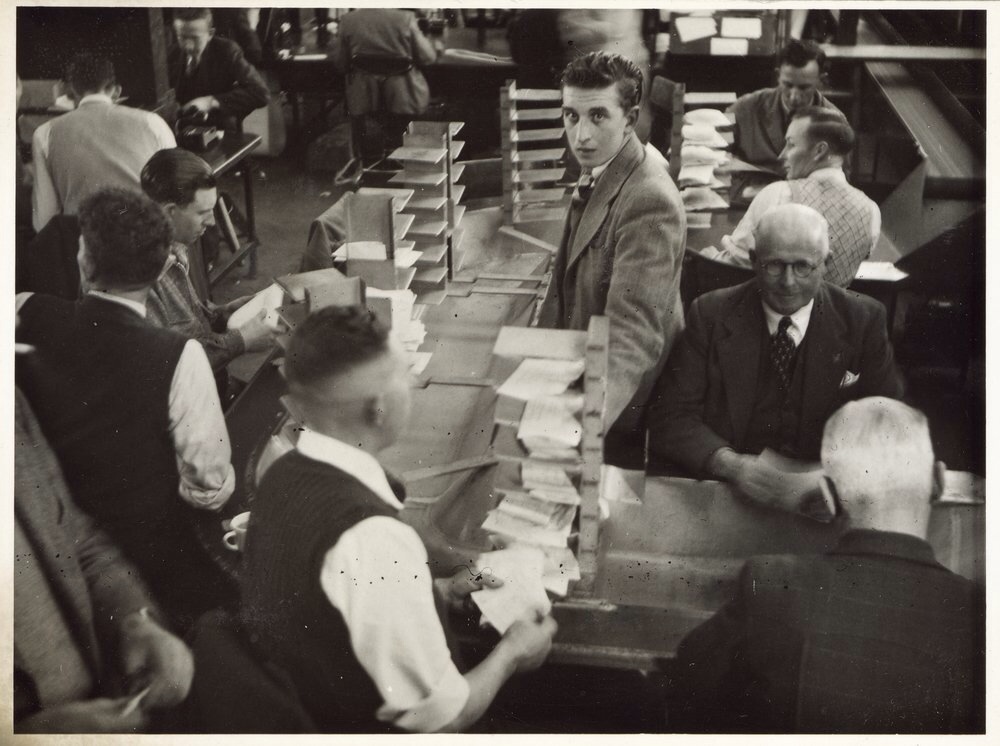
 Photo: The Circulation Desk, 1946 by Bob Kent, State Library Victoria, (www.slv.vic.gov.au)


This is the third of a series of posts on papers we are sharing from the 2015 ADR Network Roundtable #ADRRoundtable held last month in Sydney. 


In this post, Pauline Roach describes her work  into developing a healthy workplace dispute resolution culture. Pauline began her career as nurse and midwife, working in several different hospitals in Australia, England and Scotland. Following her return from a 4 year trip overseas, she began a career with the NSW Public Service. Pauline has worked in the dispute resolution field for 20 years and has managed the Community Justice Centres (CJCs) Sydney and Bankstown, where she provided ongoing training and supervision to mediators and staff.

In 2003, Pauline was appointed to the position of Grievance Network Coordinator at the Roads and Traffic Authority (RTA) where she completed a major review of the RTA’s Grievance Resolution Policy. In this role she established the grievance resolution network and the RTA Workplace Mediation Panel. In 2013 she was appointed to the position of Consultant at Transport for NSW.

Pauline completed the Master in Dispute Resolution at University of Technology, Sydney.


Workplace disputes are disruptive, expensive and often linger in one form or another for long periods of time. This post looks at anew workplace mediation model developed and implemented at (an anonymous for this post) large public sector organisation in New South Wales. The post is in two parts: The first part discusses strategies and structures implemented to respond to workplace disputes. The second part provides details the new hybrid mediation process developed and analyses the outcomes from this mediation process.


Strategies and Structures

The organisation implemented a strategic framework to help develop a corporate culture and context where the principles of ADR could succeed and are accepted by staff. This has involved staffing, policy development and the education of staff. It also includes engagement with the union to encourage and support their members to participate in the process. The organisation, employee and union representative have a shared benefit in the successful resolution of a dispute, the employer has a functioning workplace and the employee has a job. Both groups acknowledge this understanding of the shared benefits and this removes many barriers to the ADR process succeeding.

Policies such as the Code of Conduct outline an ethical framework for the standards of work, conduct and responsibilities for all staff, managers and contractors. The use of ADR processes to resolve workplace disputes are integrated into its culture and policies such as the Code of Conduct. The Code of Conduct highlighted that staff must be actively involved in resolving their disputes. Through on going education staffwere aware of the ADR procedures available to them, which assist in the resolution of workplace disputes at the local level. The organisation established a grievance resolution network which provided staff and managers with the tools to resolve workplace issues locally, in a timely manner and as close as possible to the origin of the dispute. The aim is principally to assist in the early identification and management of a dispute before it had a negative impact to the workplace. This included the development of an individual dispute resolution strategy (DRS) for each dispute. A broad range of ADR processes are available to assist in the resolution of disputes:

➢ Mediation
➢ Facilitated discussion
➢ Team Development Days
➢ Conflict coaching
➢ Group facilitation.

For a great description of many of these terms, see this NADRAC document.

Grievance Contact Officers (GCOs) were appointed from across the state for a three year term on a voluntary basis. GCOs assisted staff with workplace communication difficulties and/or interpersonal disputes or other workplace concerns. Where possible they encouraged staff to:

➢ Speak directly with the person concerned
➢ Ask their manager for assistance
➢ Referred the matter to Human Resources for assistance.

To support this policy direction, the organisation has also established a Workplace Mediation Panel. This panel consists of independent consultants who are skilled in the provision of a range of ADR processes.


The Hybrid Mediation Model

The hybrid mediation model implemented at the organisationhas three distinguishing features:

1. Before any ADR intervention is undertaken a thorough intake and /or pre-mediation process is conducted. The aim is to ensure that the most appropriate dispute resolution strategy is developed (i.e. conflict coaching scheduled prior to and after mediation). Before a dispute resolution strategy is developed all parties to the dispute must be identified, interviewed and the facts analysed. It also includes discussions with local managers to gain an understanding of previous action taken to resolve the dispute. Why wasn’t the action successful? What outcome does the manager want and how do they see it being resolved? It may also include discussions with the union organisor.
2. When the agreement is being developed the party’s manager is present. This means that the relevant manager becomes a party to the mediated outcomes so that responsibility for agreed changes to conduct cannot be ignored. In cases where a manager is involved, that manager’s manager is involved. All parties including the manager sign the mediated agreement and are also given a copy of the agreement.
3. Where possible the mediators mirror the parties (e.g. gender, age, language and cultural background).

Bearing in mind the importance of retaining or rebuilding a working relationship following resolution of less complex bullying complaints, the organisation also refers these cases for ADR intervention. In these cases a thorough intake interview is also undertaken to access the power imbalance between the disputants and to ensure the disputants and the manager understand the process and reality check outcome options.

Resolution of workplace disputes requires a strategic and explicit cultural change rather than a piece meal application of ADR processes in isolation. The organisation has implemented a strategic framework and consistent approach, which developed a culture and context where dispute resolution can succeed and be accepted by staff. Through a review of policies and staff education programs, staffs are aware of their responsibilities under the Code of Conduct and various policies. In a climate that supports dispute resolution, the organisation has successfully developed a dispute resolution process which accommodates its unique culture and business.

Bringing mediation skills into the workplace: can we call this ‘conflict literacy’?

This is the second paper from those presented at the 4th ADR Research Network Roundtable (#ADRRoundtable) at the University of NSW, Sydney last month. We are keen to share the wonderful and challenging ideas discussed. At our roundtables and in this blog we aim to advance the dispute resolution field by presenting high quality, critical dispute resolution scholarship. Next year we’ll be meeting in Hobart, Tasmania and if you’d like to join us (and perhaps visit the equally challenging MONA) , we will be posting information about how to be part of the next meeting here on our blog.


Please feel free to comment here on or over on Twitter @ADRResearch.


This post and the next one feature discussion of the important area of workplace dispute resolution. Today’s post is by Olivia Davis. Olivia has worked in ADR since 2001 and is currently Quality Manager for the Financial Ombudsman Service. She is completing a Master of Dispute Resolution at UTS and is interested in bringing ADR skills into the broader workplace context.


We can measure an individual’s literacy level, but can we measure their ability to deal with conflict productively? This post discusses the concepts that need to be considered before developing a methodology for measuring ‘conflict literacy’.


Bringing mediation skills into the broader workplace context enhances workers’ ability not only to deal productively with conflict, but to cultivate positive relationships, negotiate more persuasively and include multiple perspectives when problem-solving. Key skills from the mediation skill set are listening, questioning, reflecting, reframing, and summarizing, as well as the ability to manage emotions and power imbalances, and reality-test proposed outcomes. The literature around ‘conflict competence’ adds to this list the skills of multivalent thinking, emotional intelligence and impulse control.


The contribution of this post is to combine current thinking about definitions of literacy with current thinking about conflict, to develop a new concept that is more nuanced and complex than ‘conflict competence’, as it is outlined above. To arrive at an understanding of what is meant by the term ‘conflict literacy’ as proposed by the author, the phrase is broken down and each word looked at separately.


The word literacy is commonly attached as a suffix (eg; media literacy, financial literacy, scientific literacy, computer literacy etc) to a particular field as a shorthand way of indicating an individual’s level of knowledge about, and ability to navigate, that particular subject area effectively. As technology and social media have pervaded our daily lives in ever-increasing ways, our understanding of what it means to ‘be literate’ has been forced to expand beyond the simple ability to read and write, to include such skills as the ability to critically evaluate sources of information, filter for relevance, understand which signifiers are valued, as well as produce relevant content. Literacy has always been about the ability to participate effectively in a social environment, but it now has a ‘meta’ aspect which demands that we be able to interrogate the frame the environment sits within, and critique our role as co-creaters of that environment.


Looking at ‘conflict’ it is notable that current thinking sees conflict not as something to be avoided or suppressed – or even resolved – but rather as an energy force that is part of the human experience, and is ever-present, whether latent or manifest. Conflict theorists have applied the principles of complexity science to better understand the dynamics of conflict, how to harness its energies and how to intervene effectively. Complexity science sees all elements in a system as having mutual causality; everything happens in a context, and there are no clear-cut ‘victims’ and ‘perpetrators’. More complex perspectives allow participants to evade the tyranny of binary oppositions and create more satisfying agreements.


The term ‘conflict literacy’ combines all these concepts; it is more than ‘conflict competence’, and goes further than the parameters of the mediation skill set. Is conflict literacy achieved by bringing mediation skills into the workplace? The answer would have to be: not on their own, no.​